The physics of rockets remains the same. But sensors, software, and autonomous systems are transforming space transportation. ESA engineer Kate Underhill explains why data and energy impose limitations, where AI can help—and where it cannot.
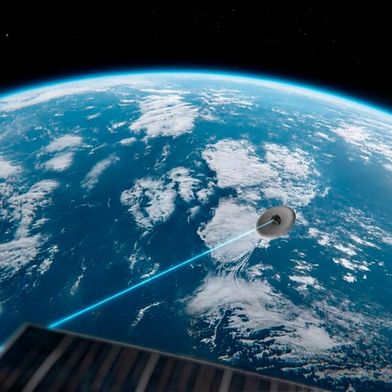
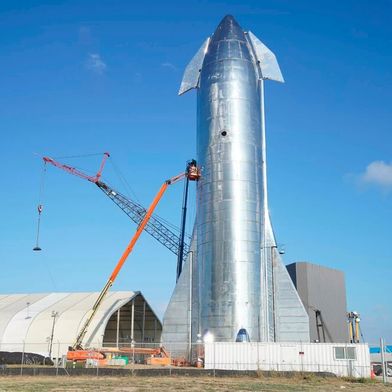
The Future of Space Travel: At Pretzl Connect 2026, ESA engineer Kate Underhill explained how sensor technology, software, and AI are transforming the development of future space transportation systems.
(Image: mc/VCG)
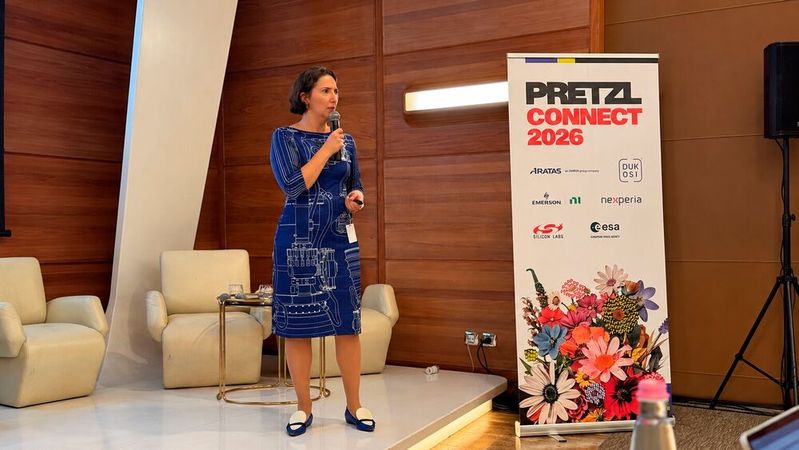
Kate Underhill has been working in rocket engineering for more than 20 years. As a propulsion engineer at the European Space Agency (ESA), she has long focused on combustion, materials, and thermodynamics. At the Pretzl Connect 2026 electronics conference, she spoke about the use of sensors, onboard computers, and software. She emphasized that the fundamental physics of rockets has not changed.
“What is changing, however, are the electronics, the intelligence, and the onboard power systems. That’s where the future lies,” Underhill notes. In addition to reusable rockets, she outlined vehicles that transport and maintain satellites in orbit. Both developments place new demands on electronics and software. However, AI isn’t necessary for everything.
Electronics in Cold, Hot, and Vibrating Environments
Even today, an Ariane 6 flight is largely automated. Onboard computers process sensor data, control the flight path, and trigger stage separations. This does not require adaptive software. The Ariane 5 demonstrated what traditional control technology is capable of during the launch of the James Webb Space Telescope: The precise insertion into the intended trajectory reduced the amount of fuel needed for subsequent course corrections.
Extreme conditions prevail in propulsion and fuel systems: Cryogenic hydrogen is at about 20 K, or -253 °C (−423.4 °F). Other components become very hot. Sensors must take measurements without interfering with operations. Added to this are vibrations, rapid pressure changes, and electromagnetic interference. For long-term missions in orbit, radiation exposure is also becoming an increasingly important factor.
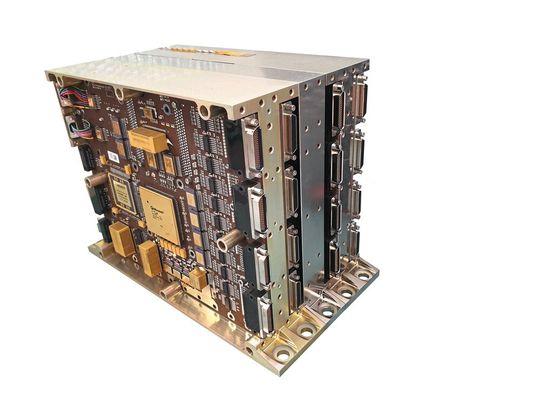
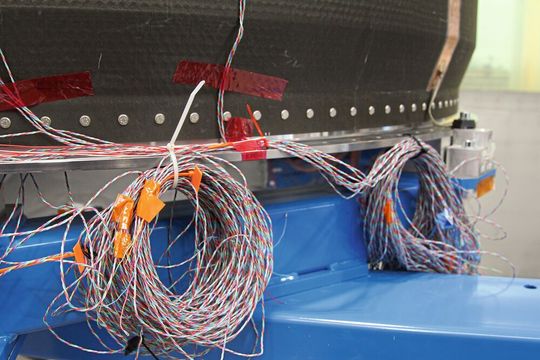
On-board electronics for space: The computer for ESA's Hera mission relies on a LEON-3 processor and redundant hardware to ensure reliable operation even under challenging conditions.
(Image: ESA)
“In the aerospace industry, we take a very conservative approach. Electronics must function under specific conditions, which is why we rely on proven technology. We’re at least ten years behind consumer electronics,” Underhill explained. The space industry has different priorities than the consumer electronics sector: fault tolerance, qualification, and radiation resistance are more important than the latest generation of chips.”
Additional sensors require power and may increase mass. Underhill cites wireless sensors and energy harvesting from vibrations as potential approaches. With laser ignition, power spikes place high demands on compact electronics. She considers electrically powered fuel pumps for chemical rocket engines to be more practical for smaller propulsion systems. Large systems could require hundreds of kilograms of batteries. One interim solution being investigated involves turbopumps with an electric startup followed by gas generator operation. For smaller systems in orbit, solar power is also an option. The key factor is whether the additional electronics actually improve the overall system.
Sensors: How Rocket Engines Reveal Their Condition
For reusable engines, it must be possible to assess after every flight what stresses they have undergone and how much longer they will last. According to Underhill’s approach, manufacturing, test bench, and operational data should be integrated for this purpose. Temperatures, pressure readings, valve actuations, and closing times could reveal signs of wear and deviations.
But even measuring this is difficult: Underhill cites turbines operating at 50,000 min⁻¹. Sensors must not alter the operating conditions. So far, fuel quantities can sometimes only be estimated indirectly based on temperature and flow rate readings. In microgravity, this becomes even more difficult.
Electrical capacitance tomography detects changes in capacitance between electrodes and uses this data to reconstruct the distribution of liquid and gas in the tank. At ground tests conducted as part of the ESA Phoebus project, the method was tested on cryogenic tanks. However, the ground tests do not yet prove that the method is also operational in microgravity.
Date: 08.12.2025
Naturally, we always handle your personal data responsibly. Any personal data we receive from you is processed in accordance with applicable data protection legislation. For detailed information please see our privacy policy.
Consent to the use of data for promotional purposes
I hereby consent to Vogel Communications Group GmbH & Co. KG, Max-Planck-Str. 7-9, 97082 Würzburg including any affiliated companies according to §§ 15 et seq. AktG (hereafter: Vogel Communications Group) using my e-mail address to send editorial newsletters. A list of all affiliated companies can be found here
Newsletter content may include all products and services of any companies mentioned above, including for example specialist journals and books, events and fairs as well as event-related products and services, print and digital media offers and services such as additional (editorial) newsletters, raffles, lead campaigns, market research both online and offline, specialist webportals and e-learning offers. In case my personal telephone number has also been collected, it may be used for offers of aforementioned products, for services of the companies mentioned above, and market research purposes.
Additionally, my consent also includes the processing of my email address and telephone number for data matching for marketing purposes with select advertising partners such as LinkedIn, Google, and Meta. For this, Vogel Communications Group may transmit said data in hashed form to the advertising partners who then use said data to determine whether I am also a member of the mentioned advertising partner portals. Vogel Communications Group uses this feature for the purposes of re-targeting (up-selling, cross-selling, and customer loyalty), generating so-called look-alike audiences for acquisition of new customers, and as basis for exclusion for on-going advertising campaigns. Further information can be found in section “data matching for marketing purposes”.
In case I access protected data on Internet portals of Vogel Communications Group including any affiliated companies according to §§ 15 et seq. AktG, I need to provide further data in order to register for the access to such content. In return for this free access to editorial content, my data may be used in accordance with this consent for the purposes stated here. This does not apply to data matching for marketing purposes.
Right of revocation
I understand that I can revoke my consent at will. My revocation does not change the lawfulness of data processing that was conducted based on my consent leading up to my revocation. One option to declare my revocation is to use the contact form found at https://contact.vogel.de. In case I no longer wish to receive certain newsletters, I have subscribed to, I can also click on the unsubscribe link included at the end of a newsletter. Further information regarding my right of revocation and the implementation of it as well as the consequences of my revocation can be found in the data protection declaration, section editorial newsletter.
Underhill envisions a future scenario: Each engine could be assigned a digital twin that links design, manufacturing, and operational data. How often has a valve been actuated? When does a component need to be inspected? An electronically equipped engine, once connected to the test bench, could autonomously run a test sequence, actuate valves, and report any deviations in closing times. She describes this as a possibility, not as a fully implemented system.
Sensors in Extreme Conditions: As part of the ESA Phoebus project, engineers are investigating, among other things, new measurement methods for cryogenic rocket tanks.
(Image: ESA)
One of the obstacles to AI-based failure predictions is the limited data set. “We don’t yet have a particularly large amount of engine data. If you only build about six engines a year, you only get six data sets. Furthermore, we don’t test the engines to the point of failure—so we don’t see exactly where their limits lie,” Underhill explained. Without sufficient meaningful data on failures, it is difficult to identify their patterns using AI. That is the dilemma: Engines are not supposed to fail, which is precisely why data on their failure limits is lacking. Repeated flights could help, at least, to gradually gain a better understanding of aging processes.
Material Search: AI Is Set to Transform Development and Manufacturing
ESA is also exploring the use of AI in the search for materials. For example, the agency is looking for copper alloys that conduct heat well and are also mechanically strong. Algorithms could help identify suitable compositions more quickly.
Simulations can reduce the number of physical tests. According to Underhill, they are already being used for simple structures. However, simulation and topology optimization are not automatically AI. Attempts at topology optimization yielded interesting results three to four years ago, but at the time did not justify the effort required to define the problem. That may have changed in the meantime.
Underhill uses an injector head as an example to illustrate what additive manufacturing makes possible: “Conventional injector heads consist of more than 200 individual parts. We now have a design that we can print as a single component.” Regardless of this ArianeGroup documented in 2018 as part of ESA’s ETID program successful hot-run tests of a one-piece printed injection head, which also replaces a design consisting of more than 200 parts.
The issue of quality control remains open. In 3D printing, extensive process data is generated for each layer, in which AI could detect anomalies. Underhill leaves open the question of how much responsibility automation can assume in this process and where humans must step in to monitor it. When it comes to AI-assisted design, however, she emphasizes that engineers must understand how the components they develop function. In addition to performance, industrialized spaceflight also depends on whether engines can be manufactured and tested reliably and cost-effectively.
Autonomy Through AI: When Spacecraft Make Their Own Decisions
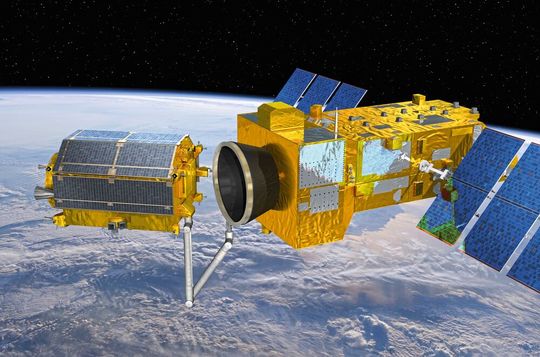
Underhill outlines a space logistics system based on the hub-and-spoke principle: In the future, reusable rockets will deliver cargo to low Earth orbit, and specialized vehicles will transport it further. Later, they could refuel or repair satellites. To do this, they must identify targets on their own, determine their movements, and dock safely. During time-critical maneuvers, not every decision can be made on the ground. “The control center must move onboard. This is an area where AI can truly add value,” said Underhill. Spacecraft should be able to react more autonomously and cooperate with one another without having to rely on a ground control center for every decision.
Service robots in space: Future spacecraft are expected to be able to autonomously approach and dock with satellites and extend their operational lifespans. The ESA illustrates this concept in an illustration.
(Image: ESA—David Ducros)
The ESA InSPoC program is laying the groundwork: InSPoC-1 addresses approach and docking, InSPoC-2 covers cryogenic propellant management and refueling, and InSPoC-3 focuses on shared onboard intelligence and spacecraft cooperation. This breakdown is taken from the official ESA program description. There are therefore no operational transport fleets yet. Underhill believes it is conceivable that vehicles could remain in space for ten or 15 years and receive new tasks via software updates.
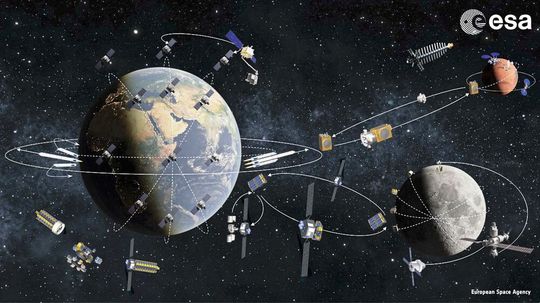
Space Transport Network: ESA is exploring concepts in which specialized spacecraft transport payloads between orbits and resupply them in orbit.
(Image: ESA)
Underhill cites extending the service life of existing satellites—for example, through docked service systems or refueling—as an early commercial application. The former is already in practice: Northrop Grumman’s MEV-1 docked with Intelsat 901 on February 25, 2020 and took over propulsion tasks without transferring fuel to the satellite. In-orbit refueling is being further developed. Underhill expects more complex autonomous repairs to follow later.
Sovereignty: How Independent Can Europe's Space Program Be?
More electronics create new dependencies. Europe has its own semiconductor manufacturers and manufacturing capacity, but remains dependent on non-European suppliers for certain chips, raw materials, and manufacturing technologies. According to Underhill, the ESA is investigating which critical components can be sourced from European suppliers.
During the Q&A session, Underhill described a procurement problem: Her team wanted to procure 20 laser diodes for an experiment. However, the supplier they contacted specified a minimum order quantity of 10,000 units. If such technologies are also sold outside the aerospace industry, the unit costs can decrease.
In the debate on international cooperation, Underhill pointed to shifting political priorities and the end of cooperation with Russia on a Mars mission. Despite meaningful partnerships, Europe needs its own key capabilities: “We need sovereignty. We must be self-reliant in these key areas,” she said. She was referring to access to space, positioning, telecommunications, and Earth observation data.
Later, Underhill discussed U.S. export controls as another source of dependency. Depending on the classification and destination country, the ITAR or EAR may restrict the transfer of certain components. This does not, however, result in a general ban on combining American and Chinese components.
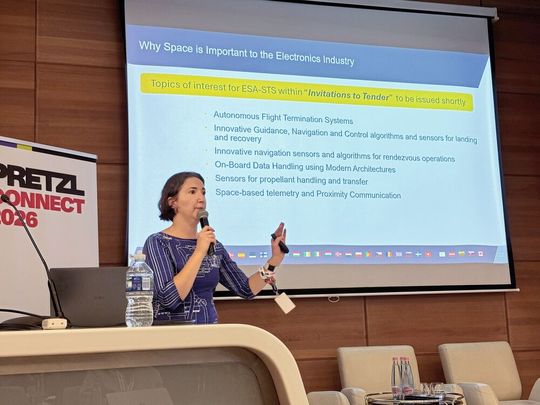
Electronics for Space Exploration: At Pretzl Connect 2026, Kate Underhill outlined the technologies for which the ESA is planning new calls for proposals. These include autonomous navigation systems, onboard computer architectures, and sensor technology for fuel transfer in space.
(Image: mc/VCG)
For Underhill, it’s also about mastering digital development and manufacturing processes. She asks how we can prevent a design file from being altered unnoticed on its way to the manufacturer. Likewise, drive engineers, electronics developers, and AI experts need to collaborate more effectively. As Underhill explains in the Q&A session, they often speak different technical languages. That’s why engineers who can translate requirements across disciplines and integrate the systems are crucial.
Traditional Control Algorithms: Not Everything Needs AI
Underhill does not advocate for AI at any cost: “In my opinion, for flight programs and rocket launches, we don’t actually need that much more intelligence with our current systems and software. In space itself, however, it could actually be of greater benefit,” the engineer assesses. Long-term missions could benefit from AI. Where traditional control algorithms do the job, however, there’s no need for added complexity. The next step in spaceflight development therefore isn’t to incorporate AI everywhere. The key factor is determining where additional electronics can actually solve a task more effectively. Sensors, computing power, and additional electronics require power, space, and certification—and more complex software must be tested. Whether the effort is worthwhile depends on the task of the overall system.