At the China International Industry Fair, the semiconductor industry made its debut with its own trade exhibition. Three trends defined the fair: new chip architectures, increased computing power directly at the machine level, and closer collaboration along the supply chain.
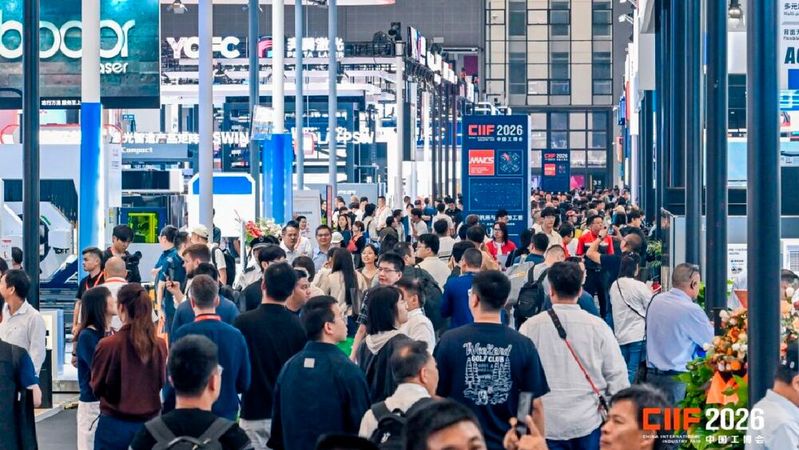
China's semiconductor industry: At the China International Industry Fair (CIIF) in Shanghai, the chip industry was given its own exhibition area for the first time in 2026. More than 300 companies showcased their technologies and solutions for industrial manufacturing at the “IC Ecosystem Show.”
(Image: CIIF)
China aims to integrate its chip industry more closely with manufacturing in other sectors. At the China International Industry Fair in Shanghai (CIIF), which concluded last Friday (October 16, 2026), the chip industry was given its own dedicated section for the first time. The “IC Ecosystem Show” took place in Hall 5.2, where more than 300 companies exhibited. This mini semiconductor trade show in Hall 5.2 was part of China’s largest trade fair for the manufacturing industry, the CIIF, according to the business publication Diyi Caijing.
This trade show layout, featuring its own large pavilion, demonstrated how the semiconductor industry is being positioned as a key player within China’s manufacturing sector. It is interesting to note that the Chinese name for the chip exhibition (“guo xin zhan”) literally translates to “National Chip Exhibition.” Beijing is clearly focused on asserting itself more and more strongly amid ongoing pressure from Washington, which has imposed boycotts on advanced chips and equipment. However, likely out of consideration for international exhibitors, a more diplomatic English name was chosen for this exhibition-within-an-exhibition.
Government investors were stepping up their support for domestic companies such as the contract manufacturer Hua Hong and its expansion in Wuxi, the South China Morning Post in Hong Kong reported several days before the trade show began. “Even though they are less sophisticated than state-of-the-art AI processors, chips produced using mature manufacturing processes remain indispensable for electric cars, industrial automation, Internet of Things devices, and consumer electronics,” the newspaper writes.
The fact that, for customers in manufacturing plants, a chip’s performance within the overall system ultimately matters more than the performance metrics of a single semiconductor is arguably the most important narrative in the Chinese semiconductor industry—one that was also omnipresent at the trade show in panel discussions, in conversations at the booths, and in private discussions. At the trade show, China provided insights into how it intends to meet this industry demand despite restrictions from Washington, the Netherlands, and Japan on chips and lithography machines.
Three Trends for the Future of Chips
Three key trends were evident. New chip architectures are designed to reduce dependence on advanced manufacturing processes. AI computing power is shifting to the machine. And domestic manufacturers are joining forces in ecosystems to achieve more on their own.
One example of the first trend is the active search for alternatives to miniaturization in the connections between individual components of a semiconductor. “Supplementing Moore’s Law with non-Moore’s Law approaches,” is how Mao Junfa of the Chinese Academy of Sciences described it, as reported by Diyi Caijing. He spoke at the “Shanghai IC Summit,” which took place alongside the trade show.
Advances in interconnect technology are therefore expected to deliver higher performance when transistors can no longer be miniaturized—either for physical reasons or due to a lack of manufacturing equipment. Advanced packaging, optical interconnects, and chiplets are expected to shorten the paths between components and reduce energy consumption.
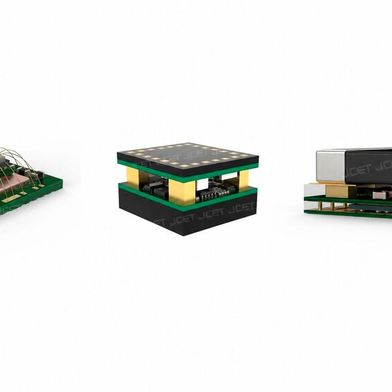
Dongfang Suanxin provided an example of this with its DF1000. The chip, which was unveiled in July 2026, combines three-dimensional stacking with in-memory computing. It was announced at the trade show that the chip is being developed and manufactured entirely in China using a mature 14-nanometer process. This architecture is designed to enable high-performance computing without requiring the most advanced manufacturing methods.
"Packaging instead of ever-smaller logic structures" is described by Diyi Caijing as an ongoing trend that, once again this year, is bringing an industry—previously viewed as rather marginal—increasingly into the spotlight. China is seeking technical solutions to overcome its politically driven restrictions on chip manufacturing.
Date: 08.12.2025
Naturally, we always handle your personal data responsibly. Any personal data we receive from you is processed in accordance with applicable data protection legislation. For detailed information please see our privacy policy.
Consent to the use of data for promotional purposes
I hereby consent to Vogel Communications Group GmbH & Co. KG, Max-Planck-Str. 7-9, 97082 Würzburg including any affiliated companies according to §§ 15 et seq. AktG (hereafter: Vogel Communications Group) using my e-mail address to send editorial newsletters. A list of all affiliated companies can be found here
Newsletter content may include all products and services of any companies mentioned above, including for example specialist journals and books, events and fairs as well as event-related products and services, print and digital media offers and services such as additional (editorial) newsletters, raffles, lead campaigns, market research both online and offline, specialist webportals and e-learning offers. In case my personal telephone number has also been collected, it may be used for offers of aforementioned products, for services of the companies mentioned above, and market research purposes.
Additionally, my consent also includes the processing of my email address and telephone number for data matching for marketing purposes with select advertising partners such as LinkedIn, Google, and Meta. For this, Vogel Communications Group may transmit said data in hashed form to the advertising partners who then use said data to determine whether I am also a member of the mentioned advertising partner portals. Vogel Communications Group uses this feature for the purposes of re-targeting (up-selling, cross-selling, and customer loyalty), generating so-called look-alike audiences for acquisition of new customers, and as basis for exclusion for on-going advertising campaigns. Further information can be found in section “data matching for marketing purposes”.
In case I access protected data on Internet portals of Vogel Communications Group including any affiliated companies according to §§ 15 et seq. AktG, I need to provide further data in order to register for the access to such content. In return for this free access to editorial content, my data may be used in accordance with this consent for the purposes stated here. This does not apply to data matching for marketing purposes.
Right of revocation
I understand that I can revoke my consent at will. My revocation does not change the lawfulness of data processing that was conducted based on my consent leading up to my revocation. One option to declare my revocation is to use the contact form found at https://contact.vogel.de. In case I no longer wish to receive certain newsletters, I have subscribed to, I can also click on the unsubscribe link included at the end of a newsletter. Further information regarding my right of revocation and the implementation of it as well as the consequences of my revocation can be found in the data protection declaration, section editorial newsletter.
The second trend evident at the trade show indicates that more and more computing power is being made available directly at the machine. This was evident, among other places, at the AXERA booth. AXERA unveiled the AX8860 series for large AI models in Shanghai. Up to 128 gigabytes of RAM and 64 video channels are designed to enable complex tasks, according to the Chinese trade publication Bandaoti Chanye Zongheng, which reported on this new chip series. For factory operators, what matters is whether a model can be reliably integrated. “Industrial systems typically have a service life of five to ten years, while large models and algorithms for machine vision are evolving rapidly,” reported Bandaoti Chanye Zongheng from the chip trade show. Machines are designed to run for years, but their AI must be updatable. Replacing the hardware would be impractical.
The third trend—ever-closer collaboration among individual players in the supply chain—was evident in the many strategic partnerships for which contracts or letters of intent were signed this time in Shanghai. Hua Hong agreed to collaborate with NAURA, AMEC, ACM Research, and HWATS Technology, according to Diyi Caijing. The companies plan to jointly develop manufacturing and plant engineering. Where AI systems enable autonomous further development, partnerships and ecosystems are becoming increasingly important.
Community Matters
As in other industries, the realization is taking hold in China’s semiconductor industry that lone players no longer stand a chance in the era of artificial intelligence. No one can keep up with the rapid iteration of various technologies on their own. Growing specialization, on the one hand, and the increasing interconnection of different industries, on the other, are not mutually exclusive.
“Having the IP but struggling with implementation,” said Wang Zhiyu of the Alibaba DAMO Academy, describing a problem, according to Bandaoti Chanye Zongheng. Processor designs alone do not make a product. Software adjustments delay mass production. To solve precisely this problem, Alibaba XuanTie offers a platform complete with software called Flex. Kyland integrates its operating system with control software and an industrial bus to control semiconductor equipment. All of these offerings demonstrate just how much work lies between chip design and the machine itself. Ecosystems organized around platforms are intended to bridge this gap.
“Chip-based computing modules are merely hardware components,” writes Bandaoti Chanye Zongheng. “For them to actually serve factory operations, they must be integrated into a system using operating systems, industrial buses, and control software.”
China’s semiconductor industry, which continues to grapple with ideologically motivated headwinds from Washington, Europe, and Japan, has identified a key prerequisite for successfully catching up with the West in terms of technology. It is as unspectacular as it is pragmatic. New automation solutions and AI chips do not necessarily have to be world-leading, according to the thinking in China, but they must work in everyday factory settings and be affordable for manufacturers.