







Aerospace Engineering Target Pressure Reached—Yet Still Measured Incorrectly
Related Vendors

If test results in a high vacuum deviate inexplicably, the error rarely lies in the pressure reading but rather in environmental conditions such as the composition of the residual gas. Especially when it comes to sensitive optics and detectors, the success or failure of precise aerospace testing hinges on the test environment.
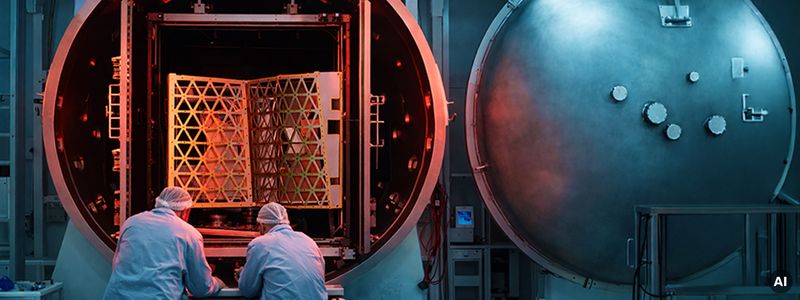
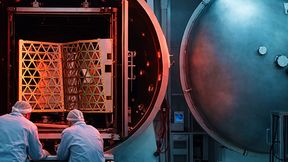
Every space mission is preceded by countless tests conducted on Earth: Before spacecraft, propulsion systems, or instruments are deployed, their performance is verified under mission-relevant conditions. Simulating space-like conditions remains essential for this purpose. However, it is becoming increasingly difficult to ensure that the test environment does not influence the behavior being measured. This is because technical instruments such as optics and detectors are becoming more sensitive. [1] Cleanliness and stable conditions are crucial factors in creating a suitable test environment.
Sign in or register and read on
Please log in or register and read this article. To be able to read this article in full, you must be registered. Free registration gives you access to exclusive specialist information.
Already registered? Log in here

