The industrial use of AI is increasingly shifting from pilot testing to regular operations. The focus is on AI-powered assistance systems for engineering, digital twins for Physical AI, and the development of dedicated AI data centers. Here’s an overview of some of the latest developments.
With new hardware and software solutions, the productive use of AI in industry is becoming increasingly prominent.
(Source: Nvidia)
This year’s Nvidia GTC (October 20–22) in Berlin (Germany) focused entirely on the productive use of AI. The topics covered the entire AI stack—from LLM development to Physical AI for scientific and industrial applications. Numerous companies used the event to announce new products or partnerships—here’s an overview.
1. Festo and Nvidia Are Developing Digital Twins for Physical AI
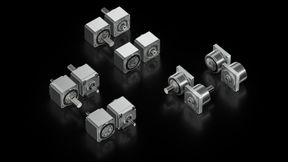
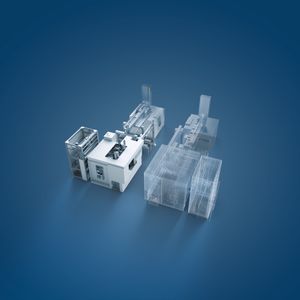
Festo is partnering with Nvidia to develop precise digital simulation models. The company’s goal is to extend the quality standards of its own hardware to the virtual environment, thereby paving the way for “Physical AI” in industry. To test complex machine processes even before physical setup, Festo will rely on the open simulation framework Nvidia Isaac Sim and Omniverse libraries in the future. In doing so, the company systematically compares real laboratory measurements with simulated data to accurately replicate the dynamic behavior of the components. “This collaboration is a milestone for industrial automation,” emphasizes Festo CTO Prof. Dr. Tomas Smetana. The goal is to create virtual environments that users can trust just as much as they trust real hardware. A first practical example is a joint project with ABB Robotics: The partners are linking the digital twin of a Festo handling system with the ABB Robot Studio software. This enables machine builders to commission their systems virtually, resolve integration issues early on, and drastically shorten development times. According to Festo, the company’s long-term goal is to bridge the gap between simulation and reality to such an extent that virtual concepts can be transferred to real machines with virtually no need for adaptation.
2. Dassault Systèmes Is Driving the Advancement of Industrial AI
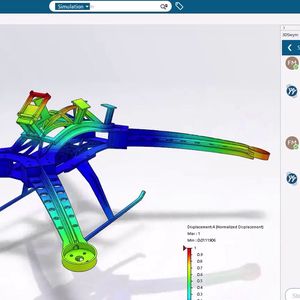
At GTC, Dassault Systèmes showcased new developments in the field of industrial artificial intelligence. The focus was on AI-powered “virtual twin factories” and virtual assistants that are expected to revolutionize processes in engineering, manufacturing, and science in the future. The “Virtual Companions” Aura, Leo, and Marie take on long-term industrial tasks, but always leave the final decision-making authority with humans. In engineering, the assistants evaluated design alternatives at machine speed. In manufacturing, Delmia applications enable end-to-end, fully automated production processes to be tested on a digital twin. In addition, the company demonstrated the design and simulation of entire “engineering AI factories” based on the Nvidia DSX architecture. The technologies showcased underscore the consistent advancement of the partnership between Dassault Systèmes and Nvidia, which was strengthened earlier this year, the company said.
3. Dell and Nvidia Are Driving the Adoption of Agentic AI
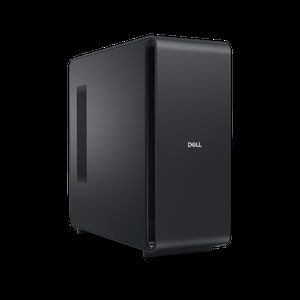
Dell Technologies announces far-reaching innovations for the “Dell AI Factory with Nvidia.” The goal is to securely transition agent-based AI from the testing phase to production. According to Dell, more than 6,500 companies are already using the platform. To ensure the security of autonomous AI workflows, Dell is expanding its software ecosystem. For example, Reflection’s Beam open-weight model is now validated. New integrations from partners such as Mistral, Dynatrace, and Red Hat will help manage AI resources efficiently and transparently at an enterprise scale in the future. Dell is also expanding its hardware portfolio: new “Deskside” solutions and Pro Precision workstations are available for developers. For data centers, Dell is introducing preconfigured container solutions (Modular Data Center) as well as new PowerEdge servers that are optimally tuned for demanding AI inference with Vera CPUs and Groq 3 LPUs.
4. PNY Introduces a Configurator for Digital AI Factories
Building AI infrastructure is a complex process. With its new “AI Factory Digital Twin Configurator,” PNY Technologies is now demonstrating a way to overcome this challenge. With this interactive application, companies can plan customized data centers for artificial intelligence and visualize them directly as 3D models. Users can easily access the tool via smartphone and select the type and number of servers they need. The system then automatically calculates the optimal architecture—tailored precisely for AI training, fine-tuning, or inference. The configured system is immediately displayed as a digital twin, giving users a realistic impression of the architecture and performance of the planned “AI Factory.” The technological foundation for the photorealistic visualization is provided by Omniverse and the new NVIDIA RTX PRO 6000 Blackwell Max-Q GPU. In addition to virtual planning, PNY, as a specialized distributor, also supplies the appropriate hardware for such AI data centers. The offering includes networking technologies as well as the latest Blackwell-generation NVIDIA accelerators, including the RTX PRO 6000 and 4500 (server and workstation editions). According to the company, this means it offers all the building blocks needed to bring demanding AI projects to life.
5. SUSE Strengthens Enterprise AI and Launches ISV Certification Program
SUSE is introducing new features for Private Enterprise AI that allow companies to retain full control over their data when deploying autonomous AI agents. At the core of this is the integration of the NVIDIA OpenShell reference architecture into the “SUSE AI Factory with NVIDIA.” The new “SLES for NVIDIA” operating system serves as the foundation. It utilizes a zero-trust architecture, continuously monitors the agents’ data traffic, and blocks unauthorized requests to guarantee absolute data sovereignty. A real-world example comes from the Ministry of Finance of the Mexican state of Guanajuato, which is currently testing the platform for smart administrative services. Another key component is the new, two-tier ISV certification program. With the “Ready for” and “Certified for” tiers, SUSE ensures that third-party software integrates seamlessly with its own AI platform. The framework simplifies the validation of partner technologies, eliminates integration barriers, and guarantees clear support responsibilities. This allows customers to transition from testing to enterprise-wide production operations with significantly greater confidence. A new partnership with Fujitsu to deliver hybrid quantum intelligence rounds out the expanded portfolio.
Date: 08.12.2025
Naturally, we always handle your personal data responsibly. Any personal data we receive from you is processed in accordance with applicable data protection legislation. For detailed information please see our privacy policy.
Consent to the use of data for promotional purposes
I hereby consent to Vogel Communications Group GmbH & Co. KG, Max-Planck-Str. 7-9, 97082 Würzburg including any affiliated companies according to §§ 15 et seq. AktG (hereafter: Vogel Communications Group) using my e-mail address to send editorial newsletters. A list of all affiliated companies can be found here
Newsletter content may include all products and services of any companies mentioned above, including for example specialist journals and books, events and fairs as well as event-related products and services, print and digital media offers and services such as additional (editorial) newsletters, raffles, lead campaigns, market research both online and offline, specialist webportals and e-learning offers. In case my personal telephone number has also been collected, it may be used for offers of aforementioned products, for services of the companies mentioned above, and market research purposes.
Additionally, my consent also includes the processing of my email address and telephone number for data matching for marketing purposes with select advertising partners such as LinkedIn, Google, and Meta. For this, Vogel Communications Group may transmit said data in hashed form to the advertising partners who then use said data to determine whether I am also a member of the mentioned advertising partner portals. Vogel Communications Group uses this feature for the purposes of re-targeting (up-selling, cross-selling, and customer loyalty), generating so-called look-alike audiences for acquisition of new customers, and as basis for exclusion for on-going advertising campaigns. Further information can be found in section “data matching for marketing purposes”.
In case I access protected data on Internet portals of Vogel Communications Group including any affiliated companies according to §§ 15 et seq. AktG, I need to provide further data in order to register for the access to such content. In return for this free access to editorial content, my data may be used in accordance with this consent for the purposes stated here. This does not apply to data matching for marketing purposes.
Right of revocation
I understand that I can revoke my consent at will. My revocation does not change the lawfulness of data processing that was conducted based on my consent leading up to my revocation. One option to declare my revocation is to use the contact form found at https://contact.vogel.de. In case I no longer wish to receive certain newsletters, I have subscribed to, I can also click on the unsubscribe link included at the end of a newsletter. Further information regarding my right of revocation and the implementation of it as well as the consequences of my revocation can be found in the data protection declaration, section editorial newsletter.
6. An Overview of Nvidia's New Products
With the Open Shell reference architecture, NVIDIA provides a secure foundation for developing and monitoring AI agents across the entire enterprise infrastructure. The architecture is based on modern hardware (Vera Rubin, Vera CPUs, BlueField-4 DPUs) and enables security directly at the chip level through NVIDIA Sentry. It scales all the way to the edge, supports common Linux and Windows environments, and is already being used by industry leaders such as AWS, Microsoft, OpenAI, SAP, and Dell to secure their agent deployments.
The company is enhancing its open-source Agent Toolkit with new tools to control AI agents more securely and better integrate them with enterprise data. Among the most important new features are the Kumo AI model family and the “Nvidia Agent Knowledge Foundation.” The latter enables agents to use internal data for analysis and predictions without having to move data or change existing governance rules. A technological highlight of the Foundation is the new Auto-Ontology library: It automatically translates complex raw data into tangible business concepts (such as customers or orders) and maps their relationships. The expanded toolkit is complemented by proven building blocks such as the secure runtime environment OpenShell, agent blueprints (NemoClaw), and the CUDA-X libraries.
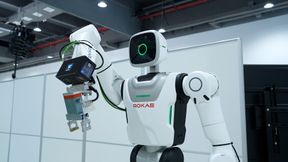
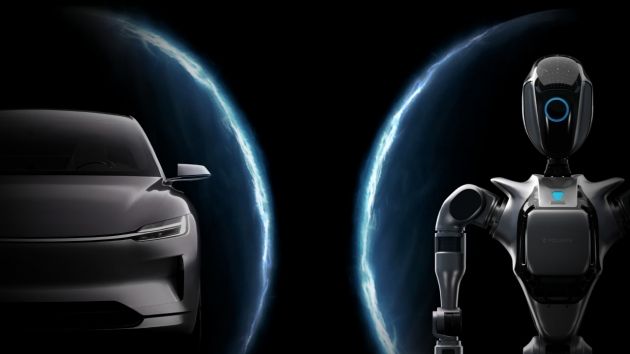
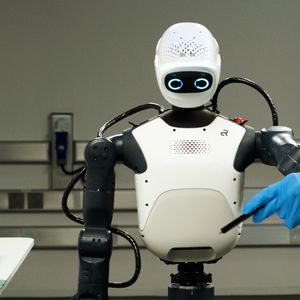
Nvidia is significantly expanding its Isaac robotics development platform and, in collaboration with Agile Robots, is introducing a new reference platform for research and development: the Agile ONE SN humanoid robot. The goal is to unify the often highly fragmented tools for simulation, training, and deployment, thereby reducing setup times from weeks to just a few days. The robot, which stands 1.40 meters (4 feet 7 inches) tall and weighs 40 kilograms (88 pounds), is powered by the Jetson Thor platform, which handles inference and real-time control directly on the device with over 2,000 teraflops of performance. It comes preconfigured with the Isaac Groot AI base model right out of the box. A mechanical highlight is the pair of highly sensitive “WUJI Hand 2” five-fingered hands, which—thanks to tactile sensors and 20 degrees of freedom—enable highly complex manipulations. In the future, the system will be safeguarded by the Halos robotics safety system.
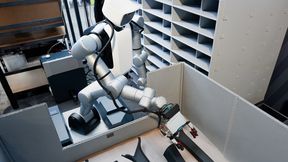
The robotics ecosystem has been expanded to include key tools designed to dramatically accelerate the training and deployment of autonomous systems. The “SimReady Central Library,” featuring over 2,000 assets, and the “Human 1M Dataset” (including 3D hand tracking) are now available on the Hugging Face platform for building virtual training environments. The now generally available open-source framework Isaac Lab 3.0 enables scalable multi-GPU training of AI agents, while the new runtime framework Isaac OS provides deterministic real-time control of the finished robots. These new features are complemented by three open-source reference workflows for the DGX Station—including one for fine-tuning Groot 1.7 models—as well as the full-stack security platform Halos, which ensures the safe real-world deployment of autonomous systems.