For years, there was an unwritten rule in the People’s Republic of China that the fewer buttons and switches a car had, the smarter it was. The smartest models had none at all. A huge touchscreen in the center of the dashboard had to handle everything. Now, manufacturers are gradually bringing back the buttons.
For years, the trend in cars was to have fewer buttons and ever-larger displays. Now, a shift is taking place in China: buttons are making a comeback.
(Image: Freely licensed on Pixabay)
"Carmakers are bringing back physical buttons" was a trending topic on Chinese social media in August, according to the Chinese automotive portal Qiche Gongshe. Mercedes-Benz, Volkswagen, BYD, and Xiaomi have reportedly reintroduced physical controls for frequently used functions. Reporters have also spotted a similar shift in interior design at Audi in China. The brand is moving away from giant screens and back toward buttons, dials, and high-quality materials, writes the industry newspaper Zhongguo Qiche Bao.
Volkswagen has also decided that all new models starting in 2026 will come standard with physical controls for frequently used functions. BMW, as well as the Korean and Japanese brands, never did away with the buttons for the air conditioning and volume in the first place. And according to media reports, Geely, BYD, Changan, and Chery have gradually reintroduced buttons in their new models.
No Buttons, Lower Costs
The trend toward buttonless cockpits began with the launch of the Tesla Model S in China in 2012. At the time, its massive central display became—virtually overnight—the quintessential symbol of the smart car. China’s automakers followed suit. Screen size, the number of displays, and the elimination of buttons became the benchmarks by which the industry measured a car’s intelligence. Those who still installed buttons were sometimes labeled “old-fashioned” or “not smart enough.”
It was even cheaper to do away with the buttons. Touch-sensitive buttons cost only about half as much to manufacture as conventional switches, Ferrari CEO Benedetto Vigna revealed in an interview in March, according to Qiche Gongshe. Tools for the switches, wiring harnesses, and endurance testing were no longer needed.
But now the tide is turning again. While touchscreen-only solutions may create a futuristic impression and lower hardware costs, they lack haptic feedback, argues Gu Jianmin, chief technology officer at Valeo China, in an interview with the Chinese automotive newspaper. Yet that is precisely what is useful for operating the air conditioning or radio by feel. Anyone who has turned the ventilation knob a thousand times can find it without looking. A menu item on the third level of a touchscreen, on the other hand, requires you to take your eyes off the road every single time.
Haptic Feedback Is Indispensable
No matter how good the software is or how large the screen is, the tactile feedback provided by ergonomically designed controls remains irreplaceable, along with the practiced movements stored in muscle memory, experts say. Proponents of physical buttons argue that replacing them with multi-level digital menus or voice controls that are not yet fully developed has also created new security risks.
Simulation tests conducted by the European testing organization Euro NCAP are frequently cited in this debate. To turn on the hazard lights at highway speeds in an emergency, drivers using a physical button took an average of 1.2 seconds, whereas those using a touchscreen took 4.7 seconds. This 3.5-second difference could increase the risk of a collision by 80 percent.
Buttons Reduce the Risk of Distraction
Similar findings were also reported in the U.S. According to a study by the U.S. National Highway Traffic Safety Administration (NHTSA), drivers took their eyes off the road for an average of eight seconds when using a touchscreen, compared to half a second when using physical buttons.
Another risk is that a frozen or malfunctioning screen could also cause the connected hazard lights or windshield wipers to stop working.
The government in Beijing now plans to mandate the use of buttons for certain functions. The Chinese Ministry of Industry and Information Technology (MIIT) has drafted a mandatory national standard with the lengthy title “Symbols for Controls, Indicators, and Tell-tales of Motor Vehicles,” reports the Chinese automotive portal Wangtongshe. Under this standard, 19 key driving functions are to be assigned their own physical controls, including turn signals, hazard lights, windshield wipers, and gear selection. According to the draft, the list also includes the horn, power windows, windshield de-icing, the emergency call system, and the power-off switch for the electric drive.
Date: 08.12.2025
Naturally, we always handle your personal data responsibly. Any personal data we receive from you is processed in accordance with applicable data protection legislation. For detailed information please see our privacy policy.
Consent to the use of data for promotional purposes
I hereby consent to Vogel Communications Group GmbH & Co. KG, Max-Planck-Str. 7-9, 97082 Würzburg including any affiliated companies according to §§ 15 et seq. AktG (hereafter: Vogel Communications Group) using my e-mail address to send editorial newsletters. A list of all affiliated companies can be found here
Newsletter content may include all products and services of any companies mentioned above, including for example specialist journals and books, events and fairs as well as event-related products and services, print and digital media offers and services such as additional (editorial) newsletters, raffles, lead campaigns, market research both online and offline, specialist webportals and e-learning offers. In case my personal telephone number has also been collected, it may be used for offers of aforementioned products, for services of the companies mentioned above, and market research purposes.
Additionally, my consent also includes the processing of my email address and telephone number for data matching for marketing purposes with select advertising partners such as LinkedIn, Google, and Meta. For this, Vogel Communications Group may transmit said data in hashed form to the advertising partners who then use said data to determine whether I am also a member of the mentioned advertising partner portals. Vogel Communications Group uses this feature for the purposes of re-targeting (up-selling, cross-selling, and customer loyalty), generating so-called look-alike audiences for acquisition of new customers, and as basis for exclusion for on-going advertising campaigns. Further information can be found in section “data matching for marketing purposes”.
In case I access protected data on Internet portals of Vogel Communications Group including any affiliated companies according to §§ 15 et seq. AktG, I need to provide further data in order to register for the access to such content. In return for this free access to editorial content, my data may be used in accordance with this consent for the purposes stated here. This does not apply to data matching for marketing purposes.
Right of revocation
I understand that I can revoke my consent at will. My revocation does not change the lawfulness of data processing that was conducted based on my consent leading up to my revocation. One option to declare my revocation is to use the contact form found at https://contact.vogel.de. In case I no longer wish to receive certain newsletters, I have subscribed to, I can also click on the unsubscribe link included at the end of a newsletter. Further information regarding my right of revocation and the implementation of it as well as the consequences of my revocation can be found in the data protection declaration, section editorial newsletter.
The standard is set to take effect in July 2027 for all newly manufactured vehicles. As with previous regulatory actions by Chinese lawmakers—such as those regarding recessed door handles—the focus here is clearly on safety.
The Coexistence of Buttons and Digital Controls
He sees the partial return of buttons “as the entry of smart cockpits into a new stage of development,” Yang Chao, head of interior design at Dongfeng’s Shanghai Design Center, told Zhongguo Qiche Bao. “A more rational phase has begun,” commented other industry observers.
However, no one expects a complete return to the analog world in the cockpit. Rather, as most analysts agree, buttons and digital controls will coexist in the future. Furthermore, artificial intelligence is once again rapidly changing the way people interact with vehicles. It’s still too early to say where this journey will ultimately lead. What is clear, however, is that fans of real buttons have weathered a long lean period.



:quality(80)/p7i.vogel.de/wcms/9e/23/9e23111e49d73012e9e3b7c69428ad5c/0134019347v1.jpeg "The Dominant VA45 high-helix tap from Bass, made of lead-free brass. The long chips, which result from the absence of lead, are clearly visible. (Image:Bass, Inc.)")
:quality(80)/p7i.vogel.de/wcms/1d/09/1d0999956ef87709b72ab1d0402ba207/csf-minis-gruppe-final-01-outputv1.jpeg "Since mid-2026, Harmonic Drive has been offering its CSF Mini gearheads in size 7 as well, in six variants designed for different installation scenarios. (Source: Harmonic Drive)")
:quality(80)/p7i.vogel.de/wcms/ab/08/ab08675922c3a7edea45128248b45b00/0133857009v1.jpeg "In the aerospace industry—one of the most demanding sectors of all—the Shanghai-based company TOPNC has already made a name for itself. (Image:TOPNC)")
:quality(80)/p7i.vogel.de/wcms/ff/48/ff48b1154746e79128935f28bd73ba0e/0113143253v1.jpeg "In our China Market Insider, we regularly provide you with relevant information straight from China. (Image:© Eisenhans - stock.adobe.com)")
:quality(80)/p7i.vogel.de/wcms/6e/bb/6ebb687f573be847aa611b413c6a33b1/0134094461v1.jpeg "From left: Sepp Hochreiter, founder of Nxai and AI researcher, and David Reger, founder and CEO of Neura Robotics, are excited about their collaboration on Physical AI. (Image:Neura)")
:quality(80)/p7i.vogel.de/wcms/89/01/890193a30c52ffd4811d18db82170952/0113143253v1.jpeg "In our China Market Insider, we regularly provide you with relevant information straight from China. (Image:© Eisenhans - stock.adobe.com)")
:quality(80)/p7i.vogel.de/wcms/6b/8a/6b8ac7cd85db2d1d1f6ab30957648711/schaeffler-news-taicanglighthouse6v1.jpeg "At the Lighthouse Factory, robots assemble linear and rotary actuators, among other components. (Source: Schaeffler)")
:quality(80)/p7i.vogel.de/wcms/4f/5a/4f5a2417df55dae5967e90b331e0bbc5/physical-ai-robotics-ariv1.jpeg "With new hardware and software solutions, the productive use of AI in industry is becoming increasingly prominent. (Source: Nvidia)")
:quality(80)/p7i.vogel.de/wcms/c3/68/c368b4f6821557ec497c64bc17fe9f8d/adobestock-2051843806--kaliel-stock-adobe-com-ki-generiertv1.jpeg "To truly harness the full potential of virtual product development, teams and management must radically change their mindset. (Source: © kaliel – stock.adobe.com_AI-generated)")
:quality(80)/p7i.vogel.de/wcms/a3/c1/a3c19e028b66a6fd7c373ab94981631d/paprika-gripperv1.jpeg "For the final, additively manufactured gripper base, SoftGripping chose PA 2200, a material based on polyamide 12 (PA12). It offers balanced mechanical properties and high load-bearing capacity, making it ideal for robust gripper solutions with integrated pneumatics. (Source: SoftGripping GmbH)")
:quality(80)/p7i.vogel.de/wcms/51/b8/51b8e08d2105fdd9952aff385f154192/graphic-2-adma1v1.png "The new surface hardening process enhances the performance of corrosion-resistant alloys by improving their tribological and mechanical surface properties, while preserving the properties of the base material. (Source: Bodycote)")
:quality(80)/p7i.vogel.de/wcms/96/ef/96effc239916cb7e0f396ab75627b8c0/image-space-testingv1.jpeg "Two scientists in front of a vacuum chamber used for testing: As technical instruments for spaceflight become more sensitive, the test facilities are becoming a critical system. (Source: Busch Group)")
:quality(80)/p7i.vogel.de/wcms/4c/61/4c61e3d5582715f2cadafc911480a20a/0132455124v1.jpeg "Mercedes-Benz has announced that it is moving away from its platform-based manufacturing strategy. Management expects a modular design concept to deliver greater benefits... (Image:Mercedes-Benz)")
:quality(80)/p7i.vogel.de/wcms/0d/14/0d14c9be5fc47bc256002ce3df435f21/keb-automation-drive-controller-marinev1.jpeg "Certified for ships, offshore applications, and more: the Combivert F6 Drive Controllers from KEB Automation. (Source: KEB Automation / Miss Irine)")
:quality(80)/p7i.vogel.de/wcms/ba/d3/bad3d62389a59fe3cdbac386a0dce64b/0134098250v1.jpeg "Following initial tests with its robotaxis in Europe, Pony.ai now plans to bring robot trucks to Europe as well. (Image:Pony.ai)")
:quality(80)/p7i.vogel.de/wcms/78/d1/78d124651f6149aa9f33913fc00ef98a/bertrandt-standort-tschechienv1.jpeg "Bertrandt has opened a new facility in the Czech Republic—near Škoda. (Source: Bertrandt)")
:quality(80)/p7i.vogel.de/wcms/27/47/27472d923d2d60f883a5682cb7987558/0134050215v1.jpeg "China's semiconductor industry: At the China International Industry Fair (CIIF) in Shanghai, the chip industry was given its own exhibition area for the first time in 2026. More than 300 companies showcased their technologies and solutions for industrial manufacturing at the “IC Ecosystem Show.” (Image:CIIF)")
:quality(80)/p7i.vogel.de/wcms/bc/20/bc2034a1ba033f00e539d91bcc70e403/bopla-bonext-1-rgbv1.jpeg "A translucent base allows for ambient lighting, either as a design feature or to visually indicate status. (Source: Bopla)")
:quality(80)/p7i.vogel.de/wcms/cd/23/cd239aa506b3ace30e62f44c83fa31ca/0134051508v1.jpeg "Figure 1: Schematic representation of the DAB (Dual Active Bridge) topology. (Image:Texas Instruments)")
:quality(80)/p7i.vogel.de/wcms/8b/35/8b35660420abba32fb891a4c5cc42fbd/0134018092v1.jpeg "Long-range UVC LED with lens and reflector: Close-up of a square LED with a transparent, dome-shaped lens on a dark base plate. The hermetically sealed housing ensures greater reliability and durability under demanding environmental conditions. (Image:FBH_Schurian)")
:fill(fff,0)/p7i.vogel.de/companies/69/de/69de1b7403b0d/simtos-logo.jpeg "simtos-logo (SIMTOS)")
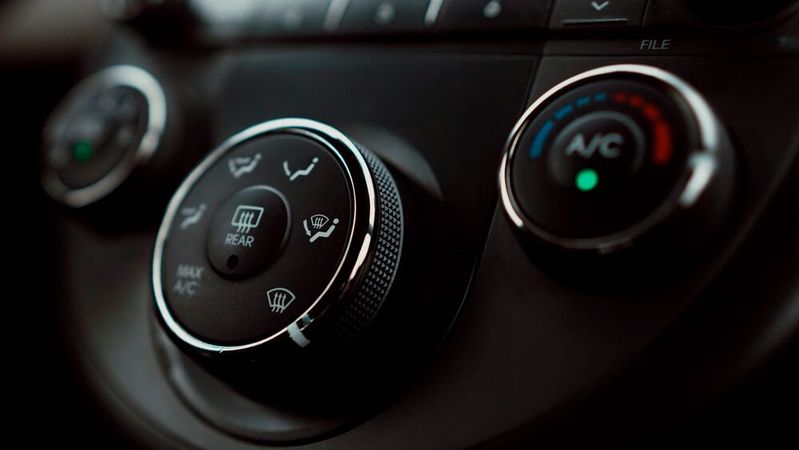
:quality(80)/p7i.vogel.de/wcms/e8/1f/e81f2bd61d820a0cf982dd3831f273dd/0129511298v1.jpeg "In China, certain functions in new cars will once again be directly accessible via haptic input—without a screen. (Image:BYD)")
:quality(80)/p7i.vogel.de/wcms/ba/b7/bab7bfd052f35da3c39388508faa350e/0129851977v1.jpeg "The third generation of the Mazda CX-5 scores above all with its inner values. (Image:Mauritz - VCG)")