What are the most important criteria for selecting connectors? What technical requirements are placed on power and data transmission? What regional differences exist in the use of online tools in the design process?
Connectors: How online tools help design in better connectors.
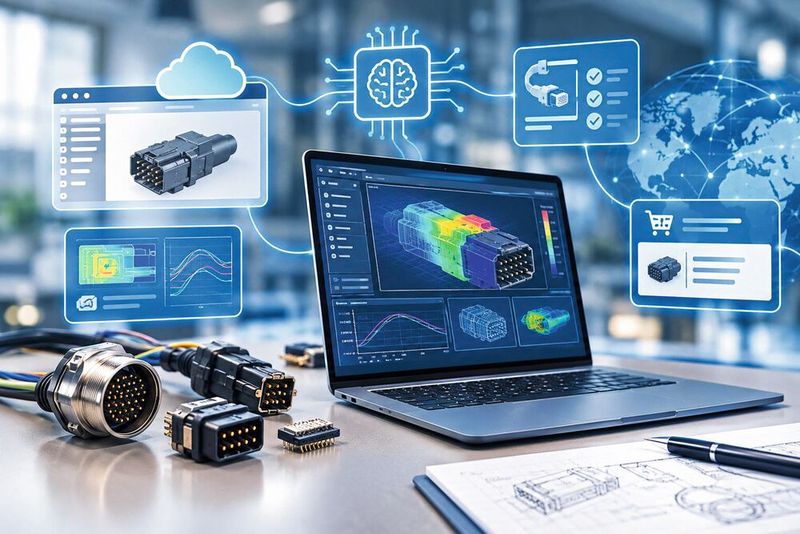
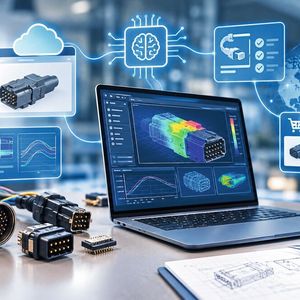
(Image: DALL-E / AI-generated)
An essential part of electronics development is choosing reliable connectors for power, signal, and data transmission. Without connectors that ensure sufficient reliability, there is a risk that the design will fail in practice.
There are many potential causes of failure that development teams must safeguard against. Vibrations, shocks, humidity, and temperature all play an important role, especially in industries such as automation technology or defence. External and internal system disturbances can impair signal integrity, causing the system software to fail at seemingly random intervals.
Gallery
There are also less technical reasons why the choice of a connector may be suboptimal. Supply chain bottlenecks and delays can mean that an OEM or ODM cannot meet demand, potentially resulting in orders being lost to competitors. In addition to selecting a technically suitable connector, the development team must also ensure how easily components can be sourced when needed.
In addition to these requirements, the design team responsible for selection is under time and cost pressure in order to secure a competitive advantage. Without effective design support, tight development schedules can lead to the selection of a suboptimal connector and a faulty layout.
Increasing Use of Modern Tools
To achieve the desired reliability throughout the entire life cycle despite short development times, developers and procurers resort to external support and novel tools to identify procurement options. The options range from manufacturer-provided online design tools to AI and 3D printing.
These services, tools and techniques accelerate the development process from component selection through to the testing phase. Two surveys recently published by connector manufacturer Harwin underscore the increasingly important role that online tools and digital technologies play in providing this support.
As part of the two surveys, a broad cross-section of European and North American developers, purchasers, and executives involved in specifying, designing, and sourcing interconnect technology were surveyed. This identified what types of design tools they use and which of these are most important for their projects. The industries ranged from aerospace engineering and telecommunications to industrial and automotive. The surveys highlighted regional differences in attitudes, but often identified shared trends.
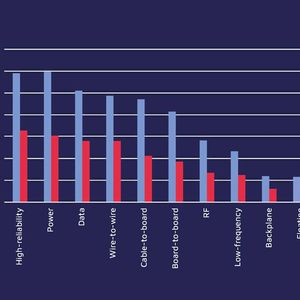
The internet proves to be a reliable source of information and data on connector selection and design-in. Professionals use various information sources when searching for connectors for a design. They often turn to connector distributors, with a considerable number also relying on sales and product teams, the media, as well as independent component databases.
In addition to the technical suitability of the products, easy procurement is also important for developers. On average, respondents in both Europe and North America rated aspects such as market availability, availability of second sources, supplier support, and short delivery times at more than 3.5 out of a possible 5 points in terms of their importance.
The Hurdles in Procurement
In view of these requirements, professionals consider certain aspects of online selection and procurement to be obstructive. Respondents in North America pointed to problems with inconsistent product documentation provided by suppliers. This makes it difficult to compare components with one another or to ensure their compatibility with automated manufacturing processes.
For supplier and retailer websites, it is therefore more important than ever to go beyond merely providing product data and to offer well-founded information, design guidelines, and analysis tools. Together, these can simplify and accelerate the identification of suitable products and make comparisons easier.
The surveys showed that developers and buyers are increasingly turning to online tools, which are more and more often based on AI. This makes it easier to capture key product characteristics before individual data sheets have to be reviewed in detail. Well-founded comparisons are therefore possible at a very early stage.
Date: 08.12.2025
Naturally, we always handle your personal data responsibly. Any personal data we receive from you is processed in accordance with applicable data protection legislation. For detailed information please see our privacy policy.
Consent to the use of data for promotional purposes
I hereby consent to Vogel Communications Group GmbH & Co. KG, Max-Planck-Str. 7-9, 97082 Würzburg including any affiliated companies according to §§ 15 et seq. AktG (hereafter: Vogel Communications Group) using my e-mail address to send editorial newsletters. A list of all affiliated companies can be found here
Newsletter content may include all products and services of any companies mentioned above, including for example specialist journals and books, events and fairs as well as event-related products and services, print and digital media offers and services such as additional (editorial) newsletters, raffles, lead campaigns, market research both online and offline, specialist webportals and e-learning offers. In case my personal telephone number has also been collected, it may be used for offers of aforementioned products, for services of the companies mentioned above, and market research purposes.
Additionally, my consent also includes the processing of my email address and telephone number for data matching for marketing purposes with select advertising partners such as LinkedIn, Google, and Meta. For this, Vogel Communications Group may transmit said data in hashed form to the advertising partners who then use said data to determine whether I am also a member of the mentioned advertising partner portals. Vogel Communications Group uses this feature for the purposes of re-targeting (up-selling, cross-selling, and customer loyalty), generating so-called look-alike audiences for acquisition of new customers, and as basis for exclusion for on-going advertising campaigns. Further information can be found in section “data matching for marketing purposes”.
In case I access protected data on Internet portals of Vogel Communications Group including any affiliated companies according to §§ 15 et seq. AktG, I need to provide further data in order to register for the access to such content. In return for this free access to editorial content, my data may be used in accordance with this consent for the purposes stated here. This does not apply to data matching for marketing purposes.
Right of revocation
I understand that I can revoke my consent at will. My revocation does not change the lawfulness of data processing that was conducted based on my consent leading up to my revocation. One option to declare my revocation is to use the contact form found at https://contact.vogel.de. In case I no longer wish to receive certain newsletters, I have subscribed to, I can also click on the unsubscribe link included at the end of a newsletter. Further information regarding my right of revocation and the implementation of it as well as the consequences of my revocation can be found in the data protection declaration, section editorial newsletter.
As AI-powered search functions gain in importance, it is reasonable to assume that the links provided lead to manufacturers’ and distributors’ websites—because that is exactly where developers and buyers look for the required components. Users who rely on AI-powered search functions are often actively looking for solutions to design challenges, not just for pure product data.
More than half of the respondents in North America said they use online design tools provided by vendors to make a selection. In Europe, the usage rate is somewhat lower at 37%. Professionals value these tools not only for product comparison and product selection, but also because they make it easier to download design files for EDA tools. The ability to adjust and simulate configurations using the online tools also proved popular.
AI and Digital Twins are Making Their Way in
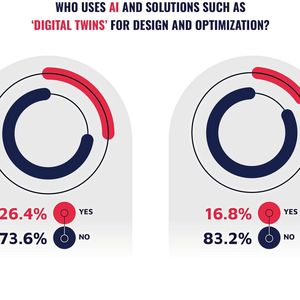
Electronics developers are increasingly turning to simulation tools and AI support in the areas of design, prototyping, and validation. More than a quarter of respondents in North America said they use AI, digital twins, or both in their projects. Usage has increased rapidly.
The number of North American users who reported using AI or digital twins has increased by 50% compared to 2025. In Europe, the adoption of AI and digital twins is progressing more slowly. Just under 17% said they are now using these technologies. However, the tools used cover a broad spectrum.
In addition to use in the selection and design process, some also use AI for predictive maintenance in order to anticipate component failures in the field. Key application areas of AI include the ability to optimize layouts before prototype creation to eliminate potential issues as quickly as possible. In North America, professionals see AI as an aid in the selection and optimization of connectors.
Digital twins make it possible to assess the functionality of a design even before the first prototype is built. Specialists in both Europe and North America pointed to the need to predict the performance and reliability of connectors under various electrical, thermal, and mechanical loads.
A digital twin is an effective tool for this purpose. It captures information about the design and its target environments. Simulations using the combined data sources can replicate the behavior of physical systems in the field. They help verify assumptions about the design’s resilience to extreme conditions and aging—something that is difficult to simulate in the laboratory.
Some respondents in Europe pointed out that the tools can also help optimize and increase manufacturing throughput. Changing the order in which components are assembled can significantly affect throughput on pick-and-place machines. For example, high-profile components, including connectors, can slow down SMT placement because the placement head is forced to follow a slower movement path.
Tools that create a digital twin of the assembled system can highlight these obstacles as well as other sequencing options that lead to excessive transport times within manufacturing. Another important use case is the automated creation of tests to speed up validation and verification.
3D Printing is Gaining Importance
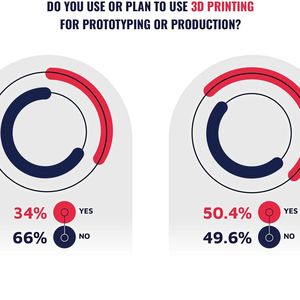
While the use of AI in Europe is currently lower than in North America, more than half of respondents said that they already use 3D printing or plan to use it for the production of prototypes or series parts. In North America, acceptance of 3D printing is lower: Slightly more than a third of respondents said they already use this technology or plan to do so.
There are several reasons for the growing use of 3D printing. One of the most important is its support for rapid prototyping. This goes hand in hand with another key concern highlighted in the two surveys: the ability to quickly obtain connector samples from suppliers and distributors. Fast sample delivery was the most important criterion for respondents in Europe, ranking just ahead of local technical support and the availability of complementary technologies from key suppliers.
Experts see 3D printing as a way to speed up design verification. It is easier to check the extent to which a design meets fit, form, and function requirements by creating models of components without having to wait for the production of cast or machined parts. 3D printing can even be transferred directly into production. Some of those surveyed cited 3D printing as a way to support low-volume manufacturing before the team has to commit to expensive injection molds and other equipment for mass production.
These results show how important it is for suppliers to stay up to date with changes in design and verification workflows. They need to align their strategies so that they provide their customers with exactly the support they need. Harwin has introduced several tools and services aimed at optimizing the selection, design-in, and qualification processes.
The company provides virtual models of its connectors for download and offers design tools such as a cable configurator. In addition to these tools, Harwin provides real-time information on distributors’ inventory to give details on product availability. In a virtual showroom, you can experience this immersively via augmented reality. The result is improved customer service and simplified design-in—in an environment in which numerous factors are making the work increasingly more complex.(kr)