Waste is turned into valuable raw materials. Modern briquetting systems reduce disposal costs and protect the environment. Six practical examples show the benefits of a functioning circular economy.
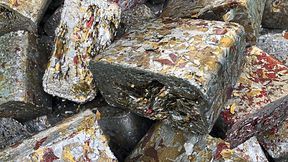
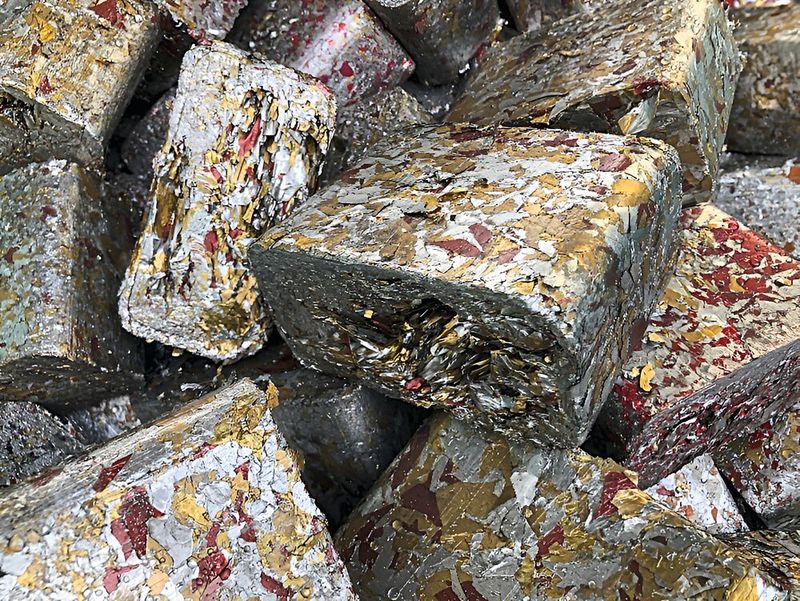
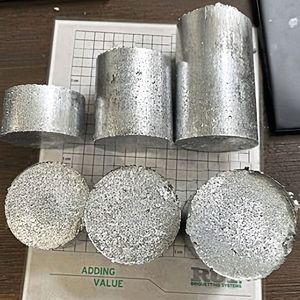
New source of revenue for Swiss Leuthold Mechanik AG: The aluminum punched grids from coffee capsule production are pressed into valuable briquettes by a briquetting line with four RUF machines.
(Image: RUF Maschinenbau GmbH & Co. KG)
Residual materials almost always arise wherever mechanical production takes place. They are still often regarded as waste. Yet there is so much more in them. Among successful companies, this realization is gaining ground worldwide. They unlock the value of these raw materials by installing individual briquetting presses or fully automated briquetting lines, thereby laying the foundation for an economical and environmentally friendly recycling cycle.
Switzerland: Perforated Grid from Coffee Capsule Production
Leuthold Mechanik AG (HLM) produces aluminum coffee capsules for several well-known brands on 35 stamping presses in Einsiedeln, Switzerland. In the process, so-called stamping grids are continuously generated as residual material, which disrupt the normal production flow. To change this and maximize the profitability of two-shift production, the company set itself the task of disposing of the residual materials as efficiently as possible.
After detailed discussions with the disposal specialist and RUF partner Hunkeler Systeme AG, the decision was made in favor of a fully automated, continuous system in which the punched scrap grids are shredded and pneumatically conveyed by vacuum to the central disposal station with filter and fan unit. There, three RUF R11 briquetting presses and an additional RUF RB5 compress the aluminum into compact briquettes. A special energy-saving concept with recirculation of the extracted air also reduces operating costs.
With this equipment, Leuthold Mechanik has not only achieved the primary goal—raising plant availability. The highly compacted briquettes also simplify logistics and are a sought-after recyclable material from which the company now earns money. By contrast, the company would have to pay for the disposal of uncompacted aluminum. Therefore, the investment paid for itself after a short time.
Bosnia and Herzegovina: Aluminum and Copper Cables
TT Kabeli d.o.o., founded in 2007, produces power cables in Bosnia and Herzegovina with more than 500 employees. The company places particular emphasis on sustainability and, through an efficient production process, ensures that as little waste as possible is generated. The production residues that still arise are processed in an initial recycling step into aluminium and copper granulate. In this loose form, however, the valuable metals are difficult to handle and market. High-quality briquetting plants were intended to provide a remedy here.
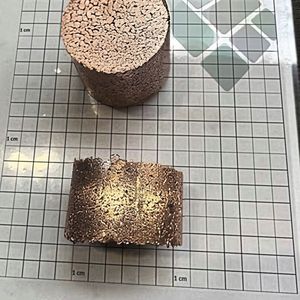
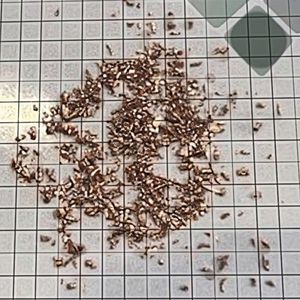
TT Kabeli’s requirement: The systems must achieve a throughput of around 400 kg/h of aluminum and 400 kg/h of copper. One possible solution: two presses with double-sided compaction. However, the RUF subsidiary RUF SE d.o.o., based in Radovljica (Slovenia), offered an even more economical solution with the RUF 55/3700/100D. This single briquetting system can be designed with two separate hoppers for both tasks. In production, the RUF system now achieves around 750 kg/h of aluminum—almost double the required amount. Copper compaction has also already been tested: In a pressing trial at RUF, at a compaction pressure of 5,200 kg/cm², briquettes with a density of 8.39 kg/l to 8.45 kg/l were produced, which is close to that of solid copper.
Slovenia: Aluminum with Bulk Densities of 0.063 kg/l to 0.392 kg/l
The use of a briquetting system at the company Talum, which manufactures a wide range of aluminum products in Slovenia, is also highly interesting. In production, chips from three different alloys are generated—with a wide range of bulk densities between 0.063 kg/l and 0.392 kg/l. The material for the briquetting press therefore changes frequently, but the briquette quality must remain consistent.
A special challenge that the RUF 15/3000/80 recommended by RUF SE meets perfectly. It automatically compensates for fluctuating bulk densities and, as needed, compacts by a factor of 6 to 35. As a result, it consistently produces briquettes with densities of 2.20 kg/l to 2.27 kg/l and achieves a throughput of up to 250 kg/h with heavier alloys and 150 kg/h with light, dry aluminum.
Date: 08.12.2025
Naturally, we always handle your personal data responsibly. Any personal data we receive from you is processed in accordance with applicable data protection legislation. For detailed information please see our privacy policy.
Consent to the use of data for promotional purposes
I hereby consent to Vogel Communications Group GmbH & Co. KG, Max-Planck-Str. 7-9, 97082 Würzburg including any affiliated companies according to §§ 15 et seq. AktG (hereafter: Vogel Communications Group) using my e-mail address to send editorial newsletters. A list of all affiliated companies can be found here
Newsletter content may include all products and services of any companies mentioned above, including for example specialist journals and books, events and fairs as well as event-related products and services, print and digital media offers and services such as additional (editorial) newsletters, raffles, lead campaigns, market research both online and offline, specialist webportals and e-learning offers. In case my personal telephone number has also been collected, it may be used for offers of aforementioned products, for services of the companies mentioned above, and market research purposes.
Additionally, my consent also includes the processing of my email address and telephone number for data matching for marketing purposes with select advertising partners such as LinkedIn, Google, and Meta. For this, Vogel Communications Group may transmit said data in hashed form to the advertising partners who then use said data to determine whether I am also a member of the mentioned advertising partner portals. Vogel Communications Group uses this feature for the purposes of re-targeting (up-selling, cross-selling, and customer loyalty), generating so-called look-alike audiences for acquisition of new customers, and as basis for exclusion for on-going advertising campaigns. Further information can be found in section “data matching for marketing purposes”.
In case I access protected data on Internet portals of Vogel Communications Group including any affiliated companies according to §§ 15 et seq. AktG, I need to provide further data in order to register for the access to such content. In return for this free access to editorial content, my data may be used in accordance with this consent for the purposes stated here. This does not apply to data matching for marketing purposes.
Right of revocation
I understand that I can revoke my consent at will. My revocation does not change the lawfulness of data processing that was conducted based on my consent leading up to my revocation. One option to declare my revocation is to use the contact form found at https://contact.vogel.de. In case I no longer wish to receive certain newsletters, I have subscribed to, I can also click on the unsubscribe link included at the end of a newsletter. Further information regarding my right of revocation and the implementation of it as well as the consequences of my revocation can be found in the data protection declaration, section editorial newsletter.
Croatia: Aluminum and Insulation Material Residues from Windows and Doors
The requirements for residual material processing at Adoro Haustüren GmbH, which manufactures windows and doors in Croatia, were even more demanding. This is because the production generates both aluminum profile offcuts with 0.469 kg/l as well as feather-light XPS insulation scraps with a bulk density of only 0.032 kg/l. For Adoro, however, it was important to be able to briquette both materials. When uncompressed, the bulky XPS in particular requires enormous storage and transport capacities. The aluminum scraps, in turn, are especially valuable.
The RUF subsidiary RUF SE ultimately delivered maximum flexibility with the RUF 5.5/2400/60x60. This system can briquette both residual materials and automatically adapts to whatever comes from production. The RUF 5.5 achieves a throughput of up to 120 kg/h with the aluminum remnants. If pure XPS is fed into the system, the throughput (with a volume reduction of more than thirtyfold) is about 40 kg/h. As a special feature, RUF installed a so-called emergency outlet on the opposite side of the line. The reason: if a peak volume of residual materials exceeds the press capacity, this keeps the line running—no backup, no downtime.
South Korea: Grinding Sludge with an Oil Content of over 65 Percent
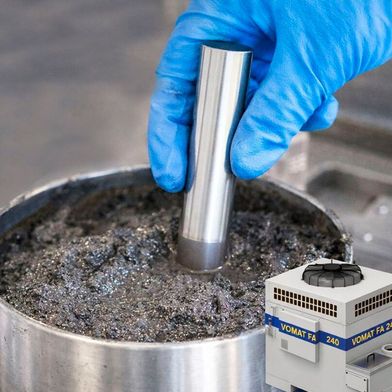
The South Korean parts manufacturer Posco Mobility Solution—a subsidiary of the steel group Posco—operates, among other things, a coil grinding line in its production. The grinding sludge generated in the process, with an oil content of over 65 percent, is expensive to dispose of, while valuable grinding oil is destroyed at the same time. For Posco Mobility, that was reason enough to take action in 2022.
The South Korean RUF partner GaNaMechatech took on the topic and implemented the project from engineering through commissioning. The particular challenge here: ordinary grinding sludge has an oil content of under 50 percent. At Posco Mobility, it was significantly higher at over 65 percent. The requirement was nevertheless clear: a maximum of 5 percent residual oil may remain in the briquette, so that more than 90 percent of the oil is recovered. This was achieved with a RUF 15/3000/100S as the centerpiece of the system, integrated into the existing production line. In other words: after the coil grinding machine, the grinding sludge runs via the filter system and a conveyor directly into the press. To design the RUF system for the extremely oil-rich material, an intermediate section of the press was specifically modified.
United Kingdom: Briquetting Plant Replacement without Production Stoppage
The UK-based UTM Limited has been compacting the aluminum chips generated in its production into compact briquettes for many years, using a RUF press. Due to increasing chip volumes, a new system was ordered—and, based on the good experience, once again from RUF. Key requirement: installing the briquetting press, which is integrated into the manufacturing process, must not interrupt ongoing production.
The British subsidiary of RUF Maschinenbau, RUF UK Ltd., ultimately met UTM’s requirements to their complete satisfaction. Since then, the new RUF 11/5000/60 has been running smoothly. However, the company did not want to part with the previous RUF machine. Instead, it remains on site as a backup and can be put into operation at any time during various maintenance or service work on the new system.