From
Tomas Hirschberger/SP-X | Translated by AI
5 min Reading Time
The third generation of the Q7 benefits technically and in terms of quality from the shared platform with the flagship Q9. This new self-confidence of the brand is particularly evident in the interior.
In the fall, Audi is unleashing the third generation of the Q7 SUV series.
(Image: Audi)
When the third generation of the Q7 rolls out this fall, it will remain the junior executive in the Audi family despite its length of over five meters (approx. 16.4 ft). The role of flagship will be taken on a few weeks later by the new Q9, which shares the same platform but adds a few more centimeters, measuring around 5.20 meters (approx. 17.1 ft). However, envy is unlikely between the two siblings. On the contrary, without the Q9 project, there might not have been a new Q7 at all. Shared development processes and extensive synergies in technology, electronics, and production likely made both SUVs economically viable in the first place.
And the Q7 benefits tremendously from this, not just under the hood, but also in areas where customers look and touch every day.
New Standard in Material Quality
You notice it right when getting in. For years, the Ingolstadt-based (Germany) company had to hear that they had lost their once-leading edge in material quality and craftsmanship. With the new Q7, this chapter seems to be over. Finally, the interior feels the way Audi customers have long missed.
Although the upper sections of the doors could use a bit more padding, high-quality materials, soft surfaces, and well-finished trims dominate. Rotary switches click with confidence again. In addition, immense body rigidity conveys the sense of quality that once elevated the brand to the ranks of Mercedes and BMW.
With Attention to Detail
This commitment is particularly evident in fine details that some competitors pay less attention to. For example, the steering wheel airbag cover is once again upholstered in leather, air vents hum quietly with electric operation, and even the two inductive MagSafe charging cradles for smartphones are fully lined with microfiber and ventilated. This prevents rattling noises and conveys the love for the product that one expects from a premium manufacturer.
The fact that the Q7 benefits massively from the upcoming Q9 on a technical level is evident in other areas as well. For example, in the cockpit architecture. Both share the new three-part panoramic display, including a passenger screen. The infotainment system operates significantly faster and more intuitively than before, and various backgrounds can be integrated (for an additional cost) via QR code, with ChatGPT supporting the voice assistant. Optionally, doors open electrically and close via "soft close"—thanks to the Q9.
Record-Sized Panoramic Roof
We also note the largest glass sliding roof Audi has ever offered, including PDLC shading of the nine elements—ranging from transparent to opaque—and 78 LEDs for customizable interior lighting. Matrix LED headlights with micro-LED technology are available as an optional extra, projecting information directly onto the road, and the OLED taillights can even communicate with other road users.
All these appealing features show that the Q7 was never primarily developed for Europe. Its most important market lies across the Atlantic. Since the introduction of the first generation in 2005, around 46 percent of all Q7 units produced have been sold in North America, another 22 percent in China, and only 18 percent in Europe. It’s no surprise, then, that space, comfort, luxury, and long-distance suitability remain the key qualities the new Q7 aims to deliver.
Impressive Space Provision
Here, the Seven from Ingolstadt (Germany) plays to its greatest strengths. It comes standard with five seats, but Audi can transform it into either a six-seater with two comfortable individual seats in the rear or a classic seven-seater for families. Thanks to the three-meter (approx. 9.8 ft) wheelbase, even taller passengers travel exceptionally comfortably in the second row, although the outer seats are noticeably narrow because the middle seat is wider. At the push of a button, all five rear seats fold down electrically. The cargo volume ranges from 670 liters to over two cubic meters (approx. 23.7 to over 70.6 cubic feet).
Date: 08.12.2025
Naturally, we always handle your personal data responsibly. Any personal data we receive from you is processed in accordance with applicable data protection legislation. For detailed information please see our privacy policy.
Consent to the use of data for promotional purposes
I hereby consent to Vogel Communications Group GmbH & Co. KG, Max-Planck-Str. 7-9, 97082 Würzburg including any affiliated companies according to §§ 15 et seq. AktG (hereafter: Vogel Communications Group) using my e-mail address to send editorial newsletters. A list of all affiliated companies can be found here
Newsletter content may include all products and services of any companies mentioned above, including for example specialist journals and books, events and fairs as well as event-related products and services, print and digital media offers and services such as additional (editorial) newsletters, raffles, lead campaigns, market research both online and offline, specialist webportals and e-learning offers. In case my personal telephone number has also been collected, it may be used for offers of aforementioned products, for services of the companies mentioned above, and market research purposes.
Additionally, my consent also includes the processing of my email address and telephone number for data matching for marketing purposes with select advertising partners such as LinkedIn, Google, and Meta. For this, Vogel Communications Group may transmit said data in hashed form to the advertising partners who then use said data to determine whether I am also a member of the mentioned advertising partner portals. Vogel Communications Group uses this feature for the purposes of re-targeting (up-selling, cross-selling, and customer loyalty), generating so-called look-alike audiences for acquisition of new customers, and as basis for exclusion for on-going advertising campaigns. Further information can be found in section “data matching for marketing purposes”.
In case I access protected data on Internet portals of Vogel Communications Group including any affiliated companies according to §§ 15 et seq. AktG, I need to provide further data in order to register for the access to such content. In return for this free access to editorial content, my data may be used in accordance with this consent for the purposes stated here. This does not apply to data matching for marketing purposes.
Right of revocation
I understand that I can revoke my consent at will. My revocation does not change the lawfulness of data processing that was conducted based on my consent leading up to my revocation. One option to declare my revocation is to use the contact form found at https://contact.vogel.de. In case I no longer wish to receive certain newsletters, I have subscribed to, I can also click on the unsubscribe link included at the end of a newsletter. Further information regarding my right of revocation and the implementation of it as well as the consequences of my revocation can be found in the data protection declaration, section editorial newsletter.
Just as impressive as the space is the way the Q7 moves. With confidence and the utmost ease. Not as softly rolling as a Mercedes GLE, but slightly sportier, more ambitious, yet still never demanding—always relaxing. Even when equipped with the massive 23-inch wheels. This is thanks in part to two different air suspension systems that Audi offers as standard. One is more comfort-oriented, while the other leans slightly more dynamic.
Those who prefer a more active driving style can opt for the sporty suspension, which lowers the body by three centimeters (approx. 1.2 in) and provides a firmer connection to the road without sacrificing long-distance comfort. At the same time, the body remains surprisingly stable even during quick direction changes. This is further enhanced, if desired, by an all-wheel steering system, where the rear wheels steer counter to the front wheels by up to five degrees. This not only reduces the turning circle but also makes the five-meter (approx. 16.4 ft) giant feel noticeably more agile than its dimensions would suggest.
In comfort mode, it will surely appeal most to comfort-loving Americans, though we find it too soft and less precise here. In dynamic mode, it is much more convincing with its more direct character.
Two Diesels, One Petrol Engine, and Possibly a Plug-In Hybrid
The Q7 is never short on power. At market launch, two three-liter six-cylinder TDIs are initially available. Later, a three-liter V6 gasoline engine with probably 270 kW/367 hp will follow, likely serving as the basis for the planned plug-in hybrid. Even stronger gasoline engines, such as the SQ7, are reserved for the US market for now due to emissions regulations.
With the TDIs, each paired with an eight-speed Tiptronic and permanent all-wheel drive, the Q7 forms a harmonious relationship. The more powerful variant delivers 220 kW/299 PS and 630 newton meters (approx. 465 lb-ft) of torque, while the base model achieves 180 kW/245 PS and 500 newton meters (approx. 369 lb-ft). Both engines feature the new MHEV-plus technology (Mild Hybrid), an advanced starter generator that primarily supports the drivetrain with 18 kW/24 PS during acceleration and helps reduce diesel consumption.
Smooth Running and No Turbo Lag
Even more remarkable, however, is the new electrically driven compressor. This component fundamentally changes the character of the diesel engines by eliminating turbo lag, as it generates boost pressure within milliseconds. The result is an unusually smooth torque delivery. The thrust kicks in virtually without delay and develops almost linearly—almost as seamlessly as in an electric car. The transition between electric boost and combustion engine feels nearly seamless.
Added to this is an impressive running refinement. Even under load, the six-cylinder engines remain astoundingly quiet. Only a sonorous hum penetrates the interior, and combined with excellent noise insulation, this creates long-distance comfort that can certainly compete with luxury sedans.
Of course, all of this comes at a price. Audi charges at least 87,900 euros (approx. 95,000 USD) for the base TDI, with the more powerful version starting at 90,500 euros (approx. 98,000 USD).



:quality(80)/p7i.vogel.de/wcms/21/b6/21b61c2ac1df28254fb0dad1574fb2d7/0132853015v1.jpeg "The rose-gold, TiAlSiN-based coating material InoxaCon contributes significantly to the stability and service life of HPTec's new RQR-350 milling tool. It enables safe and efficient automated processes in the manufacturing of surgical instruments. (Image:Cemecon)")
:quality(80)/p7i.vogel.de/wcms/d2/73/d273374d6347651e4e6200cf6061ea4e/0132860560v1.jpeg "Even in July, the flag of the Chinese economy did not flutter particularly briskly in the air. Read here what’s happening and why production in China is apparently declining ... (Image:AI-generated)")
:quality(80)/p7i.vogel.de/wcms/18/47/1847f131e3afda201d1dbb98ad0ecb04/0132826776v1.jpeg "Image 1: Difender armored steels from Dillinger stand out with top scores in ballistic testing and cold bending. Defense companies therefore readily choose them. They can be found, for example, in the armored vehicles Fuchs and GTK Boxer of the German Armed Forces. (Image: Dillinger)")
:quality(80)/p7i.vogel.de/wcms/1e/7d/1e7d651782e0e97b3efc25abf2b52350/img-3485v1.jpeg "The Siemens Energy employees attach balancing weights at the precisely calculated and adjusted angular position to achieve the best possible result. (Source: Schenck Rotec)")
:quality(80)/p7i.vogel.de/wcms/a7/38/a73840cb81da9dc3c503f4c04bf66b96/0132892768v1.jpeg "Unitree's IPO symbolizes the high expectations for humanoid robots and embodied AI. (Image:Dall-E / AI-generated)")
:quality(80)/p7i.vogel.de/wcms/1c/a5/1ca5e3ef5d834c3a42de8909c872e3c6/0132876444v1.jpeg "The autonomous transport system Active Shuttle marketed by Bosch Rexroth has been sold to Neura Robotics. (Image:Bosch Rexroth)")
:quality(80)/p7i.vogel.de/wcms/30/1a/301a1aa59e093d848b69e9ff7006b83e/image1v1.jpeg "Wireless switching devices offer advantages in numerous industrial applications – wherever wired communication reaches its limits (Image: Steute) (Image:)")
:quality(80)/p7i.vogel.de/wcms/a2/85/a285b12508af812e28b17be3482a736c/0132488872v1.jpeg "NIS2 is no longer an abstract requirement in the distant future for many industrial companies. (Image:AI-generated)")
:quality(80)/p7i.vogel.de/wcms/41/fc/41fc456ff1ff8f30807924663e8df127/img-0942v1.jpeg "In industrial additive manufacturing, the production strategy must influence the design from the very beginning. (Source: Materialise)")
:quality(80)/p7i.vogel.de/wcms/44/fe/44fe86a16c26c09bb363b3671bf0b930/0132847771v1.jpeg "CoreTechnologie (CT) points out that the 3D printing software 4D_Additive has been equipped with additional application possibilities. Here you can learn more about what the new version 1.8 can do – such as generating complex lattice structures or optimizing faulty data ... (Image:CT)")
:quality(80)/p7i.vogel.de/wcms/b4/f2/b4f2c272247f79c5e87334a6839f20cb/0132549860v1.jpeg "Morefire analysis: Many mechanical engineering websites focus on technical specs instead of customer benefits. Translating features into clear benefits increases visibility, inquiries, and competitiveness. (Image: ©peopleimages.com - stock.adobe.com)")
:quality(80)/p7i.vogel.de/wcms/b4/9a/b49aaad0500e06e253f7d75ecb77338a/adobestock-4840668--dani-kreienb-hl-stock-adobe-comv1.jpeg "Metal processing in 2026 will be more digital, automated, and data-driven – but not automatically easier. (Image:© Dani Kreienbühl - stock.adobe.com)")
:quality(80)/p7i.vogel.de/wcms/5b/88/5b88d94e6a43f2b857462cd1921f7386/0132281427v1.jpeg "The eTurbo solves a well-known turbocharger problem: by combining an exhaust gas turbocharger and a permanently excited synchronous motor into a highly integrated core assembly, the compressor achieves sufficient speed even when the exhaust energy is actually not yet sufficient. (Image: BorgWarner)")
:quality(80)/p7i.vogel.de/wcms/75/fe/75feffb63bc6275786606d78a8d797c4/0132901853v1.jpeg "Steyr Motors reports similar business results as last year. Here you can learn more about the details of the Austrian company's situation ... (Image:E-Steyr)")
:quality(80)/p7i.vogel.de/wcms/57/d2/57d2b75d884c18866b46e776126fb46b/org-blobs-user-response-file-output-dac07b02-0e97-4452-9a3a-26528da583b3-file-1787126178766-jpgv1.jpeg "The memory manufacturer CXMT has had an extremely successful IPO. Among the investors are several car manufacturers. (Image:KI-generiert)")
:quality(80)/p7i.vogel.de/wcms/d0/68/d0681c9d26012538a22ff5c103429612/0132875205v1.jpeg "Electric vehicles: Structure of the zone architecture in a modern vehicle. (Image:TI)")
:quality(80)/p7i.vogel.de/wcms/22/82/22826566c11220ed61efac5982fb94a2/0132896083v1.jpeg "Electrodes made from paper and copper paste deliver comparable signal quality to the established gold standard. They perform significantly better in all environmental impact analyses. (Image:Screentec)")
:quality(80)/p7i.vogel.de/wcms/c4/9f/c49f5b8173f678f7ef071355b1fbbd7c/yamu-jay-ai-generated-9088888v1.jpeg "As part of a strategic partnership, Siemens and Reinhausen are advancing the future of energy supply solutions for AI data centers. (Symbol image) (Source: pixabay / AI-generated)")
:quality(80)/p7i.vogel.de/wcms/28/20/28204a4592a69a8682bfbf9a8f7e1dc2/0132846993v1.jpeg "The health status of a lithium-ion battery changes with increasing aging. AI models can utilize characteristic changes in the charge and voltage curves to estimate the state of health. (Image:freely licensed)")
:quality(80)/p7i.vogel.de/wcms/90/dc/90dc332e30a3e4bd3ff77646ed0633b7/0132833369v1.jpeg "Through a compromised repository of the widely used open-source tool LiteLLM, attackers were able to capture several terabytes of data and login credentials. Security company CloudSEK concludes, after analyzing the data, that the attack conducted in March of this year affected more than 2,000 companies, including major players like Microsoft, Nvidia, AWS, and Deutsche Bahn. (Image:freely licensed)")
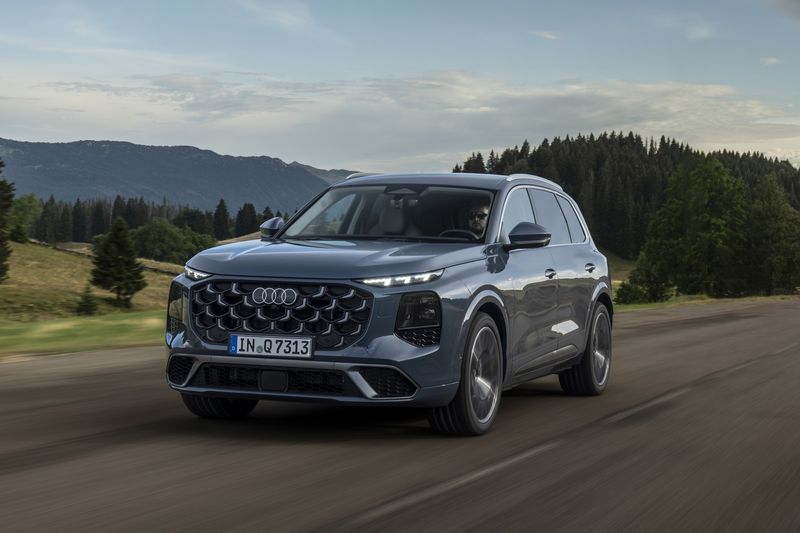
:quality(80)/p7i.vogel.de/wcms/39/75/3975cdd7d4ea96710800e9f6bd1f9fcb/q7-1006v1.jpeg "Thanks to optional all-wheel steering, the five-meter giant offers a moderate turning circle and drives noticeably more maneuverably.(Source: Audi)")
:quality(80)/p7i.vogel.de/wcms/91/79/91794eb31770562e3553227df11b156e/q7-1010v1.jpeg "Stylish OLED taillights give the Q7 a high-quality technical appearance.(Source: Audi)")
:quality(80)/p7i.vogel.de/wcms/7d/55/7d55ba3b5cf53592a84cf986f75fd35c/q7-1011v1.jpeg "Big opening and plenty behind it: The trunk can be expanded to well over two cubic meters.(Source: Audi)")
:quality(80)/p7i.vogel.de/wcms/9d/b4/9db4a7c3af983685566d42a20244e8ba/q7-1073v1.jpeg "The Q7 comes standard with three screens in the dashboard.(Source: Audi)")
:quality(80)/p7i.vogel.de/wcms/ef/d5/efd51deadaa11d27c590d660fd866d2c/0131935878v1.jpeg "The Deepal S05 PHEV has a system output of 190 kW/258 hp. (Image: Changan)")
:quality(80)/p7i.vogel.de/wcms/63/75/6375cfd8e1c865bb6842dfac0d0768f0/0132140588v1.jpeg "The space available in the IM6 is generous due to the nearly three-meter-long wheelbase and is subjectively enhanced by the huge panoramic roof. (Image: MG)")