


:quality(80)/p7i.vogel.de/wcms/5e/f8/5ef8d3b9a25951f1b4a3fac0f4b65281/0133131043v1.jpeg "Kasto has significantly improved its long-proven Kastossb automatic band saw and will be showcasing it at the upcoming AMB. For example, it now features an electromechanical saw feed mechanism that reduces energy consumption. Read here to find out what other new developments there are in the world of sawing ... (Image:Kasto)")
:quality(80)/p7i.vogel.de/wcms/43/bc/43bcc092db07947d7f240564e7d8549d/0133068647v1.jpeg "The C80 Giga inductive coupling system from SMW transmits power up to 75 W—and signals in real time at speeds of up to 1 GBit/s. (Image:SMW-Autoblok / SMW-electronics)")
:quality(80)/p7i.vogel.de/wcms/bd/b6/bdb6acbb7eafcbb21fcf66f8835ccb6d/0132925320v1.jpeg "Kyocera's MG90B Series (Image:Kyocera)")
:quality(80)/p7i.vogel.de/wcms/99/1e/991e3f401bd9a889b80c6b92506ecdf5/0132465976v1.jpeg "Above the gearbox is a stainless steel sealing flange designed to house the mechanical seal, which seals the agitator shaft. (Image:SEW)")
:quality(80)/p7i.vogel.de/wcms/19/41/194148c719692eece4e091f0caa6f63f/image1v1.jpeg "Patent Infringement Proceedings before the Unified Patent Court (Image:(UPC) is already the second case brought by Teradyne Robotics regarding intellectual property infringement in Europe in 2026. (Universal Robots)")
:quality(80)/p7i.vogel.de/wcms/a7/75/a775ac03d9f732b4a1a9777f30775387/b-2bm-surface-systems-application-01v1.jpeg "The X6-generation robots from b+m deliver exceptionally high paint quality and are also particularly compact and designed for easy maintenance. (Image:Beckhoff)")
:quality(80)/p7i.vogel.de/wcms/36/e2/36e249eb320302cb4292263b451a67de/613921630v1.jpeg "On August 21, a strike by 39,000 employees brought production to a standstill at three Hyundai plants in South Korea. (Image:picture alliance / REUTERS | Kim Soo-hyeon)")
:quality(80)/p7i.vogel.de/wcms/a2/11/a211bcc07ec547e0fa37965a078802a3/newsimage426357v1.jpeg "As part of the “AgriLoop” project, researchers at the University of Bonn are developing a system designed to control greenhouse robots using natural language and to map plant populations in three dimensions. (Source: University of Bonn)")
:quality(80)/p7i.vogel.de/wcms/b5/23/b523d58efd8b39df18f3b93d3c9d7269/2026-075-stromfreie-festkoerperkuehlung-aus-waerme-wird-kaeltev1.jpeg "Researchers at KIT and the University of Tsukuba are combining two nickel-titanium films that first convert heat into motion and then into cold. (Source: Concept by Yi-Ting Hsiau and Jingyuan Xu, KIT; visual design by Ella Maru Studio)")
:quality(80)/p7i.vogel.de/wcms/aa/96/aa96adace3d0396e169f3da7f7c9b85e/adobestock-107687632--dennisjacobsen-stock-adobe-comv1.jpeg "Electric eels have three electric organs that allow them to deliver electric shocks with voltages of up to 860 volts (illustration). (Source: dennisjacobsen - stock.adobe.com)")
:quality(80)/p7i.vogel.de/wcms/aa/a5/aaa5d3c9a3e218667238db24730422dc/4--sonderteile-aus-nichtrostendem-edelstahl-verbindungstechnikv1.jpeg "In safety- and performance-critical designs, when using fasteners made of stainless steel, geometry, the manufacturing process, and operational loads—in addition to the material and corrosion resistance—play a crucial role in ensuring the safe design of the bolted joint. (Source: Güldner Screws)")
:quality(80)/p7i.vogel.de/wcms/6e/ea/6eea0f7b13ed25685b67b4741883df7a/drohnev1.jpeg "Multi-Jet Fusion is frequently used for drone components because this process offers high mechanical strength and durability while also enabling the production of complex geometries that are difficult to achieve using conventional manufacturing methods. (Source: Protolabs)")
:quality(80)/p7i.vogel.de/wcms/9b/41/9b418f6413b5c5b1de63f1f4323d2386/p90652877-highres--08-2026v1.jpeg "BMW has officially launched the iX3 (left) and i3 (right) models in China. The automaker has high hopes for the electric vehicles based on the \"New Class\" platform. (Image:BMW)")
:quality(80)/p7i.vogel.de/wcms/75/e5/75e571d02630c5a1a3e231f68a8b9e0d/0133082782v1.jpeg "Peter Laursen, COO of Dekra (right), and Zhou Hua, Vice President of Catarc, have signed a memorandum of understanding. Both organizations intend to work together to support the transformation of the automotive industry. (Image:Dekra)")
:quality(80)/p7i.vogel.de/wcms/4d/d4/4dd4e681bfec6e264afb3a54efeb18e2/0133108087v1.jpeg "Evocopter founder Paul Ressle has designed his ultralight helicopter with Quadrifoglio design elements. (Image:Stellantis Germany / Alfa Romeo)")
:quality(80)/p7i.vogel.de/wcms/32/de/32de9a873e00f48976141978979e0fdb/0133123102v1.jpeg "Delighted about the future partnership (from left to right): Oliver Adrian, COO & CRO of Chargecloud; Christian Hahn, CEO of Hubject; and Markus Bach, CEO & CTO of Chargecloud. (Image:ChargeCloud)")
:quality(80)/p7i.vogel.de/wcms/98/77/98776f483ab9191161c61dbf8cc28a2a/recycling-ki-hub-kay-herschelmannv1.jpeg "In the K3I-Cycling project, the participants are developing new methods to produce high-quality plastic recyclates from mixed lightweight packaging waste. (Source: Kay Herschelmann)")
:quality(80)/p7i.vogel.de/wcms/48/71/4871462eff61cbe2897297d90af45145/0133016766v1.jpeg "Contactors vs. High-Current Relays: Contactors are considered the “kings” of high-current switching. However, high-current relays are now also making their mark in this area. (Image:Omron)")
:quality(80)/p7i.vogel.de/wcms/ab/a0/aba00084ab468eac51ce70894a8e320f/mmc-ppb-5zu4-02-2026v1.jpeg "The push-pull mechanism allows for safe insertion and removal even at maximum port density. (Source: Rosenberger OSI)")
:quality(80)/p7i.vogel.de/wcms/53/38/533875796f7f4a00cd3ff165652f3ce7/0132806622v1.jpeg "Next-generation packaging and testing solutions for high-density 3D power modules from JCET. (Image:JCET)")
:fill(fff,0)/p7i.vogel.de/companies/69/88/69882c428938e/tmts2026-ticec-banner-en-2000px.png "tmts2026-ticec-banner-en-2000px (https://www.tmts.tw/en)")
:fill(fff,0)/p7i.vogel.de/companies/69/de/69de1b7403b0d/simtos-logo.jpeg "simtos-logo (SIMTOS)")
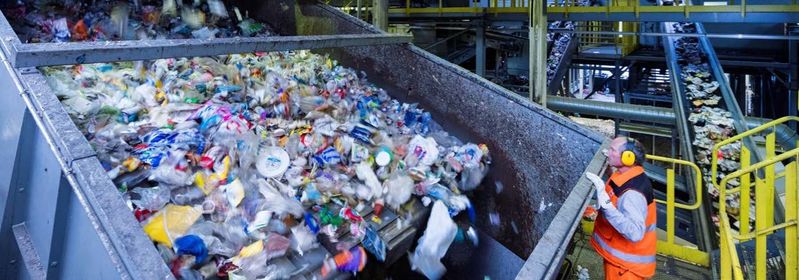
:quality(80)/p7i.vogel.de/wcms/81/22/8122583abe81b65e0590e99aa189b001/0131847826v1.jpeg "Rymoplast has invested in a recycling plant in Markranstädt, Saxony, near Leipzig. There, high-quality granulate is produced from plastic films. However, the thermal management of the processing systems must be optimal for this. Technotrans had the right solution ... (Image: Rymoplast)")
Date: 08.12.2025
Naturally, we always handle your personal data responsibly. Any personal data we receive from you is processed in accordance with applicable data protection legislation. For detailed information please see our privacy policy.
Consent to the use of data for promotional purposes
I hereby consent to Vogel Communications Group GmbH & Co. KG, Max-Planck-Str. 7-9, 97082 Würzburg including any affiliated companies according to §§ 15 et seq. AktG (hereafter: Vogel Communications Group) using my e-mail address to send editorial newsletters. A list of all affiliated companies can be found here
Newsletter content may include all products and services of any companies mentioned above, including for example specialist journals and books, events and fairs as well as event-related products and services, print and digital media offers and services such as additional (editorial) newsletters, raffles, lead campaigns, market research both online and offline, specialist webportals and e-learning offers. In case my personal telephone number has also been collected, it may be used for offers of aforementioned products, for services of the companies mentioned above, and market research purposes.
Additionally, my consent also includes the processing of my email address and telephone number for data matching for marketing purposes with select advertising partners such as LinkedIn, Google, and Meta. For this, Vogel Communications Group may transmit said data in hashed form to the advertising partners who then use said data to determine whether I am also a member of the mentioned advertising partner portals. Vogel Communications Group uses this feature for the purposes of re-targeting (up-selling, cross-selling, and customer loyalty), generating so-called look-alike audiences for acquisition of new customers, and as basis for exclusion for on-going advertising campaigns. Further information can be found in section “data matching for marketing purposes”.
In case I access protected data on Internet portals of Vogel Communications Group including any affiliated companies according to §§ 15 et seq. AktG, I need to provide further data in order to register for the access to such content. In return for this free access to editorial content, my data may be used in accordance with this consent for the purposes stated here. This does not apply to data matching for marketing purposes.
Right of revocation
I understand that I can revoke my consent at will. My revocation does not change the lawfulness of data processing that was conducted based on my consent leading up to my revocation. One option to declare my revocation is to use the contact form found at https://contact.vogel.de. In case I no longer wish to receive certain newsletters, I have subscribed to, I can also click on the unsubscribe link included at the end of a newsletter. Further information regarding my right of revocation and the implementation of it as well as the consequences of my revocation can be found in the data protection declaration, section editorial newsletter.
:quality(80)/p7i.vogel.de/wcms/ab/a3/aba3362936ca55fa62cf6c213e11f773/newsimage420756-1440x810v1v1.jpeg "Thanks to its property profile, the bio-based foam made from polybutylene succinate can replace conventional polyethylene (PE) foams in important areas of application—for example in packaging, protection and transportation solutions as well as in construction applications. (Image:Fraunhofer ICT)")
:quality(80)/p7i.vogel.de/wcms/07/86/078634f1c74b37d42f11da9cd790244c/0131313804v1.jpeg "Sustainable materials are arriving in series production. For example wood, which replaces parts of the plastic structure. (Image:Stefan G. König 2026)")