


:quality(80)/p7i.vogel.de/wcms/e9/90/e9904998fceb618c13613a1660fdfc74/0133135112v1.jpeg "This saw blade lasts up to eight times longer than solid carbide counterparts. This is made possible by an innovative nanocrystalline diamond coating from Oerlikon Balzers, which can also be applied to drill bits and end mills. Here is some information from a project with a user ... (Image:Oerlikon Balzers)")
:quality(80)/p7i.vogel.de/wcms/5e/f8/5ef8d3b9a25951f1b4a3fac0f4b65281/0133131043v1.jpeg "Kasto has significantly improved its long-proven Kastossb automatic band saw and will be showcasing it at the upcoming AMB. For example, it now features an electromechanical saw feed mechanism that reduces energy consumption. Read here to find out what other new developments there are in the world of sawing ... (Image:Kasto)")
:quality(80)/p7i.vogel.de/wcms/43/bc/43bcc092db07947d7f240564e7d8549d/0133068647v1.jpeg "The C80 Giga inductive coupling system from SMW transmits power up to 75 W—and signals in real time at speeds of up to 1 GBit/s. (Image:SMW-Autoblok / SMW-electronics)")
:quality(80)/p7i.vogel.de/wcms/bd/b6/bdb6acbb7eafcbb21fcf66f8835ccb6d/0132925320v1.jpeg "Kyocera's MG90B Series (Image:Kyocera)")
:quality(80)/p7i.vogel.de/wcms/17/a4/17a4d6ffc591eea86644f852184894e5/0133126677v1.jpeg "(Image:AI-generated)")
:quality(80)/p7i.vogel.de/wcms/19/41/194148c719692eece4e091f0caa6f63f/image1v1.jpeg "Patent Infringement Proceedings before the Unified Patent Court (Image:(UPC) is already the second case brought by Teradyne Robotics regarding intellectual property infringement in Europe in 2026. (Universal Robots)")
:quality(80)/p7i.vogel.de/wcms/a7/75/a775ac03d9f732b4a1a9777f30775387/b-2bm-surface-systems-application-01v1.jpeg "The X6-generation robots from b+m deliver exceptionally high paint quality and are also particularly compact and designed for easy maintenance. (Image:Beckhoff)")
:quality(80)/p7i.vogel.de/wcms/36/e2/36e249eb320302cb4292263b451a67de/613921630v1.jpeg "On August 21, a strike by 39,000 employees brought production to a standstill at three Hyundai plants in South Korea. (Image:picture alliance / REUTERS | Kim Soo-hyeon)")
:quality(80)/p7i.vogel.de/wcms/d3/ad/d3ad3f6529839a772acd8741ce83e439/0132390244v1.jpeg "If you make the wrong choice when seeking funding advice, you risk not only wasting time but also missing out on funding opportunities and suffering financial losses. (Image: ©alfa27 - stock.adobe.com)")
:quality(80)/p7i.vogel.de/wcms/b5/23/b523d58efd8b39df18f3b93d3c9d7269/2026-075-stromfreie-festkoerperkuehlung-aus-waerme-wird-kaeltev1.jpeg "Researchers at KIT and the University of Tsukuba are combining two nickel-titanium films that first convert heat into motion and then into cold. (Source: Concept by Yi-Ting Hsiau and Jingyuan Xu, KIT; visual design by Ella Maru Studio)")
:quality(80)/p7i.vogel.de/wcms/aa/96/aa96adace3d0396e169f3da7f7c9b85e/adobestock-107687632--dennisjacobsen-stock-adobe-comv1.jpeg "Electric eels have three electric organs that allow them to deliver electric shocks with voltages of up to 860 volts (illustration). (Source: dennisjacobsen - stock.adobe.com)")
:quality(80)/p7i.vogel.de/wcms/6e/ea/6eea0f7b13ed25685b67b4741883df7a/drohnev1.jpeg "Multi-Jet Fusion is frequently used for drone components because this process offers high mechanical strength and durability while also enabling the production of complex geometries that are difficult to achieve using conventional manufacturing methods. (Source: Protolabs)")
:quality(80)/p7i.vogel.de/wcms/40/18/40189b6e092b2e7212a61a3c45605425/0132864015v1.jpeg "At least half of the material mass of end-of-life BMW vehicles could be reused to make new parts using appropriate processes. (Image:BMW)")
:quality(80)/p7i.vogel.de/wcms/9b/41/9b418f6413b5c5b1de63f1f4323d2386/p90652877-highres--08-2026v1.jpeg "BMW has officially launched the iX3 (left) and i3 (right) models in China. The automaker has high hopes for the electric vehicles based on the \"New Class\" platform. (Image:BMW)")
:quality(80)/p7i.vogel.de/wcms/75/e5/75e571d02630c5a1a3e231f68a8b9e0d/0133082782v1.jpeg "Peter Laursen, COO of Dekra (right), and Zhou Hua, Vice President of Catarc, have signed a memorandum of understanding. Both organizations intend to work together to support the transformation of the automotive industry. (Image:Dekra)")
:quality(80)/p7i.vogel.de/wcms/4d/d4/4dd4e681bfec6e264afb3a54efeb18e2/0133108087v1.jpeg "Evocopter founder Paul Ressle has designed his ultralight helicopter with Quadrifoglio design elements. (Image:Stellantis Germany / Alfa Romeo)")
:quality(80)/p7i.vogel.de/wcms/38/4d/384de4721339db429ec3a735dd541143/0133124795v1.jpeg "The massive AI industry surrounding Project Stargate is worth billions of dollars, but it also poses significant risks. (Image:Gemini / AI-generated)")
:quality(80)/p7i.vogel.de/wcms/73/f1/73f1b6ea230da6eec20134f3af51fa91/0133131975v1.jpeg "Hugging Face is considered a leading platform for open AI models. An acquisition would bring Nvidia closer to the entire value chain—from computing hardware to model development and distribution. (Image:freely licensed)")
:quality(80)/p7i.vogel.de/wcms/01/25/0125f845ff0a3fc8967d0684920b60b7/0133135734v1.jpeg "Upturn: The technology sector is entering a new phase of growth. (Image:Gerd Altmann)")
:quality(80)/p7i.vogel.de/wcms/98/77/98776f483ab9191161c61dbf8cc28a2a/recycling-ki-hub-kay-herschelmannv1.jpeg "In the K3I-Cycling project, the participants are developing new methods to produce high-quality plastic recyclates from mixed lightweight packaging waste. (Source: Kay Herschelmann)")
Circular Economy How Smoothly is the Recycling Process Going?
The EU aims to make the domestic automotive industry more environmentally friendly and resilient through a functioning circular economy. Unfortunately, many requirements, technologies, and processes have yet to be finalized.
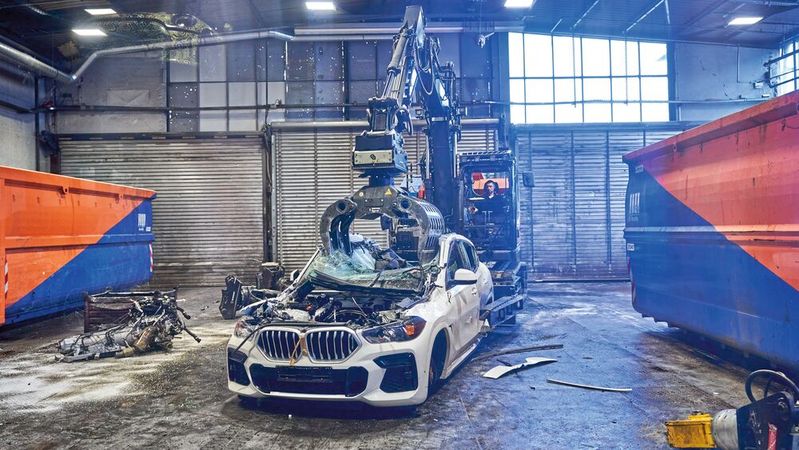
The following figures from the European Union illustrate just how significantly the automotive industry influences European raw material flows: 17 percent of steel, 42 percent of aluminum, and 63 percent of platinum are used by the automotive industry. The EU’s new End-of-Life Vehicle (ELV) Regulation, which is set to take effect in 2026, takes this into account: for the first time, binding requirements for the use of recycled plastics are being established. Furthermore, the remanufacturing and reconditioning of used parts are being promoted.
Sign in or register and read on
Please log in or register and read this article. To be able to read this article in full, you must be registered. Free registration gives you access to exclusive specialist information.
Already registered? Log in here
:quality(80)/p7i.vogel.de/wcms/d2/40/d240b49c8edba464bf610f0e0b3628f0/p90629460-lowres-2250x1265v1.jpeg "p90629460-lowres-2250x1265v1 (Source: BMW Group)")
:quality(80)/p7i.vogel.de/wcms/07/86/078634f1c74b37d42f11da9cd790244c/0131313804v1.jpeg "Sustainable materials are arriving in series production. For example wood, which replaces parts of the plastic structure. (Image:Stefan G. König 2026)")