The Edag Group is developing a customizable engineering framework that gives companies control over their AI—including data, architecture, and costs. Edag.ai combines AI expertise with Edag’s engineering experience.
Gabriel Seiberth, Executive Vice President of Electrics/Electronics: “Successful enterprise AI isn’t achieved by subscribing to Frontier Labs’ APIs, but through robust, task-optimized harnesses.”
(Image: Edag Group)
Almost all companies are investing in AI, but according to the MIT Nanda project, only five percent of AI pilot projects generate measurable business value. High costs, a lack of control over data and systems, and unclear economic benefits stand in the way of productive use.
With Edag.ai, the Edag Group is now introducing a new approach that considers artificial intelligence from the perspective of product development requirements and helps companies confidently and cost-effectively integrate AI into their development processes. Edag.ai is neither just another AI model nor a standardized software product. Large language models run centrally at the provider’s site. They can be connected to a company’s data via an API, but cannot be deeply integrated into its processes. Thus, Edag.ai focuses on AI systems built from reusable building blocks that are adapted to the processes, data, and requirements of each individual company.
Smart Data from 7,000 Development Projects
Edag.ai’s particular strength lies in its combination of AI expertise and decades of engineering experience. As one of the leading independent engineering service providers, the Edag Group brings expertise gained from over 7,000 global development projects, ranging from E/E functions to platforms to the complete vehicle.
Unlike consumer AI, enterprise AI does not require “big” data, but rather “smart” data: condensed knowledge optimized for its specific use case. Edag has derived such smart data from its projects and structured it into engineering ontologies, reference models—such as its own product development process—and knowledge bases. When linked to this smart data, the customer’s proprietary data gains economic value, while data sovereignty remains with the customer. Technical standards and deterministic rules supplement the models wherever process data must be processed and results must be tracked.
The Value of the Model Does Not Lie in the Technology
According to Edag, successful enterprise AI projects start with the use case, not the technology. The company has systematized this knowledge into the 5Cs of sovereign AI. Using this framework, companies can assess—based on Cost, Control, Compliance, Customization, and Compounding—whether all the prerequisites for value-adding, customized AI are met before they invest.
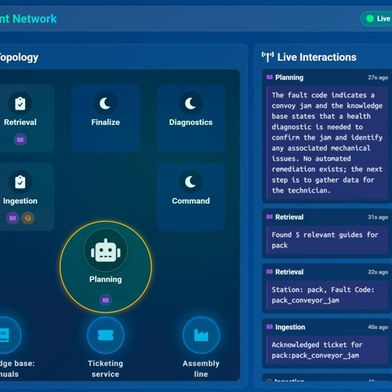
“The market is always asking which model is the best. For companies, that’s the wrong question. A model’s value only emerges within what’s called a ‘harness’—an infrastructure that provides the model with tools, memory, and data, and controls its operations. Benchmarks show that the same top-tier model solves three-quarters of the tasks in a specialized harness, but only slightly more than half in a generic one,” explains Gabriel Seiberth, Executive Vice President of Electrics/Electronics at the Edag Group. “Successful enterprise AI therefore doesn’t come from subscribing to Frontier Labs’ APIs, but from sophisticated, task-optimized harnesses. That’s the only place where knowledge can accumulate. And: Retraining a model costs millions, while expanding a system costs a fraction of that. That’s why we’re developing a specific engineering harness: It links domain knowledge, data, processes, and models and makes them available at the enterprise level.”
A Harness Optimized for Engineering
For a long time, the focus was on AGI, a general-purpose AI for all applications. Technologically, the mantra was: “Scale is all you need”—more data, more computing power. With the term “Harness”—coined by Anthropic in late 2025 to describe AI agents—the counter-thesis is beginning to gain traction: AI is a designed system consisting of a model and its surrounding structure, and the importance of that structure is growing rapidly.
Harnesses are task-specific: coding, cybersecurity, and theorem proving, for example, each require their own. Consequently, so does product engineering. Cars are the most complex consumer goods in the world—cyber-physical systems with the computing power of a small data center. Furthermore, their development is heavily regulated: Every result must be verifiable against standards and traceable across all domains, from requirements to approval. EDAG’s Engineering Harness is the first to be optimized for this use case. It is intentionally never “finished”: it incorporates new models and methods as soon as they become available. And with every integration and use, it accumulates knowledge that belongs to the company. “Only those who master the structure around the model hold the keys to enterprise value,” says Seiberth.
Date: 08.12.2025
Naturally, we always handle your personal data responsibly. Any personal data we receive from you is processed in accordance with applicable data protection legislation. For detailed information please see our privacy policy.
Consent to the use of data for promotional purposes
I hereby consent to Vogel Communications Group GmbH & Co. KG, Max-Planck-Str. 7-9, 97082 Würzburg including any affiliated companies according to §§ 15 et seq. AktG (hereafter: Vogel Communications Group) using my e-mail address to send editorial newsletters. A list of all affiliated companies can be found here
Newsletter content may include all products and services of any companies mentioned above, including for example specialist journals and books, events and fairs as well as event-related products and services, print and digital media offers and services such as additional (editorial) newsletters, raffles, lead campaigns, market research both online and offline, specialist webportals and e-learning offers. In case my personal telephone number has also been collected, it may be used for offers of aforementioned products, for services of the companies mentioned above, and market research purposes.
Additionally, my consent also includes the processing of my email address and telephone number for data matching for marketing purposes with select advertising partners such as LinkedIn, Google, and Meta. For this, Vogel Communications Group may transmit said data in hashed form to the advertising partners who then use said data to determine whether I am also a member of the mentioned advertising partner portals. Vogel Communications Group uses this feature for the purposes of re-targeting (up-selling, cross-selling, and customer loyalty), generating so-called look-alike audiences for acquisition of new customers, and as basis for exclusion for on-going advertising campaigns. Further information can be found in section “data matching for marketing purposes”.
In case I access protected data on Internet portals of Vogel Communications Group including any affiliated companies according to §§ 15 et seq. AktG, I need to provide further data in order to register for the access to such content. In return for this free access to editorial content, my data may be used in accordance with this consent for the purposes stated here. This does not apply to data matching for marketing purposes.
Right of revocation
I understand that I can revoke my consent at will. My revocation does not change the lawfulness of data processing that was conducted based on my consent leading up to my revocation. One option to declare my revocation is to use the contact form found at https://contact.vogel.de. In case I no longer wish to receive certain newsletters, I have subscribed to, I can also click on the unsubscribe link included at the end of a newsletter. Further information regarding my right of revocation and the implementation of it as well as the consequences of my revocation can be found in the data protection declaration, section editorial newsletter.
Sovereignty Instead of an API
The Engineering Harness is based on an open, modular platform whose components can be expanded or replaced. When used via an API, the provider decides which model handles a task, which tools it uses, what it costs, and when it changes. At Edag.ai, the company makes these decisions, and in a technology landscape that is changing so rapidly, it does not commit to any single, isolated approach. The platform and ontologies run everywhere and can be fully transferred to the customer. For industries with high requirements for data protection, traceability, and intellectual property—such as the automotive and defense sectors—this is a prerequisite for AI deployment that complies with regulatory requirements.
In addition to these building blocks, Edag offers ready-to-use AI applications, such as those for coding, cybersecurity, and requirements engineering, as well as for numerous other tasks throughout the product development process. They can be deployed immediately or customized to meet specific customer data, processes, and requirements.