New ModelsDacia Spring: New Generation Starting at 18,000 Euros
By
Tomas Hirschberger/SP-X | Translated by AI
5 min Reading Time
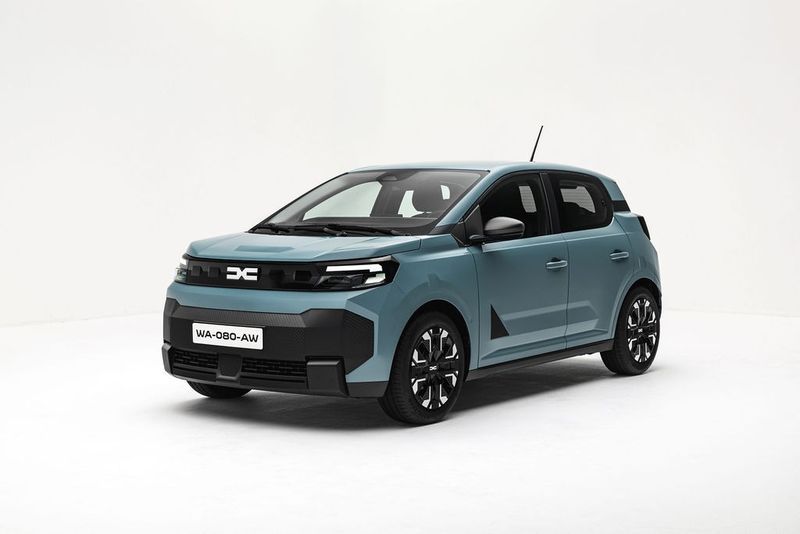
The new Spring is 15 centimeters (5.9 inches) longer, shares its platform with the Renault Twingo, and is now manufactured in Europe instead of China. The starting price, however, remains well below 20,000 euros ($23,200).
Dacia has developed a successor to the Spring electric compact car.
(Source: Dacia)
When the history of e-mobility is written in the future, the Dacia Spring must not be left out. Not because it was a particularly innovative, good, or even attractive car. Even in hindsight, no one would seriously claim that. No, it’s because the Spring broke new ground. With its affordable starting price of around 20,000 euros at the time, the Romanian electric car democratized electric mobility and ensured that even the “average person” could experience it. Since 2021, Dacia has sold 210,000 Springs in 40 countries; for 93 percent of customers, it was their first experience with an EV.
Now the new Spring is here—and with it, a second spring. Because suddenly, it’s blooming. Until now, the budget electric car was assembled as inexpensively as possible by its Chinese partner Dongfeng, the new Spring will be a true European. Built at the Novo Mesto plant in Slovenia, alongside its sister model Renault Twingo E-Tech, with which the four-door model also shares the key technical components.
Both are built on the same RG-EV platform. At 3.85 meters (12.63 feet), however, the Dacia is six centimeters (2.4 inches) longer than the Twingo and even surpasses its predecessor by a full 15 centimeters (5.9 inches). The biggest leap into adulthood, however, is in width: At 1.74 meters (5.71 feet), it now appears significantly sturdier and more reliable than the narrow model from Wuhan, which was just 1.58 meters (5.18 feet) wide and looked like a fragile, shaky candidate even when stationary. Although the Spring has grown in every dimension, it remains a lightweight at just 1.2 metric tons (2,646 pounds), which should primarily benefit fuel economy. Dacia promises 12.7 kWh per 100 kilometers (19.9 kWh per 100 miles).
With the handbag-sized electric car now standing so confidently and sturdily on its wheels, the design team led by David Durand has succeeded in taking the Spring out of the “toy” category. Until now, it was little more than a basic mode of transportation. Now, with the Spring II, a modern compact car has arrived. The front end is raised and robust, the front and rear overhangs are minimal, and the lines are clean and angular.
Smart Savings
Although Durand’s team transplanted nearly the entire roof section of the Twingo, including the window line, it really takes a lot of imagination to spot any similarities to its French sibling. LED lights come standard at the front and rear. They cleverly reflect the light within the housing at a 45-degree angle—making them look more impressive than they actually are. Solid bumpers made of unpainted black plastic protect against minor bumps and hefty repair bills, while design elements like the black panels visually separate the roof from the body.
The new Spring uses its extra length to create an 18-liter frunk under the hood—enough space for the charging cable. The Twingo doesn’t have one. And in the back, there’s more cargo volume. 330 liters to 1,280 liters represents a significant increase over the first-generation Spring and is top-notch for this class. Nevertheless, there’s still surprisingly plenty of room inside for four adults, with ample knee and headroom even in the back seat. The only potential complaints here are the non-retractable windows; more affordable hinged windows will have to do.
It’s clear to see that not a single euro was wasted on unnecessary frills. “Every element must also serve a practical purpose,” says David Durand. The Spring is still designed with smart cost-saving in mind. Practical, but not spartan. The seats feel comfortable and grown-up; two screens—7- and 10.1-inch—were carried over from the Twingo and customized with their own graphics, which are by no means less informative than those of its French sibling. Numerous storage compartments swallow up the small items of everyday driving life, and the agave blue of the upholstery is echoed as a horizontal stripe on the dashboard.
Date: 08.12.2025
Naturally, we always handle your personal data responsibly. Any personal data we receive from you is processed in accordance with applicable data protection legislation. For detailed information please see our privacy policy.
Consent to the use of data for promotional purposes
I hereby consent to Vogel Communications Group GmbH & Co. KG, Max-Planck-Str. 7-9, 97082 Würzburg including any affiliated companies according to §§ 15 et seq. AktG (hereafter: Vogel Communications Group) using my e-mail address to send editorial newsletters. A list of all affiliated companies can be found here
Newsletter content may include all products and services of any companies mentioned above, including for example specialist journals and books, events and fairs as well as event-related products and services, print and digital media offers and services such as additional (editorial) newsletters, raffles, lead campaigns, market research both online and offline, specialist webportals and e-learning offers. In case my personal telephone number has also been collected, it may be used for offers of aforementioned products, for services of the companies mentioned above, and market research purposes.
Additionally, my consent also includes the processing of my email address and telephone number for data matching for marketing purposes with select advertising partners such as LinkedIn, Google, and Meta. For this, Vogel Communications Group may transmit said data in hashed form to the advertising partners who then use said data to determine whether I am also a member of the mentioned advertising partner portals. Vogel Communications Group uses this feature for the purposes of re-targeting (up-selling, cross-selling, and customer loyalty), generating so-called look-alike audiences for acquisition of new customers, and as basis for exclusion for on-going advertising campaigns. Further information can be found in section “data matching for marketing purposes”.
In case I access protected data on Internet portals of Vogel Communications Group including any affiliated companies according to §§ 15 et seq. AktG, I need to provide further data in order to register for the access to such content. In return for this free access to editorial content, my data may be used in accordance with this consent for the purposes stated here. This does not apply to data matching for marketing purposes.
Right of revocation
I understand that I can revoke my consent at will. My revocation does not change the lawfulness of data processing that was conducted based on my consent leading up to my revocation. One option to declare my revocation is to use the contact form found at https://contact.vogel.de. In case I no longer wish to receive certain newsletters, I have subscribed to, I can also click on the unsubscribe link included at the end of a newsletter. Further information regarding my right of revocation and the implementation of it as well as the consequences of my revocation can be found in the data protection declaration, section editorial newsletter.
Like the interior, the electrical system is by no means a shortcoming, but rather pragmatically tailored to the target audience. The Spring is the first Dacia to be equipped with new, shortened development cycles of the Renault Group. As a result, new models are expected to be ready in two years and cost less at the same time. In addition to the Spring, Dacia has already announced three more EVs by 2030.
Small Battery, Energy-Efficient Charging Technology
The Spring doesn't carry any ballast to begin with. 60 kW (80 hp) has to be enough, just like a small, lightweight 27.5 kWh LFP battery, which is tucked deep in the underbody. That provides a range of about 250 kilometers (155 miles). According to Dacia, a Mini used primarily in the city doesn’t need more than that. Even the leisurely charging speed isn’t a major issue for customers. The new Spring charges its battery extremely slowly at a rate of 6.6 kW. It takes nine hours to charge from a standard household outlet (15% to 80%) and nearly three hours from a wallbox. For an additional fee, a package is available that enables AC charging at 11 kW (1 hour 55 min.) as well as DC charging at 50 kW (28 min.). This package also includes the ability to supply power to external electrical devices, known as the Vehicle-to-Load (V2L) function.
When it launches in December, the Spring will be available in four colors and two trim levels. The entry-level “Expression” trim, which includes 15-inch steel wheels, manual air conditioning, and a media package, is expected to cost less than 18,000 euros ($20,880). The “Journey” adds 16-inch wheels, a rearview camera, a higher-end media system, and additional connectivity features. It will hit the market for under 20,000 euros.
Technical Specifications of the Dacia Spring II
Five-door compact car with front-wheel drive
Length: 3.85 m (12.63 feet), Width: 1.74 m (5.71 feet), Height: 152 mm (4.99 feet), Wheelbase: 2.49 m (8.17 feet)
Trunk: 337 to 1,283 liters; front trunk: 18 liters



:quality(80)/p7i.vogel.de/wcms/a0/94/a09489b453e958dc8ffd85accab2aaf3/0130556732v1.jpeg "Mutares supported two of its portfolio companies to help them strengthen their position. It worked out perfectly. Now both have been sold. Read here to find out exactly what this is all about... (Image:Mutares)")
:quality(80)/p7i.vogel.de/wcms/88/91/88915656ec26bd5f6e79ce0e523dd33b/0131576263v1.jpeg "Dr. Volker Nilles is CEO of Arburg GmbH + Co KG. In this role, he leads the six-member executive team and, since the beginning of the year, has been responsible for steering the course of the manufacturer of injection molding machines and digital systems for plastics processing. The family-owned company, based in Loßburg, employs approximately 3,400 people worldwide and has a history spanning more than 100 years. (Image: Arburg GmbH + Co. KG)")
:quality(80)/p7i.vogel.de/wcms/81/d4/81d47ab5407c961b55233009313ac9d2/0133075510v1.jpeg "Small, but designed for demanding applications: KSK demonstrates that the diameter of ball screws says nothing about their load-carrying capacity. (Image:Arkero)")
:quality(80)/p7i.vogel.de/wcms/6b/80/6b80bac3b1b33a0e3bc17849bef4ba59/0133171618v1.jpeg "With its portal solution for the MAK 4 Evolution UD swivel-bending machine, Schröder enables the fully automated production of sheet-metal enclosures. (Image:Schröder Group)")
:quality(80)/p7i.vogel.de/wcms/13/2d/132df0ce425eb46f046ffe1065912b19/699704-he-xiaopeng-und-iron-36d230-original-1788864307v1.png "He Xiaopeng hangs an employee ID badge around the neck of the humanoid \"IRON,\" as part of the team. (Source: Xpeng)")
:quality(80)/p7i.vogel.de/wcms/cc/80/cc8031ca517f9ff98cec245efa899b25/0133211591v1.jpeg "The two CEOs of the companies: Max Mauri of Seco and David Reger of Neura. (Image:Neura Robotics)")
:quality(80)/p7i.vogel.de/wcms/ae/eb/aeeb20bb1bf0e6226c35d50b11551a89/0133237319v1.jpeg "At ArcelorMittal Bremen, steel coils are cut to size using blades, a process that takes place at high speed. This makes it difficult to ensure the quality of both the product and the blades. However, TS Sensors and Selmatec have now developed a real-time system ... (Image:AT Sensors)")
:quality(80)/p7i.vogel.de/wcms/ee/de/eedeb235bb6ee164059ea34e6bea795f/0132989868v1.jpeg "From a small Irish bakery to a major manufacturer with expansion plans: Processes can only be scaled through real-time data transparency. (Image:West-Bake)")
:quality(80)/p7i.vogel.de/wcms/be/4d/be4d7294d3d171468dc0b83efa4f442c/0133268906v1.jpeg "Here, two experts from Lufthansa Technik are applying the “AeroSHARK” coating to an aircraft. Until now, Boeing has been using this coating, which mimics the skin structure of sharks. Now Airbus also wants to use it to make its aircraft more fuel-efficient. (Image:Lufthansa Technik)")
:quality(80)/p7i.vogel.de/wcms/6e/1a/6e1ac5a0f1f7b4e9d0b42d34ab3fc47b/geda-sh250w-1v1.jpeg "According to the manufacturer, the battery-powered lift for wind turbines sets new standards in safety, availability, and efficiency. (Source: Geda GmbH)")
:quality(80)/p7i.vogel.de/wcms/45/20/45208dbb0868aa49d32ded081173ebdb/siemens-sarla-aviation-01v1.jpeg "To ensure that data does not remain isolated in individual departments or systems, three companies are leveraging the Digital Thread with Siemens solutions. (Source: Sarla Aviation)")
:quality(80)/p7i.vogel.de/wcms/92/e9/92e9f029ef416e02b6f0b772b39c30df/limbitless-stratasys-zacharyv1.jpeg "The renewed focus of the expanded partnership between Stratasys and Limbitless is on sustainability, education, and improved access to 3D-printed prosthetics. (Source: Stratasys)")
:quality(80)/p7i.vogel.de/wcms/99/9f/999f4972c3c4cbb69c30830e80dedd4e/dacia-spring-exterioradriencortesi-001v1.jpeg "Dacia has developed a successor to the Spring electric compact car. (Source: Dacia)")
:quality(80)/p7i.vogel.de/wcms/a4/b6/a4b6fc6ca18008acda9ff06c711555e9/a264385-largev1.jpeg "The A2 E-Tron is in a completely different league than the car that gave it its name, which was introduced nearly 30 years ago. (Source: Audi)")
:quality(80)/p7i.vogel.de/wcms/12/33/1233e00dd83a287e5225169847b22799/0133224119v1.jpeg "The path to the software-defined vehicle leads from control modules and wiring harnesses to a centralized, networked E/E architecture. (Image:Dall-E / AI-generated)")
:quality(80)/p7i.vogel.de/wcms/00/ad/00adb77750d3b28827e3739e6812f803/manuel-mengelkoch-director-sales-operations-volvo-trucks-2v1.jpeg "Manuel Mengelkoch is Director of Sales Operations at Volvo Trucks Germany. (Source: Volvo Trucks)")
:quality(80)/p7i.vogel.de/wcms/c4/b5/c4b5badd67b0037f23c1d69806a13d16/0133216860v1.jpeg "Fascinating Technology: ASML's NXE3800E EUV machine. (Image:ASML)")
:quality(80)/p7i.vogel.de/wcms/7c/57/7c5719c462b2973564651ca5e472bb58/0133230109v1.jpeg "Prototype of the Diamond Spin Quantum Computer: Users can operate it using the Fujitsu Hybrid Quantum Computing Platform, even without any additional specialized knowledge. (Image:Fujitsu)")
:quality(80)/p7i.vogel.de/wcms/87/96/879685114467b0fe5a43f25923787762/set-explosion-2000pxv1.jpeg "Not explosive, but safe: The new KDS-Rail Fire Safety Kit. (Source: Conta-Clip)")
:quality(80)/p7i.vogel.de/wcms/a4/4e/a44e89f5d47d037ca5d0c870b8dabc65/0133203720v1.jpeg "Transparent DC charging connector from Lapp featuring the vSECC.InPlug communication controller board from Vector (Image:Vector Informatics)")
:quality(80)/p7i.vogel.de/wcms/f7/9e/f79eb21ac246cb5ae9f4413400c8f8f7/0129006331v1.jpeg "The range of electric cars has grown significantly compared to 2024. At the same time, prices have dropped sharply. (Image:Hyundai)")
:quality(80)/p7i.vogel.de/wcms/72/08/720834f12587ad24cd3d5a159a563a3f/dacia-spring-exterioradriencortesi-007v1.jpeg "At 3.85 meters long and 1.74 meters wide, the new Spring is significantly larger than its predecessor.(Source: Dacia)")
:quality(80)/p7i.vogel.de/wcms/aa/f4/aaf4161ef9811367497b74a9d329b338/dacia-spring-exterioradriencortesi-005v1.jpeg "The short overhangs are striking.(Source: Dacia)")
:quality(80)/p7i.vogel.de/wcms/43/c5/43c50db819a586daf1dc1c536a53d798/dacia-spring-exterioradriencortesi-008v1.jpeg "The Spring II comes standard with LED lights. A clever cost-saving feature: They reflect the light inside the housing at a 45-degree angle—making them appear larger. Unpainted plastic bumpers protect against minor bumps and hefty repair bills.(Source: Dacia)")
:quality(80)/p7i.vogel.de/wcms/71/34/71346230d6c930684bdfc244f92e8e67/dacia-spring-interioradriencortesi-001v1.jpeg "The two screens—7-inch and 10.1-inch—were carried over from the Twingo and customized with their own graphics.(Source: Dacia)")
:quality(80):fill(efefef,0)/p7i.vogel.de/wcms/6a/9f/6a9fa9db99087/comsol-ebook-battery-design-coverbild.jpeg "COMSOL_Ebook Battery Design_Coverbild")
:quality(80)/p7i.vogel.de/wcms/c2/57/c257d627beec10e94252cde72830adf6/0130472803v1.jpeg "With the Twingo E-Tech, Renault is now launching a purely electrically powered new edition of the Twingo small car (Image:Renault)")
:quality(80)/p7i.vogel.de/wcms/a4/b6/a4b6fc6ca18008acda9ff06c711555e9/a264385-largev1.jpeg "The A2 E-Tron is in a completely different league than the car that gave it its name, which was introduced nearly 30 years ago. (Source: Audi)")