Optical chips, nuclear fusion, and quantum technology are driving the expansion of new manufacturing capacity in China. Bodun Optoelectronics is benefiting from this trend: The company supplies ion sources and ion beam systems and aims to increasingly replace Western suppliers.
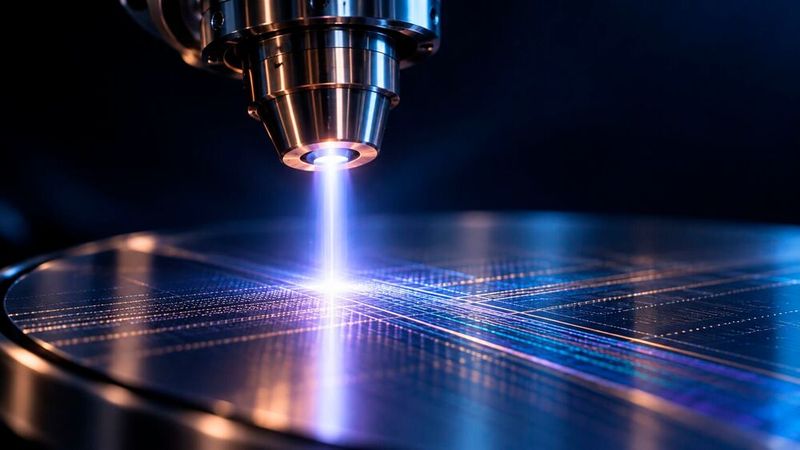
Ion beams can ablate, coat, or smooth surfaces down to the atomic level. Such processes are used, among other things, in optical chips, precision optics, and superconducting materials.
(Image: AI-generated)
In Zhongshan, in southern China, the business of those who supply shovels to shovel sellers is booming. The image dates back to the time of the great California Gold Rush around 1849. Back then, shovel sellers earned more than the gold miners.
That is exactly what a company called Bodun Guangdian—also known as Bodun Optoelectronics—is doing, and its co-founder, Ji Ming, has just given his first interview. The Chinese technology website Huxiu has therefore published an in-depth profile of the company.
Let's stay with the image of the shovels and their sellers for a moment. Nvidia is often referred to as the "shovel seller" of the AI boom. But above Nvidia are the companies that manufacture the tools for these shovel sellers.
The company Bodun, profiled here, manufactures ion sources and ion beam systems. “We’re the shovel sellers,” says company founder Ji Ming himself. The infrastructure for many high-tech fields is currently being built out. As a result, demand for his products is high, particularly in the three areas of AI data centers, nuclear fusion, and quantum technology.
Shovels from Optics Valley
The city of Zhongshan is located in the southern province of Guangdong and refers to itself as the “Optics Valley” of the Greater Bay Area surrounding Shenzhen and Hong Kong. The city once primarily produced lenses for smartphones and surveillance cameras. The machines used to coat and etch these lenses were imported from abroad.
Bodun now manufactures them in China. It’s high technology, but it’s not rocket science. An ion beam is created when a special gas is ionized and electromagnetic fields shape the ions into a beam. This beam can remove material, deposit layers, or smooth surfaces down to the atomic level. Without its own ion sources, China was previously unable to build high-quality ion beam systems. “It’s like how China couldn’t build good cars because it lacked the engine,” says Ji Ming. He and his company are in the process of changing that.
Nuclear fusion, traditional precision optics, and semiconductors—including optical communications—each account for about one-third of Bodun’s annual revenue to date. Revenue has grown by 50 percent annually for several consecutive years. The company is not publicly traded. The figures come from Bodun itself and should be viewed with caution.
In July of this year, Bodun secured more than 100 million yuan (more than 13 million euros / $14.82 million) in a funding round, according to the Chinese tech portal 36Kr. Again, there were no verifiable figures regarding the company’s revenue. However, skepticism about the accuracy of the published figures should not lead us to overlook this success story.
High-Tech Winners
Bodun is benefiting from three major and very real trends. The first is “domestic substitution”—that is, the Chinese government’s efforts to rapidly accelerate the development of its own high-tech manufacturing in response to U.S. sanctions. The second trend is the rising demand for optical chips driven by the AI boom. The third trend, which is reflected in Bodun’s order books, is Chinese investment in controlled nuclear fusion and quantum computers.
"Revenue growth comes primarily from optical communications and superconductors for nuclear fusion," says Ji Ming. Fusion reactors require magnets made from high-temperature superconducting tapes. In the second generation of these tapes, a layer of magnesium oxide is applied using ion beam-assisted deposition, an indispensable process, according to the technology portal 36Kr. Many new factories for such tapes are currently being built in China, and Bodun supplies nearly all manufacturers, according to company sources.
Date: 08.12.2025
Naturally, we always handle your personal data responsibly. Any personal data we receive from you is processed in accordance with applicable data protection legislation. For detailed information please see our privacy policy.
Consent to the use of data for promotional purposes
I hereby consent to Vogel Communications Group GmbH & Co. KG, Max-Planck-Str. 7-9, 97082 Würzburg including any affiliated companies according to §§ 15 et seq. AktG (hereafter: Vogel Communications Group) using my e-mail address to send editorial newsletters. A list of all affiliated companies can be found here
Newsletter content may include all products and services of any companies mentioned above, including for example specialist journals and books, events and fairs as well as event-related products and services, print and digital media offers and services such as additional (editorial) newsletters, raffles, lead campaigns, market research both online and offline, specialist webportals and e-learning offers. In case my personal telephone number has also been collected, it may be used for offers of aforementioned products, for services of the companies mentioned above, and market research purposes.
Additionally, my consent also includes the processing of my email address and telephone number for data matching for marketing purposes with select advertising partners such as LinkedIn, Google, and Meta. For this, Vogel Communications Group may transmit said data in hashed form to the advertising partners who then use said data to determine whether I am also a member of the mentioned advertising partner portals. Vogel Communications Group uses this feature for the purposes of re-targeting (up-selling, cross-selling, and customer loyalty), generating so-called look-alike audiences for acquisition of new customers, and as basis for exclusion for on-going advertising campaigns. Further information can be found in section “data matching for marketing purposes”.
In case I access protected data on Internet portals of Vogel Communications Group including any affiliated companies according to §§ 15 et seq. AktG, I need to provide further data in order to register for the access to such content. In return for this free access to editorial content, my data may be used in accordance with this consent for the purposes stated here. This does not apply to data matching for marketing purposes.
Right of revocation
I understand that I can revoke my consent at will. My revocation does not change the lawfulness of data processing that was conducted based on my consent leading up to my revocation. One option to declare my revocation is to use the contact form found at https://contact.vogel.de. In case I no longer wish to receive certain newsletters, I have subscribed to, I can also click on the unsubscribe link included at the end of a newsletter. Further information regarding my right of revocation and the implementation of it as well as the consequences of my revocation can be found in the data protection declaration, section editorial newsletter.
As if that weren’t enough good fortune for a small company in southern China, something else is now booming as well. In AI data centers, data flows between servers not as electrons, but as light. The optical modules and chips are made of compound semiconductors such as indium phosphide, gallium arsenide, and lithium niobate. These components require high-precision machining, and that is precisely where ion beams excel. According to market research firm C&C, the global market for optical modules reached approximately 12.7 billion euros ($14.478 billion) in 2024, a 52 percent increase compared to the previous year, Huxiu reports. Huxiu notes that nearly all major Chinese manufacturers of optical chips are Bodun customers.
Capitalize on the Opportunity
Ji Ming founded his company in 2016 together with a college friend who had previously worked at an American ion beam company. Ji Ming describes his strategy as “encircling cities from the countryside,” a concept drawn from Chinese military strategy. The first customers were small lens manufacturers in the Apple and Huawei supply chains who could not afford to import equipment.
Bodun owes its first major contract to the Americans and their attempt to cut China off from Western high technology and slow its own progress in the field of AI and its success on the global market. Washington secured a ban on shipments from the U.S., Germany, and Japan. Since 2019, a Chinese manufacturer of mirrors for optical remote sensing from space has been prohibited from sourcing equipment from these three Western countries. In a pinch, they turned to the then-fledgling startup in southern China.
“We made a strong impression right from our very first major project in the most demanding sector—aerospace. That dispelled all doubts about the performance of our products,” says Ji Ming. In 2023 and 2024, Bodun became a supplier to leading Chinese chip factories by retrofitting old foreign equipment. A Japanese equipment manufacturer tested the ion sources for nearly three years. Since 2026, they have been installed as standard equipment in systems from international manufacturers, according to Ji Ming. Huxiu does not name the Japanese company. “We want to replace European and American products,” the company’s founder is quoted as saying by 36Kr.
“In terms of core technology, the gap isn’t that wide. But foreign manufacturers have decades of experience. Those advantages remain,” says Ji Ming. He estimates that while foreign systems score 100 points, Chinese ones score between 70 and 80. The weaknesses lie in reliability, stability, and consistency, he says. That’s more honest than what we’re used to hearing from many businesspeople, whether Chinese or not.
The Prize Is Hot
But the price is right. Chinese customers expect to pay two-thirds or half of the price charged abroad for the same performance, says Ji Ming. Direct price comparisons have become difficult since the technology and trade war launched by Washington and Brussels has led Beijing, in retaliation, to make it harder for certain Western companies to access the Chinese market.
Germany is one of the countries whose facilities were barred from serving Chinese space industry customers in 2019. Among the established providers of ion beam systems is, for example, Scia Systems from Chemnitz. The company promotes ion beam etching of lithium niobate waveguides—precisely the application into which Bodun is now expanding.
The Chinese entrepreneur does not dare to predict how long the good times will last. “Once the industry matures, demand could decline. Now that everyone is investing, we as equipment manufacturers are seeing a lot of demand,” says Ji Ming.
Donald Trump’s sanctions and a halt in foreign shipments were the catalyst that enabled Bodun’s growth. Now, more and more factories for superconducting tapes and optical chips are being built in China itself. The companies that make the shovels for the “shovel sellers” of the AI gold rush certainly have their hands full for the time being.



:quality(80)/p7i.vogel.de/wcms/68/a5/68a5ce0896756c1dcf48dbeceefafbd3/0132300990v1.jpeg "Christoph Geigges is President and CEO of Walter AG. Headquartered in Tübingen (Germany), the company is one of the world’s leading suppliers of precision tools for metalworking. Under Geigges’ leadership, this long-established company is increasingly transforming itself from a tool manufacturer into an engineering partner that supports the entire manufacturing process. (Image: Walter AG)")
:quality(80)/p7i.vogel.de/wcms/3e/7c/3e7c26f44c68545fc7318597b6b65903/0133649650v1.jpeg "The flexible Heller circular storage system can store and process pallets measuring both 630 millimeters by 630 millimeters and 800 millimeters by 800 millimeters—even in mixed-mode operation. This makes the entire production line particularly flexible. (Image:Brighter)")
:quality(80)/p7i.vogel.de/wcms/16/29/162983885950ec1df27ab441bfe88613/0133132549v1.jpeg "Bernd Hermeler is the CEO of Cemecon AG. He studied mechanical engineering at RWTH Aachen University (Germany)—the very university from which the company emerged as a spin-off 40 years ago. Today, Hermeler is responsible for the global strategy of the coating specialist, which, with branches in Europe, the U.S., China, Japan, and India, is considered the global technology leader in the coating of cutting tools. (Image: Cemecon AG)")
:quality(80)/p7i.vogel.de/wcms/af/81/af81b53cb4926dcadc20ba369a29d412/0132695968v1.jpeg "International venture capital is increasingly flowing into the machining industry. Here are the players that entrepreneurs and CEOs should keep an eye on right now. (Image: ©NDABCREATIVITY - stock.adobe.com)")
:quality(80)/p7i.vogel.de/wcms/88/dc/88dc38a1a0b5e016192ab83b0850fbd0/0133514708v1.jpeg "Scalable data sovereignty is the foundation for the transition from computationally intensive AI processing and growing data streams to sustainable, energy-efficient storage systems. (Image:Gemini / AI-generated)")
:quality(80)/p7i.vogel.de/wcms/1c/ef/1cef66e13c5cc02c5731fefcc99c00d2/0133697754v1.jpeg "Embodied AI in Industry: FMC³ Robotics combines AI-based perception and adaptation with traditional robot control to prepare robots for use in industrial manufacturing. (Image:FMC³/processed by AI)")
:quality(80)/p7i.vogel.de/wcms/db/ca/dbcae78eb8853b53fe122832fe3b2cba/0132914918v1.jpeg "Robotics in Flexible Manufacturing: As connectivity increases, so do the requirements for functional safety. (Image: Delta Electronics)")
:quality(80)/p7i.vogel.de/wcms/ea/18/ea18e84aed24bbe1c91937f30c2f7301/image1v1.jpeg "Kassow Robots' new product portfolio now includes seven 7-axis cobots. (Image: Kassow Robots (Image:)")
:quality(80)/p7i.vogel.de/wcms/90/30/90300137452b00d22f95113eff065ac3/fliehkraftkupplungen-und-bremsen-montage-centrifugal-clutches-and-brakes-assembly-1v1.jpeg "Installation: Centrifugal clutches should always be precisely matched to the machine. (Source: Amsbeck Machine Technology)")
:quality(80)/p7i.vogel.de/wcms/93/84/9384230e840a99a2015fdd3e0af11e2b/newsimage428236v1.jpeg "The crutch replicates the natural, biomechanical movement pattern of the human body. (Source: Leon Kast)")
:quality(80)/p7i.vogel.de/wcms/5b/a2/5ba21b3e5fcdd91f6bfe806f745ea723/isc-physioink-bild-3v1.jpeg "In the PhysioINK project, Fraunhofer researchers are developing bio-printing inks from the most common tissue proteins. Under the microscope, the living tissue cells (fibroblasts) are visible in the printed lattice structure: blue represents the cell nucleus, and green represents the cytoskeleton. (Source: Tobias Weigel/Fraunhofer ISC)")
:quality(80)/p7i.vogel.de/wcms/9c/16/9c16e4aa02594fe4bf82ead736562b07/directhop1-scaledv1.jpeg "Light as a feather, but without feathers: The University of Washington's robot, which weighs just one gram, uses a bionic direct-drive system to catapult itself into the air with centimeter-level precision. (Source: Mark Stone/University of Washington)")
:quality(80)/p7i.vogel.de/wcms/0a/50/0a50938be0b598b36efc4e5457ed56dd/forvia-siege-zen-massage-16-9-06v1.jpeg "Seat with massage function by Forvia. (Source: Forvia)")
:quality(80)/p7i.vogel.de/wcms/99/61/9961719acb89bc87fdecb1bba140481c/0133725593v1.jpeg "Ultrason (PSU, PESU, PPSU) is suitable for E&E components used in electric mobility or AI infrastructure, such as connectors for fiber-optic cables. (Image:BASF)")
:quality(80)/p7i.vogel.de/wcms/42/9b/429badd88cd4a74edb6491d10310349c/wayve-london-05v1.jpeg "Wayve is developing an AI software stack for automated driving. It appears that the Volkswagen Group has now opted for this technology. (Source: Wayve)")
:quality(80)/p7i.vogel.de/wcms/14/9f/149f934f87e5418748fa41a611586a4f/rawdon-gloverv1.jpeg "Rowdon Glover, Managing Director of Jaguar: “We are willing to accept polarization.” (Image:JLR)")
:quality(80)/p7i.vogel.de/wcms/36/f0/36f0472d20227013871aa790f4d48ac6/0133726018v1.jpeg "Ion beams can ablate, coat, or smooth surfaces down to the atomic level. Such processes are used, among other things, in optical chips, precision optics, and superconducting materials. (Image:AI-generated)")
:quality(80)/p7i.vogel.de/wcms/1f/47/1f47da6ee12c38a745eb478a04157a65/0133726100v1.jpeg "The schematic diagram shows the structure of a 3D NAND memory device with memory cells stacked on top of one another and vertical connections for high storage density. (Image:Dall-E / AI-generated)")
:quality(80)/p7i.vogel.de/wcms/70/59/7059db055d4eeb8dea752651a071f360/geralt-handshake-4608297v1.jpeg "The deal between Schneider Electric and PTC is intended to create end-to-end data flows for the industry. (Source: )")
:quality(80)/p7i.vogel.de/wcms/67/3d/673d8f6f14bd030b53b61800a0aeb06d/0133548286v1.jpeg "Overview: If even a single critical component is missing, the entire production process can come to a standstill. Proactive procurement is intended to mitigate such bottlenecks early on. (Image:Dall-E / AI-generated)")
:fill(fff,0)/images.vogel.de/vogelonline/companyimg/76800/76895/65.jpg "FAULHABER_120mm.jpg ()")
:fill(fff,0)/p7i.vogel.de/companies/69/de/69de1b7403b0d/simtos-logo.jpeg "simtos-logo (SIMTOS)")
:quality(80)/p7i.vogel.de/wcms/52/07/52071244e4b5cc28a8834b26ae30eee6/0132094074v1.jpeg "Symbol image: Photonics. (Image: Dall-E / AI-generated)")
:quality(80)/p7i.vogel.de/wcms/c2/df/c2df275b52afda5130ec90662fc767af/adobestock-1858604981--c2-a9-20vladyslav-20andrukhiv-20-e2-80-93-20stock-adobe-com-ki-generiertv1.jpeg "Artificial sun on earth: Start-ups in China are working to accelerate the development of the virtually inexhaustible energy source of nuclear fusion with AI. (Source: © Vladyslav Andrukhiv - stock.adobe.com/AI-generated)")
:quality(80)/p7i.vogel.de/wcms/e4/e6/e4e6ed55884470a59a94670bb96ce0ab/0131354452v1.jpeg "Intelligent, networked kitchen appliances such as this French door fridge from Samsung still have a chance on the German market—but not in China. (Image:Samsung)")