Component Procurement in a BottleneckWhen a Missing Part Brings Production to a Halt
From
Dustin Siggelkow* | Translated by AI
8 min Reading Time
Independent sourcing helps EMS companies manage obsolescence, shortages, excess inventory, and price risks in a more controlled manner and secure critical components.
Overview: If even a single critical component is missing, the entire production process can come to a standstill. Proactive procurement is intended to mitigate such bottlenecks early on.
(Image: Dall-E / AI-generated)
It’s rarely the largest or most expensive components that bring production to a halt. Often, it’s an inconspicuous chip—smaller than a postage stamp—that’s missing. On paper, it might amount to just a few euros. But on the production floor, that very part can determine whether an assembly is shipped or remains incomplete.
In such situations, EMS companies contact Chipline TG. Time is usually of the essence—the customer is waiting, and multiple departments are simultaneously searching for a solution. Meanwhile, we see inventory that was once urgently needed but is now tying up capital. Often, the only difference between a missing part and excess inventory is a revised forecast, a product discontinuation, or a postponed call-off.
Those who wait to act until the production line is up and running or the warehouse is full miss out on valuable options. In such situations, it’s crucial to react quickly, communicate transparently, and not downplay risks. Purchasing under time pressure doesn’t require vague promises—it requires clear answers. Is the merchandise really available? Where does it come from? And how can the risk be properly mitigated?
Risks Are Visible in the Bill of Materials
A bill of materials primarily contains technical data. For purchasing, it must also indicate where the supply chain is vulnerable. This includes lifecycle status, alternatives, lead times, inventory levels, open purchase orders, consumption, and the duration of a re-approval process.
Not every item is equally critical. A standard component with multiple manufacturers requires less attention than a microcontroller from a single approved source. Often, a simple classification is sufficient: Category A can halt production at short notice and has no alternative. Category B is clearly at risk but still allows for a response time. Category C is monitored. The assessment must not be left solely to Purchasing. Production Planning knows the consumption rates, Development evaluates alternatives, and Quality defines the necessary documentation.
Obsolescence Begins Before a Product Is Discontinued
Figure 1: When it comes to critical components, it's not just availability and price that matter, but also origin, condition, and traceability.
(Image: Chipline TG)
A Product Discontinuation Notice is rarely the start of the problem. Warning signs appear earlier: lead times increase, manufacturers scale back support, distributors reduce inventory, or a new product generation takes center stage. PCN (Product Change Notification) and PDN (Product Discontinuation Notice) notifications should be directly linked to bill of materials, customer projects, and demand. For critical items, purchasing and engineering should evaluate potential replacement parts early on. This prevents having to choose later between an excessively large last-time-buy order and procurement under extreme time pressure.
Even the “last-time-buy” approach requires more than just a consumption projection. Project duration, realistic call-offs, safety reserves, repair needs, shelf life, and financing costs must all be factored into the decision. The correct quantity is the one that meets expected demand without creating the next excess inventory problem.
Recently, two part numbers for a component were under consideration for a project. The data sheets indicated that both variants were technically identical. For the employees at Chipline TG, that wasn’t enough to approve the part. “We sought confirmation directly from the manufacturer. Only then was the customer able to reliably evaluate the alternative,” said Dustin Siggelkow, CEO of the Chipline Trading Group.
Excess Inventory is not a Sign of Poor Planning
Minimum order quantities, postponed call-offs, redesigns, or purchases during an allocation may have valid reasons. The problem arises when, afterward, no one is left responsible for the goods. Over time, marketing the goods becomes more difficult. Date codes expire, packaging is opened, and prices change. An inventory list requires the manufacturer’s part number, manufacturer, quantity, date code, packaging type, condition, and traceability. Photos of labels and original packaging help avoid follow-up inquiries.
Date: 08.12.2025
Naturally, we always handle your personal data responsibly. Any personal data we receive from you is processed in accordance with applicable data protection legislation. For detailed information please see our privacy policy.
Consent to the use of data for promotional purposes
I hereby consent to Vogel Communications Group GmbH & Co. KG, Max-Planck-Str. 7-9, 97082 Würzburg including any affiliated companies according to §§ 15 et seq. AktG (hereafter: Vogel Communications Group) using my e-mail address to send editorial newsletters. A list of all affiliated companies can be found here
Newsletter content may include all products and services of any companies mentioned above, including for example specialist journals and books, events and fairs as well as event-related products and services, print and digital media offers and services such as additional (editorial) newsletters, raffles, lead campaigns, market research both online and offline, specialist webportals and e-learning offers. In case my personal telephone number has also been collected, it may be used for offers of aforementioned products, for services of the companies mentioned above, and market research purposes.
Additionally, my consent also includes the processing of my email address and telephone number for data matching for marketing purposes with select advertising partners such as LinkedIn, Google, and Meta. For this, Vogel Communications Group may transmit said data in hashed form to the advertising partners who then use said data to determine whether I am also a member of the mentioned advertising partner portals. Vogel Communications Group uses this feature for the purposes of re-targeting (up-selling, cross-selling, and customer loyalty), generating so-called look-alike audiences for acquisition of new customers, and as basis for exclusion for on-going advertising campaigns. Further information can be found in section “data matching for marketing purposes”.
In case I access protected data on Internet portals of Vogel Communications Group including any affiliated companies according to §§ 15 et seq. AktG, I need to provide further data in order to register for the access to such content. In return for this free access to editorial content, my data may be used in accordance with this consent for the purposes stated here. This does not apply to data matching for marketing purposes.
Right of revocation
I understand that I can revoke my consent at will. My revocation does not change the lawfulness of data processing that was conducted based on my consent leading up to my revocation. One option to declare my revocation is to use the contact form found at https://contact.vogel.de. In case I no longer wish to receive certain newsletters, I have subscribed to, I can also click on the unsubscribe link included at the end of a newsletter. Further information regarding my right of revocation and the implementation of it as well as the consequences of my revocation can be found in the data protection declaration, section editorial newsletter.
This is followed by the following options: internal use, return or cancellation, acceptance by the customer, direct sale, or consignment.
Book value is not market value. An item purchased at a high price during a shortage may be readily available today, while a discontinued item may actually be in higher demand. An early marketing launch and comprehensive data significantly improve the odds. An anonymous Excel list years later usually has the opposite effect.
In a bottleneck situation, production efficiency is the top priority
The first question to ask when there is a shortage is: When does the production problem arise? This determines how quickly action must be taken and what solution will help.
To perform the search, the provider needs:
Manufacturer Part Number
Approved Manufacturers
Quantity
Date
Date Code
Packaging
Delivery Location
Proof of Quality
It must also be clear whether a partial delivery would be helpful and whether alternatives can be considered.
The unit price remains important, but it is only part of the equation. If 500 missing components bring a production line to a standstill, a day of downtime can be more expensive than the additional cost of a partially inspected shipment. Purchasing, engineering, and quality control must jointly weigh production impact, costs, and product risk.
A clear request saves more time than a broad mass email. Once the quantity, deadline, and inspection requirements are established, unsuitable bids can be weeded out early on.
A Reasonable Price Depends on the Context
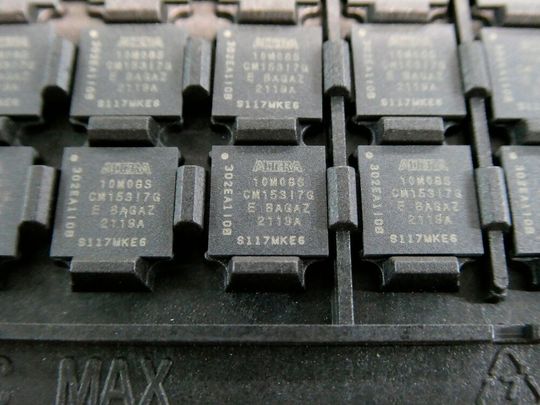
Figure 2: Whether a component can be approved is not determined by its outward appearance alone. The extent of testing depends on the component’s origin, application, value, and risk.
(Image: Chipline TG)
The most recent price paid is not automatically a meaningful benchmark. It may stem from a framework agreement, a spot purchase, or an allocation phase. Quotes are comparable only if the goods, packaging, testing specifications, payment terms, and warranty are identical. The cost of goods sold includes transportation, customs duties, and testing costs. During a supply shortage, the impact of a production outage is also a factor. An unusually low price can sometimes be explained by another EMS company clearing out inventory. However, the source and price must be plausible. If the explanation remains vague, the need for verification increases.
For predictable demand, it may make sense to secure the projected annual demand as a total quantity early on and then call off the goods in agreed-upon tranches. This stabilizes availability and price without requiring the EMS company to immediately store the entire inventory itself. Depending on the payment model, capital tied up can also be reduced. This requires a reliable forecast, clear purchase terms, and rules governing call-off windows and quantity changes. Especially for regularly recurring needs, Scheduled Business can thus bridge the gap between short-term spot purchases and maintaining a full in-house inventory.
Use Alternative Sources Based on Clear Principles
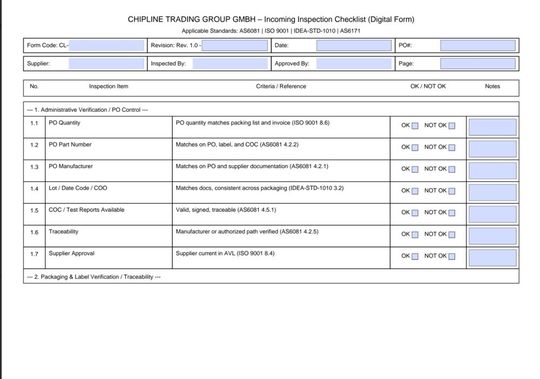
Figure 3: Structured inspection reports help to document inspection steps, the condition of the goods, and any potential anomalies in a traceable manner
(Image: Chipline TG)
Authorized distribution remains the preferred channel for many needs. However, it is not always sufficient in cases of product discontinuations, allocations, or shortages. The independent market can supplement it. It is not a shortcut, but a controlled risk decision.
The extent of the inspection depends on the specific case. The inspection plan is determined by the origin, application, value of the goods, risk of counterfeiting, and traceability. For a transparent batch, a documented visual inspection may be sufficient. Critical parts may require X-ray analysis, X-ray fluorescence analysis, solderability testing, decapsulation, or electrical testing.
IDEA-STD-1010 provides guidance for the visual inspection of open-market products. AS6081 describes how to handle suspicious or counterfeit components in the distribution environment. External laboratories should be qualified for the specific method and, if possible, accredited according to ISO/IEC 17025.
Standards alone do not guarantee a reliable delivery. What matters most is which inspection was agreed upon and whether the report clearly pertains to the specific lot. A lengthy document with no connection to the goods is less helpful than a clear inspection report.
Seven Questions for an Independent Provider
The terms “broker” and “independent distributor” don’t say much about the process. Some act as intermediaries for goods, while others purchase, inspect, and ship the goods themselves. Seven questions provide the purchasing department with a realistic picture:
Are the contracting parties, business address, contact person, bank account information, and billing recipient clearly identified and consistent?
Does the quote include the manufacturer, complete part number, quantity, date code, packaging, condition, location, and delivery time?
Can the provider clearly explain how it evaluates its sources and blocks suspicious suppliers or goods?
Is the supply chain documented internally, even if the upstream supplier is not named for reasons of source protection?
Is the inspection plan established in accordance with the component's risk level and approved prior to ordering?
Are warranties, return policies, and the handling of discrepancies clearly defined?
Does the provider openly say “No” if a source or lot does not meet the requirements?
Warning signs include artificial time pressure, inconsistent information, missing product photos, an inappropriate payment account, and denied inspection or return rights. A single issue does not necessarily constitute grounds for exclusion. Multiple red flags may warrant a more rigorous review or lead to rejection.
Effective Procurement Remains Manageable
Dustin Siggelkow, Managing Director of Chipline Trading Group GmbH.
(Image: Chipline TG)
Ultimately, it doesn’t matter whether goods were found anywhere. The more important question is: Is the available information sufficient to approve this order responsibly? This requires a traceable supply chain, an inspection plan appropriate to the risk, realistic price and delivery assumptions, and clear lines of responsibility in case questions arise after the goods are received.
Professional procurement also involves knowing when to draw the line. If the origin remains unclear, if the documentation and the goods do not match, or if a technical risk cannot be adequately mitigated, a well-reasoned “no” is often more valuable than a quick “yes.” Especially during bottlenecks, this discipline protects against decisions whose long-term costs far exceed any short-term benefits.
Alternative sources of supply are therefore neither inherently risky nor automatically the solution. They are a complementary procurement channel that must be managed according to clear principles: transparency, risk-based assessment, reliable communication, and accountability beyond delivery. If these criteria are met, EMS companies can bridge shortages, hedge against obsolescence, limit price risks, and manage inventory more effectively to meet demand—without sacrificing quality for speed.
*Dustin Siggelkow is the managing director of Chipline Trading Group GmbH. Headquartered in Quickborn (near Hamburg), the company supports EMS and OEM customers with the independent procurement of electronic components, cost-reduction projects, the marketing of excess inventory, and scheduled business involving guaranteed annual requirements and staggered call-offs.



:quality(80)/p7i.vogel.de/wcms/ba/ec/baecd2e3783dee11913096f7d58e1232/bild-1-kammerer-kgt-f-r-elektrozylinder-300dpi-2000px-printv1.jpeg "Kammerer ball screw for use in an electric cylinder (Source: Kammerer)")
:quality(80)/p7i.vogel.de/wcms/51/1b/511b420dbcc296aec09e3bffb051b8a8/0133581587v1.jpeg "The cables connect numerous machine components—often in confined spaces. (Image:Helu)")
:quality(80)/p7i.vogel.de/wcms/b5/67/b5676f3bfb36251ed31f9a0cccf650b6/0133167827v1.jpeg "Thanks to JumboFlex Generation 2, employees can effortlessly move wheelchairs weighing as much as 40 kilograms. (Image:Lard)")
:quality(80)/p7i.vogel.de/wcms/5e/c6/5ec615b7a51440f668259f2af9158cb9/0132654694v1.jpeg "Strategic Partnerships in Industry: As buyers and restructuring partners, Chinese investors are increasingly helping to preserve jobs in Germany. (Image: ©Anatolii Rymarchuk - stock.adobe.com)")
:quality(80)/p7i.vogel.de/wcms/aa/3e/aa3e2603a812f8e7d33c00ba8ae28c9f/0133507886v1.jpeg "With the Iggy Rob, igus is bringing a humanoid robot into factories for a price of 47,999 euros ($54,718). (Image: igus)")
:quality(80)/p7i.vogel.de/wcms/92/64/92645c64ffbb6980976d39102388d120/0113143253v1.jpeg "In our China Market Insider, we regularly provide you with relevant information straight from China. (Image:© Eisenhans - stock.adobe.com)")
:quality(80)/p7i.vogel.de/wcms/c7/05/c70542511e0824ee491f7b55e21fa429/0133598424v1.jpeg "In logistics, AI is often implemented only on a case-by-case basis; data is stored in separate systems, and inventory levels, status values, and priorities are not defined consistently. (Image: ©m-project - stock.adobe.com)")
:quality(80)/p7i.vogel.de/wcms/3a/9c/3a9c1fd546e1f041b86bb1d03cf39101/0133610524v1.jpeg "The Mason W-01 combines industrial-grade humanoid hardware, Physical AI-based perception, and autonomous task planning. (Image:Nova X Robotics)")
:quality(80)/p7i.vogel.de/wcms/9c/16/9c16e4aa02594fe4bf82ead736562b07/directhop1-scaledv1.jpeg "Light as a feather, but without feathers: The University of Washington's robot, which weighs just one gram, uses a bionic direct-drive system to catapult itself into the air with centimeter-level precision. (Source: Mark Stone/University of Washington)")
:quality(80)/p7i.vogel.de/wcms/e7/94/e794290f265afbd0ffc7a06c4fe9d425/adobestock-1887113836--hypnotics-14-stock-adobe-com-ki-generiertv1.jpeg "In both autonomous driving and industrial production, there is growing skepticism as to whether full autonomy is always desirable. (Source: © Hypnotics 14 – stock.adobe.com / AI-generated)")
:quality(80)/p7i.vogel.de/wcms/a8/71/a8712e5c6ef536228444ab5275cedfe2/adobestock-340905887--gorodenkoff-stock-adobe-comv1.jpeg "A new position paper outlines the conditions that the business community, academia, and policymakers must jointly establish in order to ensure the long-term viability of industry in Germany and Europe. (Source: © Gorodenkoff – stock.adobe.com)")
:quality(80)/p7i.vogel.de/wcms/7d/eb/7deb25ca674fa4c781a9d1fab083f7cf/parker-entwicklungszentrum-hresv1.jpeg "The centerpiece of the Parker Center for Drive and Control Technology in Offenbach is the exhibition area. (Source: Parker Hannifin)")
:quality(80)/p7i.vogel.de/wcms/78/ab/78abbfbab0565fabb19efe637aea30e8/nio-power-swap-station-4-china-guangzhou-2024-1400x933-jpgv1.webp "Nio and Geely are collaborating on battery replacement for electric cars. (Source: Nio)")
:quality(80)/p7i.vogel.de/wcms/2e/58/2e58c664e733dd182666606f850c5da4/0133400664v1.jpeg "The IM6 is sort of the crossover version of the IM5. (Image:MG Motor)")
:quality(80)/p7i.vogel.de/wcms/40/5f/405f41f4075e8798878011f0932a8195/0133509065v1.jpeg "Caruso has integrated Hyundai into its platform. (Image:Hyundai)")
:quality(80)/p7i.vogel.de/wcms/06/98/06989beb3f95b8fb06d71190c86cffde/tabletv1.jpeg "The cockpit view during a test drive in the simulator. (Source: Uccello et al., IEEE OJITS 2026)")
:quality(80)/p7i.vogel.de/wcms/67/3d/673d8f6f14bd030b53b61800a0aeb06d/0133548286v1.jpeg "Overview: If even a single critical component is missing, the entire production process can come to a standstill. Proactive procurement is intended to mitigate such bottlenecks early on. (Image:Dall-E / AI-generated)")
:quality(80)/p7i.vogel.de/wcms/b3/8d/b38d7e914a0a51c24db7e93c8a8420e2/0133672676v1.jpeg "Figure 1: Today, the AT cut is most commonly used for quartz crystals. The double-twisted SC cut further enhances the stability and aging resistance of OCXO oscillators. (Image:Q-Tech)")
:quality(80)/p7i.vogel.de/wcms/40/34/4034915f85470ad8264659267e4f02d0/0133655653v1.jpeg "Cariad, Volkswagen's software subsidiary, continues to struggle. Now, another round of layoffs has been announced, which will result in the loss of many jobs ... (Image:Cariad)")
:quality(80)/p7i.vogel.de/wcms/e4/2a/e42af12e2a0816bb3d25fac9932903e9/0133646920v1.jpeg "TSMC's U.S. headquarters in Arizona: According to various media reports, the world's largest contract semiconductor manufacturer may be planning to build up to six additional fabs in the state of Texas. (Image:TSMC)")



:quality(80)/p7i.vogel.de/wcms/35/7b/357b538427108fcf45d75b35315e873c/0132234252v1.jpeg "Supply Chain Management: The key shift in modern supply chain resilience is the transition from reactive damage control to proactive planning. (Image:Gerd Altmann)")
:quality(80)/p7i.vogel.de/wcms/89/61/8961e8605b32164f3845ad7bd0389d66/0127136552v1.jpeg "When discussing hardware in AI applications, the focus is often on GPUs and other hardware accelerators. However, in hardware design, it is actually storage that increasingly challenges developers; not only in terms of quantity but also access times. (Image:freely licensed)")