The Weidmüller I/O system is being utilized by the Australian Institute of Marine Science (AIMS) in the National Sea Simulator (SeaSim) aquariums. The research conducted with this system contributes to the protection of the Great Barrier Reef on Australia's east coast.
In the Sea-Sim, the parameters must be kept constant to ensure the scientific integrity of the experiment.
(Image: Weidmüller)
The Australian Institute of Marine Science (AIMS) is at the forefront of tropical marine research, focusing on the unique ecosystems of Australia's oceans, particularly the Great Barrier Reef, which is the largest coral reef on the planet. Decades of research have revealed the reef's vulnerability to large-scale environmental disruptions. Since 2016, it has experienced four significant coral bleaching events, resulting in widespread coral death
Investigating the causes of coral bleaching
To prevent further coral loss and ongoing damage to the reef, AIMS has set out to investigate the two biggest culprits for this phenomenon: climate change and the invasion of crown-of-thorns starfish. These are the two main causes of the loss of hard corals on the Great Barrier Reef.
Gallery
The world's most advanced research aquarium
To get to the bottom of these problems, AIMS conducts research using the National Sea Simulator. This facility is the most advanced research aquarium in the world. With highly automated systems, different parameters can be changed and monitored at each individual tank, thus recreating the conditions in the reef. Temperature, salinity, nutrient richness, light color, acidity, and water quality can be varied and regulated as needed and according to research interest.
The slightest change can distort the study
To obtain valid research results and insights, the technology in the aquariums must be highly reliable and functional. The slightest change in a parameter, such as the salt content of the water, can distort a long-term study. In this case, not only would years of research be nullified, financial losses would also occur.
Reducing downtime to a minimum
AIMS uses the U-remote I/O system, which meets the high scientific requirements. The modular design of the U-remote module makes it possible to replace electronics during ongoing operations. This reduces downtime to a minimum. In addition, the plain text diagnosis in the integrated web server simplifies error identification, thereby significantly shortening maintenance time. Thus, the U-remote is suitable for standard use in the aquarium's control cabinets.
IO-Link-capable according to standard IEC 61131-9
"For our facility, we need a smart system. It needs to be resilient, able to communicate with the sensors, and configurable. We have many third-party products," explains Steve Green, Senior Controls & Electrical Technician: SeaSim Facility, AIMS. With eleven different protocols, Weidmüller's I/O system can be integrated into the heterogeneous control landscape of the National Sea Simulator. U-remote is IO-Link capable according to the IEC 61131-9 standard. The system communicates with the smart sensors of the research tanks, so that researchers are informed about the values in the experimental plants at all times.
Change the parameters flexibly
Another important feature of U-remote that benefits AIMS is its flexibility. "In research, we change the parameters for different experiments. The I/O system is a product that allows us to easily change the parameters," says Steve Green.
The inputs and outputs of U-remote are configurable at any time. For this purpose, a web server pre-installed in each fieldbus coupler is provided. It can be accessed by entering the IP address using a standard web browser over the Ethernet network or the integrated USB interface. AIMS is then shown the modules installed at the facility and their current process data accurately displayed in the browser.
With just one click, the institute can reconfigure the individual inputs and outputs online. The installation can be saved and transferred to other stations as a standard. This saves the institute time and ensures uniform configuration of all tanks involved in the experiment; accordingly, it also reduces susceptibility to errors when setting up a new parameterization.
Date: 08.12.2025
Naturally, we always handle your personal data responsibly. Any personal data we receive from you is processed in accordance with applicable data protection legislation. For detailed information please see our privacy policy.
Consent to the use of data for promotional purposes
I hereby consent to Vogel Communications Group GmbH & Co. KG, Max-Planck-Str. 7-9, 97082 Würzburg including any affiliated companies according to §§ 15 et seq. AktG (hereafter: Vogel Communications Group) using my e-mail address to send editorial newsletters. A list of all affiliated companies can be found here
Newsletter content may include all products and services of any companies mentioned above, including for example specialist journals and books, events and fairs as well as event-related products and services, print and digital media offers and services such as additional (editorial) newsletters, raffles, lead campaigns, market research both online and offline, specialist webportals and e-learning offers. In case my personal telephone number has also been collected, it may be used for offers of aforementioned products, for services of the companies mentioned above, and market research purposes.
Additionally, my consent also includes the processing of my email address and telephone number for data matching for marketing purposes with select advertising partners such as LinkedIn, Google, and Meta. For this, Vogel Communications Group may transmit said data in hashed form to the advertising partners who then use said data to determine whether I am also a member of the mentioned advertising partner portals. Vogel Communications Group uses this feature for the purposes of re-targeting (up-selling, cross-selling, and customer loyalty), generating so-called look-alike audiences for acquisition of new customers, and as basis for exclusion for on-going advertising campaigns. Further information can be found in section “data matching for marketing purposes”.
In case I access protected data on Internet portals of Vogel Communications Group including any affiliated companies according to §§ 15 et seq. AktG, I need to provide further data in order to register for the access to such content. In return for this free access to editorial content, my data may be used in accordance with this consent for the purposes stated here. This does not apply to data matching for marketing purposes.
Right of revocation
I understand that I can revoke my consent at will. My revocation does not change the lawfulness of data processing that was conducted based on my consent leading up to my revocation. One option to declare my revocation is to use the contact form found at https://contact.vogel.de. In case I no longer wish to receive certain newsletters, I have subscribed to, I can also click on the unsubscribe link included at the end of a newsletter. Further information regarding my right of revocation and the implementation of it as well as the consequences of my revocation can be found in the data protection declaration, section editorial newsletter.
Long-term experiments with crown-of-thorns starfish
Over the past years, AIMS has gained many new insights. Through long-term experiments with crown-of-thorns starfish, the institute was able to provide reef managers with data to better understand the invasions, identify the causes, and develop innovative tools to help control their numbers and actively protect the reefs.
The I/O system is one of the many products and solutions in the fields of IIoT and automation from Weidmüller. "As an 'enabler from data to value', we enable our customers to easily automate their systems," explains Dr. Thomas Bürger, Head of the Automation Products and Solutions Division at Weidmüller.



:quality(80)/p7i.vogel.de/wcms/9e/23/9e23111e49d73012e9e3b7c69428ad5c/0134019347v1.jpeg "The Dominant VA45 high-helix tap from Bass, made of lead-free brass. The long chips, which result from the absence of lead, are clearly visible. (Image:Bass, Inc.)")
:quality(80)/p7i.vogel.de/wcms/1d/09/1d0999956ef87709b72ab1d0402ba207/csf-minis-gruppe-final-01-outputv1.jpeg "Since mid-2026, Harmonic Drive has been offering its CSF Mini gearheads in size 7 as well, in six variants designed for different installation scenarios. (Source: Harmonic Drive)")
:quality(80)/p7i.vogel.de/wcms/ab/08/ab08675922c3a7edea45128248b45b00/0133857009v1.jpeg "In the aerospace industry—one of the most demanding sectors of all—the Shanghai-based company TOPNC has already made a name for itself. (Image:TOPNC)")
:quality(80)/p7i.vogel.de/wcms/ff/48/ff48b1154746e79128935f28bd73ba0e/0113143253v1.jpeg "In our China Market Insider, we regularly provide you with relevant information straight from China. (Image:© Eisenhans - stock.adobe.com)")
:quality(80)/p7i.vogel.de/wcms/ad/d8/add899fae30176e09e7643883e1e155e/0134059801v1.jpeg "The Siemens plant in Erlangen is set to become a global model for AI-supported, autonomous manufacturing. (Image:Siemens AG)")
:quality(80)/p7i.vogel.de/wcms/ca/24/ca24d741a2fd714fa14d2a3e9db1c904/image1v1.jpeg "With 117,500 units sold, transportation and logistics will remain the leading application area for service robotics in 2025 as well. (Image:Innok Robotics)")
:quality(80)/p7i.vogel.de/wcms/b7/95/b795d5fb82459f8a526e880f0698dffa/1-maxon-mind-covershot-landscapev1.jpeg "Claude Jaquemet demonstrates the Maxon Mind demo system. (Source: Maxon)")
:quality(80)/p7i.vogel.de/wcms/be/66/be661616d5250d4c3814a25688f3904b/0133917202v1.jpeg "Neuron AI combines 3D vision, touch, hearing, proprioception, and language—along with memory—into a Perception-Language-Action (PLA) model. Robots can grasp objects they cannot see. (Image:Neura)")
:quality(80)/p7i.vogel.de/wcms/51/b8/51b8e08d2105fdd9952aff385f154192/graphic-2-adma1v1.png "The new surface hardening process enhances the performance of corrosion-resistant alloys by improving their tribological and mechanical surface properties, while preserving the properties of the base material. (Source: Bodycote)")
:quality(80)/p7i.vogel.de/wcms/96/ef/96effc239916cb7e0f396ab75627b8c0/image-space-testingv1.jpeg "Two scientists in front of a vacuum chamber used for testing: As technical instruments for spaceflight become more sensitive, the test facilities are becoming a critical system. (Source: Busch Group)")
:quality(80)/p7i.vogel.de/wcms/5a/12/5a1294a38a634f839f542c0055024d7a/jie-yin-feather-star-header-1500v1.jpeg "Underwater Acrobatics: The new soft robot mimics brittle stars—using minimal propulsion technology. (Source: North Carolina State University)")
:quality(80)/p7i.vogel.de/wcms/96/89/9689197f666e4aa9bc4a1f395c25d3ef/0133739635v1.jpeg "The 2026 Nobel Prize in Medicine laureates: Karl Deisseroth, Peter Hegemann, and Georg Nagel. (Image:Nobel Prize Outreach)")
:quality(80)/p7i.vogel.de/wcms/e9/ea/e9ea034dfa0235d6ec69fc032add864e/0134003342v1.jpeg "Embedded Rust is also becoming increasingly attractive for automotive applications. But what impact does this have on the underlying software architecture? (Image:intellias)")
:quality(80)/p7i.vogel.de/wcms/c8/8b/c88bddfadbd858445414cf92d149ac8f/0134039618v1.jpeg "Green Science Alliance, a Japanese chemical and GreenTech company, is now working in Switzerland on innovative battery recycling processes. (Image:Green Science Alliance)")
:quality(80)/p7i.vogel.de/wcms/fe/f7/fef766ae8b8310ca6dd0852208923e4e/hendrik-malinowski-coo-01v1.png "Hendrik Malinowski Takes on New Role as CCO of BUGATTI RIMAC (Source: Bugatti)")
:quality(80)/p7i.vogel.de/wcms/d9/5f/d95fd82eb5368ce77a8bc9de3a085376/yoshihiro-nakatav1.jpeg "“We are a European manufacturer”: Yoshihiro Nakata, CEO of Toyota Motor Europe, at the corporate briefing in Brussels. (Image:Toyota)")
:quality(80)/p7i.vogel.de/wcms/8b/35/8b35660420abba32fb891a4c5cc42fbd/0134018092v1.jpeg "Long-range UVC LED with lens and reflector: Close-up of a square LED with a transparent, dome-shaped lens on a dark base plate. The hermetically sealed housing ensures greater reliability and durability under demanding environmental conditions. (Image:FBH_Schurian)")
:quality(80)/p7i.vogel.de/wcms/a4/1c/a41cd52e0a26e5173bd4e1f834d4f7f4/0134025034v1.jpeg "As chips become more complex, the demands on semiconductor testing increase. Teradyne and FormFactor plan to combine their technologies for future applications. (Image:freely licensed)")
:quality(80)/p7i.vogel.de/wcms/7b/64/7b64e9fe595b88d2b01ed79e0f2baf94/pm-weidm-ller-elatec-substation-line-switchv1.jpeg "Caption: The Substation Line managed switches can accommodate up to three HSR/PRP modules. (Image:Weidmüller)")
:quality(80)/p7i.vogel.de/wcms/b3/bf/b3bf55a31510b319bb473f73aa205477/0133987448v1.jpeg "In court, Qualcomm achieved a partial victory in its legal dispute with Arm, but was awarded only a symbolic $2 in damages—for now. (Image:Dall-E / AI-generated)")
:fill(fff,0)/p7i.vogel.de/companies/69/de/69de1b7403b0d/simtos-logo.jpeg "simtos-logo (SIMTOS)")
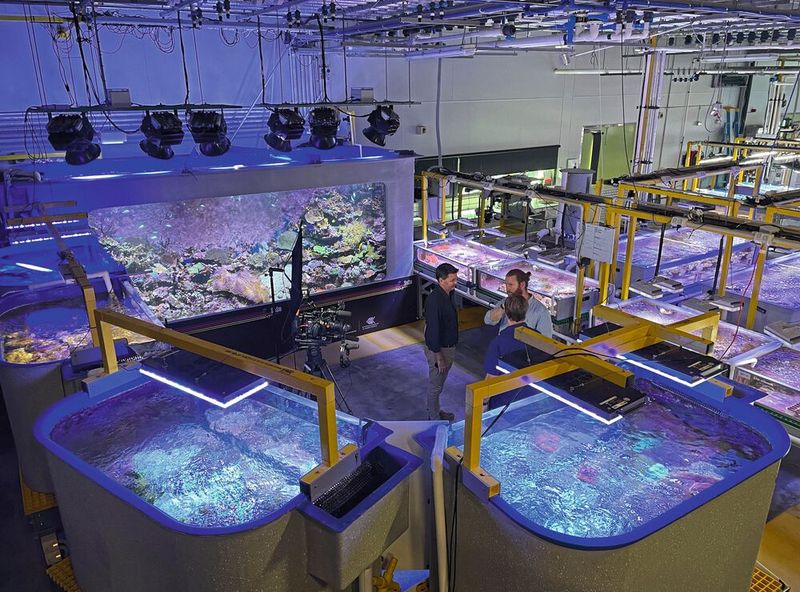
:quality(80)/p7i.vogel.de/wcms/47/7a/477a929bd4c3aca5f7baa86166f6c968/0119038317v1.jpeg "In the research of the Australian Institute of Marine Science (AIMS), the I/O system from Weidmüller is used in the aquariums of the National Sea Simulator (SeaSim).(Image: Weidmüller)")
:quality(80)/p7i.vogel.de/wcms/05/c0/05c0dce4b915926d128d4cfe785ab601/0119038314v1.jpeg "Thanks to eleven different protocols, the u-remote I/O system can be integrated into heterogeneous system landscapes.(Image: Weidmüller)")
:quality(80)/p7i.vogel.de/wcms/0a/9e/0a9e239facaa603184a15292a562d00c/0119037891v1.jpeg "Tests are carried out on corals in the different tanks.(Image: Weidmüller)")
:quality(80)/p7i.vogel.de/wcms/68/cc/68ccb15d16ded5deebfc7915e1172c81/0119038975v1.jpeg "In the Sea-Sim, the parameters must be kept constant to ensure the scientific integrity of the experiment.(Image: Weidmüller)")
:quality(80)/p7i.vogel.de/wcms/db/01/db0155d9e7ca9fd069bd9bd4161f4d1b/0127315728v1.jpeg "Hackers have become the mafia of the digital age. They block systems, steal sensitive data, and extort money. They no longer operate as individuals in backrooms but as professionally organized groups equipped with top-notch technology. Their targets include both international corporations and medium-sized and small businesses. (Image:Bystronic/Justin Wood)")
:quality(80)/p7i.vogel.de/wcms/f8/76/f8761c4d42f22012d01a5abe7751e28c/0132211217v1.jpeg "Control cabinets are far from being obsolete in machinery and plant engineering. (Image:AI-generated)")