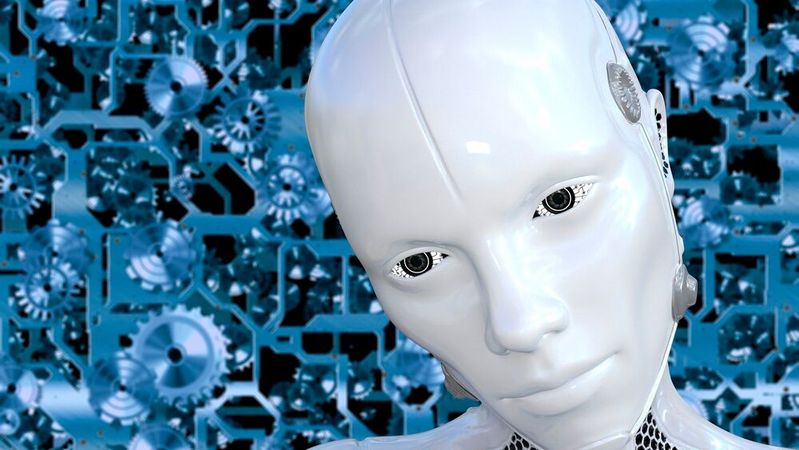
AI-powered robots are transforming the future of robotics by making systems smarter, more adaptable, and more autonomous. Autonomous robots, once a subject of futuristic works, are now on their way to mass production.
Humanoid robots: Robots that were a vision just a few years ago are now a reality thanks to AI, machine learning, and real-time data processing.
Humanoid robots are rapidly evolving from conceptual prototypes to practical tools for various industries, thanks to advancements in artificial intelligence, robotics, and significant investments by major technology companies. This development is transforming sectors such as healthcare, industrial manufacturing, and personal assistance, positioning humanoid robots as an integral part of the future workforce.
The growth of AI-powered robots is being driven by increasing demands in healthcare and manufacturing as well as supportive government measures. It is expected that humanoid robots will offset four percent of the labor shortages in U.S. manufacturing by 2030 by taking on dirty, dangerous, or monotonous tasks. By 2030, these robots could meet two percent of the global demand for elderly care workers, helping in areas with caregiver shortages. In sectors such as mining, disaster relief, and the chemical industry, humanoid robots could perform five to 15 percent of hazardous tasks, thereby enhancing safety and efficiency.
Gallery
By 2050, 63 million humanoid robots could be in use in the USA alone. Countries like Japan are relying on caregiving robots for their aging population, while China is expanding production for industrial automation.
Market Growth and Acceptance
The integration of humanoid robots into various industries is being driven by technological advancements and the need to address labor shortages. Companies like Tesla have introduced the Optimus Gen 2.0—the latest iteration of their humanoid robot designed to push the boundaries of automation both in industry and caregiving. Boston Dynamics, known for its robots like Atlas, is capable of performing complex movements and expanding the limits of humanoid mobility and real-world applications. San Diego-based company Ainos has announced a strategic partnership with Japanese company Ugo to develop a robot with odor detection capabilities.
As humanoid robots play an important role in addressing labor shortages and increasing efficiency in various industries, and significant market growth is expected in the coming years, their energy demand will also rise.
The AI Hardware Revolution
AI hardware platforms like the Nvidia Jetson, the processor of the Qualcomm Dragonwing IQ9 series, and the Synaptics SL1680 provide powerful, energy-efficient computing power essential for real-time perception, motion planning, and decision-making in humanoid robots.
Qualcomm's Dragonwing-IQ9 series is a newly introduced high-performance platform for robotics and industrial applications with long lifecycle support. It offers industry-leading power efficiency for edge processing and up to 100 trillion operations per second (TOPS) in a highly integrated, thermally efficient system-on-chip (SoC) that also includes dedicated real-time processing cores to manage the safety-critical routines required for the safe operation of robots in close proximity to vulnerable individuals. Qualcomm's Dragonwing-IQ9 series processor also features a camera ISP (Image Signal Processor) capable of connecting up to 16 high-resolution cameras simultaneously. The SoC can utilize camera and sensor inputs for object detection, object recognition, path planning, and other essential tasks for robotic navigation and decision-making. Additionally, the dedicated NPU in the devices is powerful enough to run language models like Llama2, enabling humans to interact naturally with their robots.
The Synaptics SL1680 is based on a quad-core ARM Cortex-A73 64-bit CPU, a 7.9 TOPS NPU, a highly efficient, feature-rich GPU, and a multimedia accelerator pipeline. It is ideally suited for home and industrial controls, smart devices, home security gateways, digital signage, displays, point-of-sale systems, and scanners.
Sophisticated AI architectures require advanced core power solutions to support their high computational performance and real-time processing. These systems demand multiphase voltage regulation, dynamic power scaling, and low-noise, highly efficient power delivery to ensure performance stability. As AI workloads in humanoid robots become increasingly intensive, power supply architectures must ensure thermal efficiency, rapid power response, and seamless integration with AI accelerators to avoid bottlenecks or overheating.
Date: 08.12.2025
Naturally, we always handle your personal data responsibly. Any personal data we receive from you is processed in accordance with applicable data protection legislation. For detailed information please see our privacy policy.
Consent to the use of data for promotional purposes
I hereby consent to Vogel Communications Group GmbH & Co. KG, Max-Planck-Str. 7-9, 97082 Würzburg including any affiliated companies according to §§ 15 et seq. AktG (hereafter: Vogel Communications Group) using my e-mail address to send editorial newsletters. A list of all affiliated companies can be found here
Newsletter content may include all products and services of any companies mentioned above, including for example specialist journals and books, events and fairs as well as event-related products and services, print and digital media offers and services such as additional (editorial) newsletters, raffles, lead campaigns, market research both online and offline, specialist webportals and e-learning offers. In case my personal telephone number has also been collected, it may be used for offers of aforementioned products, for services of the companies mentioned above, and market research purposes.
Additionally, my consent also includes the processing of my email address and telephone number for data matching for marketing purposes with select advertising partners such as LinkedIn, Google, and Meta. For this, Vogel Communications Group may transmit said data in hashed form to the advertising partners who then use said data to determine whether I am also a member of the mentioned advertising partner portals. Vogel Communications Group uses this feature for the purposes of re-targeting (up-selling, cross-selling, and customer loyalty), generating so-called look-alike audiences for acquisition of new customers, and as basis for exclusion for on-going advertising campaigns. Further information can be found in section “data matching for marketing purposes”.
In case I access protected data on Internet portals of Vogel Communications Group including any affiliated companies according to §§ 15 et seq. AktG, I need to provide further data in order to register for the access to such content. In return for this free access to editorial content, my data may be used in accordance with this consent for the purposes stated here. This does not apply to data matching for marketing purposes.
Right of revocation
I understand that I can revoke my consent at will. My revocation does not change the lawfulness of data processing that was conducted based on my consent leading up to my revocation. One option to declare my revocation is to use the contact form found at https://contact.vogel.de. In case I no longer wish to receive certain newsletters, I have subscribed to, I can also click on the unsubscribe link included at the end of a newsletter. Further information regarding my right of revocation and the implementation of it as well as the consequences of my revocation can be found in the data protection declaration, section editorial newsletter.
The Core Computing Unit is the heart of the system, as it performs computations and determines what specific solutions are needed for power rails. High-performance core rails have strict specifications to provide the power required by the CPUs, GPUs, and accelerators in the system-on-chip. This article focuses on power supply solutions for SoC core rails.
Conventional solutions for SoC core rails use analog PWM controllers, discrete MOSFETs, and discrete current and temperature sensing circuits (Figure 1). These solutions require many external components, driving up costs, reducing reliability in some applications, and demanding more PCB space. This can complicate the development of conventional solutions and lead to a lack of flexibility and scalability, which are critical requirements for the types of SoCs used in high-performance computing (HPC) applications.
Image 2 depicts a state-of-the-art SoC core power solution with digital multi-phase controllers and monolithic DrMOS power stages. The DrMOS integrates the gate driver IC, the current sensing circuitry, and the temperature sensing circuitry; this enables a simpler solution by eliminating several external components required in conventional solutions.
The DrMOS is a monolithic design with incredibly high power density, offering precise current sensing and accurate on-die temperature sensing. MPS features a 22V and a 6V DrMOS portfolio to support single-stage and two-stage power conversion. For example, the MPQ86760 is a DrMOS from the 6V portfolio that is well-suited for SoCs for autonomous driving and infotainment. Meanwhile, the MPQ86960 is a DrMOS from the 22V portfolio and can be used in humanoid robots.
Figure 3 shows a DrMOS that, together with MPS's multiphase controllers, can supply power rails from 30 A to 80 A (and higher under certain conditions). This combination of a DrMOS and a dedicated controller can be used to efficiently regulate the core power rail of the SoC in a humanoid robot while delivering high current in a compact design.
These digital controllers offer flexibility and scalability, as the number of phases can be configured based on the current levels of the respective SoC core rail. Digital controllers do not require external feedback loop compensation, simplifying design efforts and reducing development time. They also feature non-volatile memory (NVM), allowing register settings to be configured and reconfigured up to 1000 times. Additionally, the controller and DrMOS provide various monitoring and protection features that can be utilized to implement system-level telemetry.
Modern robot platforms use either a 48V or a 22V lithium-ion battery. A 48V lithium-ion battery is becoming the standard high-voltage rail for full-size humanoid robots. MPS offers solutions to efficiently step down both 48V and 22V to provide the necessary voltage for the core rails.
Image 3 shows a block diagram of a highly efficient power supply system for a robotics SoC. A battery is routed through the front-end protection to two digital MPQ2967 controllers. Each controller then configures and manages four MPQ86960 DrMOS stages in multi-phase configurations.
This ensures the supply of four power rails from 30 A to 80 A. The multiphase operation improves efficiency, current sharing, and thermal distribution. The controllers can communicate with the SoC via the I2C interface or any other standard interface supported by our controllers. This setup is ideally suited for high-performance robots requiring a compact and reliable power supply.
Conclusion
The robotics industry is shifting from decentralized controls to centralized high-performance computing platforms. Modern robots use CPUs, GPUs, and AI accelerators to process computer vision, motion planning, and control algorithms in real-time. This shift necessitates powerful low-voltage and high-current power supply systems.
The SoCs used in central data processing require advanced power management solutions, particularly for core voltage rails. Traditional power supply solutions are no longer suitable for the next generation of power applications in central computing systems. With multiphase digital controllers like the MPQ2967 and DrMOS power stages like the MPQ86960, which are deployed in robot SoC core power applications, scalable, flexible, and compact power solutions with high efficiency and fast transient response can be provided.



:quality(80)/p7i.vogel.de/wcms/8e/7e/8e7e0cda4c68699bcc48283a38739769/0133316747v1.jpeg "A little-known hidden champion! When people think of laser cutting, the first thing that comes to mind is the power of the laser beam—and it is impressive to see the sparks flying. But Air Liquide—an exhibitor at Euroblech, by the way—wants to make it clear that the process gas is also key to success. (Image:AI-generated)")
:quality(80)/p7i.vogel.de/wcms/20/fa/20fa35e0af203c3464f7e7fdbb57a685/0133281172v1.jpeg "Since 2003, Etzinger AG has been developing and manufacturing high-quality coffee grinders, pepper mills, and grinding mechanisms for professional and home use. (Image:Etzinger)")
:quality(80)/p7i.vogel.de/wcms/69/91/6991413943488b4a2f6fde9dcd88c5b0/0133256686v1.jpeg "The CMA-patented pendulum mount can compensate for radial tolerances of up to one millimeter. (Image:Schwiening)")
:quality(80)/p7i.vogel.de/wcms/0b/cd/0bcd6d502ffcd087c4fc12b7b760b3ce/0133317507v2v1.jpeg "The new Multi Center from J.G. Weisser. (Image:J.G. Weisser)")
:quality(80)/p7i.vogel.de/wcms/bd/4e/bd4ef09ab0f84932ea76ca0330ffe789/0133329802v1.jpeg "The robotics boom and its consequences: According to a study, a significant portion of value creation occurs in the electronics industry. (Image:Fraunhofer IPA)")
:quality(80)/p7i.vogel.de/wcms/35/81/35815f36be1b1c13f9abef4cea2a3e2b/0133171739v1.jpeg "Humanoid robots in industry: Despite impressive progress, many systems are still in the pilot phase. (Image:AI-generated)")
:quality(80)/p7i.vogel.de/wcms/81/dc/81dc63ed24c562521413023779495e7d/chris-kramerv1.jpeg "Chris Kramar, Director and General Manager of OEM Solutions for Germany, Austria, and Switzerland at Dell Technologies (Source: Dell Technologies)")
:quality(80)/p7i.vogel.de/wcms/bb/f5/bbf5342f532debc1bd7c09c2b9a0bf42/0133176497v1.jpeg "Over the past two years, AI has emerged as the most important growth driver in the industry. (Image: ©Gorodenkoff - stock.adobe.com)")
:quality(80)/p7i.vogel.de/wcms/e9/19/e91905d37afe605bc348a690a4fed72e/0133350592v1.jpeg "At Autodesk University, Autodesk is introducing new AI features for CAD and PLM. (Image:Autodesk)")
:quality(80)/p7i.vogel.de/wcms/98/73/98731d23cbd95ff22391993a74cfefbf/mit-bifurcatedcircuits-01-pressv1.jpeg "A sample of the variety of configurations that Bifur circuits can form. (Source: Courtesy of the researchers)")
:quality(80)/p7i.vogel.de/wcms/f4/3d/f43d1f4297d9ae0cd1b6d2adfcb5ffe1/0133276470v1.jpeg "Simulation: Electric arcs in the electrical industry, including associated field simulation. (Image:CADFEM)")
:quality(80)/p7i.vogel.de/wcms/3e/f1/3ef196715e1b291ec7ae84f02c875c63/0133310495v1.jpeg "The Next Phase of Ethernet in Vehicles: End-to-end Ethernet integrates all high-data-rate devices into the network, including displays and central high-performance computing units. (Image:Infineon Technologies)")
:quality(80)/p7i.vogel.de/wcms/b4/b8/b4b89c48bb797df7251706d4ee096a80/0133359349v1.jpeg "To advance modern rail transportation, Knorr-Bremse and CARS have signed a memorandum of understanding regarding the China Freight Cooperation Program. Pictured here is Rail Executive Board Member Nicolas Lange at the signing ceremony in Beijing. (Image: Knorr-Bremse)")
:quality(80)/p7i.vogel.de/wcms/99/8c/998cb26cfb3110e8444a4ecbfe2dc799/0133338279v1.jpeg "Electric car manufacturer Rivian is launching its R2 SUV in the U.S. (Image:Rivian)")
:quality(80)/p7i.vogel.de/wcms/cc/d1/ccd1607af856c9cff96c73a5ffccfcad/p90652283-highres-demonstrator-woodenv1.jpeg "The FSCM research project, which was recently completed, is delivering innovations close to production for plastics, metals, and design at BMW. (Source: BMW)")
:quality(80)/p7i.vogel.de/wcms/4c/53/4c534208d09a9b1ce597938715e7fc19/0133288763v1.jpeg "Logic Folding: In its latest Kirin 9050 Pro, Huawei uses hybrid bonding to distribute the computing units across two silicon layers in order to increase the effective transistor density without resorting to finer manufacturing processes. (Image:Huawei)")
:quality(80)/p7i.vogel.de/wcms/56/d1/56d131e0b5bd05ef47411e92ad740cb4/0133351029v1.jpeg "Researchers at DTU have developed a nanolaser in a semiconductor membrane. The structure concentrates charge carriers and the light field into a small area (shaded in blue). If data is transmitted on microchips using light instead of electrical signals, transmission speeds can be increased and energy losses reduced. (Image:Yi Yu, DTU)")
:quality(80)/p7i.vogel.de/wcms/5e/55/5e55101ddc6338f755fcf3244db1367f/0133331863v1.jpeg "For data center projects, it is becoming increasingly important to also obtain the consent of the affected community. (Image:Dall-E / AI-generated)")
:quality(80)/p7i.vogel.de/wcms/8d/f9/8df95d3f58408673986b3d643e6b63ba/0133252773v1.jpeg "TXC targets high-speed optical links in AI data centers with 312.5 MHz oscillators, among other solutions. As data rates increase, requirements for jitter and frequency stability become more demanding as well. (Bild: TXC)")
:fill(fff,0)/p7i.vogel.de/companies/69/88/69882c428938e/tmts2026-ticec-banner-en-2000px.png "tmts2026-ticec-banner-en-2000px (https://www.tmts.tw/en)")
:fill(fff,0)/p7i.vogel.de/companies/69/de/69de1b7403b0d/simtos-logo.jpeg "simtos-logo (SIMTOS)")
:quality(80)/p7i.vogel.de/wcms/a6/64/a664af28b9f1a4a7a12423ff37590bb1/0130496948v1.jpeg "Image 3: Example of a robotic SoC performance tree(Image: Codico)")
:quality(80)/p7i.vogel.de/wcms/38/b8/38b81bf6de1192b187b97e1e7d2b1a43/0130496950v1.jpeg "Image 2: Digital PWM controllers and monolithic DrMOS ICs(Image: Codico)")
:quality(80)/p7i.vogel.de/wcms/65/48/65481d29031e80527db7b468795ea93d/0130496953v1.jpeg "Image 1: Traditional SoC solution(Image: Codico)")
:quality(80)/p7i.vogel.de/wcms/e0/42/e042b78b0428516f8c62fc5b774c1ed0/0132138884v1.jpeg "Humanoid robots and autonomous factory: Two megatrends come together. (Image: AI-generated)")
:quality(80)/p7i.vogel.de/wcms/2a/16/2a164f7cbaf53e75573f718f69560c03/-28c-29designbyfreepik2v1.jpeg "Humanoid robots could become one of the most important tools of modern industrial and service society within the next ten years. (Image:FreePik2)")
:quality(80)/p7i.vogel.de/wcms/55/0c/550c9404e9cd6fc8173f04cf4a320081/0128174539v1.jpeg "Modern robotics: CPUs, GPUs, and AI accelerators are required to process computer vision, motion planning, and control algorithms in real time. (Image:Pete Linforth)")
:quality(80)/p7i.vogel.de/wcms/49/3f/493f0f51259c97a0f3fc279607f43f38/0127955062v1.jpeg "Dragonwing IQ-X Series: Qualcomm's first Arm CPUs for the industry. (Image:Qualcomm Inc.)")