It sounds a little like the two companies have grown apart. Quite surprisingly, those responsible at IBM have announced the closure of two research facilities in China. The move had already been on the cards in the recent past.
The strategy of withdrawing from China and investing in locations in India instead has been pursued for some time.
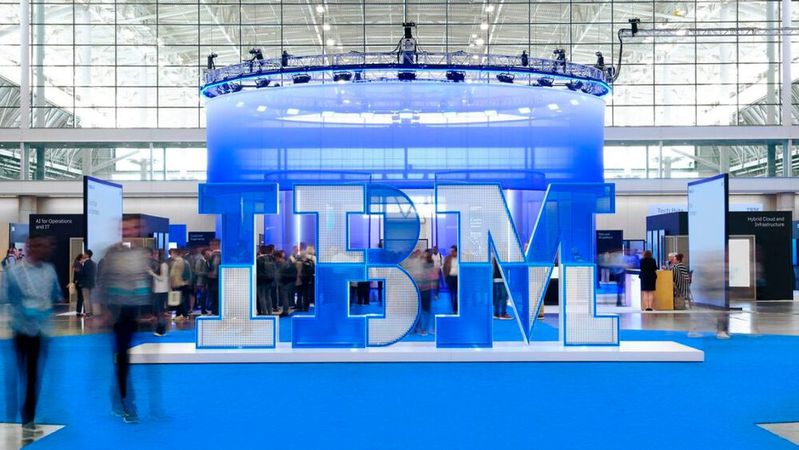
(Image: IBM)
IBM is closing two research and development centers in China, reports the Chinese business portal Caixin. Around 1,600 employees are affected by the closure and have apparently been caught off guard by the news in a very "American" way, the report suggests. "We are pulling all of our development missions out of China," said Jack Hergenrother, VP Global Enterprise Systems Development, according to a transcript of his speech to the workforce in China that was made available to Caixin. He justified IBM's decision with the "dynamics of the market" and the "fierce competition" in China, according to the report.
IBM's China Development Lab (CDL) and China Systems Lab (CSL) will be closed. CDL specializes in the development of application software and has more than 1,000 employees. CSL develops system software, for example for mainframe databases, and has just under 700 employees, writes Caixin.
Both R&D centers were founded in 1999. The news of their closure, although not entirely unexpected, nevertheless sent "shockwaves through the local tech community", as the South China Morning Post (SCMP) newspaper observed.
Flagship employer goes American
For many years, IBM was one of the most sought-after employers in the People's Republic for young graduates from China's top universities. For a quarter of a century, employee training, wages and the corporate culture were regarded as absolutely exemplary in China.
However, some employees discovered on Friday last week that they suddenly no longer had access to the company intranet. Some initially thought it was a system error, until they later received phone calls and the sad news of their termination. It was not until the following Monday that IBM management had time for a three-minute online meeting with the affected employees, as the SCMP reported, citing an employee. However, the IBM employees who had just been fired were not allowed to ask any questions. "More than 1,000 employees will be laid off in Beijing, Shanghai and Dalian," the newspaper quotes various Chinese media reports from the affected cities.
India as an alternative to China
In the first three decades since IBM began investing heavily in China in 1984, the company's business there had been very lucrative, including the sale of servers to Chinese banks and telecoms companies. However, relations between Washington and Beijing began to deteriorate rapidly after Chinese army officers were accused of various offenses in the US and convicted in absentia.
In 2014, the communist leadership in Beijing therefore accelerated a "De-IOE" campaign, which demanded that its state-owned companies turn away from American software products. The abbreviation "IOE" here stands for IBM, Oracle and EMC (which has since merged with Dell). The decline in IBM's China business has accelerated even further since the US began its trade and chip war with the People's Republic in 2018. Last year, IBM's sales in China fell by 19.6 percent, while in Asia-Pacific as a whole they rose by 1.6 percent, according to the company's latest annual report.
China's companies, whether state-owned or private, are increasingly buying from IBM's Chinese competitors. Since 2018, IBM has begun to withdraw some of its R&D employees from the People's Republic. The "China Research Laboratory" has already been closed in 2021 - 26 years after it opened.
An Indian-born IBM CEO is obviously not ideal for business in China either, commented Chinese media. "In 2020, after Arvind Krishna became CEO, the relocation of R&D jobs to India has accelerated, despite his multiple visits to China and assertion of the importance of the Chinese market," writes the SCMP.
IBM is currently investing in its Indian R&D centers in Bangalore and Gurgaon and also in a new cybersecurity hub in Bangalore. "It's no secret that IBM is expanding rapidly in India, replacing its R&D in China," an IBM official told Caixin.
IBM's cutbacks from China are part of a wave of American tech companies withdrawing from the People's Republic. According to media reports, Microsoft asked Chinese employees in May of this year whether they would consider moving to the USA. LinkedIn, which is owned by Microsoft, closed its Chinese platform around a year ago. Airbnb has given up after the harsh coronavirus measures in China decimated its local business. Amazon's e-book store in China has also already closed down. (sb)
Date: 08.12.2025
Naturally, we always handle your personal data responsibly. Any personal data we receive from you is processed in accordance with applicable data protection legislation. For detailed information please see our privacy policy.
Consent to the use of data for promotional purposes
I hereby consent to Vogel Communications Group GmbH & Co. KG, Max-Planck-Str. 7-9, 97082 Würzburg including any affiliated companies according to §§ 15 et seq. AktG (hereafter: Vogel Communications Group) using my e-mail address to send editorial newsletters. A list of all affiliated companies can be found here
Newsletter content may include all products and services of any companies mentioned above, including for example specialist journals and books, events and fairs as well as event-related products and services, print and digital media offers and services such as additional (editorial) newsletters, raffles, lead campaigns, market research both online and offline, specialist webportals and e-learning offers. In case my personal telephone number has also been collected, it may be used for offers of aforementioned products, for services of the companies mentioned above, and market research purposes.
Additionally, my consent also includes the processing of my email address and telephone number for data matching for marketing purposes with select advertising partners such as LinkedIn, Google, and Meta. For this, Vogel Communications Group may transmit said data in hashed form to the advertising partners who then use said data to determine whether I am also a member of the mentioned advertising partner portals. Vogel Communications Group uses this feature for the purposes of re-targeting (up-selling, cross-selling, and customer loyalty), generating so-called look-alike audiences for acquisition of new customers, and as basis for exclusion for on-going advertising campaigns. Further information can be found in section “data matching for marketing purposes”.
In case I access protected data on Internet portals of Vogel Communications Group including any affiliated companies according to §§ 15 et seq. AktG, I need to provide further data in order to register for the access to such content. In return for this free access to editorial content, my data may be used in accordance with this consent for the purposes stated here. This does not apply to data matching for marketing purposes.
Right of revocation
I understand that I can revoke my consent at will. My revocation does not change the lawfulness of data processing that was conducted based on my consent leading up to my revocation. One option to declare my revocation is to use the contact form found at https://contact.vogel.de. In case I no longer wish to receive certain newsletters, I have subscribed to, I can also click on the unsubscribe link included at the end of a newsletter. Further information regarding my right of revocation and the implementation of it as well as the consequences of my revocation can be found in the data protection declaration, section editorial newsletter.
*Henrik Bork is the Managing Director at Asia Waypoint, a consulting agency specializing in China, based in Beijing. "China Market Insider" is a project of Vogel Communications Group, Würzburg, Germany



:quality(80)/p7i.vogel.de/wcms/9f/5e/9f5ebdd436f99ade82edb3b60628c9f9/0132744768v1.jpeg "During welding, molten, glowing metal particles fly around. To ensure the welder is well protected, there are several things to consider. This includes protection from head to toe, covering the body, hands (image), and even feet. Arbeitsschutz-Express provides advice here ... (Image:Nitras)")
:quality(80)/p7i.vogel.de/wcms/80/92/8092cd36dac1d263ca6e705b8a7b0a69/0132724408v1.jpeg "New infrastructure projects in Kazakhstan aim to bring Europe and Asia closer together on the so-called Middle Corridor. (Image:Die Astana Times)")
:quality(80)/p7i.vogel.de/wcms/7d/1b/7d1b6a432c52f68600583b25f7d5c80d/0113143253v1.jpeg "In our China Market Insider, we regularly provide you with relevant information directly from China. (Image:© Eisenhans - stock.adobe.com)")
:quality(80)/p7i.vogel.de/wcms/09/42/09426afd0e023190089bd8c1c36c432f/0132473007v1.jpeg "Particularly in the area of solid carbide cutters, Pferd Tools has thousands of variants in its portfolio. (Image:Pferd Tools)")
:quality(80)/p7i.vogel.de/wcms/11/b0/11b041587fe5783597a78530b628ed7c/0132682714v1.jpeg "Symbolic image: New US rules could make market access more difficult for foreign providers of mobile robots and connected inverters. (Image:Dall-E / AI-generated)")
:quality(80)/p7i.vogel.de/wcms/f2/2d/f22d62adcc688c71e6bea844be9c2a9c/0132344529v1.jpeg "IO-Link is an important component for the Smart Factory. With high transmission speeds, additional data, simplified wiring, and easy integration, IO-Link offers crucial advantages for automation processes. (Image:Baumer)")
:quality(80)/p7i.vogel.de/wcms/2b/00/2b00bf86ad24c2db6c80b9edda1bb375/aufmacher-iotmaxx-gateways-cmykv1.jpeg "With the freely programmable Linux gateways from IoTmaxx, individual integration requirements can be implemented. They are now also available in customized switch cabinets from IoTmaxx. (Source: IoTmaxx GmbH)")
:quality(80)/p7i.vogel.de/wcms/6a/ab/6aab1e6c486540a1587dd92605efa931/0132684773v1.jpeg "Autonomous execution of workflows in the assembly of car doors at Audi. (Image:Mimic Robotics / Audi)")
:quality(80)/p7i.vogel.de/wcms/ca/90/ca90a13919cdade100d393bb3d2f4b3a/0132724138v1.jpeg "Improved cooling concept: Thanks to the cavity microstructure, known as vascular metamaterials, not only are volume and weight reduced, but the cooling capacity is also increased. (Image:Automoteam)")
:quality(80)/p7i.vogel.de/wcms/79/7d/797da27ccb047d5f70ba1d067db9aa81/newsimage425644v1.jpeg "Porous ceramic cubes from the 3D printer use energy-efficient evaporative cooling and noticeably reduce the temperature. (Source: Lunghammer - TU Graz)")
:quality(80)/p7i.vogel.de/wcms/ee/27/ee27620db6bb24e898d15a9452578774/titel-pumpev1.jpeg "Pressure fluctuations and flow forces directly influence the mechanical behavior of technical systems. Multiphysics analyses reveal critical interactions already in the early development stages. (Source: Merkle CAE Solutions)")
:quality(80)/p7i.vogel.de/wcms/47/a6/47a65bc9763ddfc99d52e7d9e48e8220/najwa-abdel-latif-shingle-matrix-fraunhofer-isev1.png "The project manager at Fraunhofer ISE, Najwa Abdel Latif, inspects the interconnected solar cells on the shingle matrix stringer at Fraunhofer ISE. (Source: Fraunhofer ISE / Sophia Bächle)")
:quality(80)/p7i.vogel.de/wcms/90/bb/90bb490f64a7eb60cf1805d9fdb541f0/353166-1-5v1.jpeg "A new electric car is almost always better for the climate than continuing to drive with a combustion engine. (Source: Volvo)")
:quality(80)/p7i.vogel.de/wcms/93/a5/93a52e2b9980dd2fe4823c8054d33c75/0132691285v1.jpeg "At the test bench, data from approximately 240 analog channels is measured. In total, including the channels captured via CAN, around 900 channels are recorded and monitored at the test bench. (Image: Liebherr)")
:quality(80)/p7i.vogel.de/wcms/0a/5c/0a5c469cb4bb53f28ff81c7689ebd868/0132728214v1.jpeg "Junghyun Kwon, Executive Vice President, Head of Autonomous Driving at Hyundai. (Image:Hyundai)")
:quality(80)/p7i.vogel.de/wcms/fd/f4/fdf477763e22c638539d9c204e6428f7/0132654523v1.jpeg "77 percent of EV batteries were manufactured in Asia, primarily in China, in 2025. This is an increase of 7 percent compared to 2024. (Image: AI-generated)")
:quality(80)/p7i.vogel.de/wcms/da/39/da39a38e5c07b0461d44b1a4660aa24f/0132715760v1.jpeg "Product innovation: Innodisk announces GMSL2 camera modules and adapter board series. (Image: Innodisk)")
:quality(80)/p7i.vogel.de/wcms/83/a9/83a9493ad202f37e188f3323c56aa2c6/0132672260v1.jpeg "After Moore's Law: Packaging is becoming the most important driver for semiconductor technology. (Image: ©Svitlana - stock.adobe.com)")
:quality(80)/p7i.vogel.de/wcms/1c/ba/1cba2c23c75d7e5d18f726598dc00708/0132680361v1.jpeg "Symbolic image: Data centers, chips, and circuit boards represent the real AI infrastructure—the fragile bubble represents the high expectations for its continued growth. (Image:Dall-E / AI-generated)")
:quality(80)/p7i.vogel.de/wcms/df/b6/dfb6fc4bd19a03eaff97541bd402c942/newsimage425602v1.png "In their work, researchers at Fraunhofer SIT first create deepfakes themselves to train the system. (Source: Fraunhofer SIT)")
:quality(80)/p7i.vogel.de/wcms/11/b0/11b041587fe5783597a78530b628ed7c/0132682714v1.jpeg "Symbolic image: New US rules could make market access more difficult for foreign providers of mobile robots and connected inverters. (Image:Dall-E / AI-generated)")
:quality(80)/p7i.vogel.de/wcms/3c/8c/3c8cd7148e6997e144ec11ec5466d4ef/0132514800v1.jpeg "China warns of \"backdoor\" in Claude Code – Anthropic disagrees. (Image:Anthropic)")