With its Rhino S solid-state battery, Chinese automaker Chery is setting the bar high for the next generation of electric vehicles. A solid-state cell with an energy density of 400 Wh/kg (181 Wh/lb) has already been developed, and the 600 Wh/kg (272 Wh/lb) version is currently in development. The project is particularly interesting at the intersection of cell chemistry, manufacturing, and vehicle electronics.
Solid-state batteries: They promise a massive increase in the range of electric cars. Is there any truth to this promise, and what about mass production?
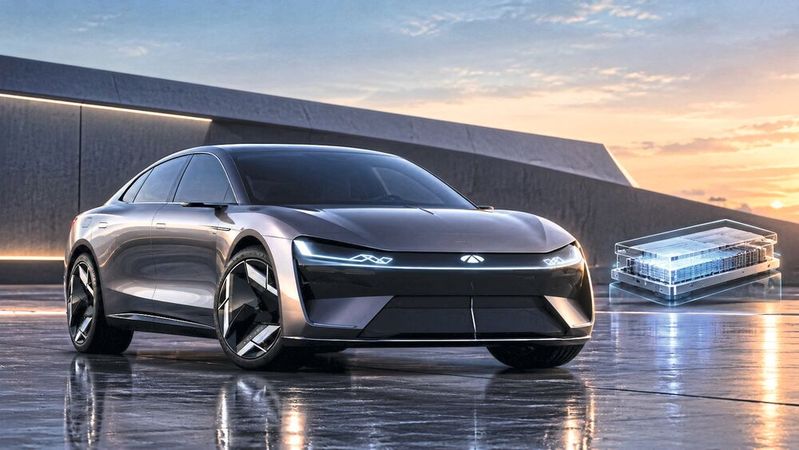
(Image: Dall-E / AI-generated)
Chery's spectacular claim of a 1,500 km (932 miles) range for electric car batteries is nothing new. As early as 2024, the Chinese automaker had already announced a battery cell energy density of 400 Wh/kg, with a future target of 600 Wh/kg. Specific cell parameters are now available. According to the company, the battery, named “Rhino S,” achieves 400 Wh/kg at 60 Ah. The cell uses a sulfide solid electrolyte and a high-nickel ternary cathode. For the next stage of development, Chery cites 600 Wh/kg and a range of more than 1,500 km. However, 600 Wh/kg and 1,500 km are target values, not production figures.
Batteries: Not all Rhinos are the Same
When it comes to the Rhino family, it’s also important to distinguish between the different technologies. In parallel with the all-solid-state battery, the company is developing a solid-liquid hybrid battery, which is scheduled to be installed in vehicles as early as late 2026.
The actual all-solid-state battery will follow later. The Chinese plan to first integrate and validate it in a vehicle in 2027. The Exeed ES8 has been named as the test vehicle. The hybrid battery planned for 2026 is therefore not an all-solid-state battery—especially not by Chinese standards.
Energy Density: 400 Wh/kg is the Current Stepping Stone
In addition to all target values, an energy density of 400 Wh/kg is therefore the key figure at this stage. Chery claims to have already achieved this value with its Rhino-S solid-state cell. The automaker has backed this development with a significant financial investment: more than 10 billion yuan in cumulative R&D investments in frontier technologies, including all-solid-state batteries. In 2025, the company invested a total of 14.715 billion yuan ($2.19 billion) in research and development; spending on clean technologies is expected to rise to more than 8 billion yuan ($1.19) in 2026.
Solid Electrolyte: Sulfide or Polymer?
For the 400 Wh/kg cell, the Chinese are relying on a sulfide solid electrolyte. Sulfides offer high lithium-ion conductivity but pose particular challenges for manufacturing. Key issues include sensitivity to moisture, as well as the mechanical and electrochemical stability of the interfaces between the electrode and the solid electrolyte. Lithium dendrites can also limit service life and safety. Dendrite growth has not yet been fully understood and therefore remains a potential risk.
For the 600 Wh/kg variant, on the other hand, the approach relies on an in situ polymerized solid electrolyte. “In situ” means that the polymer electrolyte is first formed (polymerized) inside the battery cell rather than being introduced separately as a finished polymer film. This approach is intended to ensure the best possible wetting and contact between the electrodes and to address interfacial issues.
Chery combines this type of electrolyte with a lithium-rich manganese cathode. This combination is intended to enable higher energy density. The Chinese financial news agency CLS confirms the cell chemistries and development goals cited by Chery.
An Energy Density of 600 Wh/kg Does Not Yet Equate to a 600-Wh/kg Battery
When it comes to energy density, the following applies: The specification refers to the cell, not the entire battery pack. The housing, busbars, sensors, fuses, contactors, battery management, and thermal management all add to the mass. As a result, the system energy density is lower.
Nevertheless, 600 Wh/kg at the cell level would represent a significant technological leap. With the same battery mass, more energy could be stored; alternatively, a comparable range could be achieved with a lighter battery.
What Does this Mean for Electronics?
A new cell chemistry also changes the requirements for the electronics. The BMS must precisely monitor cell voltage and temperature and control charging and discharging processes within safe limits. At the same time, SOC and SOH models for the new cell chemistry must be validated under real-world operating conditions.
In addition, there are the high-voltage components: contactors, fuses, current sensors, insulation monitoring, and power electronics must all work in tandem with the characteristics of the new battery.
Date: 08.12.2025
Naturally, we always handle your personal data responsibly. Any personal data we receive from you is processed in accordance with applicable data protection legislation. For detailed information please see our privacy policy.
Consent to the use of data for promotional purposes
I hereby consent to Vogel Communications Group GmbH & Co. KG, Max-Planck-Str. 7-9, 97082 Würzburg including any affiliated companies according to §§ 15 et seq. AktG (hereafter: Vogel Communications Group) using my e-mail address to send editorial newsletters. A list of all affiliated companies can be found here
Newsletter content may include all products and services of any companies mentioned above, including for example specialist journals and books, events and fairs as well as event-related products and services, print and digital media offers and services such as additional (editorial) newsletters, raffles, lead campaigns, market research both online and offline, specialist webportals and e-learning offers. In case my personal telephone number has also been collected, it may be used for offers of aforementioned products, for services of the companies mentioned above, and market research purposes.
Additionally, my consent also includes the processing of my email address and telephone number for data matching for marketing purposes with select advertising partners such as LinkedIn, Google, and Meta. For this, Vogel Communications Group may transmit said data in hashed form to the advertising partners who then use said data to determine whether I am also a member of the mentioned advertising partner portals. Vogel Communications Group uses this feature for the purposes of re-targeting (up-selling, cross-selling, and customer loyalty), generating so-called look-alike audiences for acquisition of new customers, and as basis for exclusion for on-going advertising campaigns. Further information can be found in section “data matching for marketing purposes”.
In case I access protected data on Internet portals of Vogel Communications Group including any affiliated companies according to §§ 15 et seq. AktG, I need to provide further data in order to register for the access to such content. In return for this free access to editorial content, my data may be used in accordance with this consent for the purposes stated here. This does not apply to data matching for marketing purposes.
Right of revocation
I understand that I can revoke my consent at will. My revocation does not change the lawfulness of data processing that was conducted based on my consent leading up to my revocation. One option to declare my revocation is to use the contact form found at https://contact.vogel.de. In case I no longer wish to receive certain newsletters, I have subscribed to, I can also click on the unsubscribe link included at the end of a newsletter. Further information regarding my right of revocation and the implementation of it as well as the consequences of my revocation can be found in the data protection declaration, section editorial newsletter.
The all-solid-state battery is therefore not simply a matter of replacing the cells. It affects the design of the entire high-voltage system.
2027: Vehicle Testing, Yes; Mass Production, No
For Chery, 2027 is explicitly the year of vehicle integration and validation. This is an important step, but a significantly smaller one than the start of mass production. The Chinese online portal China New Energy Vehicle Post (CnEVPost) reported on the vehicle validation planned for 2027 and named the Exeed ES8 as the vehicle in question. This makes the timeline for initial vehicle testing quite plausible. However, this does not imply that large-scale, commercially viable production will begin in 2027.
This is because energy density and performance must remain stable over many cycles. Other factors include manufacturing yield, costs, quality assurance, fast-charging capability, temperature behavior, and safety. Of particular interest here is China’s new standard GB/T 43568-2026. Effective July 2026, it defines for the first time in greater detail when a battery in China may actually be designated as a solid-state battery.
This is also relevant to Chery's roadmap: The Chinese auto industry now makes a clear distinction between solid-liquid hybrid batteries and true all-solid-state batteries.
Therefore, the range should also be stated with caution. A range of more than 1,500 km is technically feasible with a sufficiently high cell energy density and an efficient vehicle. However, the range cannot be directly derived from 600 Wh/kg, as vehicle mass, aerodynamics, tires, the powertrain, and the driving cycle also play a decisive role.
Solid-State Battery: The Real Litmus Test Comes in 2027
Nevertheless, Chery has taken the solid-state battery a step beyond the mere announcement phase and reached its first milestone of 400 Wh/kg. In practical testing in 2027, the concept must demonstrate whether the high energy density also enables cycle stability, fast-charging capability, safety, and economically viable manufacturing.
It is fairly certain that Chery can achieve an energy density of 600 Wh/kg in a single cell, putting it ahead of its competitors. Chery (E8 Rhino), GAC (Hyptec), and Toyota (future models). Both Chery and GAC plan to begin mass production of solid-state batteries in 2027, while Toyota plans to do so in 2027 or 2028. All other manufacturers are focusing on hybrid models for the time being.
According to available sources, German manufacturers such as BMW and VW will not bring a production-ready solid-state battery to market before the end of the decade.



:quality(80)/p7i.vogel.de/wcms/68/a5/68a5ce0896756c1dcf48dbeceefafbd3/0132300990v1.jpeg "Christoph Geigges is President and CEO of Walter AG. Headquartered in Tübingen (Germany), the company is one of the world’s leading suppliers of precision tools for metalworking. Under Geigges’ leadership, this long-established company is increasingly transforming itself from a tool manufacturer into an engineering partner that supports the entire manufacturing process. (Image: Walter AG)")
:quality(80)/p7i.vogel.de/wcms/3e/7c/3e7c26f44c68545fc7318597b6b65903/0133649650v1.jpeg "The flexible Heller circular storage system can store and process pallets measuring both 630 millimeters by 630 millimeters and 800 millimeters by 800 millimeters—even in mixed-mode operation. This makes the entire production line particularly flexible. (Image:Brighter)")
:quality(80)/p7i.vogel.de/wcms/16/29/162983885950ec1df27ab441bfe88613/0133132549v1.jpeg "Bernd Hermeler is the CEO of Cemecon AG. He studied mechanical engineering at RWTH Aachen University (Germany)—the very university from which the company emerged as a spin-off 40 years ago. Today, Hermeler is responsible for the global strategy of the coating specialist, which, with branches in Europe, the U.S., China, Japan, and India, is considered the global technology leader in the coating of cutting tools. (Image: Cemecon AG)")
:quality(80)/p7i.vogel.de/wcms/af/81/af81b53cb4926dcadc20ba369a29d412/0132695968v1.jpeg "International venture capital is increasingly flowing into the machining industry. Here are the players that entrepreneurs and CEOs should keep an eye on right now. (Image: ©NDABCREATIVITY - stock.adobe.com)")
:quality(80)/p7i.vogel.de/wcms/ea/18/ea18e84aed24bbe1c91937f30c2f7301/image1v1.jpeg "Kassow Robots' new product portfolio now includes seven 7-axis cobots. (Image: Kassow Robots (Image:)")
:quality(80)/p7i.vogel.de/wcms/c8/d0/c8d0c68a98e4eff417e2bacc58da92b7/aveva-world-media-kitv1.jpeg "Predictive maintenance should not be a matter of plant size or budget, but rather a matter of the proper integration of data collection, analysis, and feedback to operators. (Source: Aveva)")
:quality(80)/p7i.vogel.de/wcms/f2/3b/f23bff6710f706981c703b3110407075/geralt-traffic-signs-663368v1.jpeg "Nearly all of the manufacturing companies surveyed worldwide measure AI outcomes in some form, but only 49 percent rigorously calculate the ROI of AI. (Source: )")
:quality(80)/p7i.vogel.de/wcms/aa/3e/aa3e2603a812f8e7d33c00ba8ae28c9f/0133507886v1.jpeg "With the Iggy Rob, igus is bringing a humanoid robot into factories for a price of 47,999 euros ($54,718). (Image: igus)")
:quality(80)/p7i.vogel.de/wcms/5b/a2/5ba21b3e5fcdd91f6bfe806f745ea723/isc-physioink-bild-3v1.jpeg "In the PhysioINK project, Fraunhofer researchers are developing bio-printing inks from the most common tissue proteins. Under the microscope, the living tissue cells (fibroblasts) are visible in the printed lattice structure: blue represents the cell nucleus, and green represents the cytoskeleton. (Source: Tobias Weigel/Fraunhofer ISC)")
:quality(80)/p7i.vogel.de/wcms/9c/16/9c16e4aa02594fe4bf82ead736562b07/directhop1-scaledv1.jpeg "Light as a feather, but without feathers: The University of Washington's robot, which weighs just one gram, uses a bionic direct-drive system to catapult itself into the air with centimeter-level precision. (Source: Mark Stone/University of Washington)")
:quality(80)/p7i.vogel.de/wcms/e7/94/e794290f265afbd0ffc7a06c4fe9d425/adobestock-1887113836--hypnotics-14-stock-adobe-com-ki-generiertv1.jpeg "In both autonomous driving and industrial production, there is growing skepticism as to whether full autonomy is always desirable. (Source: © Hypnotics 14 – stock.adobe.com / AI-generated)")
:quality(80)/p7i.vogel.de/wcms/a8/71/a8712e5c6ef536228444ab5275cedfe2/adobestock-340905887--gorodenkoff-stock-adobe-comv1.jpeg "A new position paper outlines the conditions that the business community, academia, and policymakers must jointly establish in order to ensure the long-term viability of industry in Germany and Europe. (Source: © Gorodenkoff – stock.adobe.com)")
:quality(80)/p7i.vogel.de/wcms/e9/47/e9470a0380c0d0022533e8a694f239f6/0133704817v1.jpeg "Range Extender: In the BYD Dolphin, the parallel hybrid system operates almost exclusively using a series strategy. (Image:BYD)")
:quality(80)/p7i.vogel.de/wcms/38/40/3840a78113b846a7a13486d73506eff5/citroen-2cv-screenshot-ki-bearbeitetv1.jpeg "This is what Citroën's 2CV concept car might look like. (Image:Stellantis / KI-generiert)")
:quality(80)/p7i.vogel.de/wcms/24/49/244902b72b5020c427bb50c6d3513811/0133725464v1.jpeg "Solid-state batteries: They promise a massive increase in the range of electric cars. Is there any truth to this promise, and what about mass production? (Image:Dall-E / AI-generated)")
:quality(80)/p7i.vogel.de/wcms/fa/bb/fabb3c45272579793253b5da63f911f7/db2023im00001-largev1.jpeg "The planned VW/Powerco battery cell factory is located north of Valencia, not far from the port of Sagunt (left). On the right, a future expansion of the factory is faintly visible through the transparency. (Image:Volkswagen AG)")
:quality(80)/p7i.vogel.de/wcms/70/59/7059db055d4eeb8dea752651a071f360/geralt-handshake-4608297v1.jpeg "The deal between Schneider Electric and PTC is intended to create end-to-end data flows for the industry. (Source: )")
:quality(80)/p7i.vogel.de/wcms/67/3d/673d8f6f14bd030b53b61800a0aeb06d/0133548286v1.jpeg "Overview: If even a single critical component is missing, the entire production process can come to a standstill. Proactive procurement is intended to mitigate such bottlenecks early on. (Image:Dall-E / AI-generated)")
:quality(80)/p7i.vogel.de/wcms/b3/8d/b38d7e914a0a51c24db7e93c8a8420e2/0133672676v1.jpeg "Figure 1: Today, the AT cut is most commonly used for quartz crystals. The double-twisted SC cut further enhances the stability and aging resistance of OCXO oscillators. (Image:Q-Tech)")
:quality(80)/p7i.vogel.de/wcms/40/34/4034915f85470ad8264659267e4f02d0/0133655653v1.jpeg "Cariad, Volkswagen's software subsidiary, continues to struggle. Now, another round of layoffs has been announced, which will result in the loss of many jobs ... (Image:Cariad)")
:fill(fff,0)/images.vogel.de/vogelonline/companyimg/76800/76895/65.jpg "FAULHABER_120mm.jpg ()")
:fill(fff,0)/p7i.vogel.de/companies/69/de/69de1b7403b0d/simtos-logo.jpeg "simtos-logo (SIMTOS)")
:quality(80)/p7i.vogel.de/wcms/9a/eb/9aebe89e1654dc14f3b44725a901b1a7/0132278483v1.jpeg "In China, since July 2026, the GB/T 43568-2026 standard defines when an energy storage device may be referred to as a solid-state battery. (Image:phonlamaiphoto - stock.adobe.com)")
:quality(80)/p7i.vogel.de/wcms/ac/4a/ac4ac41833e4d72d7e5fe55b12291134/0131065166v1.jpeg "Robin Zeng, Chairman and CEO of CATL, is driving forward the development of modern battery technologies. (Image:CATL)")