Six key trends—from energy efficiency to cyber security—are shaping the mechanical engineering industry. Those who see them as opportunities will transform today's pressures into tomorrow's strategic competitive advantages. Simone Gardosi, EMEA OEM Segment Leader at Eaton, explains exactly how to do this in the following article.
The mechanical engineering industry is facing major challenges: rising operating costs, a shortage of skilled workers, global competition and new trade barriers. The solution: energy-efficient, digitally networked and user-friendly systems.
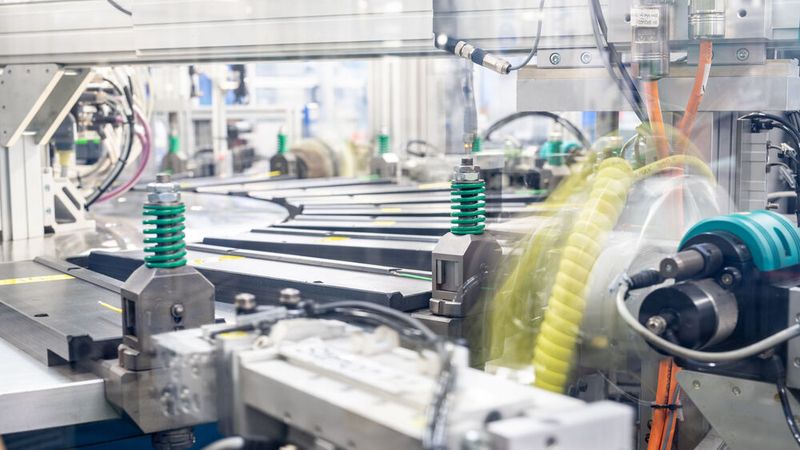
(Image: Eaton)
The mechanical engineering industry is facing unprecedented challenges: With rising operating costs, an acute skills shortage, increased global competition and emerging trade barriers, customer requirements are also changing significantly. Against this backdrop, there are six key developments that are having a fundamental impact on how machine manufacturers design, manufacture and deliver solutions.
1. Control Energy Consumption
Rapidly rising energy prices continue to weigh heavily on the industrial sector, particularly in Germany. The cost of electricity for large consumers there is around 14 ct/kWh, which is significantly higher than the European average of 12 ct/kWh and the much lower rates of 8 ct/kWh in the USA and China. Machine manufacturers must be prepared for customers who are looking for relief from this cost pressure. Solutions that precisely monitor energy consumption offer a decisive advantage in a market in which total cost of ownership is increasingly becoming a decisive factor in purchasing decisions.
Our experience also shows that machine builders are increasingly turning to solutions that offer greater energy efficiency, for example through more reliable motor control systems. This ensures optimum performance, prevents energy-intensive breakdowns, enables predictive optimization and reduces maintenance-related energy waste.
2. Seize New Opportunities of the Energy Transition
The accelerating energy transition is opening up considerable opportunities for mechanical engineering companies. First and foremost, these arise from growth in the renewable energy sector. New business areas and sources of income are emerging here beyond traditional manufacturing, and the existing expertise in the field of precision machinery can be used for innovative applications.
In Germany, for example, the massive expansion of charging infrastructure for electric vehicles is driving demand across the entire ecosystem—from charging stations and power distribution systems to grid connections, payment platforms and grid management solutions. Machine builders are well positioned to capitalize on this by manufacturing and assembling charging stations, developing power conversion equipment and offering integrated solutions such as cable management, connectors and cooling systems for high-power chargers. There are similar growth opportunities in the areas of battery energy storage and heating, ventilation and air conditioning technology. These applications place high demands on reliability, cost efficiency, scalability and compliance with legal regulations—all areas in which mechanical engineers can contribute their in-depth expertise and experience in a targeted manner.
3. Mastering Increasing Productivity Requirements With Digital Innovation
This rapid pace of innovation is not limited to growth sectors such as renewable energies, but has now become indispensable in all industries: from the automotive industry to production and the utilities sector. Machine builders are under increasing pressure to realize shorter development cycles and faster time-to-market. One solution is to invest in future-proof design architectures that include pre-configured control blocks, digital twin models and extensive component libraries.
These digital building blocks are already validated, can be easily reconfigured, reused or scaled and can be quickly integrated into new designs. Instead of developing a motor controller from scratch, machine builders can rely on digital building blocks. These already contain relevant specifications, embedded software, algorithms for energy optimization and predictive maintenance functions, among other things. This approach significantly shortens the development time, minimizes errors and allows for a more flexible design process.
This digital innovation is part of a general trend towards data-driven processes. The digital transformation in German factories is in full swing and is opening up new opportunities for intelligent, data-driven operations. Machines are increasingly being equipped with sensors and smart devices to monitor specific measurement parameters. An often overlooked challenge for machine builders is the cabling and integration of these devices. For this reason, they are increasingly looking for intelligent plug-and-play cabling solutions that can be seamlessly integrated into standard fieldbus systems while reducing installation time and costs.
Date: 08.12.2025
Naturally, we always handle your personal data responsibly. Any personal data we receive from you is processed in accordance with applicable data protection legislation. For detailed information please see our privacy policy.
Consent to the use of data for promotional purposes
I hereby consent to Vogel Communications Group GmbH & Co. KG, Max-Planck-Str. 7-9, 97082 Würzburg including any affiliated companies according to §§ 15 et seq. AktG (hereafter: Vogel Communications Group) using my e-mail address to send editorial newsletters. A list of all affiliated companies can be found here
Newsletter content may include all products and services of any companies mentioned above, including for example specialist journals and books, events and fairs as well as event-related products and services, print and digital media offers and services such as additional (editorial) newsletters, raffles, lead campaigns, market research both online and offline, specialist webportals and e-learning offers. In case my personal telephone number has also been collected, it may be used for offers of aforementioned products, for services of the companies mentioned above, and market research purposes.
Additionally, my consent also includes the processing of my email address and telephone number for data matching for marketing purposes with select advertising partners such as LinkedIn, Google, and Meta. For this, Vogel Communications Group may transmit said data in hashed form to the advertising partners who then use said data to determine whether I am also a member of the mentioned advertising partner portals. Vogel Communications Group uses this feature for the purposes of re-targeting (up-selling, cross-selling, and customer loyalty), generating so-called look-alike audiences for acquisition of new customers, and as basis for exclusion for on-going advertising campaigns. Further information can be found in section “data matching for marketing purposes”.
In case I access protected data on Internet portals of Vogel Communications Group including any affiliated companies according to §§ 15 et seq. AktG, I need to provide further data in order to register for the access to such content. In return for this free access to editorial content, my data may be used in accordance with this consent for the purposes stated here. This does not apply to data matching for marketing purposes.
Right of revocation
I understand that I can revoke my consent at will. My revocation does not change the lawfulness of data processing that was conducted based on my consent leading up to my revocation. One option to declare my revocation is to use the contact form found at https://contact.vogel.de. In case I no longer wish to receive certain newsletters, I have subscribed to, I can also click on the unsubscribe link included at the end of a newsletter. Further information regarding my right of revocation and the implementation of it as well as the consequences of my revocation can be found in the data protection declaration, section editorial newsletter.
This simplified approach enables machine builders to offer additional services such as predictive maintenance and remote monitoring. The use of machine data also helps to differentiate products from the competition through advanced analysis and optimization. It also enables the development of models that generate recurring revenue and allow companies to clearly differentiate themselves from their competitors.
5. Ensure Cyber Security in An Increasingly Networked Environment
While increasing connectivity opens up new business opportunities for machine manufacturers, it also exposes them to a growing number of cyberattacks and security breaches. Cyberattacks and espionage cost German companies almost $340 billion last year alone. As production facilities become more connected through intelligent systems and cyber attackers increasingly rely on artificial intelligence, machine builders are under growing pressure to implement sophisticated security measures.
Strategies such as "security by design", which are integrated from the ground up rather than added as an afterthought, "zero trust" architectures and strict access controls have now become the industry standard. Modern tools now offer seamless remote monitoring by expert teams, early detection of anomalies and proactive optimization of routine maintenance to minimize risk and ensure a rapid response in the event of an attack.
6. Overcome Personnel Problems With An Intuitive, User-Driendly Design
While most current trends are driven by technological developments, one key trend is still all about people: the labor shortage. It is the biggest challenge for manufacturers. With the baby boomer generation retiring in large numbers, companies are struggling to fill vacancies with new talent. At the same time, adapting to new processes in smart factories is a challenge for both new employees and the existing workforce.
Manufacturers therefore need machines that are intuitive and easy to operate so that new employees can be trained quickly and existing processes can be optimized. Machine builders support them by developing user interfaces that enable easy navigation to important information and simplified human-machine interaction. This approach not only shortens the training period, but also reduces errors and thus leads to less downtime.
These trends are not visions of the future, but current market realities. Machine manufacturers who see these six trends as interlinked opportunities rather than isolated challenges will emerge stronger from this phase of transformative change. In this way, they have the potential to establish themselves as indispensable partners in an environment in which adaptability and innovation are the key to success. Energy efficiency is becoming a competitive advantage and is no longer just a cost or environmental issue. The digital transformation is evolving from a technological upgrade to a revolution in business models. Cybersecurity is changing from a compliance requirement to a basis for building trust. User-friendly design is moving from a nice-to-have feature to an operational necessity. The future belongs to those who turn the pressures of today into the strategic advantages of tomorrow.
About Eaton
Eaton is an intelligent energy management company dedicated to protecting the environment and improving the quality of life for people around the world. We develop products for data centers, utilities, industrial, commercial, institutional, mechanical, residential, aerospace and mobility markets. We are guided by our commitment to doing business right, doing business sustainably and helping our customers manage energy—now and in the future. By focusing on the global growth trends of electrification and digitalization, we help solve the most pressing energy management challenges and build a more sustainable society for the people of today and generations to come.



:quality(80)/p7i.vogel.de/wcms/20/fa/20fa35e0af203c3464f7e7fdbb57a685/0133281172v1.jpeg "Since 2003, Etzinger AG has been developing and manufacturing high-quality coffee grinders, pepper mills, and grinding mechanisms for professional and home use. (Image:Etzinger)")
:quality(80)/p7i.vogel.de/wcms/69/91/6991413943488b4a2f6fde9dcd88c5b0/0133256686v1.jpeg "The CMA-patented pendulum mount can compensate for radial tolerances of up to one millimeter. (Image:Schwiening)")
:quality(80)/p7i.vogel.de/wcms/0b/cd/0bcd6d502ffcd087c4fc12b7b760b3ce/0133317507v2v1.jpeg "The new Multi Center from J.G. Weisser. (Image:J.G. Weisser)")
:quality(80)/p7i.vogel.de/wcms/6a/ef/6aef8ea2d02622844db469c705a21222/0133322968v1v1.jpeg "Canada and the U.S. have been locked in a trade dispute ever since Donald Trump was re-elected as U.S. president. In the long run, however, Canada could end up being the loser. That is why the country is turning more toward its trading partner, the EU. Something very special is set to emerge... (Image:AI-generated)")
:quality(80)/p7i.vogel.de/wcms/35/81/35815f36be1b1c13f9abef4cea2a3e2b/0133171739v1.jpeg "Humanoid robots in industry: Despite impressive progress, many systems are still in the pilot phase. (Image:AI-generated)")
:quality(80)/p7i.vogel.de/wcms/81/dc/81dc63ed24c562521413023779495e7d/chris-kramerv1.jpeg "Chris Kramar, Director and General Manager of OEM Solutions for Germany, Austria, and Switzerland at Dell Technologies (Source: Dell Technologies)")
:quality(80)/p7i.vogel.de/wcms/bb/f5/bbf5342f532debc1bd7c09c2b9a0bf42/0133176497v1.jpeg "Over the past two years, AI has emerged as the most important growth driver in the industry. (Image: ©Gorodenkoff - stock.adobe.com)")
:quality(80)/p7i.vogel.de/wcms/01/61/01615a0939754c41e9d2c8971bf0b38a/web-image-kuka-kmf-1500p-300-dpi-1v1.jpeg "Thanks to its design, the KMF 1500P-CB is suitable for the stable and flexible handling of closed and open pallets. (Source: Kuka)")
:quality(80)/p7i.vogel.de/wcms/98/73/98731d23cbd95ff22391993a74cfefbf/mit-bifurcatedcircuits-01-pressv1.jpeg "A sample of the variety of configurations that Bifur circuits can form. (Source: Courtesy of the researchers)")
:quality(80)/p7i.vogel.de/wcms/f4/3d/f43d1f4297d9ae0cd1b6d2adfcb5ffe1/0133276470v1.jpeg "Simulation: Electric arcs in the electrical industry, including associated field simulation. (Image:CADFEM)")
:quality(80)/p7i.vogel.de/wcms/1d/fb/1dfbb415cd837102a33ce21ecf052ec3/0133277411v1.jpeg "LED drivers: LED circuit boards connect the light fixture to the electronics. During design, the operating current, forward voltage, and temperature must be taken into account across the entire operating range. (Image: ©Maria - stock.adobe.com)")
:quality(80)/p7i.vogel.de/wcms/80/8a/808a0eccf49a2a4fe560bd1998506ef9/0133308770v1.jpeg "Just like that, the supports are gone! High-speed footage of the automated, ultrasound-based process for removing optimized support structures from additively manufactured metal parts. It will be presented for the first time at Formnext from November 17 to 20. (Image:Fraunhofer IAPT)")
:quality(80)/p7i.vogel.de/wcms/73/06/7306146c5296cdd9bd77433f736c28e9/0133344456v1.jpeg "Tesla plans to bring its electric tractor-trailer to Europe in 2027. (Image:Tesla)")
:quality(80)/p7i.vogel.de/wcms/bf/fa/bffae31a7688e8c6721da41a7a6b502e/dsc00333-1536x864v1.jpeg "On August 10, 2026, Coolfly officially unveiled Urban, a flying vehicle designed for standing passengers. (Source: CoolFly)")
:quality(80)/p7i.vogel.de/wcms/fe/a8/fea8f62ea056f3c5334931f38cb80c76/0133324887v1v1.jpeg "It's flying off the shelves! The ID.Polo electric compact car seems to be living up to Volkswagen's expectations. After all, there are already more than 30,000 orders. The three sister models are also selling well... (Image:Volkswagen)")
:quality(80)/p7i.vogel.de/wcms/cb/00/cb0048b5a5df1a016d82aafa60aab9a9/35fa3e8bcf12df84fcc0b7ade728c03dv1.jpeg "Xiaomi has unveiled four new models. The large SUVs all have a gasoline engine to charge the battery. (Image:Xiaomi)")
:quality(80)/p7i.vogel.de/wcms/8d/f9/8df95d3f58408673986b3d643e6b63ba/0133252773v1.jpeg "TXC targets high-speed optical links in AI data centers with 312.5 MHz oscillators, among other solutions. As data rates increase, requirements for jitter and frequency stability become more demanding as well. (Bild: TXC)")
:quality(80)/p7i.vogel.de/wcms/b4/85/b48565f20a330043d0cd8c5f708f779f/0133316091v2v1.jpeg "The open Chiisai standard supports the cross-vendor development of HALs, middleware, and embedded software for small microcontrollers. (Image:Vector Informatics)")
:quality(80)/p7i.vogel.de/wcms/6c/a6/6ca6c6410e051401d5596d5cc6dfa277/0133283570v1.jpeg "From Core to Platform: With MIPS, ARC, and RISC-V, competition is shifting from individual processor IP blocks to integrated compute platforms for specialized applications. (Image:Dall-E / AI-generated)")
:quality(80)/p7i.vogel.de/wcms/73/17/73174a2afe684fa12d7d6a57b29b20e2/0133305506v1.jpeg "AI data centers are a key driver of direct current technologies. (Image:Pixabay / Brian Penny / AI-generated)")
:fill(fff,0)/p7i.vogel.de/companies/69/88/69882c428938e/tmts2026-ticec-banner-en-2000px.png "tmts2026-ticec-banner-en-2000px (https://www.tmts.tw/en)")
:fill(fff,0)/p7i.vogel.de/companies/69/de/69de1b7403b0d/simtos-logo.jpeg "simtos-logo (SIMTOS)")
:quality(80)/p7i.vogel.de/wcms/1b/1d/1b1de9fed3f42dbceaf87942fc1c8ceb/0131656300v1.jpeg "Author: Simone Gardosi, EMEA OEM Segment Leader at Eaton(Image: Eaton)")
:quality(80)/p7i.vogel.de/wcms/e3/df/e3dfa0dfc84a5c98c1cd08b53fa10da9/0131657162v1.jpeg "The mechanical engineering industry is facing major challenges: rising operating costs, a shortage of skilled workers, global competition and new trade barriers. The solution: energy-efficient, digitally networked and user-friendly systems.(Image: Eaton)")
:quality(80)/p7i.vogel.de/wcms/c7/fd/c7fd6aa6e02d2905532e13267e308ed6/0131657166v1.jpeg "The mechanical engineering industry is facing major challenges: rising operating costs, a shortage of skilled workers, global competition and new trade barriers. The solution: energy-efficient, digitally networked and user-friendly systems.(Image: Eaton)")
:quality(80)/p7i.vogel.de/wcms/a6/15/a615478c358fe24b9d36d3173090c757/0131657164v1.jpeg "The mechanical engineering industry is facing major challenges: rising operating costs, a shortage of skilled workers, global competition and new trade barriers. The solution: energy-efficient, digitally networked and user-friendly systems.(Image: Eaton)")
:quality(80)/p7i.vogel.de/wcms/5e/df/5edf91d60fe9d1d1e27b2ea083a79143/0129618357v1.jpeg "The future of manufacturing will be determined by demonstrable productivity gains - with more digitalization, networked data streams and simulation-based decisions. (Image:Visual Components)")
:quality(80)/p7i.vogel.de/wcms/d1/ab/d1ab452217529e5c29a81add9aca7c22/0128871322v1.jpeg "Only one year to go: the new EU Machinery Regulation makes cybersecurity mandatory. Companies should act now. (Picture: ©Pisit - stock.adobe.com)")
:quality(80)/p7i.vogel.de/wcms/2a/2a/2a2a10fc0bba59cf59816abb8fecfd42/0132450232v1.jpeg "In addition to global crises and high customer demands, mechanical engineers must respond to rising energy prices and data-driven processes. (Image:Gemini / AI-generated)")
:quality(80)/p7i.vogel.de/wcms/7f/ed/7fed884669e7341e2bd9664f69acc528/0127859665v1.jpeg "Data as a foundation: Continuous machine connectivity enables real-time analysis, increases OEE, and provides transparency about performance, availability, and quality. (Image: ©Gorodenkoff - stock.adobe.com)")