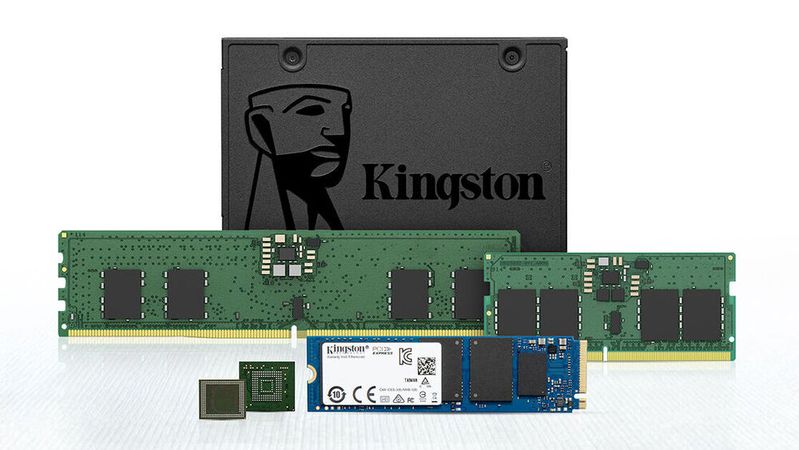
Industrial storage systems must meet high standards for performance, reliability, and service life. In addition to storage technology, operating conditions and long-term availability are also critical factors. Protecting sensitive data is another key consideration.
In industrial settings in particular, storage devices must meet different requirements—especially in terms of durability and security—than standard commercial storage or memory media. When requirements for edge AI are added to the mix, choosing the right storage component requires particularly careful consideration.
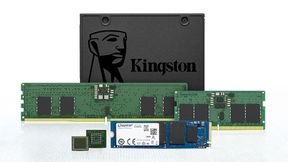
(Image: Kingston)
Industrial and embedded systems place high demands on the memory used. These demands depend heavily on the specific application and environmental conditions. For example, it is crucial whether a system is used indoors or outdoors, in a cooled or heated environment, or under conditions of severe shock and vibration. The latter is particularly relevant for use in mobile applications.
In addition to operating conditions, the role of memory within the system is also crucial. While non-volatile storage devices such as solid-state drives (SSDs), embedded MultiMediaCards (eMMC), and Universal Flash Storage (UFS) store data permanently, Dynamic Random Access Memory (DRAM) serves as volatile working memory for ongoing data processing.
Write Load and Temperature Determine the Choice of Storage Device
Another important selection criterion for storage in industrial and embedded applications is what is known as the write load. Applications that regularly write and read data require an SSD with high endurance, such as SSDs based on 3D Triple Level Cell (3D-TLC) NAND flash memory. In contrast, applications that are predominantly read-intensive can be adequately supported by an SSD based on 3D Quad Level Cell (3D-QLC) NAND flash, which is generally sufficient for such use cases.
One of the differences between TLC and QLC lies in their storage density. TLC stores three bits per memory cell, while QLC stores four bits. QLC’s higher storage density enables larger capacities but is generally accompanied by a lower write endurance of the memory cells. Which technology is suitable therefore depends on the actual write profile.
One of the metrics used to assess the lifespan of a storage device is Total Bytes Written (TBW). It indicates the cumulative amount of data that can be written to an SSD within its specified endurance limit. This value is an important selection criterion for developers, particularly for applications that continuously record log or sensor data.
Another important selection criterion is the temperature range. For many applications, the commercial temperature range of 0 to +70 °C (32 to 158 °F) is sufficient. In some cases, however, developers must account for short-term temperature spikes and, consequently, occasional overheating. Features such as thermal throttling can help prevent overheating by specifically regulating the storage device’s performance at high temperatures. For demanding applications, storage manufacturers offer SSDs with an extended temperature range, such as -20 to +85 °C (−4 to 185 °F), or an industrial temperature range of -40 to +85 °C (−40 to 185 °F).
In addition to temperature, the heat generated by the storage unit itself can also be a factor. Therefore, especially in compact, poorly ventilated systems, thermal management must be taken into account as early as the design phase.
Controlled Bills of Materials Ensure Product Quality
For industrial applications, in addition to technical specifications, the availability of components over time is also critical, as many systems remain in service for ten years or longer. For this reason, manufacturers select individual components very carefully when developing a system. Before developers add components to the supplier list, they should approve them under strict guidelines in accordance with the relevant processes. In this way, developers ensure that all components work together reliably and that the final product is of high quality so that it remains in service for as long as possible.
An unplanned or unintended change to a component during production or the product's lifecycle poses a high risk. Possible causes include, among others:
Incompatibilities between components;
System instabilities;
Problems with the host or operating system; or
Variations in the thermal behavior or energy management of an SSD.
In the worst-case scenario, such changes can lead to a production shutdown. Controlled bills of materials (BOMs), standardized firmware versions, and long-term product availability help minimize this risk.
Depending on the application, evaluating and qualifying a component such as an SSD can take anywhere from a few days to several months. Once a component has been successfully approved, its technical characteristics should remain unchanged throughout the entire product life cycle, if possible.
If changes are nevertheless necessary, the manufacturer typically notifies its customers via a Product Change Notification (PCN). This notification describes the planned changes and the reasons for them. When a product is discontinued, the customer should ideally receive the following information:
Date: 08.12.2025
Naturally, we always handle your personal data responsibly. Any personal data we receive from you is processed in accordance with applicable data protection legislation. For detailed information please see our privacy policy.
Consent to the use of data for promotional purposes
I hereby consent to Vogel Communications Group GmbH & Co. KG, Max-Planck-Str. 7-9, 97082 Würzburg including any affiliated companies according to §§ 15 et seq. AktG (hereafter: Vogel Communications Group) using my e-mail address to send editorial newsletters. A list of all affiliated companies can be found here
Newsletter content may include all products and services of any companies mentioned above, including for example specialist journals and books, events and fairs as well as event-related products and services, print and digital media offers and services such as additional (editorial) newsletters, raffles, lead campaigns, market research both online and offline, specialist webportals and e-learning offers. In case my personal telephone number has also been collected, it may be used for offers of aforementioned products, for services of the companies mentioned above, and market research purposes.
Additionally, my consent also includes the processing of my email address and telephone number for data matching for marketing purposes with select advertising partners such as LinkedIn, Google, and Meta. For this, Vogel Communications Group may transmit said data in hashed form to the advertising partners who then use said data to determine whether I am also a member of the mentioned advertising partner portals. Vogel Communications Group uses this feature for the purposes of re-targeting (up-selling, cross-selling, and customer loyalty), generating so-called look-alike audiences for acquisition of new customers, and as basis for exclusion for on-going advertising campaigns. Further information can be found in section “data matching for marketing purposes”.
In case I access protected data on Internet portals of Vogel Communications Group including any affiliated companies according to §§ 15 et seq. AktG, I need to provide further data in order to register for the access to such content. In return for this free access to editorial content, my data may be used in accordance with this consent for the purposes stated here. This does not apply to data matching for marketing purposes.
Right of revocation
I understand that I can revoke my consent at will. My revocation does not change the lawfulness of data processing that was conducted based on my consent leading up to my revocation. One option to declare my revocation is to use the contact form found at https://contact.vogel.de. In case I no longer wish to receive certain newsletters, I have subscribed to, I can also click on the unsubscribe link included at the end of a newsletter. Further information regarding my right of revocation and the implementation of it as well as the consequences of my revocation can be found in the data protection declaration, section editorial newsletter.
the End of Life (EOL) date;
the reason for the change;
the last possible order date (Last Time Buy, LTB);
a recommended replacement part with a part number; and
Information on the availability of samples of the successor product.
This allows customers to plan and carry out the transition as easily and seamlessly as possible.
Memory Architectures for Edge AI and Automation
Edge AI, automation, and industrial computer systems rely on a hierarchical memory architecture to balance performance, write endurance, reliability, and resilience to environmental factors.
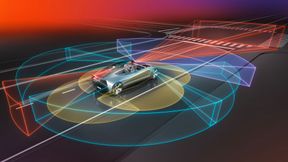
These systems often process data from various sources, such as cameras, Light Detection and Ranging (LiDAR) systems, sensors, industrial equipment, or autonomous vehicles. To do so, they must capture large volumes of data in real time, store it continuously, and be able to quickly access applications and AI models. This is the only way to analyze the data directly on-site and make decisions with low latency.
Added to this are demanding operating conditions such as shock and vibration, high humidity, or extreme temperatures. In some cases, the storage architecture must also account for a limited or intermittently interrupted network connection.
Depending on the system design, various storage options are available, including SATA SSDs, Non-Volatile Memory Express (NVMe) SSDs, eMMC, UFS, and industrial SD and microSD cards. Developers often combine multiple storage technologies to efficiently handle different tasks. For example, the operating system can run on an eMMC while it simultaneously records log data. SSDs in various form factors, on the other hand, can store large amounts of data and continuously collected sensor data. DRAM complements these storage devices as main memory. It provides the processor with data for ongoing processing and plays a key role in executing applications and AI models.
Typical applications include edge devices and industrial PCs, where industrial SSDs store operating systems, applications, AI models, and local log data. In edge gateways, on the other hand, SSDs often handle data aggregation and local caching, especially when the network is limited or temporarily unavailable.
Hardware Encryption Protects Sensitive Data
In addition to performance, reliability, and operating conditions, the data security of the respective storage device also plays a key role. To protect sensitive information in embedded and edge systems, developers can rely on SSDs with hardware-based Advanced Encryption Standard (AES)-256 encryption that also support the TCG Opal 2.0 security standard.
AES is a symmetric encryption algorithm that uses key lengths of 128, 192, or 256 bits. AES-256 is considered very secure and is even used by government agencies. AES is currently the standard for modern security SSDs.
The Trusted Computing Group's (TCG) vendor-neutral Opal standard is designed to protect stored user data from unauthorized access. The specification defines an interface for managing the security features of a storage medium, including device encryption, and combines the advantages of software and hardware encryption. A prerequisite is a self-encrypting drive (SED) with AES-128 or AES-256 encryption.
TCG Opal-compatible SSDs can also be integrated into corresponding security and management platforms. These include, for example, compatible products from McAfee, WinMagic, Sophos, and other TCG Opal-compatible management platforms.
Encryption directly at the hardware level protects stored data without significantly taxing the host system’s processing power. When combined with appropriate authentication and key management, these mechanisms can prevent unauthorized access to data. Especially in distributed embedded and edge systems, centralized management makes it easier to implement uniform security policies and helps protect sensitive data, even if a device is lost or stolen.
*Balamayuran Sivapalan is a Field Application Engineer at Kingston Technology