With electronics becoming smaller, more tightly packaged, and subjected to more demanding conditions, 3D printing technology continues to prove itself as a viable alternative to traditional manufacturing processes. Here, Jake Collins, Senior Applications Engineer at Boston Micro Fabrication, explores the advantages that high-precision 3D printing brings to electronics prototyping and production, and shares expert guidance for those evaluating it as a potential technology solution.
While micro-injection molding takes 10 to 12 weeks for critical components, 3D printing offers faster manufacturing and greater flexibility for design iterations, Collins said.
(Image: Boston Micro Fabrication)
From connectors and sensors to advanced packaging elements, the need for highly precise, miniaturized components is accelerating as electronic devices become increasingly compact and sophisticated. Ongoing miniaturization, rising component density, and faster data transmission speeds that generate additional heat are among the key challenges confronting today’s electronics designers.
As a result, conventional manufacturing techniques are increasingly challenged to meet modern demands, often resulting in extended lead times, elevated expenditures, and rigid design limitations. In response, a growing number of electronics manufacturers are adopting 3D printing as a more dynamic and economically viable alternative. Micro-scale 3D printing technologies, specifically Projection Micro Stereolithography (PµSL), have emerged as the preferred solution, delivering the precision and architectural versatility needed to keep pace with the rapid pace of product evolution.
Accelerating the Prototyping Phase Through 3D Printing
One of the paramount advantages of micro-precision 3D printing is its capacity to compress the design-to-production lifecycle. Unlike conventional approaches such as micro injection moulding, which often require 10 to 12 weeks to produce critical components, 3D Printing effectively circumvents traditional bottlenecks. This facilitates expedited production schedules and enhanced agility for design iterations. By enabling rapid iterative cycles without depending on physical moulds and tooling, 3D printing empowers manufacturers to fine-tune designs swiftly without incurring costly delays.
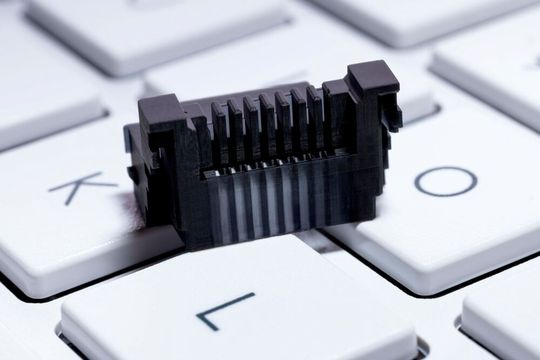
A compelling illustration of this capability is a recent collaborative project our organisation conducted with Hirose Electronics, a manufacturer of high-performance electrical connectors. Tasked with the rapid prototyping of circuit connectors for their next-generation product line, Hirose faced the familiar obstacles of long lead times, high tooling costs, and the inherent risks of design rigidity. Relying on standard micro injection moulding would have severely decelerated their innovation trajectory, prompting their strategic pivot towards 3D printing.
This pivot empowered Hirose to quickly iterate on their connector designs, test multiple versions, and finalize production-quality prototypes much faster than before. The flexibility of 3D printing allowed them to make design changes on the fly—without the costly delays associated with retooling. This capability drastically reduced their overall prototyping time, creating a faster and more efficient path to validation while saving on both costs and lead time.
Benefit from the Structured Approach
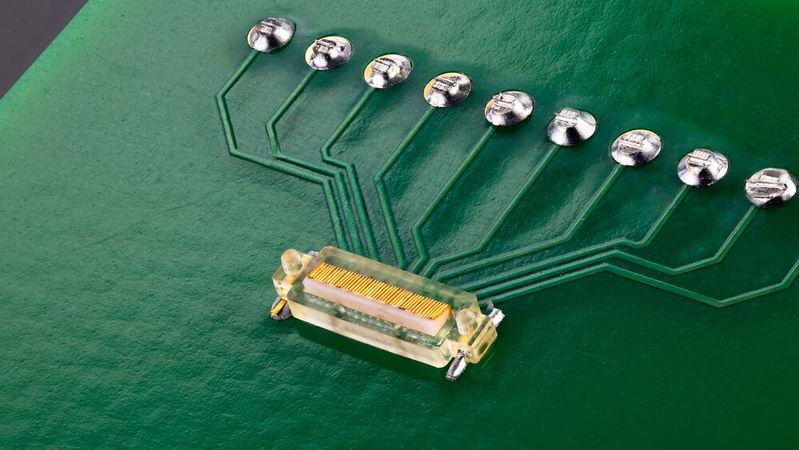
Micro 3D printing enables the production of high-precision land grid arrays, which are used in electronics to produce mechanical and electrical connections.
(Image: Boston Micro Fabrication)
If you happen to be a manufacturer looking to integrate 3D printing within your operations and, I would always advise taking a structured approach to ensure you maximize the benefits.
Commence by identifying specific product components that demand extensive design iterations or currently impede your existing manufacturing workflows. Subsequently, , evaluate your design requirements, checking for precision tolerances and material needs—highly precise 3D printing is ideal for small, intricate parts. I would also definitely recommend that, before moving to full production, you request a sample part from a 3D printing provider to see how it can accelerate your prototyping.
Following the finalization of your prototype, the transition to production is straightforward, and the same flexibility and accuracy that make 3D printing ideal for prototyping will continue to deliver benefits during full-scale production.
Expanding Production Volume Without Compromising Quality
Naturally, it’s imperative to verify that the materials you used during prototyping can handle the demands of production. Ensure that they meet durability and performance standards for long-term use, and also that they conform to any necessary heat or mechanical-resistance standards.
Run small batches to ensure your printer can replicate high-quality results consistently across multiple units. Consistency in precision, tolerances, and surface finish is key when scaling up.
Furthermore, to maximize efficiency for production, it’s necessary to standardize your processes and refine printer settings. Focus on designs that may change in early production or where 3D printing offers lower costs than traditional methods.
Date: 08.12.2025
Naturally, we always handle your personal data responsibly. Any personal data we receive from you is processed in accordance with applicable data protection legislation. For detailed information please see our privacy policy.
Consent to the use of data for promotional purposes
I hereby consent to Vogel Communications Group GmbH & Co. KG, Max-Planck-Str. 7-9, 97082 Würzburg including any affiliated companies according to §§ 15 et seq. AktG (hereafter: Vogel Communications Group) using my e-mail address to send editorial newsletters. A list of all affiliated companies can be found here
Newsletter content may include all products and services of any companies mentioned above, including for example specialist journals and books, events and fairs as well as event-related products and services, print and digital media offers and services such as additional (editorial) newsletters, raffles, lead campaigns, market research both online and offline, specialist webportals and e-learning offers. In case my personal telephone number has also been collected, it may be used for offers of aforementioned products, for services of the companies mentioned above, and market research purposes.
Additionally, my consent also includes the processing of my email address and telephone number for data matching for marketing purposes with select advertising partners such as LinkedIn, Google, and Meta. For this, Vogel Communications Group may transmit said data in hashed form to the advertising partners who then use said data to determine whether I am also a member of the mentioned advertising partner portals. Vogel Communications Group uses this feature for the purposes of re-targeting (up-selling, cross-selling, and customer loyalty), generating so-called look-alike audiences for acquisition of new customers, and as basis for exclusion for on-going advertising campaigns. Further information can be found in section “data matching for marketing purposes”.
In case I access protected data on Internet portals of Vogel Communications Group including any affiliated companies according to §§ 15 et seq. AktG, I need to provide further data in order to register for the access to such content. In return for this free access to editorial content, my data may be used in accordance with this consent for the purposes stated here. This does not apply to data matching for marketing purposes.
Right of revocation
I understand that I can revoke my consent at will. My revocation does not change the lawfulness of data processing that was conducted based on my consent leading up to my revocation. One option to declare my revocation is to use the contact form found at https://contact.vogel.de. In case I no longer wish to receive certain newsletters, I have subscribed to, I can also click on the unsubscribe link included at the end of a newsletter. Further information regarding my right of revocation and the implementation of it as well as the consequences of my revocation can be found in the data protection declaration, section editorial newsletter.
Finally, always monitor your production operations and look for ways to improve where possible, for example, using data from initial production runs to fine-tune your process.
Key Considerations for Integrating 3D Printing
Jake Collins is a Senior Applications Engineer at Boston Micro Fabrication.
(Image: Boston Micro Fabrication)
By integrating 3D printing, it’s genuinely possible to reduce prototyping time by as much as 60-90% and cut costs by 50-70%, depending on the complexity and volume of your project. It’s also widely acknowledged that the technology is ideal for parts with evolving designs, where it delivers a better cost per unit compared to traditional methods.
To commence this transition, identifying a pilot project is essential. Select a specific component that can benefit from quicker design iterations—such as connectors, sensors, or other small, intricate parts—where traditional manufacturing methods are causing delays.
When it comes to the 3D printing technology itself, it’s important to thoroughly evaluate the different options based on your specific needs. For example, with part size and complexity par for the course in electronics manufacturing, can the printer handle the detailed, small-scale parts required for the application in question? And does the technology itself offer the fine detail needed for reliable performance in electronics components?
Ultimately, once the technology is in place, plan your transition and set a clear timeline to go from prototyping to production. As I mentioned previously, high-precision 3D printing’s flexibility eliminates the need for retooling, enabling a smooth transition to full-scale production.
Clearly, as electronics continue to shrink and functional demands grow, micro‑scale 3D printing is emerging as a catalyst for the next wave of innovation. The ability to create complex, micron‑level geometries is redefining what designers can achieve across an ever-expanding number of components As the industry moves toward more integrated, compact, and application‑specific designs, high-precision 3D printing will continue to play a central role in enabling breakthroughs that were previously out of reach - driving a future where innovation is limited only by imagination, not manufacturing constraints.
*Jake Collins is Senior Applications Engineer at Boston Micro Fabrication, the global leader in micro-precision 3D printing, delivering advanced manufacturing solutions for applications that demand micron-level resolution, accuracy, and precision.



:quality(80)/p7i.vogel.de/wcms/d1/ef/d1ef6b6f7d4543f7999980bacccaf22b/0133499261v1.jpeg "As the growing imbalance in trade relations with China continues to widen, the EU Chamber of Commerce foresees a day when trade with China will have to be seriously reevaluated ... (Image: AI-generated)")
:quality(80)/p7i.vogel.de/wcms/fe/1f/fe1fa5ee713f94deaba963dc24c3abc5/0133299273v1.jpeg "The Flexistar enables highly flexible production of laser-welded tubes thanks to its tool-free clamping system. (Image:Because Technology, LLC)")
:quality(80)/p7i.vogel.de/wcms/1b/5a/1b5ac72f83db4dbee3ff91e51bc398f4/0133496095v1.jpeg "BASF announces that it will take the next step toward producing the polyurethane precursor MDI in India ... (Image:BASF)")
:quality(80)/p7i.vogel.de/wcms/3f/cf/3fcfa390902944ffcf24e7fe973cc3ee/0133486258v1.jpeg "Do you need to create secure connections on structures using blind rivets, but space is tight? Then you should take a closer look at the Universalgrip from Gesipa ... (Image: Gesipa)")
:quality(80)/p7i.vogel.de/wcms/60/ef/60ef4f07e4829b2c2929befc0f353c58/0133511729v1.jpeg "Humanoid robots can match human performance in certain tasks. (Image:Gemini / AI-generated)")
:quality(80)/p7i.vogel.de/wcms/2e/99/2e99726b522e4b35b690e25eb6a42643/0133463991v1.jpeg "Robotics: In AMR applications, connection technology must reliably transmit power, signals, and data despite vibration and shock loads—in very confined spaces and in a way that allows for regular maintenance. (Image:Hyperever)")
:quality(80)/p7i.vogel.de/wcms/d0/18/d01801e3d5dbd7bc9d0b4f60408b630c/0133468429v1.jpeg "Quality requirements for film packaging are on the rise. At the same time, many companies are turning to recyclable film materials, which, however, have their own challenges. Fraunhofer researchers have therefore developed a fast system that detects problems in real time. (Image:Fraunhofer IKTS)")
:quality(80)/p7i.vogel.de/wcms/b1/06/b106cf44923ce39565c3264982fd20eb/0133414574v1.jpeg "Robots Build Robots: At the new Ubtech factory, automated systems even handle parts of the material supply and logistics for the production of humanoid robots. (Image:Ubtech)")
:quality(80)/p7i.vogel.de/wcms/c0/52/c052f405eb55fc3d08c4837e77206fc0/adobestock-2021845957--aucartstudio-stock-adobe-com-ki-generiertv1.jpeg "An innovation from China to combat extreme summer heat: A novel coating lowers temperatures. (Source: © AucArtStudio – stock.adobe.com_AI-generated)")
:quality(80)/p7i.vogel.de/wcms/66/a7/66a7b78159caeacce57136529688799f/0133503398v1.jpeg "Sunlight Makes Stone! These stone blocks weren't made the traditional way. Instead, they were additively manufactured from sand using a laser. In the future, however, the laser is set to be replaced by concentrated sunlight—if the startup Addisol is successful... (Image:Addisol / F. Fiedler)")
:quality(80)/p7i.vogel.de/wcms/72/b9/72b995c2c8d812c5e2115cbef31e035a/0133462727v1.jpeg "Eggl manufactures center hoods that are precisely tailored to each cooking island—whether standard size or custom shape. They are made entirely of stainless steel and are individually customized in terms of size and filter arrangement. (Image:SPI)")
:quality(80)/p7i.vogel.de/wcms/13/5d/135dfae6229ceaf5c55467a43e8f7257/adobestock-1879961393--ardi-stock-adobe-com-ki-generiertv1.jpeg "Annoying chatterboxes or awkward silences in response to questions—a moderator should specifically prepare for difficult situations in order to navigate them effectively. (Image:ardi - stock.adobe.com_AI-generated)")
:quality(80)/p7i.vogel.de/wcms/aa/a2/aaa2c6dd2daa24b485cddbf9297590c0/0133467318v1.jpeg "Battery Monitoring: Battery monitoring using electrochemical impedance spectroscopy offers several advantages. (Image:TI)")
:quality(80)/p7i.vogel.de/wcms/39/b2/39b21bf03be1683831862239a369987c/0133469638v1.jpeg "Data from autonomous vehicles and robots operating autonomously is in high demand, and Ruqi wants to capitalize on this. (Image:Ruqi Mobility)")
:quality(80)/p7i.vogel.de/wcms/8a/bb/8abbb6217220595edc1549ac9b84f307/0133429906v1.jpeg "The IAA in Hanover showcased the ambitions of Chinese commercial vehicle manufacturers in Europe. (Image:Wehner - VCG)")
:quality(80)/p7i.vogel.de/wcms/0c/53/0c5313ef91c14b6df0d0996efc33c8ad/jpg03568-bearbeitetv1.jpeg "The category winners of the 2027 German Car of the Year award. (Source: GCOTY)")
:quality(80)/p7i.vogel.de/wcms/ca/b4/cab46fd26d19d6a2febca032048200b6/0133471827v1.jpeg "Photonics SDK for C and Python: Computational operations are now abstracted as standard mathematical functions. (Image:Q.ANT)")
:quality(80)/p7i.vogel.de/wcms/92/b2/92b2ed5299cde450c0764f4f64468395/0133505895v1.jpeg "The \"Iris 100\" test system for high-precision volume production of microLEDs uses a spectrometer and a high-resolution camera. (Image:Teradyne)")
:quality(80)/p7i.vogel.de/wcms/f3/d8/f3d870d8f31a5a5110449c929ea3e641/0133470449v1.jpeg "The new Nexora sensor family from Teledyne e2v: These CMOS image sensors combine BSI technology with a global shutter and are available in 12- and 16-megapixel versions. (Image:Teledyne)")
:quality(80)/p7i.vogel.de/wcms/11/2e/112eabc5fb41e1a401f0e93e9326ef51/0133489329v1.jpeg "A sandbox limits the actions an AI agent can take, but it is not an impenetrable barrier. Only multiple independent layers of protection prevent an escape from immediately granting access to production systems. (Image:freely licensed)")
:fill(fff,0)/images.vogel.de/vogelonline/companyimg/76800/76895/65.jpg "FAULHABER_120mm.jpg ()")
:fill(fff,0)/p7i.vogel.de/companies/69/de/69de1b7403b0d/simtos-logo.jpeg "simtos-logo (SIMTOS)")

:quality(80):fill(efefef,0)/p7i.vogel.de/wcms/67/af/67af6d7f2d755/skz-whitepaper-mission-additive-manufacturing-coverbild.png "SKZ Whitepaper_Mission Additive Manufacturing_Coverbild")
:quality(80)/p7i.vogel.de/wcms/eb/f1/ebf12390eeff81d4bfa22b957a1c0433/0127322221v1.jpeg "For these fully assembled cable sets, 18 variants of a connector for test systems had to be manufactured. (Image:BMF)")
:quality(80)/p7i.vogel.de/wcms/41/fc/41fc456ff1ff8f30807924663e8df127/img-0942v1.jpeg "In industrial additive manufacturing, the production strategy must influence the design from the very beginning. (Source: Materialise)")