The integration of a Profinet interface into an existing system is often complex – especially when time, development resources, and quantities are limited. This was precisely the challenge that had to be addressed during the network expansion of an industrial ultrasound solution.
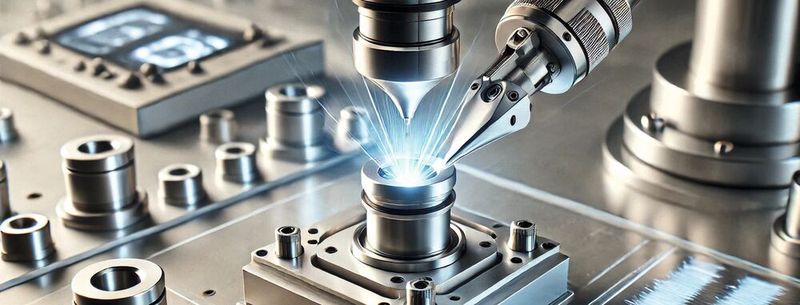
An existing ultrasonic welding system was to be equipped with a Profinet interface – quickly and without new hardware.
(Image: Burger Engineering)
A manufacturer of ultrasonic welding systems faced a specific challenge: the control of a new device version needed to be made Profinet-capable. In the previous model, control for adjusting frequencies, amplitudes, and other parameters was carried out via a serial interface based on an STM32 controller. For the new product generation, however, the end customer desired real-time communication via Profinet. The requirement was clear: the new interface had to seamlessly integrate into the existing system architecture, preferably without extensive hardware redevelopment or lengthy certification processes.
The project was managed on behalf of the end customer by the system developer Brückmann Elektronik and the systems engineering specialists at Burger Engineering. The choice of the appropriate communication module was crucial. Ultimately, the decision was made to use the Netrapid 90 from Hilscher, a provider of solutions in the field of industrial communication. Netrapid 90 is a fully tested, solderable communication module with an integrated netX 90 chip, which is delivered with the preloaded Profinet communication stack and can therefore be directly integrated into existing designs without complex hardware development.
Alternatives were discussed, but due to the planned low production volumes, a separate PCB development (design-in of a netX 90) was quickly ruled out. The Netrapid 90 proved to be the most efficient solution with its compact design, complete communication and application unit, as well as the available development and certification tools. Due to a lack of experience with Profinet, especially in combination with the Hilscher hardware, Brückmann sought external support—and turned to Burger Engineering. The development team has been a certified official Hilscher "netX Design-In Partner" for several years and has extensive experience integrating Hilscher products.
The role distribution in the project:
Brückmann: Overall responsibility for the power supply design, project coordination, communication with the end customer
Burger Engineering: Development of the application or Profinet communication (stack) as well as integration of communication via Netrapid 90, support during certification
Hilscher: Provision of the Netrapid 90 and the corresponding stack, support with stack-related questions and license handling, technical exchange during implementation
Byte Mirroring Instead of Protocol Overhead
The core of the technical solution was the separation of application and communication logic. The existing STM32 controller, which already handled all device-specific functions such as frequency regulation, amplitude control, and power management, was not to be additionally burdened with Profinet communication. Initially, the plan was to operate the Netrapid 90 in the so-called Companion Mode—implementing the application in the STM32 while handling all communication to the Profinet network through the Netrapid 90. However, as the STM32 was already operating at its performance limits due to time-critical processes, the decision was made to implement the Netrapid in Stand-Alone Mode. This allowed application files to be exchanged between the provider and consumer via the second core of the netX 90 using the Profinet protocol. As a result, Profinet communication was achieved practically without any further performance loss for the STM32.
The connection to the STM32 was realized via an SPI interface. The Netrapid 90 acted as a master, directly retrieving process-relevant data from the STM32 control chip – or transmitting it to it. This cyclical process data exchange significantly increased the timing stability of the communication and also enabled later changes within the transmitted data.
The Profinet communication was configured so that the Netrapid 90 had no knowledge of the specific data contents. Instead, 64 bytes of provider data and 64 bytes of consumer data were exchanged cyclically as pure byte fields between the Profinet network and the STM32. In this way, it was solely the responsibility of the higher-level controller and the STM32 to interpret the contents of these data fields. For the application on the Netrapid module itself, this was irrelevant—it merely mirrored the data at defined intervals.
Date: 08.12.2025
Naturally, we always handle your personal data responsibly. Any personal data we receive from you is processed in accordance with applicable data protection legislation. For detailed information please see our privacy policy.
Consent to the use of data for promotional purposes
I hereby consent to Vogel Communications Group GmbH & Co. KG, Max-Planck-Str. 7-9, 97082 Würzburg including any affiliated companies according to §§ 15 et seq. AktG (hereafter: Vogel Communications Group) using my e-mail address to send editorial newsletters. A list of all affiliated companies can be found here
Newsletter content may include all products and services of any companies mentioned above, including for example specialist journals and books, events and fairs as well as event-related products and services, print and digital media offers and services such as additional (editorial) newsletters, raffles, lead campaigns, market research both online and offline, specialist webportals and e-learning offers. In case my personal telephone number has also been collected, it may be used for offers of aforementioned products, for services of the companies mentioned above, and market research purposes.
Additionally, my consent also includes the processing of my email address and telephone number for data matching for marketing purposes with select advertising partners such as LinkedIn, Google, and Meta. For this, Vogel Communications Group may transmit said data in hashed form to the advertising partners who then use said data to determine whether I am also a member of the mentioned advertising partner portals. Vogel Communications Group uses this feature for the purposes of re-targeting (up-selling, cross-selling, and customer loyalty), generating so-called look-alike audiences for acquisition of new customers, and as basis for exclusion for on-going advertising campaigns. Further information can be found in section “data matching for marketing purposes”.
In case I access protected data on Internet portals of Vogel Communications Group including any affiliated companies according to §§ 15 et seq. AktG, I need to provide further data in order to register for the access to such content. In return for this free access to editorial content, my data may be used in accordance with this consent for the purposes stated here. This does not apply to data matching for marketing purposes.
Right of revocation
I understand that I can revoke my consent at will. My revocation does not change the lawfulness of data processing that was conducted based on my consent leading up to my revocation. One option to declare my revocation is to use the contact form found at https://contact.vogel.de. In case I no longer wish to receive certain newsletters, I have subscribed to, I can also click on the unsubscribe link included at the end of a newsletter. Further information regarding my right of revocation and the implementation of it as well as the consequences of my revocation can be found in the data protection declaration, section editorial newsletter.
Shorter Development Time Than with an Integrated Chip Solution
This mirroring significantly reduced development effort: adjustments to the data structure—such as adding parameters, switching from 8-bit to 16-bit values, or introducing new control commands—could still be made towards the end of the project without needing to modify the communication layer again. It was precisely this decoupling that gave the project its high flexibility and speed. For the developer, this meant: no complex diagnostics, no extensive interpretation, no unnecessary parameterization—just a robust, flexible process data exchange. Additionally, development time was shortened with the Netrapid 90 from Hilscher as an embedded module solution, as the development effort was significantly lower compared to an integrated chip solution.
"With product development projects, we have long been offering an all-in-one package, which has recently been in higher demand from our customers. This is for various reasons, certainly including internal resource shortages. The days when product development could take many months are over. By using fully tested embedded modules with pre-installed firmware, we can drastically shorten the development cycle," explains Jörg Klenke, Project Management Officer (PMO) and member of the executive board at Burger Engineering.
In 9 Months and 2 Project Phases to the Final Product
The project was divided into two phases: an initial implementation phase and a second certification and optimization phase. The collaboration was structured as a division of labor between the system developer Brückmann, the communication expert Burger Engineering, and the hardware supplier Hilscher.
Phase 1: Implementation (February to June 2023): The project began with a joint workshop between Brückmann as the client and Burger Engineering as the development partner. During this workshop, the technical framework for the project was outlined, and a decision was made on whether a Companion Mode or a Standalone solution with SPI mirroring would be more suitable. Following an analysis of the controller load, the Standalone variant with SPI mirroring was chosen. The application was fully implemented on the Application Core of the Hilscher Netrapid 90. The development partner took on the complete implementation of the application and worked with evaluation boards during the early phase to test independently of the target hardware. In parallel, Hilscher delivered the Profinet protocol stack tailored to the Netrapid 90 hardware.
Phase 2: Optimization and Certification (June to September 2024): In the second phase of the project, the solution was prepared for Profinet certification based on preliminary tests. The development partner adjusted the data structure once again at the customer's request and expanded parameter ranges—the flexibility of the 64-byte mirroring proved invaluable here once more. The certification was conducted by the testing body Comded, located just a few kilometers from the development site. This enabled quick feedback loops: a necessary software update could be directly uploaded on-site without the need for a new registration.
Even in this phase, the efficiency of the communication module used became evident: selecting Conformance Class A and Netload Class 1 at the beginning of the project not only minimized development but also reduced certification efforts to the essentials. Features such as Profinet alarms, diagnostic functions, or complex parameterization were deliberately not implemented, as they were not required for the application and would have only added more time and costs.
Profinet Connection Implemented in Under Half a Year
At the end, a complete Profinet connection for an industrial power supply was realized in less than half a year and certified with minimal effort. Additionally, the solution can be easily adapted in the future or transferred to other device classes. Thus, a small-scale production project became an ideal entry point into Industrial IoT. The new ultrasonic welding device was successfully introduced at a relevant trade fair in 2025.
At Brückmann, they are very satisfied with the result, as Sebastian Wenzel, responsible for technical sales, explains: "The collaboration with Burger Engineering enabled us to realize a Profinet-capable solution for our customer in a very short time—despite the challenges of small-scale production development and subsequent changes. Particularly valuable for us was the combination of technical expertise and an extremely pragmatic approach. The result fully met our expectations, and we can well imagine relying on the team again for future projects."



:quality(80)/p7i.vogel.de/wcms/17/b8/17b8af0cb725e0e1d3e8d72458bab260/siemens-meet-at-the-machinev1.jpeg "“Meet at the Machine” is Siemens’ new initiative, which aims to bring together machine builders, software, and automation technologies to accelerate innovation in the machine tool industry and help manufacturers become productive more quickly. (Source: Siemens)")
:quality(80)/p7i.vogel.de/wcms/8e/7e/8e7e0cda4c68699bcc48283a38739769/0133316747v1.jpeg "A little-known hidden champion! When people think of laser cutting, the first thing that comes to mind is the power of the laser beam—and it is impressive to see the sparks flying. But Air Liquide—an exhibitor at Euroblech, by the way—wants to make it clear that the process gas is also key to success. (Image:AI-generated)")
:quality(80)/p7i.vogel.de/wcms/20/fa/20fa35e0af203c3464f7e7fdbb57a685/0133281172v1.jpeg "Since 2003, Etzinger AG has been developing and manufacturing high-quality coffee grinders, pepper mills, and grinding mechanisms for professional and home use. (Image:Etzinger)")
:quality(80)/p7i.vogel.de/wcms/69/91/6991413943488b4a2f6fde9dcd88c5b0/0133256686v1.jpeg "The CMA-patented pendulum mount can compensate for radial tolerances of up to one millimeter. (Image:Schwiening)")
:quality(80)/p7i.vogel.de/wcms/38/79/38799bfbbccd938b64c67068cfa68780/0133329362v1.jpeg "What exactly enables machines to act on their own? (Image:Shutterstock)")
:quality(80)/p7i.vogel.de/wcms/1b/9f/1b9fc9f113fc66212e2c0e17a3edaf9f/org-blobs-user-response-file-output-f317796f-57b7-483f-9403-5d9ac8a816f5-plugin-output-call-kdigtepb7be7us8xvbota0mh-1672x940v1.png "According to Barclays data, Europe leads the global trade in actuator components. With a 34 percent share, the region ranks ahead of China, which has a 26.3 percent share. (Source: Statista | CC BY-ND 4.0, AI-generated)")
:quality(80)/p7i.vogel.de/wcms/f5/4c/f54c9fc59ccb0604ab9219188469a45f/image1v1.jpeg "Christopher Savoia, Global Head of the UR+ Ecosystem at Universal Robots, presents the new SP7 Smart Panel on a UR17g-1300 robot during the unveiling of Gen 7—UR’s 7th-generation robot platform—at IMTS in Chicago on September 14, 2026. (Image:Image: Teradyne Robotics)")
:quality(80)/p7i.vogel.de/wcms/bd/4e/bd4ef09ab0f84932ea76ca0330ffe789/0133329802v1.jpeg "The robotics boom and its consequences: According to a study, a significant portion of value creation occurs in the electronics industry. (Image:Fraunhofer IPA)")
:quality(80)/p7i.vogel.de/wcms/87/87/87870cf2b30aaef7b8a06212a4ef2c14/0133403885v1.jpeg "A digital twin and a real component demonstrate how closely simulation and manufacturing are converging. Stampack Xpress 2026.1 virtually models forming behavior and supports the validation of process and tool design. (Image:Stampack)")
:quality(80)/p7i.vogel.de/wcms/59/2a/592a7f2d0964e9e6846cae331f5daa3a/0133266065v1.jpeg "Perforated metal sheets are particularly well-suited for balcony railings, as they combine stability, privacy, and design versatility. (Image:Ripo Factory)")
:quality(80)/p7i.vogel.de/wcms/45/64/45642ff0fe0a6bec251b77739131d83b/abb-ferrari-hypersail-16-9-three-quarter-front-viewv1.jpeg "The Ferrari Hypersail is a 100-foot monohull wing-in-plane yacht powered entirely by renewable energy. (Source: ABB / Ferrari Hypersail)")
:quality(80)/p7i.vogel.de/wcms/3e/0e/3e0e3ea22e48410ceada53b02ffccb59/0133358454v1.jpeg "BYD top executive Stella Li plans to offer megawatt flash charging for commercial vehicles as well. (Image:VDA/IAA Transportation 2026)")
:quality(80)/p7i.vogel.de/wcms/e2/7d/e27de60472809cc58ac0d321066c9679/l1051833v1.jpeg "Geely has acquired a stake of just over 26 percent in Renault do Brasil. Geely models for the South American market are now also being produced at the Ayrton Senna plant in São José dos Pinhais. (Image:Renault)")
:quality(80)/p7i.vogel.de/wcms/1e/c1/1ec1495eb283200f4b7cb55de0c4dff7/20260917-110436643v1.jpeg "Ceremonial launch of Mercedes-Benz GLA production in Rastatt; among those in attendance was plant manager Marco Zwick (second from the right). (Source: Thomas Günnel – Automotive Industry)")
:quality(80)/p7i.vogel.de/wcms/76/f3/76f310eed0caebc79ff91195c29de08d/visual-siwa-treatment-optimizerv1.jpeg "A Mireo train from Siemens Mobility was used in the “Automated Train” project for a fully automated delivery and return trip on the open rail network. (Source: Siemens Mobility)")
:quality(80)/p7i.vogel.de/wcms/4c/53/4c534208d09a9b1ce597938715e7fc19/0133288763v1.jpeg "Logic Folding: In its latest Kirin 9050 Pro, Huawei uses hybrid bonding to distribute the computing units across two silicon layers in order to increase the effective transistor density without resorting to finer manufacturing processes. (Image:Huawei)")
:quality(80)/p7i.vogel.de/wcms/56/d1/56d131e0b5bd05ef47411e92ad740cb4/0133351029v1.jpeg "Researchers at DTU have developed a nanolaser in a semiconductor membrane. The structure concentrates charge carriers and the light field into a small area (shaded in blue). If data is transmitted on microchips using light instead of electrical signals, transmission speeds can be increased and energy losses reduced. (Image:Yi Yu, DTU)")
:quality(80)/p7i.vogel.de/wcms/5e/55/5e55101ddc6338f755fcf3244db1367f/0133331863v1.jpeg "For data center projects, it is becoming increasingly important to also obtain the consent of the affected community. (Image:Dall-E / AI-generated)")
:quality(80)/p7i.vogel.de/wcms/8d/f9/8df95d3f58408673986b3d643e6b63ba/0133252773v1.jpeg "TXC targets high-speed optical links in AI data centers with 312.5 MHz oscillators, among other solutions. As data rates increase, requirements for jitter and frequency stability become more demanding as well. (Bild: TXC)")
:fill(fff,0)/p7i.vogel.de/companies/69/88/69882c428938e/tmts2026-ticec-banner-en-2000px.png "tmts2026-ticec-banner-en-2000px (https://www.tmts.tw/en)")
:quality(80)/p7i.vogel.de/wcms/2c/e6/2ce6e486d5f55aba283fb8947a6143f9/0126795710v1.jpeg "Netrapid 90 from Hilscher is the perfect communication platform for customized solutions with an integrated application.(Image: Hilscher Gesellschaft für Systemautomation)")
:quality(80)/p7i.vogel.de/wcms/7a/2d/7a2d3cb580ec97dfe6464ff709477e07/0126985339v1.jpeg "The Netrapid 90 communication module for multiprotocol industrial communication is already delivered with a Profinet communication stack.(Image: Hilscher Gesellschaft für Systemautomation)")
:quality(80)/p7i.vogel.de/wcms/39/2e/392e9b4ee7f6495141ab0685183fe201/0126982236v1.jpeg "The Netrapid 90 communication module with integrated net-X-90 chip: The solution for integrating a Profinet interface.(Image: Hilscher Gesellschaft für Systemautomation)")
:quality(80)/p7i.vogel.de/wcms/07/19/0719a406fbb8d1ef72a5d9d5c1880b88/0126985336v1.jpeg "Netrapid 90 supports numerous other communication protocols in addition to Profinet.(Image: Hilscher Gesellschaft für Systemautomation)")
:quality(80)/p7i.vogel.de/wcms/d6/94/d694db1af2cad4cfd03e1ae617b2967b/0127938873v1.jpeg "Fieldbus integration in embedded systems is considered a supreme discipline—EMI robustness, real-time capable protocols, and certification processes challenge developers on all levels. (Image:AI-generated)")
:quality(80)/p7i.vogel.de/wcms/f1/e0/f1e0762012ba63607bd0ee537ef4db7a/bild1-phoenix-20contact-00167373-full-b5000v1.jpeg "The driverless transport systems (DTS) or automated guided vehicles (AGVs) used in intralogistics must meet one essential requirement: they should operate safely, quickly, and interoperably within the existing infrastructure. (Image: Phoenix Contact)")