Fast charging, energy density and new material systems: CATL shows that the future of the battery does not lie in one technology, but in the interaction of several approaches.
Robin Zeng, Chairman and CEO of CATL, is driving forward the development of modern battery technologies.
(Image: CATL)
CATL presented several new battery systems and infrastructure approaches at its technology event. These include further developments of existing cell platforms such as Shenxing and Qilin, a condensed high-energy battery and sodium-ion approaches. The portfolio is complemented by an integrated concept comprising fast charging and battery replacement.
The focus is less on a single technology and more on a differentiated strategy across several cell chemistries. Lithium iron phosphate (LFP) is increasingly approaching its physical limits in terms of energy density, but remains relevant due to its stability and cost structure. Especially in applications with a focus on fast-charging capability. Nickel-rich systems (NMC) continue to offer advantages in terms of gravimetric energy density and therefore range and power density. Sodium-ion batteries, on the other hand, primarily address applications with extended temperature requirements and lower cost requirements.
The approach points to the parallel further development of several technologies instead of relying on one dominant cell chemistry. This shifts the focus from the optimization of individual parameters to systemic design. In addition to cell technologies, CATL is also presenting infrastructural approaches. The combination of fast charging and battery replacement is conceived as an integrated system in order to optimize both charging times and system utilization. The aim is to no longer consider energy supply in isolation at vehicle or cell level, but as part of a higher-level system consisting of battery, vehicle and infrastructure.
Shenxing Gen3: 10C Charging with Stable Capacity
The achievable charging speed of lithium-ion batteries is closely linked to their thermal behavior. As the temperature rises, parasitic side reactions increase, which has a direct effect on ageing. Accordingly, the Arrhenius relationship shows that a temperature increase of just 10 °C (approx. 18 °F) can roughly double the reaction rate of internal processes. This has direct consequences for the cycle life.
The third generation of the Shenxing battery addresses this conflict of objectives primarily through thermal management. This includes reduced power loss during operation, improved heat dissipation and more precise control of the operating states. Under these conditions, a capacity retention of over 90 % is specified.
In terms of power, the system achieves charging rates of up to 10C, with short-term peaks of up to 15C. The charging stroke from 10 % to 80 % state of charge is specified in around 3 min 44 s. The charging capacity is maintained even at low temperatures: At -30 °C (approx. -22 °F), a charging range from 20 % to 98 % should be achievable in around 9 min.
In addition, the battery is combined with a self-heating function and integrated into an infrastructure concept that includes both fast charging and battery replacement. The aim is to ensure charging performance at system level even under unfavorable ambient conditions.
Qilin Gen3: Higher Energy Density, Lower Weight, Greater Range
The stated cell energy density of 280 Wh/kg is remarkable for an LFP-based system and also requires explanation. The theoretical limit value of LFP is around 170 Wh/kg at cell level; in practice, classic cylindrical or prismatic cells range between 160 and 200 Wh/kg. The jump to 280 Wh/kg indicates that CATL is no longer talking about pure LFP here, but about a modified cathode. Possibly LMFP (lithium manganese iron phosphate) or a gradient structure with manganese content. This is not a weakness, but a legitimate further development; however, communication under the label "LFP" is misleading and should be taken into account when classifying it.
The system weight reduction of 255 kg (approx. 562 lb) compared to "equivalent LFP systems" is physically plausible if higher packing density and reduced housing mass are taken into account. However, the reference basis is missing: what capacity, what pack architecture, what vehicle type? Without this information, the figure cannot be independently verified. The stated energy consumption reduction of 6% per 100 km (approx. 62 mi) with 255 kg less vehicle mass is mathematically plausible - with typical rolling resistance coefficients and vehicle masses in the premium segment, the WLTP cycle actually results in a saving of around 5-7% per 200-250 kg (approx. 440-550 lb) mass reduction. This figure is therefore one of the less controversial points in the presentation.
Date: 08.12.2025
Naturally, we always handle your personal data responsibly. Any personal data we receive from you is processed in accordance with applicable data protection legislation. For detailed information please see our privacy policy.
Consent to the use of data for promotional purposes
I hereby consent to Vogel Communications Group GmbH & Co. KG, Max-Planck-Str. 7-9, 97082 Würzburg including any affiliated companies according to §§ 15 et seq. AktG (hereafter: Vogel Communications Group) using my e-mail address to send editorial newsletters. A list of all affiliated companies can be found here
Newsletter content may include all products and services of any companies mentioned above, including for example specialist journals and books, events and fairs as well as event-related products and services, print and digital media offers and services such as additional (editorial) newsletters, raffles, lead campaigns, market research both online and offline, specialist webportals and e-learning offers. In case my personal telephone number has also been collected, it may be used for offers of aforementioned products, for services of the companies mentioned above, and market research purposes.
Additionally, my consent also includes the processing of my email address and telephone number for data matching for marketing purposes with select advertising partners such as LinkedIn, Google, and Meta. For this, Vogel Communications Group may transmit said data in hashed form to the advertising partners who then use said data to determine whether I am also a member of the mentioned advertising partner portals. Vogel Communications Group uses this feature for the purposes of re-targeting (up-selling, cross-selling, and customer loyalty), generating so-called look-alike audiences for acquisition of new customers, and as basis for exclusion for on-going advertising campaigns. Further information can be found in section “data matching for marketing purposes”.
In case I access protected data on Internet portals of Vogel Communications Group including any affiliated companies according to §§ 15 et seq. AktG, I need to provide further data in order to register for the access to such content. In return for this free access to editorial content, my data may be used in accordance with this consent for the purposes stated here. This does not apply to data matching for marketing purposes.
Right of revocation
I understand that I can revoke my consent at will. My revocation does not change the lawfulness of data processing that was conducted based on my consent leading up to my revocation. One option to declare my revocation is to use the contact form found at https://contact.vogel.de. In case I no longer wish to receive certain newsletters, I have subscribed to, I can also click on the unsubscribe link included at the end of a newsletter. Further information regarding my right of revocation and the implementation of it as well as the consequences of my revocation can be found in the data protection declaration, section editorial newsletter.
The peak power of 3 MW, on the other hand, should be interpreted with caution. It corresponds to a C-rate of around 4-5C with an assumed battery capacity in the range of 90-100 kWh - achievable for a short time, but not thermally sustainable in the long term. More relevant for continuous power applications would be the continuous output power at a defined temperature and state of charge, which is not specified.
The concept of thermal-electrical separation ("no thermal propagation") makes technical sense: separate exhaust channels per cell prevent hot gases and particles from a thermal runaway cell from directly affecting neighboring cells. However, whether this is fully effective under real conditions - particularly in the event of mechanical damage to the pack or overcharging of several cells simultaneously - depends on the specific implementation and the certification tests. Mere compliance with national standards (GB/T 38031) is not a sufficient benchmark for international markets.
Qilin Condensed: 350 Wh/kg and up to 1,500‑km Range
The Qilin Condensed Battery aims to achieve a significant increase in energy density. It is specified as 350 Wh/kg gravimetric and 760 Wh/L volumetric. Depending on the vehicle concept, this allows ranges of up to 1,500 km (approx. 930 mi) to be derived. The weight of the battery pack is specified as less than 650 kg (approx. 1,430 lb).
At cell level, the system combines a nickel-rich cathode with a silicon-carbon anode. This combination of materials enables a higher energy density, but places increased demands on the mechanical and thermal design, particularly with regard to volume changes in the anode.
In addition, design measures are used at packaging level. These include a housing design with high-strength materials that reduces both installation space and weight. The specific effect on the system energy density results from the interaction of cell chemistry and mechanical integration.
The concept is partly based on developments from high-energy batteries, which are also being investigated for aviation applications. However, the transferability of such approaches to the automotive sector depends on cost, cycle stability and safety requirements.
For the electrolyte system, CATL uses a condensed medium instead of conventional liquid electrolytes. The aim is to reduce the risk of leakage and ignition. In addition, a protective mechanism is used at cell or module level, which acts as a current-limiting element in the event of a fault. The term "condensed electrolyte" is CATL's marketing name for a semi-solid-state electrolyte. It is gel-like and offers greater safety than liquid electrolytes, but is technologically easier to handle than true solid-state batteries (all-solid-state).
Second Generation Freevoy Super Hybrid Battery
The second generation of the Freevoy battery combines LFP and NMC properties at material level. For this purpose, a hybrid particle structure is used in which the olivine crystal structure of LFP serves as a mechanically and thermally stable basic framework, while nickel-rich components are integrated to increase the energy density. The aim is to partially resolve the conflict between stability and energy density.
The gravimetric energy density is specified at around 230 Wh/kg and is therefore higher than that of conventional LFP systems, without completely sacrificing their advantages in terms of cost and thermal stability. Compared to pure LFP batteries, an increase in range of over 15 % is stated for a comparable system weight.
Different operating strategies result depending on the design:
The LFP-based variant achieves a purely electric range of up to 500 km (approx. 310 mi), while the NMC-based variant should be able to cover over 600 km (approx. 370 mi). In combination with a hybrid drive, total ranges of up to 2,000 km (approx. 1,240 mi) are specified, although these values depend heavily on the respective vehicle and usage concept.
On the power side, the system achieves up to 1.5 MW at a full state of charge and maintains around 1.2 MW at a state of charge of 20%. This reduces the typical drop in performance at low states of charge, which is particularly relevant for applications with high continuous load requirements. Information on the off-road power reserve relates to specific application scenarios and must be evaluated according to the context.
The charging capacity is specified at up to 10C, which enables short charging times, but places high demands on thermal management and ageing stability.
On the mechanical level, increased resistance of the battery housing is stated, including against impact loads of up to 1,500 J. In addition, a seal is described that should allow prolonged immersion in water (up to 2 m deep) without immediate loss of function. This information relates to specific test conditions and cannot be transferred to all application scenarios without further ado.
Naxtra Sodium-ion Battery: Industrialization of Sodium-Ion Batteries on a GWh Scale
With the Naxtra Sodium-Ion Battery, CATL is driving forward the industrialization of sodium-ion batteries. The aim is to transition from laboratory developments to production on a GWh scale.
The company is addressing several known challenges in this cell chemistry. These include the control of moisture during production, gas generation in hard carbon anodes, adhesion problems between the active material and the aluminum current collector and the stability of self-forming anode systems. These factors are considered key hurdles for reproducible and scalable production. According to CATL, these issues have been stabilized to such an extent that series production is being prepared. Production is scheduled to start at the end of 2026.
Combined Charging and Exchange Network: Fewer Losses, Higher Capacity Utilization
The core principle - a common DC intermediate circuit for fast charging and battery replacement - is well founded in electrical engineering terms. In conventional architectures, the mains connection (AC) is converted several times: AC/DC for the stationary storage system, DC/DC for adaptation to vehicle voltage, DC/DC again when discharging the buffer storage system into the charging station. Each of these stages typically generates a loss of 2-4 %. A central DC bus architecture, in which alternating batteries are connected directly to the DC intermediate circuit as buffer storage, eliminates at least two of these conversion stages. The stated loss reduction of more than 13 percentage points is therefore plausible in terms of magnitude - but only in comparison with a multi-stage legacy architecture, not with modern, already optimized systems.
One critical point is the voltage level: the new Choco Swap #26 battery operates at 800 V. This makes sense for the vehicle (higher charging power with lower current, lower line losses), but places increased demands on insulation coordination and safety shutdown in the swap system. Particularly during a mechanical swapping process - in which the battery system is briefly electrically disconnected and reconnected - hot-plug capability, pre-charging circuits and potential equalization are safety-critical design parameters that are not addressed in the communication.
The stated capacity utilization of over 85% sounds high, but can only be achieved under favourable conditions: high and consistent demand, a sufficiently large fleet of compatible vehicles, short changeover cycles. In practice, demand is subject to strong daily and seasonal fluctuations. The 85% figure is probably based on a scenario with optimum load distribution, not a real operating average. For comparison: conventional charging stations achieve average utilization rates of 10-20%, even high-frequency locations rarely exceed 40%.
The profitability statement - investment costs at a fifth of comparable systems - cannot be evaluated without a reference topology. If the basis for comparison is a fast charging station with separate stationary lithium storage and unfavorable grid connection power, a considerable cost advantage is quite realistic. However, the comparison with a directly grid-connected HPC station (High Power Charging) without buffer storage is different, as the battery costs are completely eliminated there.
Further Development of Energy Solutions for All Scenarios
With the combination of different cell chemistries and an integrated infrastructure approach, CATL is expanding its portfolio beyond pure battery development. The focus is thus shifting from individual cell technologies to a systemic approach that includes battery systems as well as charging and exchange infrastructure.
The approach is aimed at vertical integration along the value chain - from cell chemistry and the battery system through to the energy supply during operation. In practical implementation, however, the performance of such a model depends largely on the standardization of interfaces, the scalability of production and integration into existing energy and vehicle architectures. (mr)



:quality(80)/p7i.vogel.de/wcms/17/b8/17b8af0cb725e0e1d3e8d72458bab260/siemens-meet-at-the-machinev1.jpeg "“Meet at the Machine” is Siemens’ new initiative, which aims to bring together machine builders, software, and automation technologies to accelerate innovation in the machine tool industry and help manufacturers become productive more quickly. (Source: Siemens)")
:quality(80)/p7i.vogel.de/wcms/8e/7e/8e7e0cda4c68699bcc48283a38739769/0133316747v1.jpeg "A little-known hidden champion! When people think of laser cutting, the first thing that comes to mind is the power of the laser beam—and it is impressive to see the sparks flying. But Air Liquide—an exhibitor at Euroblech, by the way—wants to make it clear that the process gas is also key to success. (Image:AI-generated)")
:quality(80)/p7i.vogel.de/wcms/20/fa/20fa35e0af203c3464f7e7fdbb57a685/0133281172v1.jpeg "Since 2003, Etzinger AG has been developing and manufacturing high-quality coffee grinders, pepper mills, and grinding mechanisms for professional and home use. (Image:Etzinger)")
:quality(80)/p7i.vogel.de/wcms/69/91/6991413943488b4a2f6fde9dcd88c5b0/0133256686v1.jpeg "The CMA-patented pendulum mount can compensate for radial tolerances of up to one millimeter. (Image:Schwiening)")
:quality(80)/p7i.vogel.de/wcms/38/79/38799bfbbccd938b64c67068cfa68780/0133329362v1.jpeg "What exactly enables machines to act on their own? (Image:Shutterstock)")
:quality(80)/p7i.vogel.de/wcms/1b/9f/1b9fc9f113fc66212e2c0e17a3edaf9f/org-blobs-user-response-file-output-f317796f-57b7-483f-9403-5d9ac8a816f5-plugin-output-call-kdigtepb7be7us8xvbota0mh-1672x940v1.png "According to Barclays data, Europe leads the global trade in actuator components. With a 34 percent share, the region ranks ahead of China, which has a 26.3 percent share. (Source: Statista | CC BY-ND 4.0, AI-generated)")
:quality(80)/p7i.vogel.de/wcms/f5/4c/f54c9fc59ccb0604ab9219188469a45f/image1v1.jpeg "Christopher Savoia, Global Head of the UR+ Ecosystem at Universal Robots, presents the new SP7 Smart Panel on a UR17g-1300 robot during the unveiling of Gen 7—UR’s 7th-generation robot platform—at IMTS in Chicago on September 14, 2026. (Image:Image: Teradyne Robotics)")
:quality(80)/p7i.vogel.de/wcms/bd/4e/bd4ef09ab0f84932ea76ca0330ffe789/0133329802v1.jpeg "The robotics boom and its consequences: According to a study, a significant portion of value creation occurs in the electronics industry. (Image:Fraunhofer IPA)")
:quality(80)/p7i.vogel.de/wcms/87/87/87870cf2b30aaef7b8a06212a4ef2c14/0133403885v1.jpeg "A digital twin and a real component demonstrate how closely simulation and manufacturing are converging. Stampack Xpress 2026.1 virtually models forming behavior and supports the validation of process and tool design. (Image:Stampack)")
:quality(80)/p7i.vogel.de/wcms/59/2a/592a7f2d0964e9e6846cae331f5daa3a/0133266065v1.jpeg "Perforated metal sheets are particularly well-suited for balcony railings, as they combine stability, privacy, and design versatility. (Image:Ripo Factory)")
:quality(80)/p7i.vogel.de/wcms/45/64/45642ff0fe0a6bec251b77739131d83b/abb-ferrari-hypersail-16-9-three-quarter-front-viewv1.jpeg "The Ferrari Hypersail is a 100-foot monohull wing-in-plane yacht powered entirely by renewable energy. (Source: ABB / Ferrari Hypersail)")
:quality(80)/p7i.vogel.de/wcms/3e/0e/3e0e3ea22e48410ceada53b02ffccb59/0133358454v1.jpeg "BYD top executive Stella Li plans to offer megawatt flash charging for commercial vehicles as well. (Image:VDA/IAA Transportation 2026)")
:quality(80)/p7i.vogel.de/wcms/e2/7d/e27de60472809cc58ac0d321066c9679/l1051833v1.jpeg "Geely has acquired a stake of just over 26 percent in Renault do Brasil. Geely models for the South American market are now also being produced at the Ayrton Senna plant in São José dos Pinhais. (Image:Renault)")
:quality(80)/p7i.vogel.de/wcms/1e/c1/1ec1495eb283200f4b7cb55de0c4dff7/20260917-110436643v1.jpeg "Ceremonial launch of Mercedes-Benz GLA production in Rastatt; among those in attendance was plant manager Marco Zwick (second from the right). (Source: Thomas Günnel – Automotive Industry)")
:quality(80)/p7i.vogel.de/wcms/76/f3/76f310eed0caebc79ff91195c29de08d/visual-siwa-treatment-optimizerv1.jpeg "A Mireo train from Siemens Mobility was used in the “Automated Train” project for a fully automated delivery and return trip on the open rail network. (Source: Siemens Mobility)")
:quality(80)/p7i.vogel.de/wcms/4c/53/4c534208d09a9b1ce597938715e7fc19/0133288763v1.jpeg "Logic Folding: In its latest Kirin 9050 Pro, Huawei uses hybrid bonding to distribute the computing units across two silicon layers in order to increase the effective transistor density without resorting to finer manufacturing processes. (Image:Huawei)")
:quality(80)/p7i.vogel.de/wcms/56/d1/56d131e0b5bd05ef47411e92ad740cb4/0133351029v1.jpeg "Researchers at DTU have developed a nanolaser in a semiconductor membrane. The structure concentrates charge carriers and the light field into a small area (shaded in blue). If data is transmitted on microchips using light instead of electrical signals, transmission speeds can be increased and energy losses reduced. (Image:Yi Yu, DTU)")
:quality(80)/p7i.vogel.de/wcms/5e/55/5e55101ddc6338f755fcf3244db1367f/0133331863v1.jpeg "For data center projects, it is becoming increasingly important to also obtain the consent of the affected community. (Image:Dall-E / AI-generated)")
:quality(80)/p7i.vogel.de/wcms/8d/f9/8df95d3f58408673986b3d643e6b63ba/0133252773v1.jpeg "TXC targets high-speed optical links in AI data centers with 312.5 MHz oscillators, among other solutions. As data rates increase, requirements for jitter and frequency stability become more demanding as well. (Bild: TXC)")
:fill(fff,0)/images.vogel.de/vogelonline/companyimg/76800/76895/65.jpg "FAULHABER_120mm.jpg ()")
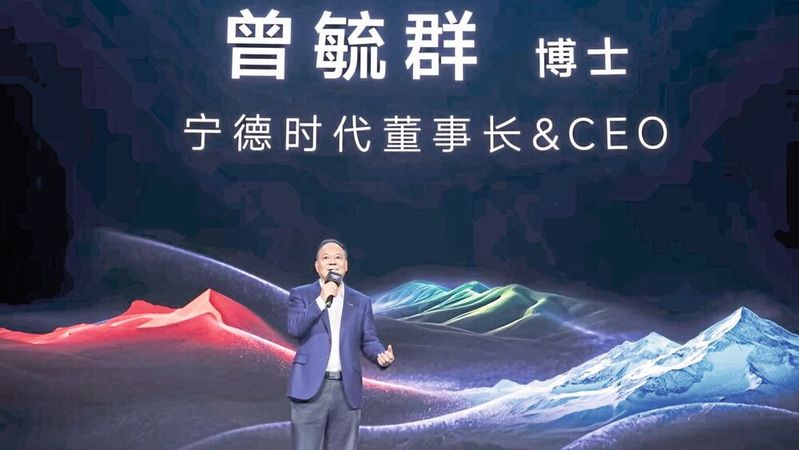
:quality(80)/p7i.vogel.de/wcms/df/b0/dfb0ab464efdca721a9e81ad38a1dbf9/0131057159v1.jpeg "Robin Zeng, Chairman and CEO of CATL, is driving forward the development of modern battery technologies.(Image: CATL)")
:quality(80)/p7i.vogel.de/wcms/f2/07/f2079df1819a8ab30f7f8d42ad6b3076/0131057162v1.jpeg "The second generation of the Freevoy Super Hybrid Battery.(Image: CATL)")
:quality(80)/p7i.vogel.de/wcms/66/d3/66d37aa9306e6e0632f7404d47731930/0131057165v1.jpeg "The third generation of the Shenxing Superfast Charging Battery.(Image: CATL)")
:quality(80)/p7i.vogel.de/wcms/90/7d/907d89978f7a4a9b75aadd13db88b74b/0131056902v1.jpeg "Naxtra Sodium-Ion Battery as an alternative sodium-based energy storage solution.(Image: CATL)")
:quality(80)/p7i.vogel.de/wcms/5a/14/5a14b26a5d4495d3a192e90e5c216251/ai-catl-sodium-batteries-vs-lithium-revolution-1800x1012v1v1.jpeg "The supplier CATL is bringing its first sodium-ion batteries into series production. Although not in the automotive industry, this step is set to follow soon. (Image:CATL)")
:quality(80)/p7i.vogel.de/wcms/7b/10/7b108d8ec7bf09cb1a20998364483525/0129923685v1.jpeg "The concept of the blade battery. (Image:BYD Europe B.V.)")