The 650-kilowatt Polestar 5 Performance is the sportiest electric car yet from the young brand. During a test drive, the model proves to be dynamic and detail-oriented.
Polestar is bringing its sportiest electric car yet, the "5 Performance," to the market.
(Image: Polestar)
This is no ordinary press test drive, where meticulously curated routes might help mask a car's weaknesses. We're driving a leg of a four-week European road trip, from Sweden to the Sahara. This segment takes us from one Spanish metropolis to another, from Barcelona to Valencia. Instead of taking the coastal highway, the route with the Polestar 5 Performance leads into the mountainous, sparsely populated hinterland. Far from urban charging infrastructure and the safe havens of well-developed fast-charging networks, the electric grand tourer must prove whether it should be feared by the EV elite.
Polestar Performance Architecture
The Polestar 5 Performance has everything on paper to compete in the league of spacious electric sports cars. Although the Swedish brand belongs to the large Chinese Geely Group, the sporty four-door explicitly does not share its technical foundation with models from Lotus or other sister brands. It is built on a specially developed platform made of bonded aluminum—the Polestar Performance Architecture. This saves weight while making the body torsionally rigid. Drivers will notice that this car surprises with well-thought-out details within the first few kilometers.
A striking design detail only becomes apparent at second glance: The Polestar 5 Performance has no rear window. The engineers moved the roof crossbeam behind the heads of the rear passengers to create ample headroom despite the flat roofline. The view to the rear is provided by a digital rearview mirror with a camera in the back. The system delivers a razor-sharp image even under a bright blue sky and intense sunlight.
In front of a red traffic light, there is an enormous brightness contrast between the shaded interior of the car behind us and the sunlit road. Nevertheless, the faces of the occupants are clear, sharp, and distinct—better than any mirror glass could capture.
Scandinavian Minimalism in the Interior
In the high-quality interior, we take a seat on Recaro seats. They offer a first-class compromise between ergonomics, high lateral support, and comfort. Polestar includes a multi-level massage program that effectively prevents back muscle tension during long journeys.
The cabin design showcases Scandinavian minimalism, unfortunately extending to the glove compartment, which doesn’t exist at all. However, the arrangement of the instruments demonstrates additional attention to detail. Instead of a fixed display integrated into the dashboard, the Polestar 5 features a compact 9-inch display mounted directly on the steering column. When the driver adjusts the steering wheel's height or depth, the screen moves with it. This eliminates any conflict between ergonomics and readability.
The central 14.5-inch display controls the vehicle functions. The high-resolution graphical system, based on the proven Android Automotive operating system with fully integrated Google services, may appear somewhat unconventional at first glance, but after a short adjustment period, it proves to be intuitive and self-explanatory. Using it, we program our first stop: the Reial Monestir de Santa Maria de Poblet. The historic monastery provides a brief respite before the journey continues further up into the mountains.
Unfortunately, No All-Wheel Steering
There, the infotainment system has a surprise in store. On a remote road, the Google navigation suddenly announces that the battery charge won't be sufficient to reach the destination. The software suggests a charging stop in the nearby village of Falset, just six kilometers away. There, public 60-kilowatt charging stations are available. While the Polestar 5, thanks to its 800-volt architecture, charges at fast-charging stations with up to 350 kW, in this inaccessible region, the station serves as a lifeline for completing the rest of the journey.
Date: 08.12.2025
Naturally, we always handle your personal data responsibly. Any personal data we receive from you is processed in accordance with applicable data protection legislation. For detailed information please see our privacy policy.
Consent to the use of data for promotional purposes
I hereby consent to Vogel Communications Group GmbH & Co. KG, Max-Planck-Str. 7-9, 97082 Würzburg including any affiliated companies according to §§ 15 et seq. AktG (hereafter: Vogel Communications Group) using my e-mail address to send editorial newsletters. A list of all affiliated companies can be found here
Newsletter content may include all products and services of any companies mentioned above, including for example specialist journals and books, events and fairs as well as event-related products and services, print and digital media offers and services such as additional (editorial) newsletters, raffles, lead campaigns, market research both online and offline, specialist webportals and e-learning offers. In case my personal telephone number has also been collected, it may be used for offers of aforementioned products, for services of the companies mentioned above, and market research purposes.
Additionally, my consent also includes the processing of my email address and telephone number for data matching for marketing purposes with select advertising partners such as LinkedIn, Google, and Meta. For this, Vogel Communications Group may transmit said data in hashed form to the advertising partners who then use said data to determine whether I am also a member of the mentioned advertising partner portals. Vogel Communications Group uses this feature for the purposes of re-targeting (up-selling, cross-selling, and customer loyalty), generating so-called look-alike audiences for acquisition of new customers, and as basis for exclusion for on-going advertising campaigns. Further information can be found in section “data matching for marketing purposes”.
In case I access protected data on Internet portals of Vogel Communications Group including any affiliated companies according to §§ 15 et seq. AktG, I need to provide further data in order to register for the access to such content. In return for this free access to editorial content, my data may be used in accordance with this consent for the purposes stated here. This does not apply to data matching for marketing purposes.
Right of revocation
I understand that I can revoke my consent at will. My revocation does not change the lawfulness of data processing that was conducted based on my consent leading up to my revocation. One option to declare my revocation is to use the contact form found at https://contact.vogel.de. In case I no longer wish to receive certain newsletters, I have subscribed to, I can also click on the unsubscribe link included at the end of a newsletter. Further information regarding my right of revocation and the implementation of it as well as the consequences of my revocation can be found in the data protection declaration, section editorial newsletter.
Back on the road, the GT gets to show what it’s capable of. Two electric motors deliver 650 kW (871 hp) and 1,015 Newton meters of torque. The sprint to 100 km/h (62 mph) is achieved in 3.2 seconds. Even more impressive, however, is how agile the 2,500-kilogram (5,511 lbs) vehicle maneuvers through tight mountain passes. A key factor here is the balanced 50:50 weight distribution between the front and rear axles.
The chassis with adaptive dampers, whose active valves control the flow, keeps the body stable. The car drives agilely, the ESP remains discreet in sport mode and allows the rear-biased power distribution its leeway. The steering reacts directly and can also be adjusted in resistance in three levels.
In tight hairpin bends, the steering manages without requiring hand repositioning. However, in this segment and with a length of over five meters, at least an optional all-wheel steering would be desirable. Competitors like the Mercedes EQS or the Porsche Taycan offer such a system, which also provides significant advantages when maneuvering.
There is also a More Affordable Alternative
For those who don't need maximum power, the Polestar 5 Dual Motor offers an alternative. This variant delivers 550 kW (737 hp) and 812 Nm of torque and comes with a significantly lower starting price of €119,900 (approx. $128,800) compared to the €142,900 (approx. $153,500)Performance model. Additionally, the entry-level version boasts a higher WLTP range of up to 670 kilometers (416 miles), compared to the 558 kilometers (346 miles) of the more powerful Performance variant.
Gallery
At the end of our journey, the Polestar 5 rolls into Valencia. After the challenging leg from the Mediterranean through the rugged and unforgiving Catalonian mountains, we step out feeling relaxed. With an empty weight of 2.5 tons, the GT reaches weight dimensions comparable to those of a large SUV—yet it delivers high driving dynamics. Polestar impressively demonstrates that the competition should indeed take this sports car seriously.
Polestar 5 Performance – Technical Data:
Four-door grand tourer of the luxury class (4+1 seats); Length: 5.09 meters (16.7 ft), Width: 2.02 meters (6.6 ft) (with exterior mirrors: 2.06 meters (6.8 ft) ), Height: 1.42 meters (4.7 ft), Wheelbase: 3.05 meters (10.0 ft), Trunk volume: 365–1,128 liters (approx. 12.9–39.8 cu ft) (plus 62 liters frunk (approx. 2.2 cu ft) )
Two electric motors with 650 kW (871 hp), Torque: 1,015 Nm, (approx. 748 lb-ft) 0–100 km/h: 3.2 s, Vmax: 250 km/h (155 mph), Consumption: 21.2 kWh/100 km, Battery size: 112 kWh (gross) / 106 kWh (net), Range: 558 km (346 miles) (WLTP), Charging capacity: 350 kW (DC), 11 kW (AC), Charging time: DC: 10–80 percent in approx. 22 minutes. Price: from 142,900 euros (approx. $153,500)



:quality(80)/p7i.vogel.de/wcms/eb/2b/eb2bd1b8487afe577b37363cd02f16ff/0113143253v1.jpeg "In our China Market Insider, we regularly provide you with relevant information straight from China. (Image:© Eisenhans - stock.adobe.com)")
:quality(80)/p7i.vogel.de/wcms/dd/b8/ddb8edc98c49b384734ab2432b297eb5/adobestock-1913662309--irene-stock-adobe-com-ki-generiertv1.jpeg "Rotary joints are used in grippers and swivel mechanisms to allow assemblies to rotate or swivel smoothly relative to one another, even under very high loads (illustrative image). (Source: Irene - stock.adobe.com / KI-generiert)")
:quality(80)/p7i.vogel.de/wcms/d1/ef/d1ef6b6f7d4543f7999980bacccaf22b/0133499261v1.jpeg "As the growing imbalance in trade relations with China continues to widen, the EU Chamber of Commerce foresees a day when trade with China will have to be seriously reevaluated ... (Image: AI-generated)")
:quality(80)/p7i.vogel.de/wcms/fe/1f/fe1fa5ee713f94deaba963dc24c3abc5/0133299273v1.jpeg "The Flexistar enables highly flexible production of laser-welded tubes thanks to its tool-free clamping system. (Image:Because Technology, LLC)")
:quality(80)/p7i.vogel.de/wcms/60/ef/60ef4f07e4829b2c2929befc0f353c58/0133511729v1.jpeg "Humanoid robots can match human performance in certain tasks. (Image:Gemini / AI-generated)")
:quality(80)/p7i.vogel.de/wcms/2e/99/2e99726b522e4b35b690e25eb6a42643/0133463991v1.jpeg "Robotics: In AMR applications, connection technology must reliably transmit power, signals, and data despite vibration and shock loads—in very confined spaces and in a way that allows for regular maintenance. (Image:Hyperever)")
:quality(80)/p7i.vogel.de/wcms/d0/18/d01801e3d5dbd7bc9d0b4f60408b630c/0133468429v1.jpeg "Quality requirements for film packaging are on the rise. At the same time, many companies are turning to recyclable film materials, which, however, have their own challenges. Fraunhofer researchers have therefore developed a fast system that detects problems in real time. (Image:Fraunhofer IKTS)")
:quality(80)/p7i.vogel.de/wcms/b1/06/b106cf44923ce39565c3264982fd20eb/0133414574v1.jpeg "Robots Build Robots: At the new Ubtech factory, automated systems even handle parts of the material supply and logistics for the production of humanoid robots. (Image:Ubtech)")
:quality(80)/p7i.vogel.de/wcms/c0/52/c052f405eb55fc3d08c4837e77206fc0/adobestock-2021845957--aucartstudio-stock-adobe-com-ki-generiertv1.jpeg "An innovation from China to combat extreme summer heat: A novel coating lowers temperatures. (Source: © AucArtStudio – stock.adobe.com_AI-generated)")
:quality(80)/p7i.vogel.de/wcms/66/a7/66a7b78159caeacce57136529688799f/0133503398v1.jpeg "Sunlight Makes Stone! These stone blocks weren't made the traditional way. Instead, they were additively manufactured from sand using a laser. In the future, however, the laser is set to be replaced by concentrated sunlight—if the startup Addisol is successful... (Image:Addisol / F. Fiedler)")
:quality(80)/p7i.vogel.de/wcms/72/b9/72b995c2c8d812c5e2115cbef31e035a/0133462727v1.jpeg "Eggl manufactures center hoods that are precisely tailored to each cooking island—whether standard size or custom shape. They are made entirely of stainless steel and are individually customized in terms of size and filter arrangement. (Image:SPI)")
:quality(80)/p7i.vogel.de/wcms/13/5d/135dfae6229ceaf5c55467a43e8f7257/adobestock-1879961393--ardi-stock-adobe-com-ki-generiertv1.jpeg "Annoying chatterboxes or awkward silences in response to questions—a moderator should specifically prepare for difficult situations in order to navigate them effectively. (Image:ardi - stock.adobe.com_AI-generated)")
:quality(80)/p7i.vogel.de/wcms/aa/a2/aaa2c6dd2daa24b485cddbf9297590c0/0133467318v1.jpeg "Battery Monitoring: Battery monitoring using electrochemical impedance spectroscopy offers several advantages. (Image:TI)")
:quality(80)/p7i.vogel.de/wcms/39/b2/39b21bf03be1683831862239a369987c/0133469638v1.jpeg "Data from autonomous vehicles and robots operating autonomously is in high demand, and Ruqi wants to capitalize on this. (Image:Ruqi Mobility)")
:quality(80)/p7i.vogel.de/wcms/8a/bb/8abbb6217220595edc1549ac9b84f307/0133429906v1.jpeg "The IAA in Hanover showcased the ambitions of Chinese commercial vehicle manufacturers in Europe. (Image:Wehner - VCG)")
:quality(80)/p7i.vogel.de/wcms/0c/53/0c5313ef91c14b6df0d0996efc33c8ad/jpg03568-bearbeitetv1.jpeg "The category winners of the 2027 German Car of the Year award. (Source: GCOTY)")
:quality(80)/p7i.vogel.de/wcms/48/15/4815da27c45973ca629a99b375ac3aef/0133509585v1.jpeg "Ventuno Q RoadTest: Designed to help the Element14 community gain practical insights from real-world tests using the Ventuno Q. (Image:Farnell/Element14)")
:quality(80)/p7i.vogel.de/wcms/17/2b/172bd132f9febdfcbcedba292ad0504d/aufmacherv1.jpeg "Micro-Epsilon offers a wide range of IO-Link-compatible sensors. (Source: Micro-Epsilon Messtechnik GmbH & Co. KG)")
:quality(80)/p7i.vogel.de/wcms/ca/b4/cab46fd26d19d6a2febca032048200b6/0133471827v1.jpeg "Photonics SDK for C and Python: Computational operations are now abstracted as standard mathematical functions. (Image:Q.ANT)")
:quality(80)/p7i.vogel.de/wcms/92/b2/92b2ed5299cde450c0764f4f64468395/0133505895v1.jpeg "The \"Iris 100\" test system for high-precision volume production of microLEDs uses a spectrometer and a high-resolution camera. (Image:Teradyne)")
:fill(fff,0)/images.vogel.de/vogelonline/companyimg/76800/76895/65.jpg "FAULHABER_120mm.jpg ()")
:fill(fff,0)/p7i.vogel.de/companies/69/de/69de1b7403b0d/simtos-logo.jpeg "simtos-logo (SIMTOS)")
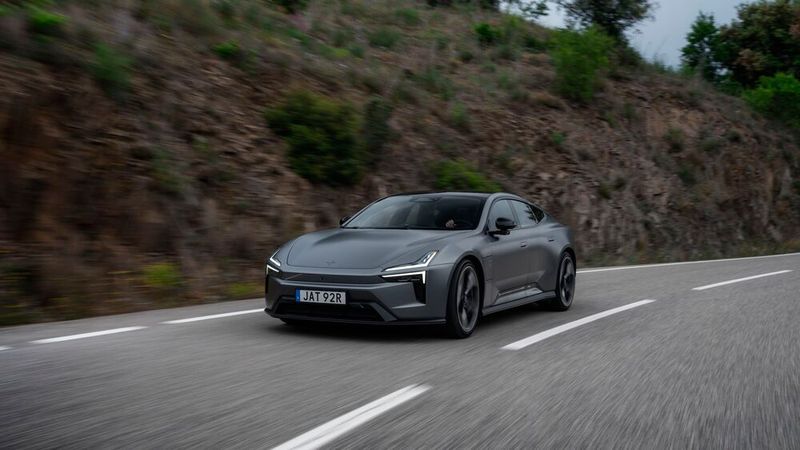
:quality(80)/p7i.vogel.de/wcms/22/d1/22d1ed6799e99100e3071891f2eb44fe/0131633571v1.jpeg "The four-door gran turismo is built on a specially developed aluminum platform.(Image: Polestar)")
:quality(80)/p7i.vogel.de/wcms/de/67/de67a570a7152923595e5fa7da6448b0/0131633577v1.jpeg "In the interior, Polestar relies on Scandinavian minimalism.(Image: Polestar)")
:quality(80)/p7i.vogel.de/wcms/26/cc/26cc15b50640da3e03fe013d8dd900e1/0131633574v1.jpeg "Two electric motors deliver 650 kilowatts and provide 1,015 Newton meters of torque.(Image: Polestar)")
:quality(80)/p7i.vogel.de/wcms/63/1a/631acacaa39ca0b5903146907713074c/0131633581v1.jpeg "Passengers sit two in the back.(Image: Polestar)")
:quality(80)/p7i.vogel.de/wcms/c5/fe/c5fe4c0dc9b1b0c2cd6227881e957258/0132086804v1.jpeg "Polestar has refreshed its Model 3 and equipped it with 800-volt technology. Externally, however, the car has remained unchanged. (Image:Schmidt - VCG)")
:quality(80)/p7i.vogel.de/wcms/42/0a/420a796e6b9d9e3bf27d89d4fe425d84/0129264331v1.jpeg "Polestar presented the new Model 5 live. (Image:Polestar)")