Physical AI connects the digital with the real world. The systems are capable of responding to new and unfamiliar situations and learning from their experiences. NTT Data, a global leader in AI, digital business, and technology services, identifies eight areas where Physical AI delivers the greatest added value.
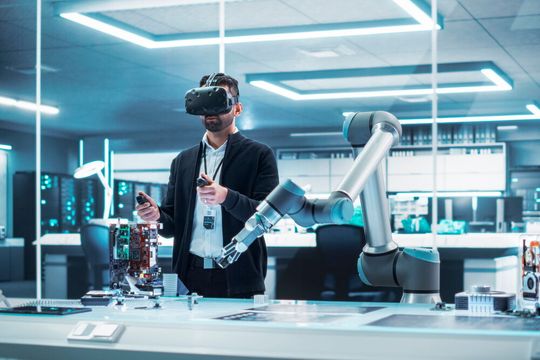
Physical AI can intervene directly in manufacturing, delivering significant added value.
(Image: Shutterstock)
The history of manufacturing automation spans many decades, but with AI and robotics, a completely new chapter is currently being written, as it is no longer limited to highly standardized processes. Even complex tasks and workflows with high variability are becoming increasingly automatable, and unforeseen events no longer disrupt production. The key is Physical AI, which enables intelligent control of physical systems in real time, thereby revolutionizing their adaptability.
"Intelligent machines that not only think but also act are the future of manufacturing," emphasizes Oliver Köth, Managing Director of Technology & Innovation at NTT Data DACH. "They can help manufacturing companies mitigate the labor shortage, optimize complex manufacturing processes, and even automate workflows that previously seemed unautomatable. Those who neglect this topic are unlikely to remain competitive in the long term."
Particularly Promising Application Areas for Physical AI
1. Intralogistics for Small and Micro Series: Products manufactured in small quantities or customized have traditionally posed a logistical challenge. However, with Physical AI, it is now possible to deliver the right parts to the right place at the right time. Autonomous Mobile Robots (AMRs) independently pick them in the warehouse and transport them to the machines. They select the best possible route, avoid obstacles, and prioritize short-notice rush orders if necessary. They also handle the transport of semi-finished goods between individual production stations, preventing idle times or backlogs of unfinished products. This reduces lead times and increases on-time delivery, while companies also need to maintain smaller inventory buffers, as demonstrated by various projects that NTT Data has already implemented in the automotive and mechanical engineering sectors. Since the AMRs continuously learn from feedback in the ongoing process (Closed Loop), they do not require regular retraining based on recorded data.
2. Individual Machine Control: Small and micro series require many individual adjustments to machines, but Physical AI can make these dynamically. Depending on the product and its requirements, the right materials and components are ordered and then processed correctly. For example, a gripper recognizes what is in front of the machine and grips it precisely—without toppling over or damaging parts, even if they are new to it. During assembly, the AI selects the appropriate tools and parameters, such as the desired paint and suitable nozzle for painting or adjusting welding current, welding time, and electrode force according to the material type and thickness. This increases the flexibility of production variants without the need for manual parameterization—setup times are significantly reduced, and new products can be produced error-free more quickly (First Time Right). In brownfield environments with existing PLC and MES landscapes (Programmable Logic Controllers / Manufacturing Execution System), machine controls based on Physical AI have already proven themselves many times.
3. Maintenance Optimization: Predictive Maintenance is not new but gains reliability with Physical AI. Instead of merely analyzing statistical data on past disruptions and failures to optimize maintenance cycles, AI can now also incorporate sensor data to reliably predict wear and defects. It is important not to rely on individual sensor data such as vibrations, sounds, temperatures, or pressure but to create a comprehensive picture through their integration—known as sensor fusion. If necessary, the AI can also adjust machine parameters or stop the machine in time to prevent faulty batches or major damage. It autonomously schedules maintenance windows to optimally utilize downtime and replace parts neither too early nor too late.
4. Automated Quality Control: Systems equipped with cameras and AI can significantly enhance quality control in manufacturing. They detect even the smallest defects, such as microscopic cracks in materials and coatings or slight deformations and discolorations on surfaces that indicate flaws. They inspect weld seams, fastenings, gaps, and dimensions—faster and more accurately than humans ever could. Products that do not meet the specified quality standards are automatically sorted out or sent to the appropriate machines for rework. Thanks to a combination of image processing and machine learning, these systems deliver significantly better results than rule-based vision systems. Additionally, they can be directly integrated into the production process to inspect all components or products rather than just random samples. This reduces scrap rates and customer complaints.
5. Self-Optimizing Machines: Machines and tools that optimize themselves represent a combination of the aforementioned use cases. They utilize extensive sensors not only to monitor the results of their work but also to assess the current tool condition—for instance, detecting wear, fouling, imbalance, or a clogged nozzle. Based on this, manufacturing parameters are adjusted to ensure consistently high production quality despite wear or contamination and, if necessary, initiate actions such as cleaning, lubrication, recalibration, or part replacement. A similar approach can be used to optimize the ramp-up phase for manufacturing new products: test products are meticulously inspected to identify deviations and gradually adjust production parameters. Targeted parameter changes help to better understand causes and effects, allowing the entire process to be refined until the production result meets the specifications.
6. Autonomous Monitoring and Inspection: Independently operating drones and robots can monitor both the factory premises and production areas—either on regular inspection routes or when surveillance cameras and other sensors report an irregularity, such as unknown individuals, open doors, blocked escape routes, or smoke and fluid leaks. They also cover blind spots and reach areas that are inaccessible or hazardous for humans. By combining camera images with infrared and LiDAR, they can achieve highly detailed object and event differentiation, even in low-light conditions. Depending on what the sensors detect, appropriate measures are initiated, such as notifying security personnel, shutting down machines, closing valves, or activating ventilation systems.
7. Human-Machine Cooperation: Physical AI enhances collaboration between humans and machines. They can operate in the same workspace without safety cages or fences. Robots, for example, recognize when humans cross their path or enter their action radius and adjust their movements to avoid causing injuries. Furthermore, robots can detect the posture, movements, and gestures of their human colleagues and provide individualized support. Depending on the work situation, they lift heavy parts and hold them in a position suitable for ergonomically friendly processing, hand over the required tools, deliver components just in time, or transport assembled parts away.
8. Humanoid Robots: Robots whose form and movements are modeled after the human body can take on complex tasks in manufacturing that are usually performed by humans. At present, they are still mostly limited to simple activities, such as sorting and transporting parts, but development is advancing rapidly. Their use is particularly attractive in situations where there is a shortage of skilled workers or where boring, repetitive, physically demanding, or hazardous tasks need to be performed. Thanks to their arms and legs, humanoid robots can move freely and assist in a wide range of work processes—around the clock, without fatigue. Even autonomous factories, where autonomous robots and other intelligent systems fully organize themselves, now seem possible.
What Decision-Makers Should Consider
Physical AI requires not only extensive AI expertise but also seamless IT/OT integrations, as intelligent systems must, among other things, retrieve data from MES and access PLC and SCADA systems (Supervisory Control and Data Acquisition). Extensive sensor technology and high data quality are additional critical success factors, as the AI needs a comprehensive and accurate picture of processes and the environment. Companies should initially pilot individual use cases intensively and subsequently standardize and scale the automated processes. Governance and IT security must be considered from the outset—otherwise, compliance and security risks may arise, necessitating costly rework.
When carefully implemented, Physical AI projects deliver significant added value. According to NTT Data's experience, typical results include a reduction in downtime by 20 to 40 percent, a 10 to 25 percent increase in Overall Equipment Effectiveness (OEE), a 15 to 30 percent reduction in scrap production, and significantly shorter ramp-up times for manufacturing new products.
Date: 08.12.2025
Naturally, we always handle your personal data responsibly. Any personal data we receive from you is processed in accordance with applicable data protection legislation. For detailed information please see our privacy policy.
Consent to the use of data for promotional purposes
I hereby consent to Vogel Communications Group GmbH & Co. KG, Max-Planck-Str. 7-9, 97082 Würzburg including any affiliated companies according to §§ 15 et seq. AktG (hereafter: Vogel Communications Group) using my e-mail address to send editorial newsletters. A list of all affiliated companies can be found here
Newsletter content may include all products and services of any companies mentioned above, including for example specialist journals and books, events and fairs as well as event-related products and services, print and digital media offers and services such as additional (editorial) newsletters, raffles, lead campaigns, market research both online and offline, specialist webportals and e-learning offers. In case my personal telephone number has also been collected, it may be used for offers of aforementioned products, for services of the companies mentioned above, and market research purposes.
Additionally, my consent also includes the processing of my email address and telephone number for data matching for marketing purposes with select advertising partners such as LinkedIn, Google, and Meta. For this, Vogel Communications Group may transmit said data in hashed form to the advertising partners who then use said data to determine whether I am also a member of the mentioned advertising partner portals. Vogel Communications Group uses this feature for the purposes of re-targeting (up-selling, cross-selling, and customer loyalty), generating so-called look-alike audiences for acquisition of new customers, and as basis for exclusion for on-going advertising campaigns. Further information can be found in section “data matching for marketing purposes”.
In case I access protected data on Internet portals of Vogel Communications Group including any affiliated companies according to §§ 15 et seq. AktG, I need to provide further data in order to register for the access to such content. In return for this free access to editorial content, my data may be used in accordance with this consent for the purposes stated here. This does not apply to data matching for marketing purposes.
Right of revocation
I understand that I can revoke my consent at will. My revocation does not change the lawfulness of data processing that was conducted based on my consent leading up to my revocation. One option to declare my revocation is to use the contact form found at https://contact.vogel.de. In case I no longer wish to receive certain newsletters, I have subscribed to, I can also click on the unsubscribe link included at the end of a newsletter. Further information regarding my right of revocation and the implementation of it as well as the consequences of my revocation can be found in the data protection declaration, section editorial newsletter.



:quality(80)/p7i.vogel.de/wcms/3f/cf/3fcfa390902944ffcf24e7fe973cc3ee/0133486258v1.jpeg "Do you need to create secure connections on structures using blind rivets, but space is tight? Then you should take a closer look at the Universalgrip from Gesipa ... (Image: Gesipa)")
:quality(80)/p7i.vogel.de/wcms/7d/e4/7de4d10508f689ec3d7fdf871ea2f598/0133075510v1.jpeg "Small, but designed for demanding applications: KSK demonstrates that the diameter of ball screws says nothing about their load-carrying capacity. (Image:Arkero)")
:quality(80)/p7i.vogel.de/wcms/d9/43/d943b0ce33bdf921f37f14655bb0c376/cuscinetto-a-sfere-di-leonardo-da-vinci-in-una-mostra-su-leonardo-da-vinci-al-mulino-di-mora-bassa---morabassa-croppedv1.jpeg "Replica of Leonardo da Vinci's ball bearing: The inventor used wooden balls. Spacers prevent the balls from rubbing against each other. (Source: Capricornis crispus)")
:quality(80)/p7i.vogel.de/wcms/17/b8/17b8af0cb725e0e1d3e8d72458bab260/siemens-meet-at-the-machinev1.jpeg "“Meet at the Machine” is Siemens’ new initiative, which aims to bring together machine builders, software, and automation technologies to accelerate innovation in the machine tool industry and help manufacturers become productive more quickly. (Source: Siemens)")
:quality(80)/p7i.vogel.de/wcms/2e/99/2e99726b522e4b35b690e25eb6a42643/0133463991v1.jpeg "Robotics: In AMR applications, connection technology must reliably transmit power, signals, and data despite vibration and shock loads—in very confined spaces and in a way that allows for regular maintenance. (Image:Hyperever)")
:quality(80)/p7i.vogel.de/wcms/d0/18/d01801e3d5dbd7bc9d0b4f60408b630c/0133468429v1.jpeg "Quality requirements for film packaging are on the rise. At the same time, many companies are turning to recyclable film materials, which, however, have their own challenges. Fraunhofer researchers have therefore developed a fast system that detects problems in real time. (Image:Fraunhofer IKTS)")
:quality(80)/p7i.vogel.de/wcms/b1/06/b106cf44923ce39565c3264982fd20eb/0133414574v1.jpeg "Robots Build Robots: At the new Ubtech factory, automated systems even handle parts of the material supply and logistics for the production of humanoid robots. (Image:Ubtech)")
:quality(80)/p7i.vogel.de/wcms/38/79/38799bfbbccd938b64c67068cfa68780/0133329362v1.jpeg "What exactly enables machines to act on their own? (Image:Shutterstock)")
:quality(80)/p7i.vogel.de/wcms/ca/46/ca462051dfb9a1fb37ca4053762af9df/org-blobs-user-response-file-output-908c701c-3b37-491e-bb5c-35fc3d336575-plugin-output-call-182851v1.png "Through extreme compression, high-energy lasers transform simple plastics into high-purity nanodiamonds. What was once used in planetary physics is now opening up entirely new possibilities for quantum sensors, novel catalysts, and extremely hard materials. (Illustrative image) (Source: VCG / AI-generated)")
:quality(80)/p7i.vogel.de/wcms/7c/7a/7c7a5eada63c7a36a365391c292f76d4/hot-fire-jarvisv1.jpeg "(Developed in record time: A “JARVIS-class” jet engine capable of up to 100 pounds of thrust. It was designed in a four-week sprint using generative AI and established CAD/CAE tools.MIT)")
:quality(80)/p7i.vogel.de/wcms/87/87/87870cf2b30aaef7b8a06212a4ef2c14/0133403885v1.jpeg "A digital twin and a real component demonstrate how closely simulation and manufacturing are converging. Stampack Xpress 2026.1 virtually models forming behavior and supports the validation of process and tool design. (Image:Stampack)")
:quality(80)/p7i.vogel.de/wcms/59/2a/592a7f2d0964e9e6846cae331f5daa3a/0133266065v1.jpeg "Perforated metal sheets are particularly well-suited for balcony railings, as they combine stability, privacy, and design versatility. (Image:Ripo Factory)")
:quality(80)/p7i.vogel.de/wcms/5d/70/5d70b7d3a05d5a99821b172db63569be/0133485094v1.jpeg "Volkswagen continues to face financial difficulties. Although cost-cutting measures are already underway, the situation hasn't improved much. Further layoffs may be on the horizon. In addition, the Wolfsburg-based company plans to accelerate the implementation of its overall measures. (Image:Volkswagen)")
:quality(80)/p7i.vogel.de/wcms/24/d5/24d546b8c00887feaef1cbc207b9e2af/0133433032v1.jpeg "Mahle CEO Arnd Franz was recently asked about his vision for the future of the commercial vehicle business—particularly regarding the industry's transition to electric vehicles... (Image:Kai R. Joachim / Mahle)")
:quality(80)/p7i.vogel.de/wcms/8b/c5/8bc5c0c40b6d706aca4e3f3ddcc99958/0133387335v1.jpeg "At InnoTrans, Stadler is unveiling for the first time its new four-axle EURO DuFour locomotive for freight service, which SBB Cargo has ordered. Compared to the existing fleet, it is expected to be significantly more energy-efficient in operation. (Image:Stadler)")
:quality(80)/p7i.vogel.de/wcms/49/97/49978469e969283ccb68531ebef1f412/klaus-zellmer-1v1.jpeg "Klaus Zellmer will become CEO of Volvo no later than October 2027. (Source: Volvo)")
:quality(80)/p7i.vogel.de/wcms/2f/19/2f1928ea68e2cf840ebba6313fc08201/0133462125v1.jpeg "Converters: Integrated GaN buck and boost converters for the medium-voltage range require 50% less space than silicon-based alternatives, without compromising efficiency. (Image:TI)")
:quality(80)/p7i.vogel.de/wcms/ad/1c/ad1c6bbdd95e8259df957681156871ad/0133464246v1.jpeg "More and more data must be modulated onto light waves and transmitted through the global fiber-optic network. Japanese researchers are now pushing the limits of the physics of this transmission even further. (Image:freely licensed)")
:quality(80)/p7i.vogel.de/wcms/f3/d9/f3d91ebfd703e24d4065b0ae7898e46b/0133177388v1.jpeg "The Evolution of Coding: In the past, programs were written by hand and fed into the computer using punch cards and switches. Today, in the age of “vibe coding,” computers can largely program themselves. (Image:Dall-E / AI-generated)")
:quality(80)/p7i.vogel.de/wcms/00/cd/00cd7c51cf41652dbb295c14634cd34f/0133438409v1.jpeg "Flash memory from Spansion dating back to 2004, before the company merged with Cypress. Infineon is divesting its NOR flash and FRAM memory business. Winbond, which is acquiring the division for $1.12 billion, plans to continue operating it as a separate company under the Spansion name starting next year. (Image:Raimond Spekking / CC BY-SA 4.0 / Wikimedia Commons)")
:fill(fff,0)/images.vogel.de/vogelonline/companyimg/76800/76895/65.jpg "FAULHABER_120mm.jpg ()")
:fill(fff,0)/p7i.vogel.de/companies/69/88/69882c428938e/tmts2026-ticec-banner-en-2000px.png "tmts2026-ticec-banner-en-2000px (https://www.tmts.tw/en)")
:fill(fff,0)/p7i.vogel.de/companies/69/de/69de1b7403b0d/simtos-logo.jpeg "simtos-logo (SIMTOS)")
:quality(80)/p7i.vogel.de/wcms/4b/ef/4bef1d6a3b7b5ff85be04aeb0d061bb0/0130176432v1.jpeg "Zhaopeng Chen, CEO Agile Robots: \"Hardware forms the basis of every robot—precision, stability and agility are crucial. But without the right software, robots remain static machines.\" (Image:Agile Robots)")
:quality(80)/p7i.vogel.de/wcms/38/79/38799bfbbccd938b64c67068cfa68780/0133329362v1.jpeg "What exactly enables machines to act on their own? (Image:Shutterstock)")
:quality(80)/p7i.vogel.de/wcms/4d/74/4d745446555110ca9797db1eabb7c9d3/0129551585v1.jpeg "Jochen Gemeinhardt is responsible for NTT Data's AI business in the DACH region as Head of Production & Supply Chain and Head of Industry Line Global Business. (Image:NTT Data)")