New Ecosystem for AI Data Centers"Photonic ICs—a Huge Opportunity for Europe!"
The interview was conducted by
Heinz Arnold
| Translated by AI
11 min Reading Time
Q.ANT has already integrated its Gen2 NPUs into 19-inch server modules and installed them for its first customers. CEO Dr. Michael Förtsch discusses real-world experiences, energy savings, hybrid computing architectures—and the opportunity for Europe to shape a new generation of computing with photonics.
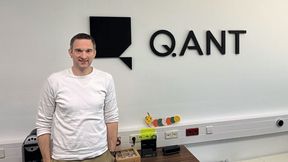
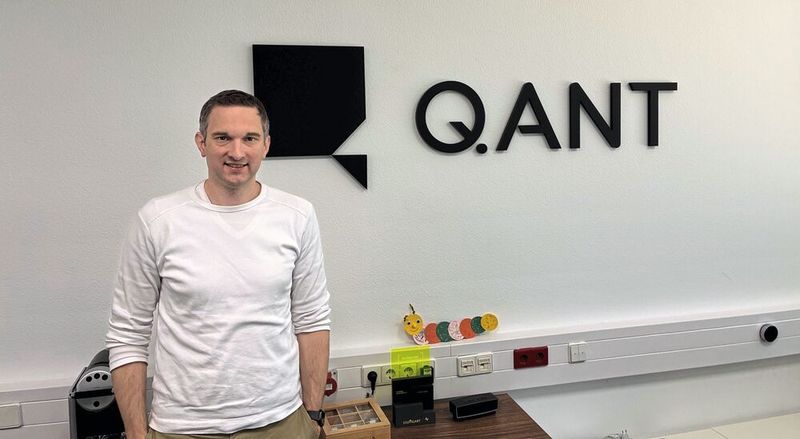
Dr. Michael Förtsch, CEO of Q.ANT, on a new ecosystem for data centers.
(Image: Q.ANT)
Q.ANT unveiled the second generation of the Native Processing Unit in November 2025. In March, 19-inch NPS modules containing multiple Gen2 NPUs were already integrated into the racks at the Leibniz Computing Center in Munich (Germany). What has been the practical experience so far, Mr. Förtsch?
Dr. Michael Förtsch: The LRZ was able to integrate the plug-ins without any problems via our PCIe interfaces and C/C++/Python APIs, where they function as accelerators. We have since installed our Native Processing Servers with Gen2 NPUs in Jülich as well. In addition, we have been collaborating with Ionos since March of this year. Ionos is the first commercial customer and cloud operator for Q.ANT’s photonic processors. In this way, we are bringing our photonic coprocessors—which are particularly capable of performing complex and nonlinear computational operations very quickly and energy-efficiently—into the real world of AI data centers.
Over the past few years, several startups—such as Neurophos, Lightmatter, Akhetonics, Lumai, and a few others—have attracted attention with their computing approaches based on photonic chips, similar to Q.ANT’s. How does Q.ANT see itself positioned in this landscape?
First of all, it’s very encouraging that a lot of venture capital is flowing into this sector: In the first half of the year, it totaled more than $1 billion. I’m even more pleased that Q.ANT occupies a unique position here: We’re the global market leader—the only company that can deliver a complete system. Our Gen2 NPU has been very well received worldwide—people are taking notice of us!
Are the Native Processing Server modules equipped with Gen2 NPUs already performing useful computational operations?
We integrate our TFLN-based photonic processors—the Native Processing Units (NPUs)—into 19-inch plug-in modules, which we call Native Processing Servers. They require no cooling and can be easily slid into data center racks. The NPS units, based on Gen2 NPUs, have already logged well over 20,000 operating hours in data centers. That’s substantial! This pioneering position is bringing us significant international attention.
Can you give a specific example of that?
A potential client in the U.S. had invited us to a meeting where we were to explain our technology. He had given us 45 minutes. To his surprise, we didn’t just explain our technology in abstract terms using slides—others can do that, too—but were able to draw on our experience in data centers. The meeting ended up lasting two and a half hours and resulted in a partnership.
What exactly is Q.ANT known for these days?
Potential users know that we provide them with a coprocessor as part of the stack. Our computing unit handles the complex mathematics—analog and based on photons rather than electrons—as well as digitally.
And do you know that the big advantage is that Q.ANT's method makes it possible to perform the calculations faster and more energy-efficiently?
We’re trying to make it clear that the major advantage is that we need far less data to describe a problem. For example, representing a circle digitally is relatively complex. In an analog system based on sine and cosine, two points are sufficient. This means that much less storage space is required: We reduce the amount of data and storage access times, so ultimately we consume much less power. We can demonstrate that in real-world applications, we need an order of magnitude fewer data points.
How much less energy intake does that mean?
It really depends on the applications—or rather, the underlying algorithm. Today, our strength lies precisely where digital processors struggle: with complex and nonlinear functions. Since these functions are known to reduce the amount of data, the rule of thumb is: the more of these functions are used, the greater the potential for savings. For example, in the area of image recognition, we see a potential for energy savings by a factor of 10.
But that doesn't mean digital processors are supposed to be replaced, does it?
The system architecture will remain as we know it: digital CPUs, digital GPUs. Our NPUs will be added as a second coprocessor, just like the GPU. In the future, I also foresee additional coprocessors that will handle other specialized tasks. We’re focusing on user-specific hybrid architectures; workloads should be processed wherever they can be handled most efficiently.
Date: 08.12.2025
Naturally, we always handle your personal data responsibly. Any personal data we receive from you is processed in accordance with applicable data protection legislation. For detailed information please see our privacy policy.
Consent to the use of data for promotional purposes
I hereby consent to Vogel Communications Group GmbH & Co. KG, Max-Planck-Str. 7-9, 97082 Würzburg including any affiliated companies according to §§ 15 et seq. AktG (hereafter: Vogel Communications Group) using my e-mail address to send editorial newsletters. A list of all affiliated companies can be found here
Newsletter content may include all products and services of any companies mentioned above, including for example specialist journals and books, events and fairs as well as event-related products and services, print and digital media offers and services such as additional (editorial) newsletters, raffles, lead campaigns, market research both online and offline, specialist webportals and e-learning offers. In case my personal telephone number has also been collected, it may be used for offers of aforementioned products, for services of the companies mentioned above, and market research purposes.
Additionally, my consent also includes the processing of my email address and telephone number for data matching for marketing purposes with select advertising partners such as LinkedIn, Google, and Meta. For this, Vogel Communications Group may transmit said data in hashed form to the advertising partners who then use said data to determine whether I am also a member of the mentioned advertising partner portals. Vogel Communications Group uses this feature for the purposes of re-targeting (up-selling, cross-selling, and customer loyalty), generating so-called look-alike audiences for acquisition of new customers, and as basis for exclusion for on-going advertising campaigns. Further information can be found in section “data matching for marketing purposes”.
In case I access protected data on Internet portals of Vogel Communications Group including any affiliated companies according to §§ 15 et seq. AktG, I need to provide further data in order to register for the access to such content. In return for this free access to editorial content, my data may be used in accordance with this consent for the purposes stated here. This does not apply to data matching for marketing purposes.
Right of revocation
I understand that I can revoke my consent at will. My revocation does not change the lawfulness of data processing that was conducted based on my consent leading up to my revocation. One option to declare my revocation is to use the contact form found at https://contact.vogel.de. In case I no longer wish to receive certain newsletters, I have subscribed to, I can also click on the unsubscribe link included at the end of a newsletter. Further information regarding my right of revocation and the implementation of it as well as the consequences of my revocation can be found in the data protection declaration, section editorial newsletter.
What do you think of compute-in-memory architectures as a way to overcome the memory wall and eliminate the need to constantly shovel so much data back and forth between the GPU and HBMs—a process that accounts for a large portion of the immense energy consumption of AI data centers?
I think bringing storage closer to processing is a logical development, and it leads to a reduction in energy consumption. But we’re tackling the problem at its root by significantly reducing the amount of data. This isn’t just a gradual improvement—it’s a true paradigm shift in computing technology! Much less data means far fewer bits that I don’t need to write. We can solve the same problem with a fraction of the data that was previously required. There’s no need for data transfer in the first place—that’s a very elegant approach!
That works in Q.ANT's favor, given that memory has become so expensive…
…and for good reason. In the 1990s, memory was generally inexpensive; the main priority was that the processors be as fast as possible. Now it’s the other way around: LLMs are memory-constrained, and while the processors are powerful enough, there’s a high degree of inefficiency in the system—especially due to Transformer architectures. Digital electronics based on CMOS ICs simply cannot efficiently handle complex mathematics. Servers equipped with our NPUs can now do exactly what the world so desperately needs.
Are Transformer Architectures a Dead End?
No, at first that was exactly the right approach: Transformers work very well with GPUs. When everyone in the U.S. was betting on them in 2016 and those massive GPU data centers sprang up, that was fine. I can only admire the courage with which those clusters were built in the U.S. But now, ten years later, transformers are reaching their limits, which is already clearly evident in the U.S.: there are no more transformer startups. That’s why we’re now seeing such strong interest in our technology from American companies.
Other companies are surely feeling this as well. As you mentioned earlier, new startups are emerging, and established companies—Nvidia in particular—will also be carefully considering their next steps and may even acquire promising startups. How secure does Q.ANT feel?
I'm not afraid of startups or established companies. Compared to startups, we have a huge lead in terms of hardware; no one can catch up with us anytime soon—we have a lead of at least two years.
And what about the established players like Nvidia?
On the one hand, they are looking for new technologies; on the other hand, they have a business model and do not want to allocate resources to these new technologies that they actually need.
Even before Q.ANT was founded—which originally intended to go in a different direction—there were photonic startups pursuing ideas similar to those Q.ANT is pursuing now. Why didn't that work out as originally planned?
The established companies—the hyperscalers, data center operators, and GPU manufacturers—did exceptionally well by focusing on GPUs and transformers. None of them were really interested in a new technology, so they steered these startups in their direction: photonics companies were to develop transceivers for high-speed optical data transmission, and then they were incorporated into the roadmaps. Interconnects have since matured into a well-established technology, and it’s now virtually impossible for a new entrant to break into this market. Incidentally, these market mechanisms are the reason why Tesla could only emerge in the U.S.; in a European context with an established industry and mature technology, that would not have been possible. As for photonic computing, the situation in Europe is now exactly the opposite: here, we can think in completely new and radical ways without having to follow Silicon Valley’s lead.
So you see a great opportunity for Europe in this area—what needs to be done now?
The first thing that comes to mind is how it doesn’t work: When European politicians try to attract operators to build traditional data centers here that are powered by nuclear energy from France, I see that as almost degrading, given that European industry is exceptionally well-positioned in the field of photonics and would be capable of building the next generation of data centers. European policymakers and European industry just need to have confidence in themselves: Sovereignty means just doing it!
In the field of quantum technologies—particularly quantum computing—a great deal is currently happening in Europe…
…which I generally welcome, but quantum computing is still far from reaching our level of maturity. We could, however, take concrete steps right away toward a new technology that would advance our sovereignty. We must move forward with industrialization now.
What specific steps should be taken now?
Now we need to build partnerships. This is possible in Europe; a great deal is already in place, from the existing fabs where photonic ICs can be manufactured in Europe to our industrial customers.
Are there already customers?
Quite a few people in the industry have already realized that our technology works and can be directly applied in many sectors to solve complex mathematical problems—with all the benefits mentioned. We have numerous prospective clients from the industry who are very interested in being able to solve complex mathematical problems much faster and more efficiently than has been possible so far—not just the day after tomorrow, but right now. This ranges from fluid mechanics to AI.
Does Q.ANT plan to build and operate its own data centers?
No, that’s not what we want; we want to sell our NPS and are in intensive discussions with data center operators in Europe and the U.S. Our goal is to build an ecosystem and develop photonics-optimized applications, especially here in Europe. We see this as a huge opportunity—not just for us, but for all of Europe.
What kinds of partnerships do you have in mind?
Our partnership with Ionos is a great example of the direction we're heading in. We need more of this—and we'll be able to announce more about it very soon.
What Would you Like to See the Government Do?
Take a look at how it works in the U.S. There, the government acts as an anchor customer. This allows startups to generate revenue—with enormous leverage in the capital market. This also benefits the government, by the way: it positions itself as an early adopter. For example, the government could ensure that a future computing infrastructure is established in data centers. I mentioned hybrid architectures earlier. There has long been discussion that the computer architecture of the future will combine multiple chip technologies on a single platform: CPUs, GPUs, photonic processors, and, in the somewhat more distant future, quantum processors as well. And these will most likely communicate with one another via high-speed photonic (optical) connections—photonic interconnects. This will be necessary to run the applications we’ll need in the future. And for this, in turn, we need ecosystems that pool knowledge and bring it to industry.
The startups benefit from this, an ecosystem emerges, and the industry provides use cases. Even if only two of the original startups succeed, that’s still great, and the effort has paid off for the government and the economy.
But wouldn't the most obvious approach be to do this specifically using photonics?
I have to repeat myself: We’re incredibly lucky: On the one hand, LLMs based on the Transformer architecture are reaching their limits; on the other hand, with analog photonic NPUs, we have exactly the kind of hardware the data center industry is looking for. Europe must now focus on photonics; we shouldn’t let this opportunity slip away. There is very strong interest worldwide, both from Europe and the U.S.
You place great emphasis on the fact that it's not enough for something to happen—it has to happen very quickly. Why the rush?
I’m thinking in particular of the U.S.—as I said, interest there is enormous—but woe betide us if expectations aren’t met on time. There, speed is at the top of the list of criteria that must be met; only then do quality and cost follow in second and third place, respectively. Here, it’s still exactly the opposite: first, quality; second, cost; third, speed. That has to change: By now, it should have become clear here as well that in the AI landscape, speed is what counts above all else: The first mover takes it all. We got in early, we now have a mature technology, we can deliver, we’re gaining international recognition, and people can now use us to solve real-world problems—problems whose complex mathematics previously forced users to give up. We must now build the corresponding ecosystem in Europe and create the “Tesla” of the computing sector!
Michael Förtsch, CEO of Q.ANT
Dr. Michael Förtsch combines scientific expertise with an entrepreneurial pioneering spirit. After studying mathematics and physics, he earned his Ph.D. at the Max Planck Institute for the Physics of Light in Erlangen (Germany) and conducted research at the National Institute of Standards and Technology (NIST) in the United States. After holding various positions at Trumpf, he founded the startup Q.ANT in 2018. As CEO, he is driving the development of photonic processors that process data using light rather than electronic circuits. With this, Förtsch aims to establish an energy-efficient alternative to conventional processor architectures for applications in artificial intelligence and high-performance computing.