China is not giving up on hydrogen, but is intensifying its efforts. The number of vehicles with fuel cells on China's roads is to be doubled by 2030, according to a new directive from the Ministry of Industry in Beijing.
China is not giving up on hydrogen, but is intensifying its efforts.
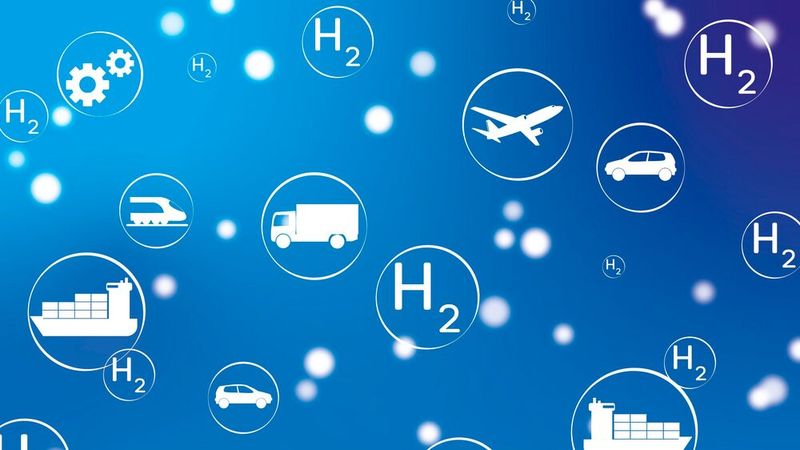
(Image: freely licensed from Pixabay)
The document published on March 16 by the Ministry of Industry MIIT and two other ministries sets clear goals for the extensive development of the hydrogen economy in transportation and industry. The strategy is based on the premise that government support is still needed to scale the technology to the point where technological breakthroughs can sufficiently reduce the efficiency and cost of application. It is the same approach that has already pushed solar energy and the e-mobility sector in China.
100,000 FCEVs on Chinese Roads by 2030
By 2030, 100,000 fuel cell electric vehicles (FCEVs) are expected to be on China's roads. That is around twice as many as today. By the end of 2025, around 40,000 hydrogen fuel cell vehicles will have been sold in China, according to the official news agency Xinhua. In addition, there are currently 574 hydrogen filling stations with a cumulative daily refuelling capacity of more than 360 tons. Last year, the number of new FCEV registrations accelerated, exceeding 10,000 per year for the first time according to insurance data, as reported by the Chinese Passenger Car Association (CPCA).
This was an increase of 47 percent compared to the previous year. Cumulatively, almost 40,000 FCEVs will have been sold in China by the end of 2025. This makes China one of the world's leading countries in this area, writes the Ministry of Industry. However, a sober look at the available figures also shows that the fuel cell, just like hydrogen in industry, is still a niche technology in the People's Republic.
Overcoming Challenges
China is struggling with the same problems that are often cited by opponents of the fuel cell in Germany. The energy efficiency over the entire life cycle of the hydrogen chain is currently still low. This is partly because a double conversion of energy from solar or nuclear power into hydrogen is required, then back into drive energy in vehicles or industrial plants after transportation.
As the debate on the new hydrogen initiative this year shows, China also sees these problems very clearly, but draws completely different conclusions from them than German experts. Firstly, they believe that they can promote technological breakthroughs by establishing comprehensive hydrogen ecosystems, which can then be used to solve the efficiency and cost issues step by step. Secondly, individual objections, such as energy efficiency, should not be allowed to become the sole deciding factor in the debate. Chinese experts and government representatives argue that there are a whole range of important reasons why hydrogen must be part of a smart energy strategy for the country.
Among other things, hydrogen is by far the cleanest technology with which renewable energies can be used. Combustion is completely emission-free. No environmental toxins are produced, as is the case when mining lithium or recycling the millions of traction batteries that China's car industry will soon have to dispose of.
There Is No Way Around Hydrogen
The business portal Zhongguo Jingyingwang quoted Lin Boqiang, Dean of the Institute for Energy Policy at Xiamen University, as saying that hydrogen is a technology that "cannot be ignored" on the path to a green energy transition in China. According to Lin, the current tensions in the Strait of Hormuz have once again underlined the importance of energy security. China has already expanded wind and solar energy to such an extent with this problem in mind. From now on, hydrogen will "probably play a bigger role", says the expert and government advisor.
As is so often the case, China is not planning here solely on the basis of technological facts or limits known today, but is incorporating the possibility of future innovations into its plans.
For example, there are hopes of breakthroughs in the field of nuclear fusion in the coming years. Beijing is also investing a lot of money in research and development in this future technology.
Is the Breakthrough in Nuclear Fusion Coming?
In other words, China does not confuse the current technological hurdles with the basic physical laws of thermodynamics, but regards them as technically solvable application issues. Fuel cell drives are already extremely efficient. They now want to work even harder on the rest of the supply chain.
Date: 08.12.2025
Naturally, we always handle your personal data responsibly. Any personal data we receive from you is processed in accordance with applicable data protection legislation. For detailed information please see our privacy policy.
Consent to the use of data for promotional purposes
I hereby consent to Vogel Communications Group GmbH & Co. KG, Max-Planck-Str. 7-9, 97082 Würzburg including any affiliated companies according to §§ 15 et seq. AktG (hereafter: Vogel Communications Group) using my e-mail address to send editorial newsletters. A list of all affiliated companies can be found here
Newsletter content may include all products and services of any companies mentioned above, including for example specialist journals and books, events and fairs as well as event-related products and services, print and digital media offers and services such as additional (editorial) newsletters, raffles, lead campaigns, market research both online and offline, specialist webportals and e-learning offers. In case my personal telephone number has also been collected, it may be used for offers of aforementioned products, for services of the companies mentioned above, and market research purposes.
Additionally, my consent also includes the processing of my email address and telephone number for data matching for marketing purposes with select advertising partners such as LinkedIn, Google, and Meta. For this, Vogel Communications Group may transmit said data in hashed form to the advertising partners who then use said data to determine whether I am also a member of the mentioned advertising partner portals. Vogel Communications Group uses this feature for the purposes of re-targeting (up-selling, cross-selling, and customer loyalty), generating so-called look-alike audiences for acquisition of new customers, and as basis for exclusion for on-going advertising campaigns. Further information can be found in section “data matching for marketing purposes”.
In case I access protected data on Internet portals of Vogel Communications Group including any affiliated companies according to §§ 15 et seq. AktG, I need to provide further data in order to register for the access to such content. In return for this free access to editorial content, my data may be used in accordance with this consent for the purposes stated here. This does not apply to data matching for marketing purposes.
Right of revocation
I understand that I can revoke my consent at will. My revocation does not change the lawfulness of data processing that was conducted based on my consent leading up to my revocation. One option to declare my revocation is to use the contact form found at https://contact.vogel.de. In case I no longer wish to receive certain newsletters, I have subscribed to, I can also click on the unsubscribe link included at the end of a newsletter. Further information regarding my right of revocation and the implementation of it as well as the consequences of my revocation can be found in the data protection declaration, section editorial newsletter.
Should the breakthrough in nuclear fusion actually come one day, the aim is to have already established hydrogen supply chains that can be used in such an event to produce hydrogen extremely cheaply via electrolysis using nuclear power. Beijing believes that a successful long-term energy policy also requires investments with a certain degree of risk.
Hydrogen in the Cluster Focus
For these reasons, the Beijing government's new directive announces new pilot programs "for the comprehensive application of hydrogen energy" throughout the country from this year, for which "clusters of cities" can submit an application. They must demonstrate extensive applications in the areas of the use of trucks with fuel cells, transport and storage of hydrogen, industrial applications and other projects before they are accepted into the program.
The focus on clusters rather than individual cities reflects the assumption that the bundling of different resources is necessary. For example, there is more production of green hydrogen in the north of the country, while the chemical industry and hydrogen metallurgy are further east. Each cluster should be able to play to its respective strengths.
The winners of this tender are to receive up to 1.6 billion yuan (approx. EUR 200 million; USD 230 million) per city cluster from the central government over the next four years. As soon as the number of FCEVs has doubled and progress has been made in the areas of storage and transportation, Chinese planners are hoping for synergy effects with industrial applications.
Aiming for Green Hydrogen
Green hydrogen, produced from solar and wind energy in China's desert regions and elsewhere, is already being used in the country's chemical industry to produce ammonia, methanol and for some processes in refineries. The first commercial uses are also already being found in the shipping industry.
The problem that a large proportion of the available hydrogen is currently still being produced using fossil fuels is also being addressed. China's hydrogen production in 2025 was the largest in the world at more than 37 million tons. The annual capacity for renewable hydrogen reached more than 250,000 tons in the same period. This was double the previous year's figure, according to the National Energy Administration.
All aspects of the hydrogen ecosystem are now to be worked on simultaneously and even more intensively. "Government officials expect the ramp-up of applications to trigger major technological leaps and breakthroughs in key areas such as fuel cells, electrolyzers, storage and transportation equipment," writes CNEVPOST. Hydrogen and the fuel cell have been confirmed in the Chinese government's new five-year plan as a "future technology" that is to be vigorously promoted. It takes a very realistic view that the technology is still at an "early stage of industrialization", but underlines its "great long-term potential as a carbon-free secondary energy source".
This "ambitious" new hydrogen plan has the potential to bring about a turning point in terms of energy efficiency and the cost of industrial hydrogen chains, Chinese commentators write. As soon as the commercial benefits become visible in the city clusters, more investment in research and development centers can be expected, just as is already happening in the many science and technology clusters for e-mobility, they argue.
China versus Germany
While the "technological breakthroughs" are not unlikely, they cannot be predicted with certainty, China has a lot of experience in reducing costs. This is now being applied again to fuel cells and the industrial use of hydrogen. The new pilot projects aim to reduce the price of hydrogen for end customers to below 25 yuan per kilogram (approx. EUR 3.10 per kg; USD 3.60 per kg), and even to around 15 yuan in preferred regions, writes Xinhua.
The long-term nature of Chinese planning and the holistic, comprehensive nature of the strategy are in stark contrast to what is happening in Germany when it comes to hydrogen. According to media reports, the number of hydrogen filling stations in Germany has recently fallen again. Once there were 80, now there are just over 50, and many of them are operating at a loss.
In 2025, 49 passenger cars with fuel cells were registered in Germany, 69 percent fewer than in the previous year compared to around 545,000 battery electric vehicles, according to the Federal Motor Transport Authority (KBA). German experts are of the opinion that "the market has spoken". The Chinese approach that the market initially needs to be given a helping hand with future technologies is frowned upon by many. In the German debate, however, the question regularly arises as to whether we will again lose the "race" to China when it comes to hydrogen, as we have already done with solar energy or e-mobility. Unfortunately, this does not seem unlikely at the moment.
If you want to remain optimistic, you can hope that China will be successful in reducing costs and increasing efficiency in the field of hydrogen technologies. Then this technology of the future will one day become cheaper in Germany, just like photovoltaics. (se)



:quality(80)/p7i.vogel.de/wcms/eb/2b/eb2bd1b8487afe577b37363cd02f16ff/0113143253v1.jpeg "In our China Market Insider, we regularly provide you with relevant information straight from China. (Image:© Eisenhans - stock.adobe.com)")
:quality(80)/p7i.vogel.de/wcms/dd/b8/ddb8edc98c49b384734ab2432b297eb5/adobestock-1913662309--irene-stock-adobe-com-ki-generiertv1.jpeg "Rotary joints are used in grippers and swivel mechanisms to allow assemblies to rotate or swivel smoothly relative to one another, even under very high loads (illustrative image). (Source: Irene - stock.adobe.com / KI-generiert)")
:quality(80)/p7i.vogel.de/wcms/d1/ef/d1ef6b6f7d4543f7999980bacccaf22b/0133499261v1.jpeg "As the growing imbalance in trade relations with China continues to widen, the EU Chamber of Commerce foresees a day when trade with China will have to be seriously reevaluated ... (Image: AI-generated)")
:quality(80)/p7i.vogel.de/wcms/fe/1f/fe1fa5ee713f94deaba963dc24c3abc5/0133299273v1.jpeg "The Flexistar enables highly flexible production of laser-welded tubes thanks to its tool-free clamping system. (Image:Because Technology, LLC)")
:quality(80)/p7i.vogel.de/wcms/60/ef/60ef4f07e4829b2c2929befc0f353c58/0133511729v1.jpeg "Humanoid robots can match human performance in certain tasks. (Image:Gemini / AI-generated)")
:quality(80)/p7i.vogel.de/wcms/2e/99/2e99726b522e4b35b690e25eb6a42643/0133463991v1.jpeg "Robotics: In AMR applications, connection technology must reliably transmit power, signals, and data despite vibration and shock loads—in very confined spaces and in a way that allows for regular maintenance. (Image:Hyperever)")
:quality(80)/p7i.vogel.de/wcms/d0/18/d01801e3d5dbd7bc9d0b4f60408b630c/0133468429v1.jpeg "Quality requirements for film packaging are on the rise. At the same time, many companies are turning to recyclable film materials, which, however, have their own challenges. Fraunhofer researchers have therefore developed a fast system that detects problems in real time. (Image:Fraunhofer IKTS)")
:quality(80)/p7i.vogel.de/wcms/b1/06/b106cf44923ce39565c3264982fd20eb/0133414574v1.jpeg "Robots Build Robots: At the new Ubtech factory, automated systems even handle parts of the material supply and logistics for the production of humanoid robots. (Image:Ubtech)")
:quality(80)/p7i.vogel.de/wcms/c0/52/c052f405eb55fc3d08c4837e77206fc0/adobestock-2021845957--aucartstudio-stock-adobe-com-ki-generiertv1.jpeg "An innovation from China to combat extreme summer heat: A novel coating lowers temperatures. (Source: © AucArtStudio – stock.adobe.com_AI-generated)")
:quality(80)/p7i.vogel.de/wcms/66/a7/66a7b78159caeacce57136529688799f/0133503398v1.jpeg "Sunlight Makes Stone! These stone blocks weren't made the traditional way. Instead, they were additively manufactured from sand using a laser. In the future, however, the laser is set to be replaced by concentrated sunlight—if the startup Addisol is successful... (Image:Addisol / F. Fiedler)")
:quality(80)/p7i.vogel.de/wcms/72/b9/72b995c2c8d812c5e2115cbef31e035a/0133462727v1.jpeg "Eggl manufactures center hoods that are precisely tailored to each cooking island—whether standard size or custom shape. They are made entirely of stainless steel and are individually customized in terms of size and filter arrangement. (Image:SPI)")
:quality(80)/p7i.vogel.de/wcms/13/5d/135dfae6229ceaf5c55467a43e8f7257/adobestock-1879961393--ardi-stock-adobe-com-ki-generiertv1.jpeg "Annoying chatterboxes or awkward silences in response to questions—a moderator should specifically prepare for difficult situations in order to navigate them effectively. (Image:ardi - stock.adobe.com_AI-generated)")
:quality(80)/p7i.vogel.de/wcms/aa/a2/aaa2c6dd2daa24b485cddbf9297590c0/0133467318v1.jpeg "Battery Monitoring: Battery monitoring using electrochemical impedance spectroscopy offers several advantages. (Image:TI)")
:quality(80)/p7i.vogel.de/wcms/39/b2/39b21bf03be1683831862239a369987c/0133469638v1.jpeg "Data from autonomous vehicles and robots operating autonomously is in high demand, and Ruqi wants to capitalize on this. (Image:Ruqi Mobility)")
:quality(80)/p7i.vogel.de/wcms/8a/bb/8abbb6217220595edc1549ac9b84f307/0133429906v1.jpeg "The IAA in Hanover showcased the ambitions of Chinese commercial vehicle manufacturers in Europe. (Image:Wehner - VCG)")
:quality(80)/p7i.vogel.de/wcms/0c/53/0c5313ef91c14b6df0d0996efc33c8ad/jpg03568-bearbeitetv1.jpeg "The category winners of the 2027 German Car of the Year award. (Source: GCOTY)")
:quality(80)/p7i.vogel.de/wcms/48/15/4815da27c45973ca629a99b375ac3aef/0133509585v1.jpeg "Ventuno Q RoadTest: Designed to help the Element14 community gain practical insights from real-world tests using the Ventuno Q. (Image:Farnell/Element14)")
:quality(80)/p7i.vogel.de/wcms/17/2b/172bd132f9febdfcbcedba292ad0504d/aufmacherv1.jpeg "Micro-Epsilon offers a wide range of IO-Link-compatible sensors. (Source: Micro-Epsilon Messtechnik GmbH & Co. KG)")
:quality(80)/p7i.vogel.de/wcms/ca/b4/cab46fd26d19d6a2febca032048200b6/0133471827v1.jpeg "Photonics SDK for C and Python: Computational operations are now abstracted as standard mathematical functions. (Image:Q.ANT)")
:quality(80)/p7i.vogel.de/wcms/92/b2/92b2ed5299cde450c0764f4f64468395/0133505895v1.jpeg "The \"Iris 100\" test system for high-precision volume production of microLEDs uses a spectrometer and a high-resolution camera. (Image:Teradyne)")
:fill(fff,0)/images.vogel.de/vogelonline/companyimg/76800/76895/65.jpg "FAULHABER_120mm.jpg ()")
:quality(80)/p7i.vogel.de/wcms/73/f0/73f00bb99a23197db05bb584fe78f20f/0130080581v1.jpeg "The \"China Speed\" analysis by Roland Berger shows that the speed of development has only a limited connection with labor costs. (Image:freely licensed at Pexels)")
:quality(80)/p7i.vogel.de/wcms/2a/34/2a3420e77a75330b48ef2fc4f1f42849/0128758742v1.jpeg "Hyundai, through HTWO Guangzhou, the Chinese subsidiary of its hydrogen brand HTWO, secured a major order for fuel cell buses in China in December 2025. The company also highlighted the importance of hydrogen beyond the passenger car sector at the World Hydrogen Expo in early December 2025. (Image:Hyundai Motor Group)")
:quality(80)/p7i.vogel.de/wcms/67/f7/67f70b1e5e7ae850054fc8204498470c/0130508382v1.jpeg "Winters in northern China are generally very cold. Methanol has a freezing point of minus 97.6 degrees Celsius and would therefore be suitable for use in commercial vehicles. (Image:freely licensed from Pixabay)")