This piece of metal is so loose and light that it even floats in milk. We are talking about metal foam. This innovative material contains up to 90 percent air and has amazing properties. It makes factories more sustainable and helps to improve the environmental footprint of industrial production.
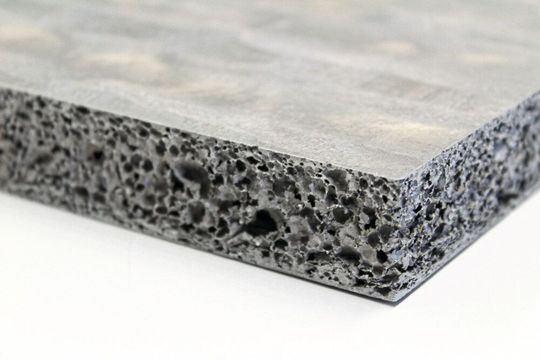
Metal foam contains up to 90 percent air and helps to make machines more efficient, lighter and at the same time more stable. Aluminum foam can be produced in a process that is similar in principle to baking bread. Powder, blowing agent and heat are required.
(Image: VDW)
Metal foams help to make machines more efficient, lighter and at the same time more stable. The highly porous material has a cellular structure—similar to its natural counterparts bone or wood—that can absorb energy in the form of vibrations, shocks or sound.
Like Baking Bread
Aluminum foam can be produced in a process that is similar in principle to baking bread. Take powder, propellant and heat, and the aluminum foam is ready. In detail, however, the production of the high-tech material is somewhat more complex. "To produce aluminum foams, an aluminum alloy powder and a blowing agent powder are mixed together, usually pre-compacted by axial pressing and then compacted into foamable strands by extrusion," explains Carsten Lies, head of the Functionally Integrated Lightweight Construction department at the Fraunhofer Institute for Machine Tools and Forming Technology (IWU) in Chemnitz (Germany). "To produce aluminum foam sandwiches, cut, foamable aluminum strands are placed between two cover sheets positioned at a distance from each other," the engineer continues, describing the production process.
Gallery
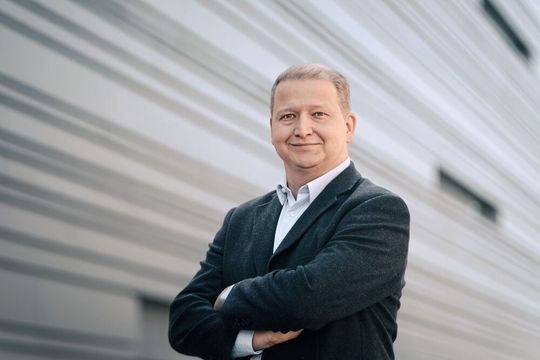
The specific advantages of using metal foam in the machine are "significantly improved damping thanks to the foam core and considerable weight savings", says Carsten Lies, Head of the Functionally Integrated Lightweight Design department at the Fraunhofer Institute for Machine Tools and Forming Technology (IWU) in Chemnitz (Germany).
(Image: VDW)
In the subsequent heat treatment, the foamable aluminum expands many times over. The resulting foam bonds firmly with the two cover sheets to form a sandwich. After cooling, the sandwich is cut to the final dimensions. "Metal foams, especially aluminum foams, are mainly used as the core material in sandwiches," explains Lies. Their cover sheets are usually made of steel or aluminum. "The cover layers absorb the applied loads, while the core keeps the sheets at a constant distance," says the Fraunhofer researcher, explaining the special properties of the high-tech material. The bond between the cover layers and the core usually takes place in a metallic material bond.
Airy, Light and Rigid: Sandwich with Foam Filling
"Depending on their design, sandwiches have a very high bending stiffness. This effect is used to make assemblies lighter while maintaining or even improving the rigidity of the assembly," says Lies. They replace solid elements of the conventional assembly. According to the researcher, depending on the optimization criteria, either significant weight savings can be achieved while maintaining the same rigidity (up to around 30 percent) or significant increases in rigidity can be achieved while maintaining the same weight. According to Lies, the specific advantages of using metal foam in the machine in terms of efficiency and sustainability are "significantly improved damping thanks to the foam core and significant weight savings through the use of sandwiches".
EMO 2025
Due to increasing regulatory requirements, production technology providers worldwide are facing the challenge of integrating high-performance and environmentally friendly materials. The solutions that already exist will be on show at EMO Hannover (Germany) 2025, the world's leading trade fair for production technology, from September 22 to 26. The focus will be on metal foams and substitutes for perfluorinated and polyfluorinated alkyl substances (PFAS) in particular.
Another positive aspect for the environmental balance is that metal foams can be easily recycled. "As no adhesive is used for sandwich production, the material can be fed into existing cycles for the processing of scrap metal from steel and aluminum," says the researcher from Chemnitz.
A Perfect Fit from the 3D Printer
Components made from metal foam—or, more precisely, components made from hybrid porous (HyPo) materials - can also be produced using 3D printing. The advantage of additively manufactured metal foam is that the air chambers can be arranged accurately. Components produced in this way can be optimized for specific applications, as the graded adjustment of the pore structure inside the component allows for more options than air bubbles in the metal, as they form when foaming with gas. This means that machine components can be produced in the 3D printer with a precise fit and precisely defined properties.
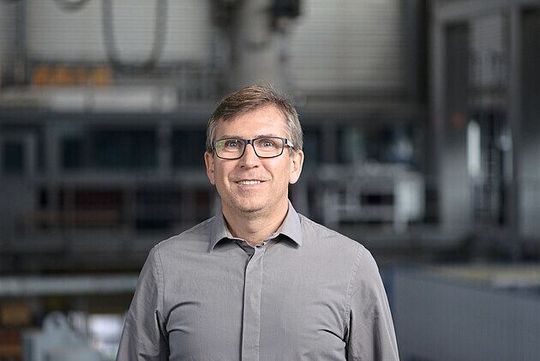
Metal foam components can also be manufactured using 3D printing. "Additive manufacturing enables the near-net-shape production of components," says Thomas Hassel from the Institute of Materials Science at Leibniz University Hannover (LUH).
(Image: VDW)
"A graded adjustment of pore structure and property profiles is difficult or even impossible in a monolithically produced material, as either the manufacturing process or the further processing up to the final component geometry do not match the final requirement conditions of the stress," explains Thomas Hassel from the Institute of Materials Science at Leibniz University Hannover (LUH, Germany). The doctor of engineering emphasizes that additive manufacturing makes it possible to manufacture components "close to the final contour" and at the same time to introduce the grading "in such a way that it is positioned precisely in the requirement profile".
The research focuses on specific applications in machine tool construction and how the innovative material can help to increase efficiency and sustainability in the factory. The focus here is on machine tool components (tool changers, tool holders, spindle slides) in terms of their rigidity, damping, thermoelastic behavior, unbalance, hardness and surface quality, explains Hassel. By implementing the HyPo components in a milling machine, for example, the advantages of the graded components are being researched. "The aim is to analyze the operating behavior during machining, as milling covers a wide range of different load cases," says Hassel. "This will make it possible to determine the influence of the HyPo component on the mechanical and thermal machine properties and significantly improve the performance of such machines."
Date: 08.12.2025
Naturally, we always handle your personal data responsibly. Any personal data we receive from you is processed in accordance with applicable data protection legislation. For detailed information please see our privacy policy.
Consent to the use of data for promotional purposes
I hereby consent to Vogel Communications Group GmbH & Co. KG, Max-Planck-Str. 7-9, 97082 Würzburg including any affiliated companies according to §§ 15 et seq. AktG (hereafter: Vogel Communications Group) using my e-mail address to send editorial newsletters. A list of all affiliated companies can be found here
Newsletter content may include all products and services of any companies mentioned above, including for example specialist journals and books, events and fairs as well as event-related products and services, print and digital media offers and services such as additional (editorial) newsletters, raffles, lead campaigns, market research both online and offline, specialist webportals and e-learning offers. In case my personal telephone number has also been collected, it may be used for offers of aforementioned products, for services of the companies mentioned above, and market research purposes.
Additionally, my consent also includes the processing of my email address and telephone number for data matching for marketing purposes with select advertising partners such as LinkedIn, Google, and Meta. For this, Vogel Communications Group may transmit said data in hashed form to the advertising partners who then use said data to determine whether I am also a member of the mentioned advertising partner portals. Vogel Communications Group uses this feature for the purposes of re-targeting (up-selling, cross-selling, and customer loyalty), generating so-called look-alike audiences for acquisition of new customers, and as basis for exclusion for on-going advertising campaigns. Further information can be found in section “data matching for marketing purposes”.
In case I access protected data on Internet portals of Vogel Communications Group including any affiliated companies according to §§ 15 et seq. AktG, I need to provide further data in order to register for the access to such content. In return for this free access to editorial content, my data may be used in accordance with this consent for the purposes stated here. This does not apply to data matching for marketing purposes.
Right of revocation
I understand that I can revoke my consent at will. My revocation does not change the lawfulness of data processing that was conducted based on my consent leading up to my revocation. One option to declare my revocation is to use the contact form found at https://contact.vogel.de. In case I no longer wish to receive certain newsletters, I have subscribed to, I can also click on the unsubscribe link included at the end of a newsletter. Further information regarding my right of revocation and the implementation of it as well as the consequences of my revocation can be found in the data protection declaration, section editorial newsletter.
Replacement for Perpetual Chemicals
Greater sustainability through lightweight materials is one of many approaches to improving the environmental balance in industrial production. Meanwhile, environmentally friendly alternatives for so-called perpetual chemicals are increasingly coming into focus. Among other things, the focus is on environmentally harmful perfluorinated and polyfluorinated alkyl substances (PFAS), which are used in production, particularly where extreme conditions prevail: high temperatures, heavy abrasion or aggressive chemical conditions. PFAS are found in seals, pipes and fittings, among other things.
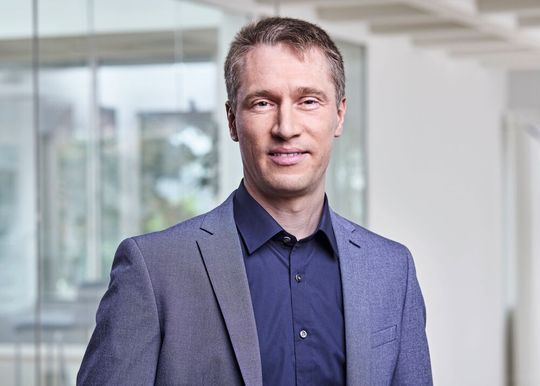
Replacing perfluorinated and polyfluorinated alkyl substances (PFAS) in production technology is often difficult. "Opportunities can arise in applications where the full potential of fluoropolymers is not required and in situations where, for example, a redesign is possible," says Frank Schönberger, Head of Synthesis and Formulation at the Fraunhofer Institute for Structural Durability and System Reliability LBF.
(Image: All rights reserved)
Whether a substitution of PFAS is possible depends on the individual application "and cannot be answered in general terms", says Frank Schönberger, Head of Synthesis and Formulation at the Fraunhofer Institute for Structural Durability and System Reliability LBF in Darmstadt (Germany). "A 1:1 replacement of fluoropolymers is generally not possible, but always depends on the individual requirements of the respective application."
There are cases in which a fluoropolymer can be replaced by another high-performance polymer (such as PEEK, PEI or PPS) depending on the requirements, for example when temperature and media requirements are moderate or in the field of tribological compounds. "But there are also areas of application in which the complex requirements—as things stand today—cannot be met by any other material," the researcher concludes. "Fluoropolymers have largely universal chemical resistance and high temperature resistance. In applications where this is required, such as in pumps or systems that have to withstand different media under different conditions, fluoropolymers are currently irreplaceable," Schönberger sums up, adding: "Opportunities may arise in applications where the full potential of fluoropolymers is not required and in situations where redesign is possible, for example."
PFAS Substitution also Relevant for the USA
According to Schönberger, the PFAS substitute is also relevant for markets outside of Europe, particularly in the USA. In addition, regulations in the United States depend in part on the respective state. This also shows: Greater sustainability in production technology is a global challenge to which factories in all industrialized nations must respond.
Metal Foam from the 3D Printer
Components made from hybrid porous (HyPo) materials can be produced using 3D printing. Researchers at the WGP (Scientific Society for Production Engineering) have set themselves the goal of establishing an adaptable and robust manufacturing process for these materials by 2027. The production of metal foam using additive processes is currently being researched in a collaborative research center (SFB/Transregio TRR375; title "Multifunctional High-Performance Components made of hybrid porous materials (HyPo)") with the participation of the universities RPTU Kaiserslautern-Landau and Leibniz Universität Hannover (both located in Germany) in the first funding period. To this end, two basic approaches are integrated into the research program: Firstly, a laser-based process (DED-LB - Laser Beam Direct Energy Deposition) and secondly, an arc-based process (WAAM - Wire Arc Additive Manufacturing) are used to produce graded porous structures and graded materials from mixed compounds. The research focus is on the graded property distribution of these materials.
(new)
Future-Proof Authentication with Universal RFID Readers



:quality(80)/p7i.vogel.de/wcms/2c/d6/2cd65bff6624dbdc007f2315307612fe/0130800023v1.jpeg "An international consortium led by Tata Steel Nederland has made significant progress in the development of new zinc-coated ultra-strong steels. (Image:Tata Steel)")
:quality(80)/p7i.vogel.de/wcms/f0/e0/f0e05856a96a9afa991a8dd9f4aceb04/0131242862v1.jpeg "Humanoid robots are the focus of the \"TUM RoboGym (powered by Neura)\". (Image:Neura Robotics)")
:quality(80)/p7i.vogel.de/wcms/c3/be/c3be858b644b6f52c83ea025a6f596ad/0130477152v1.jpeg "With the \"DUO\" version of the \"POWER-Skate XL\", loads can be moved in all directions. (Image:HTS)")
:quality(80)/p7i.vogel.de/wcms/92/87/9287ce9327245bdcd01af627044b34c8/0131221372v1.jpeg "Here, Binder provides information on a standardized portfolio and, above all, on improvements for the assembly of M12 connectors, which are now easier to handle and even safer ... (Image:Binder)")
:quality(80)/p7i.vogel.de/wcms/fc/5c/fc5c314369136a0f2b4819ca4011ce80/0131048280v1.jpeg "It all depends on the overall IO-Link package. If the interaction between sensors, powerful masters and a manufacturer-independent configuration tool is right, a significant increase in machine performance is possible. (Image:Baumer)")
:quality(80)/p7i.vogel.de/wcms/69/a2/69a26de87302feccb0ad51bc5eefae4d/0131155056v1.jpeg "Quantum Mate with integrated cobot takes over manual, repetitive tasks in an automated, reliable and efficient process. (Image:Galdabini)")
:quality(80)/p7i.vogel.de/wcms/72/54/7254c0031573057a049e5879cba0de85/0130912407v1.jpeg "The serial interface still has its legitimacy in the age of Industry 4.0: it is still used, for example, to connect peripheral devices such as scanners. (Picture: ©Guy - stock.adobe.com)")
:quality(80)/p7i.vogel.de/wcms/c1/70/c170fd5c52c08ceb4bc2b58eb94ea95f/newsimage421365-2048x1151v1v1.jpeg "Diving robot from TU Bergakademie Freiberg before its first dive at the Malter dam (Image:Andreas Hiekel/TUBAF)")
:quality(80)/p7i.vogel.de/wcms/30/76/3076278d4a7b51a5c566581a20135afc/54963580015-cdcb4657c5-k-2047x1151v1v1.jpeg "The Nancy Grace Roman space telescope was completed in the largest clean room at NASA's Goddard Space Flight Center. It is due to be launched into space in September 2026. (Image:NASA/Jolearra Tshiteya / CC BY 4.0)")
:quality(80)/p7i.vogel.de/wcms/3a/08/3a08d5a0623b4d32294e8108d639f237/nivalon-20medical-20-1626x914v1v1.png "EvoFlex implant from Nivalon Medical consists of a bone-like ZTA ceramic that is precisely adapted to the anatomy of each patient. (Image:Nivalon)")
:quality(80)/p7i.vogel.de/wcms/55/93/55936485100842cd9e83fa3ec053e9c1/2-995x560v1v1.png "The research team at the Technical University of Munich measures and controls the tendon forces on the robot. The aim of the research project is to develop new control concepts. (Image:TU Munich)")
:quality(80)/p7i.vogel.de/wcms/c2/df/c2df275b52afda5130ec90662fc767af/adobestock-1858604981--c2-a9-20vladyslav-20andrukhiv-20-e2-80-93-20stock-adobe-com-ki-generiertv1.jpeg "Artificial sun on earth: Start-ups in China are working to accelerate the development of the virtually inexhaustible energy source of nuclear fusion with AI. (Source: © Vladyslav Andrukhiv - stock.adobe.com/AI-generated)")
:quality(80)/p7i.vogel.de/wcms/2c/1f/2c1fb590b96de7ca3ca029564b063865/0131218954v1.jpeg "Xpeng brings the X9 to Germany. (Picture:Xpeng)")
:quality(80)/p7i.vogel.de/wcms/94/6b/946b136b4478d8b80e3d9e62041e7274/0131259520v1.jpeg "The Craft test bench in Berlin is used to develop future propulsion systems for sustainable aviation. The aim is to minimize noise while maintaining the efficiency of aircraft engines. (Image:DLR)")
:quality(80)/p7i.vogel.de/wcms/5a/14/5a14b26a5d4495d3a192e90e5c216251/ai-catl-sodium-batteries-vs-lithium-revolution-1800x1012v1v1.jpeg "The supplier CATL is bringing its first sodium-ion batteries into series production. Although not in the automotive industry, this step is set to follow soon. (Image:CATL)")
:quality(80)/p7i.vogel.de/wcms/68/43/68433001d98374eb72f51b4a7db590fe/0131229290v1.jpeg "Charging infrastructure provider Evoltra will operate as Citywatt Development in the future. (Image:Citywatt)")
:quality(80)/p7i.vogel.de/wcms/98/11/981107e7d149b2ff970c574cdd73f158/0131183152v1.jpeg "An optical phased array (OPA) counteracts strong optical crosstalk. For this purpose, the antenna geometry is arranged asymmetrically. (Image:Amy Pan / MIT)")
:quality(80)/p7i.vogel.de/wcms/a3/2e/a32e8b8bb38bd5c1cfd27b043baf72b7/0131203375v1.jpeg "Alliance for the AI age: Sony and TSMC join forces to produce next-generation smart image sensors (Image:Brunox983/Pixabay)")
:quality(80)/p7i.vogel.de/wcms/f9/5d/f95d24afa8d7ffb2c27916d0f329c670/0131192604v1.jpeg "Symbolic image: Kontron has a positive outlook for 2026, but must restructure. (Image:AI-generated)")
:quality(80)/p7i.vogel.de/wcms/c7/6b/c76b7659a76e1dd6e9b007340a12c70b/0131171547v1.jpeg "Circular economy in practice: in future, automated systems will save intact battery cells for reuse. (Image:Rainer Betz/Fraunhofer IPA)")
:fill(fff,0)/images.vogel.de/vogelonline/companyimg/76800/76895/65.jpg "FAULHABER_120mm.jpg ()")
:fill(fff,0)/p7i.vogel.de/companies/69/88/69882c428938e/tmts2026-ticec-banner-en-2000px.png "tmts2026-ticec-banner-en-2000px (https://www.tmts.tw/en)")
:fill(fff,0)/p7i.vogel.de/companies/69/de/69de1b7403b0d/simtos-logo.jpeg "simtos-logo (SIMTOS)")
:quality(80)/p7i.vogel.de/wcms/c6/ce/c6ce45552d003ab41a0b9e8934980ba1/0125078127v1.jpeg "Aluminum foam is manufactured in the form of sandwiches. The bonding of the materials consists entirely of metal, without adhesives. This means that metal foams can be easily recycled.(Image: VDW)")
:quality(80)/p7i.vogel.de/wcms/0c/f0/0cf068462f5eb099cc2d63fb03364cb3/0125078118v1.jpeg "Metal foam contains up to 90 percent air and helps to make machines more efficient, lighter and at the same time more stable. Aluminum foam can be produced in a process that is similar in principle to baking bread. Powder, blowing agent and heat are required.(Image: VDW)")
:quality(80)/p7i.vogel.de/wcms/ff/f8/fff8ac3773cbf2b0cfd5d670c4c8a001/0125078124v1.jpeg "To produce aluminum foams, an aluminum alloy powder and a blowing agent powder are mixed together and usually pre-compacted by axial pressing. They are then compacted into foamable strands by extrusion molding. To produce aluminum foam sandwiches, cut foamable aluminum strands are placed between two cover sheets positioned at a distance from each other. During the subsequent heat treatment, the foamable aluminum expands many times over. The resulting foam bonds with the two cover sheets to form a sandwich.(Image: VDW)")
:quality(80):fill(efefef,0)/p7i.vogel.de/wcms/67/ae/67ae0b9ac31f8/elatec-wp-universal-reader.png "Elatec WP Universal Reader")
:quality(80)/p7i.vogel.de/wcms/43/50/43502689b5318f092d1bb07adabb4e18/0128063487v1.jpeg "The special material structure of the housing consists of two solid aluminum sheets enclosing an inner core made of aluminum foam. (Image:Fraunhofer IWU)")
:quality(80)/p7i.vogel.de/wcms/48/28/4828a3911d84ff3b438a279a81a435b2/0128555915v1.jpeg "Thermoplastic sandwich structures are intended to enable the efficient production of luggage compartments in aircraft cabins, such as this overhead storage bin. (Image:Diehl Aviation Laupheim GmbH)")