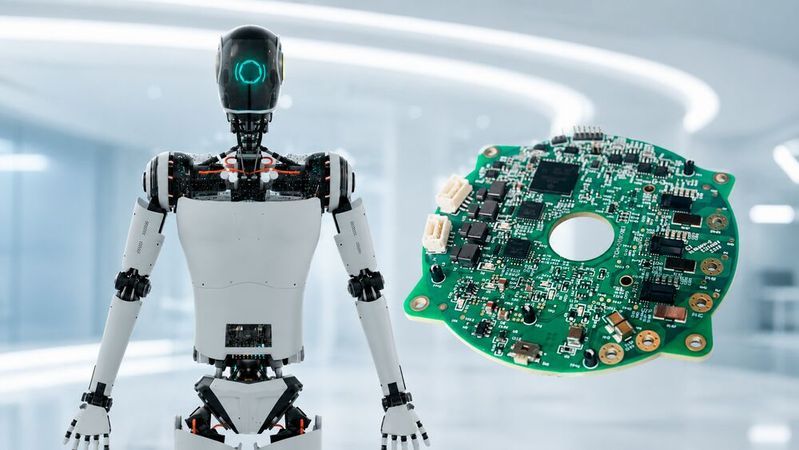
Broadband motor control, GaN power stages, and edge AI improve the motion quality of humanoid robots—despite limited installation space and within the scope of growing safety requirements.
Humanoid robotics places high demands on compact actuator designs: motor control, power electronics, sensors, and edge AI must work together efficiently in a confined space.
(Image: Texas Instruments (edited))
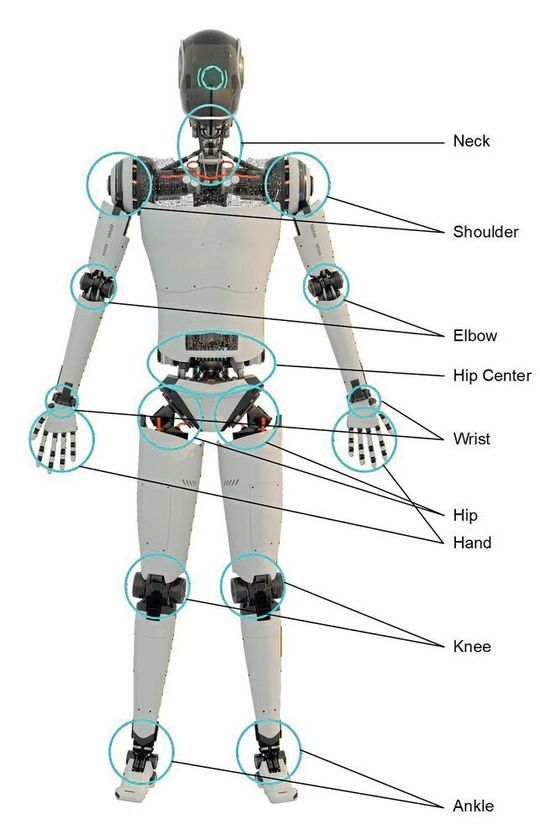
Unlike industries with established architectures and interfaces, the design of a humanoid robot (Figure 1) requires different approaches depending on the application’s requirements, dimensions, and performance specifications. Given the variety of design concepts, OEMs and system integrators must explore various strategies to reduce space requirements while improving efficiency and performance. This, in turn, can significantly increase design complexity and accordingly extend development time.
Image 1: Typical actuators in humanoid robots.
(Image: Texas Instruments)
This article discusses how advancements in broadband motor control, gallium nitride power stages, and edge AI enhance actuator capabilities by providing flexibility without relying on industry-wide standards. Space constraints and functional safety aspects are two additional topics briefly addressed.
Broader Motor Control
The movements of humanoid robots can quickly become unstable, inefficient, and unsafe if position, speed, and torque are not controlled precisely and responsively. Broadband motor controls aid in achieving smooth, human-like movements by enabling the algorithms executed by motor controls and embedded processors to continuously adapt the behavior of the actuators to changing loads and external forces.
For the implementation of broadband motor control, microcontrollers (MCUs) are required, such as the MCUs from the C2000 series, which are designed for real-time control. These components support the fast processing of current, speed, and position control loops with low, deterministic latency.
To optimize the performance of the humanoid motion system, large control bandwidths are required, such as:
Current control bandwidth over 5 kHz for responsive torque control;
Speed control bandwidth over 1 kHz in the interest of smooth motion profiles; or
Position control bandwidth over 1 kHz for precise joint positioning.
Achieving these bandwidths also requires the network to transmit position and speed setpoints from the MCU with minimal, deterministic latency. EtherCAT supports motion update rates between 4 and 32 kHz and a transmission bandwidth of 100 MBit/s, allowing the setpoint transmission to keep up with the bandwidths of the inner control loops required by real-time MCUs—and this for all joints simultaneously and without performance drops when additional joints are added.
Efficiency and Thermal Properties of the Overall System
When the control bandwidth is increased across multiple joints, power loss and cooling requirements grow, making efficiency a critical design criterion. After all, humanoid robots can contain dozens of simultaneously active actuators, so even minor efficiency deficiencies in individual joints can quickly add up, leading to excessive heat generation, which limits operating time and reduces performance.
If drive efficiency can be improved through advanced power technologies like GaN, this benefits efficiency as well as thermal properties. GaN power stages can achieve efficiencies of over 99%, compared to only 95% in silicon-based designs. This represents a significant improvement in power density and thermal management. Using GaN, developers can implement switching frequencies of over 100 kHz, enabling the use of smaller passive components while keeping EMI levels low.
When developing systems for humanoid robots, designers should aim for a power density of more than 5 W/cm³ at the actuator level, and the continuous power should be scaled according to the requirements of each joint. While finger joints are likely to range between 5 and 20 W, shoulder and elbow joints typically require between 100 and 750 W of continuous power. GaN-based half-bridge power stages with integrated drivers assist in achieving these high power densities.
Thermal behavior can also be influenced by system integration. Among other things, the integration of control, sensors, and power management makes it possible to increase overall efficiency at the joint level, which is becoming increasingly important given the growing complexity of humanoid robots.
Date: 08.12.2025
Naturally, we always handle your personal data responsibly. Any personal data we receive from you is processed in accordance with applicable data protection legislation. For detailed information please see our privacy policy.
Consent to the use of data for promotional purposes
I hereby consent to Vogel Communications Group GmbH & Co. KG, Max-Planck-Str. 7-9, 97082 Würzburg including any affiliated companies according to §§ 15 et seq. AktG (hereafter: Vogel Communications Group) using my e-mail address to send editorial newsletters. A list of all affiliated companies can be found here
Newsletter content may include all products and services of any companies mentioned above, including for example specialist journals and books, events and fairs as well as event-related products and services, print and digital media offers and services such as additional (editorial) newsletters, raffles, lead campaigns, market research both online and offline, specialist webportals and e-learning offers. In case my personal telephone number has also been collected, it may be used for offers of aforementioned products, for services of the companies mentioned above, and market research purposes.
Additionally, my consent also includes the processing of my email address and telephone number for data matching for marketing purposes with select advertising partners such as LinkedIn, Google, and Meta. For this, Vogel Communications Group may transmit said data in hashed form to the advertising partners who then use said data to determine whether I am also a member of the mentioned advertising partner portals. Vogel Communications Group uses this feature for the purposes of re-targeting (up-selling, cross-selling, and customer loyalty), generating so-called look-alike audiences for acquisition of new customers, and as basis for exclusion for on-going advertising campaigns. Further information can be found in section “data matching for marketing purposes”.
In case I access protected data on Internet portals of Vogel Communications Group including any affiliated companies according to §§ 15 et seq. AktG, I need to provide further data in order to register for the access to such content. In return for this free access to editorial content, my data may be used in accordance with this consent for the purposes stated here. This does not apply to data matching for marketing purposes.
Right of revocation
I understand that I can revoke my consent at will. My revocation does not change the lawfulness of data processing that was conducted based on my consent leading up to my revocation. One option to declare my revocation is to use the contact form found at https://contact.vogel.de. In case I no longer wish to receive certain newsletters, I have subscribed to, I can also click on the unsubscribe link included at the end of a newsletter. Further information regarding my right of revocation and the implementation of it as well as the consequences of my revocation can be found in the data protection declaration, section editorial newsletter.
Improvements through Edge AI
Edge AI plays an important, though supportive, role at the actuator level by monitoring and protecting operations at the joint level. By analyzing current, torque, and load, AI can detect early signs of wear and abnormal behavior. This predictive maintenance identifies potential failures before they can adversely affect system operation.
The use of Edge AI in actuators requires streamlined neural network architectures to meet the constraints faced by real-time MCUs in terms of computing power, memory capacity, and latency. In motion systems, feedback signals such as phase current, bus voltage, position, and speed are evaluated by an Edge AI model to detect system-level issues, enabling the identification of early signs of motor failures or wear in bearings or gear reducers. The data collected during system monitoring can also be utilized via machine learning to fine-tune control and diagnostic parameters. This helps maintain dynamic performance and consistency regardless of wear, drift, and changing operating conditions, which becomes increasingly important as components age.
Edge AI also supports local protective functions. By estimating torque and load conditions in real time, a robot's actuators can detect when they are approaching operational limits. They can then take corrective actions, such as limiting output power to prevent damage. These capabilities enhance the safety of interactions between humanoid robots and humans.
Implementation of a Compact Actuator Design
The limited space presents another fundamental challenge, as the joints in humanoid robots must deliver high torque and respond quickly despite small dimensions.
To maintain human-like dimensions, a high power density is necessary. The ideal configuration for the elbow joint of a humanoid robot, for example, requires a diameter between 50 and 100 mm.
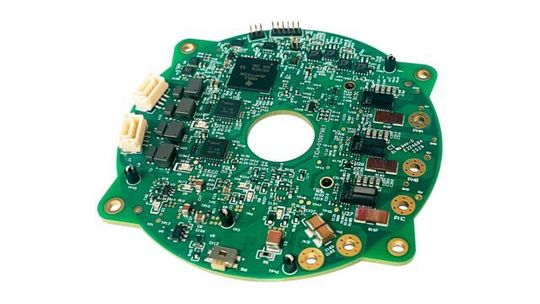
Image 2: Circuit board for the motor control system of a compact robot joint.
(Image: Texas Instruments)
This high level of compactness is not achievable without integration. Actuator designs must combine logic, sensing, and communication in a confined space while still providing acceptable thermal properties. Therefore, design decisions vary depending on the function and size of the respective joint and the available space. Figure 2 exemplifies a compact test board for the 48V/1kW motor control system of a robot joint with a 70 mm diameter.
Compliance with functional safety requirements
Unlike cobots and industrial robots, there are currently no established standards specifically applicable to humanoid robots. However, standardization organizations are very likely to develop safety specifications for humanoid robots in the future as market demand grows and the number of viable use cases increases.
Until safety requirements are established, developers of humanoid robots should thoroughly examine their current design concepts to reduce future modification costs. Standards such as ISO13849 or IEC 61508 provide an outlook on potential future requirements.
Conclusion: Combine Integration and Safety in Thinking
Effectively addressing the challenges outlined above requires a systematic approach early in the design phase. This should include rigorous testing and validation protocols and be based on safety-certified MCU platforms, such as the AM2612 and F28P650 MCUs from Texas Instruments, to meet safety standards for interacting with humanoid robots.
* Han Zhang is an Applications Manager in the team for application-specific MCU solutions for industrial motor control at TI, focusing on motor control solutions for household appliances, robotics, and industrial automation applications.



:quality(80)/p7i.vogel.de/wcms/8e/7e/8e7e0cda4c68699bcc48283a38739769/0133316747v1.jpeg "A little-known hidden champion! When people think of laser cutting, the first thing that comes to mind is the power of the laser beam—and it is impressive to see the sparks flying. But Air Liquide—an exhibitor at Euroblech, by the way—wants to make it clear that the process gas is also key to success. (Image:AI-generated)")
:quality(80)/p7i.vogel.de/wcms/20/fa/20fa35e0af203c3464f7e7fdbb57a685/0133281172v1.jpeg "Since 2003, Etzinger AG has been developing and manufacturing high-quality coffee grinders, pepper mills, and grinding mechanisms for professional and home use. (Image:Etzinger)")
:quality(80)/p7i.vogel.de/wcms/69/91/6991413943488b4a2f6fde9dcd88c5b0/0133256686v1.jpeg "The CMA-patented pendulum mount can compensate for radial tolerances of up to one millimeter. (Image:Schwiening)")
:quality(80)/p7i.vogel.de/wcms/0b/cd/0bcd6d502ffcd087c4fc12b7b760b3ce/0133317507v2v1.jpeg "The new Multi Center from J.G. Weisser. (Image:J.G. Weisser)")
:quality(80)/p7i.vogel.de/wcms/bd/4e/bd4ef09ab0f84932ea76ca0330ffe789/0133329802v1.jpeg "The robotics boom and its consequences: According to a study, a significant portion of value creation occurs in the electronics industry. (Image:Fraunhofer IPA)")
:quality(80)/p7i.vogel.de/wcms/35/81/35815f36be1b1c13f9abef4cea2a3e2b/0133171739v1.jpeg "Humanoid robots in industry: Despite impressive progress, many systems are still in the pilot phase. (Image:AI-generated)")
:quality(80)/p7i.vogel.de/wcms/81/dc/81dc63ed24c562521413023779495e7d/chris-kramerv1.jpeg "Chris Kramar, Director and General Manager of OEM Solutions for Germany, Austria, and Switzerland at Dell Technologies (Source: Dell Technologies)")
:quality(80)/p7i.vogel.de/wcms/bb/f5/bbf5342f532debc1bd7c09c2b9a0bf42/0133176497v1.jpeg "Over the past two years, AI has emerged as the most important growth driver in the industry. (Image: ©Gorodenkoff - stock.adobe.com)")
:quality(80)/p7i.vogel.de/wcms/e9/19/e91905d37afe605bc348a690a4fed72e/0133350592v1.jpeg "At Autodesk University, Autodesk is introducing new AI features for CAD and PLM. (Image:Autodesk)")
:quality(80)/p7i.vogel.de/wcms/98/73/98731d23cbd95ff22391993a74cfefbf/mit-bifurcatedcircuits-01-pressv1.jpeg "A sample of the variety of configurations that Bifur circuits can form. (Source: Courtesy of the researchers)")
:quality(80)/p7i.vogel.de/wcms/f4/3d/f43d1f4297d9ae0cd1b6d2adfcb5ffe1/0133276470v1.jpeg "Simulation: Electric arcs in the electrical industry, including associated field simulation. (Image:CADFEM)")
:quality(80)/p7i.vogel.de/wcms/3e/f1/3ef196715e1b291ec7ae84f02c875c63/0133310495v1.jpeg "The Next Phase of Ethernet in Vehicles: End-to-end Ethernet integrates all high-data-rate devices into the network, including displays and central high-performance computing units. (Image:Infineon Technologies)")
:quality(80)/p7i.vogel.de/wcms/b4/b8/b4b89c48bb797df7251706d4ee096a80/0133359349v1.jpeg "To advance modern rail transportation, Knorr-Bremse and CARS have signed a memorandum of understanding regarding the China Freight Cooperation Program. Pictured here is Rail Executive Board Member Nicolas Lange at the signing ceremony in Beijing. (Image: Knorr-Bremse)")
:quality(80)/p7i.vogel.de/wcms/99/8c/998cb26cfb3110e8444a4ecbfe2dc799/0133338279v1.jpeg "Electric car manufacturer Rivian is launching its R2 SUV in the U.S. (Image:Rivian)")
:quality(80)/p7i.vogel.de/wcms/cc/d1/ccd1607af856c9cff96c73a5ffccfcad/p90652283-highres-demonstrator-woodenv1.jpeg "The FSCM research project, which was recently completed, is delivering innovations close to production for plastics, metals, and design at BMW. (Source: BMW)")
:quality(80)/p7i.vogel.de/wcms/4c/53/4c534208d09a9b1ce597938715e7fc19/0133288763v1.jpeg "Logic Folding: In its latest Kirin 9050 Pro, Huawei uses hybrid bonding to distribute the computing units across two silicon layers in order to increase the effective transistor density without resorting to finer manufacturing processes. (Image:Huawei)")
:quality(80)/p7i.vogel.de/wcms/56/d1/56d131e0b5bd05ef47411e92ad740cb4/0133351029v1.jpeg "Researchers at DTU have developed a nanolaser in a semiconductor membrane. The structure concentrates charge carriers and the light field into a small area (shaded in blue). If data is transmitted on microchips using light instead of electrical signals, transmission speeds can be increased and energy losses reduced. (Image:Yi Yu, DTU)")
:quality(80)/p7i.vogel.de/wcms/5e/55/5e55101ddc6338f755fcf3244db1367f/0133331863v1.jpeg "For data center projects, it is becoming increasingly important to also obtain the consent of the affected community. (Image:Dall-E / AI-generated)")
:quality(80)/p7i.vogel.de/wcms/8d/f9/8df95d3f58408673986b3d643e6b63ba/0133252773v1.jpeg "TXC targets high-speed optical links in AI data centers with 312.5 MHz oscillators, among other solutions. As data rates increase, requirements for jitter and frequency stability become more demanding as well. (Bild: TXC)")
:fill(fff,0)/p7i.vogel.de/companies/69/88/69882c428938e/tmts2026-ticec-banner-en-2000px.png "tmts2026-ticec-banner-en-2000px (https://www.tmts.tw/en)")
:fill(fff,0)/p7i.vogel.de/companies/69/de/69de1b7403b0d/simtos-logo.jpeg "simtos-logo (SIMTOS)")
:quality(80)/p7i.vogel.de/wcms/7f/42/7f42affb75dfaa7226d60346e5454489/im7a6513-rampe-6720x3778v1v1.jpeg "As part of the benchmark, the ability of humanoids to self-stabilize is examined through movements with various walking paths on a ramp. (Image: Image: Fraunhofer IPA/Rainer Bez)")
:quality(80)/p7i.vogel.de/wcms/27/69/2769dfe9085cd4cbdb27837051f55b3b/0131782554v1.jpeg "Integrated system solution: This compact circuit board serves as a highly integrated motor controller directly in the elbow joint of humanoid robots. (Image:mc/VCG)")
:quality(80)/p7i.vogel.de/wcms/f6/34/f6349b66fb01a2d0944fd47dbaad1f49/0128679420v1.jpeg "Planetary gear actuator for humanoid robots: Schaeffler combines a two-stage planetary gearbox, electric motor, encoder, and controller into a compact drive unit for precise joint movements during continuous operation. (Image:Schaeffler AG)")