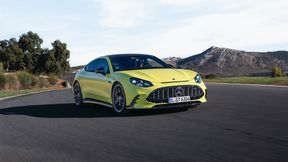
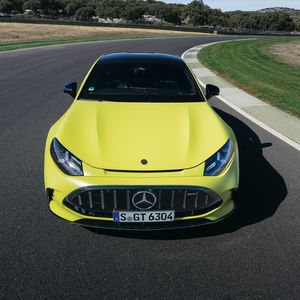
The electric AMG GT 4-door coupe uses axial-flow motors in its more powerful versions, delivering up to 860 kW. In our test drive report: a smooth cruiser, yet extreme on the racetrack.
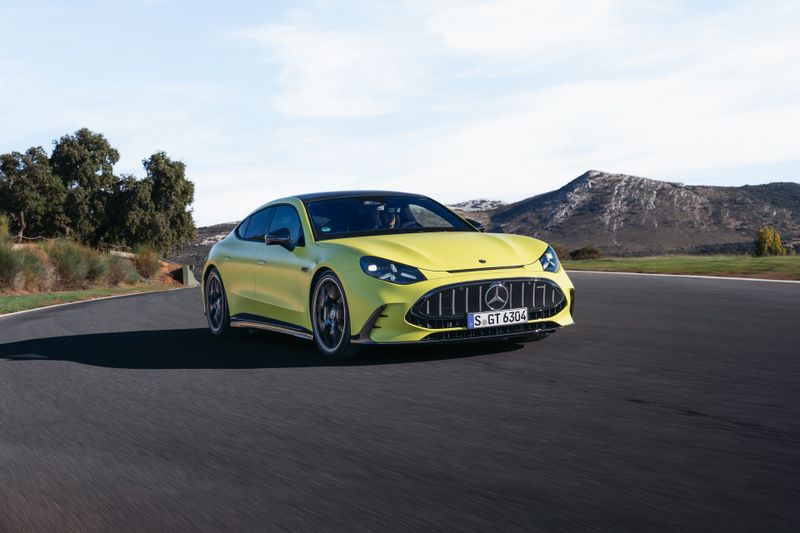
With the electric GT 4-door coupe, Mercedes-AMG is moving to the forefront of the brand's performance lineup.
(Image: Mercedes-AMG)
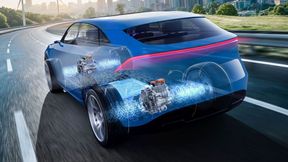
Fans of high-performance electric sports cars will have to get used to new technical terms. For example, “axial-flow motor.” Until now, these extremely lightweight and compact high-performance motors have been found primarily in supercars from Ferrari, McLaren, or Koenigsegg. Now AMG, Mercedes’ sports car division, is installing three such electric motors in the new GT 4-door coupe: two in the rear, one in the front.
This places the all-new electric version of the Gran Turismo right at the top of the brand’s performance lineup: With up to 860 kW (1,169 PS), the GT 63 is the most powerful production AMG of all time. And at just under 200,000 euros ($228,000), it’s currently the most expensive. Below it are the GT 55 with 600 kW for 155,000 euros ($176,700) and the 400 kW GT 53, starting at around 115,000 euros ($131,100). However, the axial-flow motors are reserved for the two more powerful variants.
Long-Distance and Racing Tracks
But who needs that much power? Wrong question. As we all know, GT stands for Gran Turismo—travel comfort paired with powerful engines. So this AMG is supposed to do both: tear through the hairpin turns and then comfortably take the whole family, luggage and all, to the Mediterranean. We’re putting the GT 55 to the test on the winding mountain roads around Málaga to see how it feels.
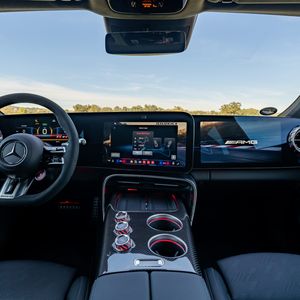
For the first leg of the trip, we take our seats on the right; a colleague with track experience is behind the wheel. Before we set off, we adjust the leather-upholstered sports seats. Using the large touchscreen, we inflate the side bolsters and adjust the lumbar support. Next to me, my colleague swipes his preferred view onto the cockpit display, turns the driving mode selector at the bottom right of the steering wheel to “Comfort,” and before we know it, we’re whizzing almost silently toward the mountains.
Software Takes Care of Everything
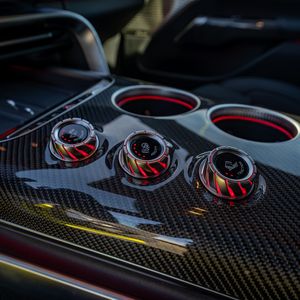
For now, there’s little sign of the 600 kW. The GT rides smoothly, stays quiet, and is completely stress-free. That’s what a touring car should be like. Still, there’s plenty of fun to be had later on. Three rotary switches on the center console control pedal response—and, with ESP turned off, traction and agility as well. How aggressively should the drivetrain respond, how much wheel slip is allowed, and how eagerly should the GT take corners? No mechanical limited-slip differential, no additional clutches for power distribution: the two rear electric motors each drive a single wheel.
The software alone controls how much torque is delivered to the left and right. Whether on wet roads, a racetrack, or cruising at a relaxed highway pace: The GT is a supercomputer on wheels whose character can be adjusted via a rotary switch to suit the driving situation and the driver’s preferences. It’s essentially the collective racing experience of AMG engineers translated into software.
The Sound of an Eight-Cylinder Engine
Then come the curves, and my colleague really picks up speed. From the passenger seat, the rock faces and bushes along the roadside sometimes seem damn close, while the GT cuts through the hairpin turns at breakneck speed, completely unfazed. Hardly any body roll, plenty of grip—the air suspension and damping work superbly. Good thing the seat bolsters fit now. In between, a quick tap on the pedal presses us into the seats. No one here will complain about a lack of power.
One turn of the dial to Sport+, and the quiet is gone. Suddenly, an eight-cylinder engine roars through the cabin, the seatback vibrates, and gear shifts are accompanied by brief interruptions in traction. One might wonder whether the GT really needs to broadcast its engine sound to the outside world. Even when stationary, the supposed engine can be revved all the way up to the equally supposed rev limiter. The few passersby on the side of the road don’t seem to mind: they watch us with their mouths agape and eyes wide open. Especially when my colleague briefly pulls on the two paddles behind the steering wheel to activate boost mode. Then the sound roars even more brutally from the speaker, and the GT 55 unleashes its full power—for 55 seconds, as the name suggests. In curves, the control system reduces the boost so that even a bold press of the pedal remains controllable, even in a roundabout. It’s truly spectacular—a far cry from the often ridiculous-sounding sound effects of other electric cars. By now, even the last combustion-engine-loving ditherer should be starting to have second thoughts.
Date: 08.12.2025
Naturally, we always handle your personal data responsibly. Any personal data we receive from you is processed in accordance with applicable data protection legislation. For detailed information please see our privacy policy.
Consent to the use of data for promotional purposes
I hereby consent to Vogel Communications Group GmbH & Co. KG, Max-Planck-Str. 7-9, 97082 Würzburg including any affiliated companies according to §§ 15 et seq. AktG (hereafter: Vogel Communications Group) using my e-mail address to send editorial newsletters. A list of all affiliated companies can be found here
Newsletter content may include all products and services of any companies mentioned above, including for example specialist journals and books, events and fairs as well as event-related products and services, print and digital media offers and services such as additional (editorial) newsletters, raffles, lead campaigns, market research both online and offline, specialist webportals and e-learning offers. In case my personal telephone number has also been collected, it may be used for offers of aforementioned products, for services of the companies mentioned above, and market research purposes.
Additionally, my consent also includes the processing of my email address and telephone number for data matching for marketing purposes with select advertising partners such as LinkedIn, Google, and Meta. For this, Vogel Communications Group may transmit said data in hashed form to the advertising partners who then use said data to determine whether I am also a member of the mentioned advertising partner portals. Vogel Communications Group uses this feature for the purposes of re-targeting (up-selling, cross-selling, and customer loyalty), generating so-called look-alike audiences for acquisition of new customers, and as basis for exclusion for on-going advertising campaigns. Further information can be found in section “data matching for marketing purposes”.
In case I access protected data on Internet portals of Vogel Communications Group including any affiliated companies according to §§ 15 et seq. AktG, I need to provide further data in order to register for the access to such content. In return for this free access to editorial content, my data may be used in accordance with this consent for the purposes stated here. This does not apply to data matching for marketing purposes.
Right of revocation
I understand that I can revoke my consent at will. My revocation does not change the lawfulness of data processing that was conducted based on my consent leading up to my revocation. One option to declare my revocation is to use the contact form found at https://contact.vogel.de. In case I no longer wish to receive certain newsletters, I have subscribed to, I can also click on the unsubscribe link included at the end of a newsletter. Further information regarding my right of revocation and the implementation of it as well as the consequences of my revocation can be found in the data protection declaration, section editorial newsletter.
"Plenty of Space" for Everyday Life
After an hour, though, the high-speed run through the curves has to come to an end. A short break—the passenger needs some fresh air. A good opportunity to take a closer look at the car. How practical is a sports car with this level of performance for everyday use? Quite practical. The easily accessible, fairly flat trunk under the large tailgate holds 400 liters (14.1 cubic feet), and the rear seatbacks can be folded down. That means you can even fit skis or snowboards inside. The 41-liter (1.4-cubic-foot), carpet-lined front trunk is big enough for the charging cable and has a drain in case it gets stored while wet.
It’s also easy to get into the back, where there’s plenty—but no more than that—of legroom. On the rather firm and deep rear seat, there’s a good hand’s width of space between the top of your head and the glass roof. With the wide center console between the front seats and the striking center tunnel, the new GT looks more like a gas-powered car. The tunnel doesn’t contain a propeller shaft, but rather high-voltage technology with busbars. The high charging power of 600 kW also requires a sophisticated cooling system. Oil circulates directly around each of the 2,660 cylindrical cells, keeping the temperature within the desired range. This allows the battery to be charged from 10 to 80 percent in just eleven minutes at a compatible charging station. According to WLTP, a very short coffee break provides enough power for about 460 kilometers (286 miles).
During a charging stop at the Ascari Race Track, it actually works: The charging rate stays high for a long time; even at 60 percent battery charge, more than 550 kW is still flowing. Such high-performance charging stations are rare, however. Even Mercedes has to haul the Hypercharger all the way to Spain. The 1,190 euros ($1,356.60) for the Performance Charging Package—which boosts charging power from the standard 350 kW to 600 kW—is therefore more of an investment in the future. But even at standard 400-kW charging stations, you can quickly add plenty of range to the battery.
Before heading back to Málaga, there’s still time for a few quick laps in the GT 63. But to really feel the difference between 816 and 1,169 PS (about 805 to 1,153 hp), it takes more than just average driving skills. Whether the 100 km/h (62 mph) mark is hit after 2.4 or 2.8 seconds, or 200 km/h (124 mph) is reached after 6.8 or 9.0 seconds, hardly matters to us on the race track. What’s more interesting is what the electronics allow: controlled drifts with ESP turned off and extreme agility thanks to rear-wheel steering. Add to that the brutal deceleration provided by the carbon-ceramic brakes.
Optional Racing Extras
If you want to take it to the extreme, order the Drivers Package, which costs 6,250 euros and raises the top speed to 300 km/h. Or, for 5,200 euros ($5,928), you can get active underbody elements. At high speeds, these elements create negative pressure that literally sucks the car onto the road. Additionally, for 4,520 euros ($5,152.80), there’s a rear diffuser that extends from the underbody like a tray and reduces drag.
On the leisurely drive back to Málaga, with the sun at our backs and a view of the sea, the four-door car once again proves to be docile and comfortable—a true Gran Turismo. The racetrack is part of its repertoire, but it certainly doesn’t define its character.