Japanese manufacturers are seeking ways out of dependency on Chinese rare earths. The focus is on electric motors that require less or no neodymium, dysprosium, and terbium. What initially sounds like material substitution has long since become a strategic issue.
In June 2026, Astemo announced that the electric drivetrain of the Nissan Leaf improves range through an efficient energy management system. This is enabled by the "3-in-1" drivetrain, which combines three key components: the motor, the inverter, and the reduction gearbox.
(Image: Astemo)
Japanese manufacturers of electric motors are now trying to manage without rare earths. These mostly come from China, which repeatedly becomes an issue due to political tensions. According to the Chinese trade portal Dianzi Jishu Yingyong, supplier Astemo has developed an electric drive that no longer requires neodymium. The rotor in it is made with simple iron.
Mitsuba has also been producing a motor made of iron for three years, which is already installed in the Honda Accord. It is strong enough to operate the windshield wipers. Honda itself, in collaboration with steel manufacturer Daido Steel, developed a magnet without heavy rare earths for the Minivan Freed back in 2016.
These are just a few of many examples from Japan. From the perspective of Japanese companies, efforts to do without rare earths are becoming increasingly important. Relations between Tokyo and Beijing have been strained since the highly conservative Prime Minister Sanae Takaichi suggested in Parliament in November 2025 that her country could intervene militarily in the event of an attack on Taiwan.
For Beijing, this is a highly sensitive issue. Shortly after Takaichi's remarks, China tightened export controls on several "dual-use" goods, including rare earths. Since then, further measures have followed.
Monopoly on Rare Earths and Processed Products
According to figures from the International Energy Agency, China has a global share of around 60 percent in rare earth mining, but more than 90 percent in processing, and almost 95 percent in manufacturing permanent magnets for electric motors. Deliveries of dysprosium and terbium to Japan have reportedly fallen to zero, according to Japanese media reports.
In Europe, the price for dysprosium climbed to 1,750 US dollars per kilogram, approximately 1,600 euros. This represents a 90 percent increase since the end of the year, according to the British agency Argus Media. Understandably, a motor that does not require these rare earths is in high demand. Astemo, a joint venture between Hitachi, Honda, and the Japanese state fund JIC Capital, relies on a synchronous reluctance motor for this purpose.
This motor generates its torque from the differing magnetic permeability of a finely layered iron rotor. This required some technical ingenuity. Ferrite magnets, which are manufactured without rare earth elements, achieve only one-third of the power of a neodymium magnet. A motor using only ferrite would thus have to triple in size. Induction motors and externally excited motors, on the other hand, do not require permanent magnets but instead need so much copper that this raw material could also become scarce.
Series in the 2030s
Astemo circumvents this with a combination. The main motor uses ferrite magnets only for support, delivers 180 kilowatts, and is only about 30 percent larger than a conventional motor with neodymium. A second motor for additional power operates entirely without magnets and activates only when needed, providing up to 135 kilowatts. Together, the two drives achieve a total of 315 kilowatts. According to the company, the serial deployment of such motors would be a world first. It is planned around the year 2030.
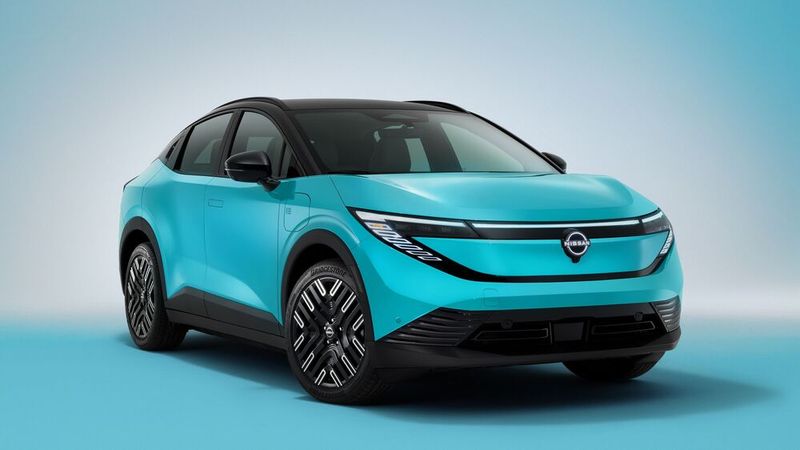
Another technological approach is to use rare earths, but significantly less than before. This is the path Nissan is taking. The automaker has reduced the share of heavy rare earths in the motor of the new "Leaf" model by more than 90 percent compared to the first generation from 2010, according to a recent report by the business newspaper Nikkei Asia. This has been achieved primarily through improved heat dissipation, which reduces the need for dysprosium and terbium.
Date: 08.12.2025
Naturally, we always handle your personal data responsibly. Any personal data we receive from you is processed in accordance with applicable data protection legislation. For detailed information please see our privacy policy.
Consent to the use of data for promotional purposes
I hereby consent to Vogel Communications Group GmbH & Co. KG, Max-Planck-Str. 7-9, 97082 Würzburg including any affiliated companies according to §§ 15 et seq. AktG (hereafter: Vogel Communications Group) using my e-mail address to send editorial newsletters. A list of all affiliated companies can be found here
Newsletter content may include all products and services of any companies mentioned above, including for example specialist journals and books, events and fairs as well as event-related products and services, print and digital media offers and services such as additional (editorial) newsletters, raffles, lead campaigns, market research both online and offline, specialist webportals and e-learning offers. In case my personal telephone number has also been collected, it may be used for offers of aforementioned products, for services of the companies mentioned above, and market research purposes.
Additionally, my consent also includes the processing of my email address and telephone number for data matching for marketing purposes with select advertising partners such as LinkedIn, Google, and Meta. For this, Vogel Communications Group may transmit said data in hashed form to the advertising partners who then use said data to determine whether I am also a member of the mentioned advertising partner portals. Vogel Communications Group uses this feature for the purposes of re-targeting (up-selling, cross-selling, and customer loyalty), generating so-called look-alike audiences for acquisition of new customers, and as basis for exclusion for on-going advertising campaigns. Further information can be found in section “data matching for marketing purposes”.
In case I access protected data on Internet portals of Vogel Communications Group including any affiliated companies according to §§ 15 et seq. AktG, I need to provide further data in order to register for the access to such content. In return for this free access to editorial content, my data may be used in accordance with this consent for the purposes stated here. This does not apply to data matching for marketing purposes.
Right of revocation
I understand that I can revoke my consent at will. My revocation does not change the lawfulness of data processing that was conducted based on my consent leading up to my revocation. One option to declare my revocation is to use the contact form found at https://contact.vogel.de. In case I no longer wish to receive certain newsletters, I have subscribed to, I can also click on the unsubscribe link included at the end of a newsletter. Further information regarding my right of revocation and the implementation of it as well as the consequences of my revocation can be found in the data protection declaration, section editorial newsletter.
Other electronics manufacturers are also attempting to reduce their production dependency on Chinese rare earths. Since June 2026, Mitsubishi Electric has been dismantling discarded air conditioners as the first company in Japan to recover the magnets from them. "This allows about 35 percent of the rare earths needed to manufacture an air conditioner to be obtained from recycled material," the company stated. Chinese media reports have mocked these efforts, pointing to the high costs of such recycling solutions.
Serious Developments
The Japanese government has made the issue a top priority. Together with France, Tokyo has recently supported a plant of the metal processor Caremag in southern France, which is set to begin operations in early 2027 and later cover one-fifth of Japan's demand for heavy rare earths.
"We share the goal of becoming economically more resilient," said France's President Emmanuel Macron during a visit to Japan in April. The G7 states aim to reduce their dependence on a "single supplier" outside the group to below 60 percent by 2030. Although China was not explicitly mentioned, everyone knows it is that single supplier.
Whether through new motors, recycling, or subsidies for domestic manufacturers: the path to independent supply chains without reliance on rare earths from China is extremely lengthy. What is currently observable in Japan are no more than the first steps along this path.



:quality(80)/p7i.vogel.de/wcms/17/b8/17b8af0cb725e0e1d3e8d72458bab260/siemens-meet-at-the-machinev1.jpeg "“Meet at the Machine” is Siemens’ new initiative, which aims to bring together machine builders, software, and automation technologies to accelerate innovation in the machine tool industry and help manufacturers become productive more quickly. (Source: Siemens)")
:quality(80)/p7i.vogel.de/wcms/8e/7e/8e7e0cda4c68699bcc48283a38739769/0133316747v1.jpeg "A little-known hidden champion! When people think of laser cutting, the first thing that comes to mind is the power of the laser beam—and it is impressive to see the sparks flying. But Air Liquide—an exhibitor at Euroblech, by the way—wants to make it clear that the process gas is also key to success. (Image:AI-generated)")
:quality(80)/p7i.vogel.de/wcms/20/fa/20fa35e0af203c3464f7e7fdbb57a685/0133281172v1.jpeg "Since 2003, Etzinger AG has been developing and manufacturing high-quality coffee grinders, pepper mills, and grinding mechanisms for professional and home use. (Image:Etzinger)")
:quality(80)/p7i.vogel.de/wcms/69/91/6991413943488b4a2f6fde9dcd88c5b0/0133256686v1.jpeg "The CMA-patented pendulum mount can compensate for radial tolerances of up to one millimeter. (Image:Schwiening)")
:quality(80)/p7i.vogel.de/wcms/38/79/38799bfbbccd938b64c67068cfa68780/0133329362v1.jpeg "What exactly enables machines to act on their own? (Image:Shutterstock)")
:quality(80)/p7i.vogel.de/wcms/1b/9f/1b9fc9f113fc66212e2c0e17a3edaf9f/org-blobs-user-response-file-output-f317796f-57b7-483f-9403-5d9ac8a816f5-plugin-output-call-kdigtepb7be7us8xvbota0mh-1672x940v1.png "According to Barclays data, Europe leads the global trade in actuator components. With a 34 percent share, the region ranks ahead of China, which has a 26.3 percent share. (Source: Statista | CC BY-ND 4.0, AI-generated)")
:quality(80)/p7i.vogel.de/wcms/f5/4c/f54c9fc59ccb0604ab9219188469a45f/image1v1.jpeg "Christopher Savoia, Global Head of the UR+ Ecosystem at Universal Robots, presents the new SP7 Smart Panel on a UR17g-1300 robot during the unveiling of Gen 7—UR’s 7th-generation robot platform—at IMTS in Chicago on September 14, 2026. (Image:Image: Teradyne Robotics)")
:quality(80)/p7i.vogel.de/wcms/bd/4e/bd4ef09ab0f84932ea76ca0330ffe789/0133329802v1.jpeg "The robotics boom and its consequences: According to a study, a significant portion of value creation occurs in the electronics industry. (Image:Fraunhofer IPA)")
:quality(80)/p7i.vogel.de/wcms/87/87/87870cf2b30aaef7b8a06212a4ef2c14/0133403885v1.jpeg "A digital twin and a real component demonstrate how closely simulation and manufacturing are converging. Stampack Xpress 2026.1 virtually models forming behavior and supports the validation of process and tool design. (Image:Stampack)")
:quality(80)/p7i.vogel.de/wcms/59/2a/592a7f2d0964e9e6846cae331f5daa3a/0133266065v1.jpeg "Perforated metal sheets are particularly well-suited for balcony railings, as they combine stability, privacy, and design versatility. (Image:Ripo Factory)")
:quality(80)/p7i.vogel.de/wcms/45/64/45642ff0fe0a6bec251b77739131d83b/abb-ferrari-hypersail-16-9-three-quarter-front-viewv1.jpeg "The Ferrari Hypersail is a 100-foot monohull wing-in-plane yacht powered entirely by renewable energy. (Source: ABB / Ferrari Hypersail)")
:quality(80)/p7i.vogel.de/wcms/1e/c1/1ec1495eb283200f4b7cb55de0c4dff7/20260917-110436643v1.jpeg "Ceremonial launch of Mercedes-Benz GLA production in Rastatt; among those in attendance was plant manager Marco Zwick (second from the right). (Source: Thomas Günnel – Automotive Industry)")
:quality(80)/p7i.vogel.de/wcms/76/f3/76f310eed0caebc79ff91195c29de08d/visual-siwa-treatment-optimizerv1.jpeg "A Mireo train from Siemens Mobility was used in the “Automated Train” project for a fully automated delivery and return trip on the open rail network. (Source: Siemens Mobility)")
:quality(80)/p7i.vogel.de/wcms/94/13/9413d081ae14d2bbbea02b30710ee84b/0113143253v1.jpeg "In our China Market Insider, we regularly provide you with relevant information straight from China. (Image:© Eisenhans - stock.adobe.com)")
:quality(80)/p7i.vogel.de/wcms/3e/f1/3ef196715e1b291ec7ae84f02c875c63/0133310495v1.jpeg "The Next Phase of Ethernet in Vehicles: End-to-end Ethernet integrates all high-data-rate devices into the network, including displays and central high-performance computing units. (Image:Infineon Technologies)")
:quality(80)/p7i.vogel.de/wcms/4c/53/4c534208d09a9b1ce597938715e7fc19/0133288763v1.jpeg "Logic Folding: In its latest Kirin 9050 Pro, Huawei uses hybrid bonding to distribute the computing units across two silicon layers in order to increase the effective transistor density without resorting to finer manufacturing processes. (Image:Huawei)")
:quality(80)/p7i.vogel.de/wcms/56/d1/56d131e0b5bd05ef47411e92ad740cb4/0133351029v1.jpeg "Researchers at DTU have developed a nanolaser in a semiconductor membrane. The structure concentrates charge carriers and the light field into a small area (shaded in blue). If data is transmitted on microchips using light instead of electrical signals, transmission speeds can be increased and energy losses reduced. (Image:Yi Yu, DTU)")
:quality(80)/p7i.vogel.de/wcms/5e/55/5e55101ddc6338f755fcf3244db1367f/0133331863v1.jpeg "For data center projects, it is becoming increasingly important to also obtain the consent of the affected community. (Image:Dall-E / AI-generated)")
:quality(80)/p7i.vogel.de/wcms/8d/f9/8df95d3f58408673986b3d643e6b63ba/0133252773v1.jpeg "TXC targets high-speed optical links in AI data centers with 312.5 MHz oscillators, among other solutions. As data rates increase, requirements for jitter and frequency stability become more demanding as well. (Bild: TXC)")
:fill(fff,0)/images.vogel.de/vogelonline/companyimg/76800/76895/65.jpg "FAULHABER_120mm.jpg ()")
:quality(80)/p7i.vogel.de/wcms/94/13/9413d081ae14d2bbbea02b30710ee84b/0113143253v1.jpeg "In our China Market Insider, we regularly provide you with relevant information straight from China. (Image:© Eisenhans - stock.adobe.com)")
:quality(80)/p7i.vogel.de/wcms/c6/7c/c67cc8f3ab80147ed8aa59d1b98802f7/bmw-1490x838v1.png "The sixth generation of the BMW drive system also does not require magnets or rare earth elements. (Image: BMW)")