China's largest DRAM manufacturer, CXMT, is preparing one of the most significant technology IPOs in the country in years. The company plans to use the capital to expand production capacities and chip quality to achieve memory chip independence from Samsung, SK Hynix, and Micron.
CXMT aims to raise at least 29.5 billion yuan in the planned IPO. The IPO is more than a financial event: China's largest DRAM manufacturer is expected to strengthen the domestic supply of memory chips as the U.S. further restricts access to key technologies.
(Image: CXMT)
China's largest DRAM manufacturer CXMT is going public. The "Star Board" of the Shanghai Stock Exchange has approved the IPO application of "ChangXin Memory Technologies," according to Chinese and international media reports. It is widely expected to be the largest IPO of a Chinese tech company on this NASDAQ-inspired stock segment since that of chip manufacturer SMIC.
The company hopes to raise at least 29.5 billion yuan (approximately US$4.1 billion), or around four billion euros. This would not only be the largest IPO in China since 2022, but also a key moment for the Chinese semiconductor industry, which is striving for autonomy in the wake of increasingly stringent chip boycotts from the USA and needs capital for this purpose.
China's Largest Manufacturer of DRAM
The company, based in Hefei, Anhui Province, was founded in 2016. It has since become China's largest manufacturer of dynamic random-access memory (DRAM). It is also already the fourth-largest manufacturer of these memory chips globally, which are used in PCs and smartphones, as well as in data centers and other AI infrastructure.
The fact that CXMT can now plan a spectacular IPO is partly thanks to its global competitors. South Korea's Samsung and SK Hynix, as well as Micron Technology in the USA, the three global market leaders, have shifted part of their production capacities away from the PC and mobile phone business to gain more shares in the more lucrative AI data center market.
The resulting artificial shortage in several segments, combined with the overall increased demand driven by AI, has recently triggered significant price surges. This has led to CXMT's revenue more than septupling in the first quarter of this year, as stated in the company's IPO prospectus.
Specifically, revenue in the first quarter of 2026 reached 50.8 billion yuan (around 6.9 billion euros / US$7.1 billion), up 719.13 percent compared to the same period last year. Net profit rose over the same period by more than 1,200 percent to just over 33 billion yuan (around 4.5 billion euros / US$4.6 billion).
Domestic Catch-up Race
CXMT is benefiting not only from the general AI boom but also indirectly from Washington's chip boycotts, which solidify its relationships with key domestic customers such as Alibaba Cloud, ByteDance, Tencent, Xiaomi, and Oppo. Amid the tension of the AI race with the U.S., trade and technology wars with Washington and its Western allies, and the Chinese state and party leadership's efforts toward "domestic substitution" of foreign chips, this upcoming IPO holds political relevance beyond its commercial scale—something that cannot be adequately captured by the numbers and facts of typical stock market reporting.
A "national champion" of the semiconductor industry is being established here, intended to reduce China's vulnerability to coercion and to counteract Washington's strategy of sabotaging China's economic development as much as possible through boycotts and tariffs in this industry, which is central to several high technologies.
Samsung, SK Hynix, and Micron Technology still dominate more than 90 percent of the global DRAM memory chip market, while CXMT most recently accounted for about 7.7 percent. For Beijing, its catch-up race, both in terms of chip quality and available quantity, is therefore of paramount importance.
"CXMT is the reason why China was able to gain a foothold in DRAM, arguably the most important memory segment driving the AI revolution," Bloomberg quoted Ao Fei, Managing Director at Beijing Xinhan Capital.
"This is a national champion that has set China's entire semiconductor supply chain in motion, serves as a training ground for the next generation of skilled workers, and has elevated the industry to a new level," he said.
Date: 08.12.2025
Naturally, we always handle your personal data responsibly. Any personal data we receive from you is processed in accordance with applicable data protection legislation. For detailed information please see our privacy policy.
Consent to the use of data for promotional purposes
I hereby consent to Vogel Communications Group GmbH & Co. KG, Max-Planck-Str. 7-9, 97082 Würzburg including any affiliated companies according to §§ 15 et seq. AktG (hereafter: Vogel Communications Group) using my e-mail address to send editorial newsletters. A list of all affiliated companies can be found here
Newsletter content may include all products and services of any companies mentioned above, including for example specialist journals and books, events and fairs as well as event-related products and services, print and digital media offers and services such as additional (editorial) newsletters, raffles, lead campaigns, market research both online and offline, specialist webportals and e-learning offers. In case my personal telephone number has also been collected, it may be used for offers of aforementioned products, for services of the companies mentioned above, and market research purposes.
Additionally, my consent also includes the processing of my email address and telephone number for data matching for marketing purposes with select advertising partners such as LinkedIn, Google, and Meta. For this, Vogel Communications Group may transmit said data in hashed form to the advertising partners who then use said data to determine whether I am also a member of the mentioned advertising partner portals. Vogel Communications Group uses this feature for the purposes of re-targeting (up-selling, cross-selling, and customer loyalty), generating so-called look-alike audiences for acquisition of new customers, and as basis for exclusion for on-going advertising campaigns. Further information can be found in section “data matching for marketing purposes”.
In case I access protected data on Internet portals of Vogel Communications Group including any affiliated companies according to §§ 15 et seq. AktG, I need to provide further data in order to register for the access to such content. In return for this free access to editorial content, my data may be used in accordance with this consent for the purposes stated here. This does not apply to data matching for marketing purposes.
Right of revocation
I understand that I can revoke my consent at will. My revocation does not change the lawfulness of data processing that was conducted based on my consent leading up to my revocation. One option to declare my revocation is to use the contact form found at https://contact.vogel.de. In case I no longer wish to receive certain newsletters, I have subscribed to, I can also click on the unsubscribe link included at the end of a newsletter. Further information regarding my right of revocation and the implementation of it as well as the consequences of my revocation can be found in the data protection declaration, section editorial newsletter.
Investments in Technological Sovereignty
The key position that CXMT holds for China's industry is therefore roughly comparable to that of battery manufacturer CATL at the time of its own IPO. Many of the investors who will benefit from the upcoming CXMT IPO are thus not solely interested in profits. A significant amount of state capital is already invested in the company, both from central funds and local investment funds in Hefei. Overall, the owners are a mix of local state funds, national chip funds, and corporate investors.
The largest shareholders include the "Hefei Qinghui Jidian Enterprise Management Partnership" with 21.67 percent and "Hefei Changxin Integrated Circuit" from the home province, as well as China's so-called "Big Fund, Phase II" from Beijing. Private capital is also involved, such as Alibaba Cloud and Alibaba (China) Network Technology, which together hold 4.97 percent.
This is "patient capital," which aims to provide a company like CXMT with the long-term resources it needs for its technological modernization. From a Chinese perspective, the rivalry acutely felt and implemented by the Americans turns this into a matter of patriotic necessity.
With the billions raised, CXMT plans to improve both the quality of its DRAM chips and its production capacity, according to its own statements. Currently, production still "lags significantly behind the massive domestic demand," as stated in the IPO prospectus. So far, the company has consolidated its mass production across the first four process generations and "expanded from DDR4 and LPDDR4X to DDR5 and LPDDR5/5X products," reports the South China Morning Post in Hong Kong.
The DDR5 portfolio, introduced last year, supports speeds of up to 8,000 megabits per second and chip densities of 16 and 24 gigabits. This places it just one chip generation behind the global giants in South Korea and the United States. The upcoming IPO of CXMT is part of a series of IPOs through which companies in China relevant to artificial intelligence development have recently bolstered their funds for research and development as well as new production lines across the entire supply chain.



:quality(80)/p7i.vogel.de/wcms/dd/92/dd928ba2e2956aa2bfff4888af8b08f8/photo--1v1.jpeg "Catalog product for extreme operating conditions: The new NRTVG guide carriage from Bosch Rexroth withstands extreme environmental conditions. (Source: Bosch Rexroth AG)")
:quality(80)/p7i.vogel.de/wcms/5a/9e/5a9e57e26964ba5c9d8719a9ee520bb3/0133310195v1.jpeg "Germany and the United Arab Emirates have signed an agreement to stand shoulder to shoulder in times of crisis. This will bring Germany many billions, to say the least.
From left: Sheikh Mohammed bin Sajed al-Nahjan and Federal Chancellor Friedrich Merz. (Image:dpa / K. Nietfeld)")
:quality(80)/p7i.vogel.de/wcms/ce/96/ce964ee3cbd875e63a809c3df1d2b01e/0133312918v1.jpeg "Do you also have a branch in China and are looking for a local partner there with whom you can work to strengthen your market position? If so, time is running out, as a survey by the German Chamber of Foreign Trade in Beijing reveals ... (Image: AI-generated)")
:quality(80)/p7i.vogel.de/wcms/a0/94/a09489b453e958dc8ffd85accab2aaf3/0130556732v1.jpeg "Mutares supported two of its portfolio companies to help them strengthen their position. It worked out perfectly. Now both have been sold. Read here to find out exactly what this is all about... (Image:Mutares)")
:quality(80)/p7i.vogel.de/wcms/81/dc/81dc63ed24c562521413023779495e7d/chris-kramerv1.jpeg "Chris Kramar, Director and General Manager of OEM Solutions for Germany, Austria, and Switzerland at Dell Technologies (Source: Dell Technologies)")
:quality(80)/p7i.vogel.de/wcms/bb/f5/bbf5342f532debc1bd7c09c2b9a0bf42/0133176497v1.jpeg "Over the past two years, AI has emerged as the most important growth driver in the industry. (Image: ©Gorodenkoff - stock.adobe.com)")
:quality(80)/p7i.vogel.de/wcms/01/61/01615a0939754c41e9d2c8971bf0b38a/web-image-kuka-kmf-1500p-300-dpi-1v1.jpeg "Thanks to its design, the KMF 1500P-CB is suitable for the stable and flexible handling of closed and open pallets. (Source: Kuka)")
:quality(80)/p7i.vogel.de/wcms/0b/ef/0bef343dfe1c7f83a1be01e7e83cc5ac/delta-fabrikv1.jpeg "Autonomous mobile manipulation robots can perform a wide range of tasks in a modern factory, from loading machines to quality control. (Image:Delta)")
:quality(80)/p7i.vogel.de/wcms/f4/3d/f43d1f4297d9ae0cd1b6d2adfcb5ffe1/0133276470v1.jpeg "Simulation: Electric arcs in the electrical industry, including associated field simulation. (Image:CADFEM)")
:quality(80)/p7i.vogel.de/wcms/1d/fb/1dfbb415cd837102a33ce21ecf052ec3/0133277411v1.jpeg "LED drivers: LED circuit boards connect the light fixture to the electronics. During design, the operating current, forward voltage, and temperature must be taken into account across the entire operating range. (Image: ©Maria - stock.adobe.com)")
:quality(80)/p7i.vogel.de/wcms/80/8a/808a0eccf49a2a4fe560bd1998506ef9/0133308770v1.jpeg "Just like that, the supports are gone! High-speed footage of the automated, ultrasound-based process for removing optimized support structures from additively manufactured metal parts. It will be presented for the first time at Formnext from November 17 to 20. (Image:Fraunhofer IAPT)")
:quality(80)/p7i.vogel.de/wcms/be/4d/be4d7294d3d171468dc0b83efa4f442c/0133268906v1.jpeg "Here, two experts from Lufthansa Technik are applying the “AeroSHARK” coating to an aircraft. Until now, Boeing has been using this coating, which mimics the skin structure of sharks. Now Airbus also wants to use it to make its aircraft more fuel-efficient. (Image:Lufthansa Technik)")
:quality(80)/p7i.vogel.de/wcms/39/86/398641ac031ac48fd402c27ffe4f0e0d/zf-screenshot-2026-09-09-131739v1.png "The decarbonization of commercial vehicles will be a key topic at IAA Transportation next week. ZF is advocating for a more technology-neutral approach. (Image:ZF)")
:quality(80)/p7i.vogel.de/wcms/94/1e/941e22de0ec2d22e9619c469ec79292b/20260731163822591v1.jpeg "The Chinese government wants its automakers to adhere to certain rules of conduct when operating abroad. (Image:Sany Truck)")
:quality(80)/p7i.vogel.de/wcms/33/f6/33f69ba076b4f655d74bd6788cf5c4a0/0133305882v1.jpeg "As they move toward production readiness, the BMW iX5 Hydrogen prototypes are undergoing an extensive testing program. (Image:BMW)")
:quality(80)/p7i.vogel.de/wcms/bb/02/bb02989aac1291557168fb36afc42343/0133288089v1.jpeg "In China, automakers will be held liable in the future if traffic rules are violated while in autonomous driving mode and, for example, an accident occurs. (Image:Created with AI)")
:quality(80)/p7i.vogel.de/wcms/6c/a6/6ca6c6410e051401d5596d5cc6dfa277/0133283570v1.jpeg "From Core to Platform: With MIPS, ARC, and RISC-V, competition is shifting from individual processor IP blocks to integrated compute platforms for specialized applications. (Image:Dall-E / AI-generated)")
:quality(80)/p7i.vogel.de/wcms/73/17/73174a2afe684fa12d7d6a57b29b20e2/0133305506v1.jpeg "AI data centers are a key driver of direct current technologies. (Image:Pixabay / Brian Penny / AI-generated)")
:quality(80)/p7i.vogel.de/wcms/08/b2/08b2ce49b6d6d11d5953064bb0a62f37/0133308791v1.jpeg "If what Anthropics is accusing its Chinese AI competitors of is true, then the industry is in for quite a shakeup! At stake is nothing less than Chinese AI systems—such as Kimi and Deepseek—that were actually trained indirectly using U.S. AI systems. (Image: AI-generated)")
:quality(80)/p7i.vogel.de/wcms/c4/b5/c4b5badd67b0037f23c1d69806a13d16/0133216860v1.jpeg "Fascinating Technology: ASML's NXE3800E EUV machine. (Image:ASML)")
:fill(fff,0)/p7i.vogel.de/companies/69/de/69de1b7403b0d/simtos-logo.jpeg "simtos-logo (SIMTOS)")
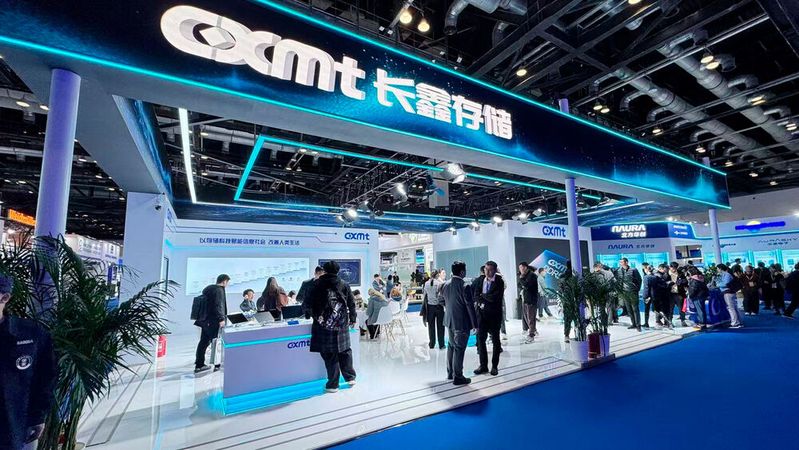
:quality(80)/p7i.vogel.de/wcms/b3/35/b335d3da40780bf7415e28698501ee59/0131690335v1.jpeg "CXMT appearance at IC China. (Image:CXMT)")
:quality(80)/p7i.vogel.de/wcms/99/53/99534c852090d9b7021f64e766c6462b/0128958235v1.jpeg "In Hefei, much is expected from the memory manufacturer CXMT. (Image:Dall-E / AI-generated)")