CSEM's new dry room strengthens the Swiss battery innovation ecosystem by expanding access to state-of-the-art development conditions. It complements the expertise already built up by leading industry players and promotes more intensive collaboration between research and industry.
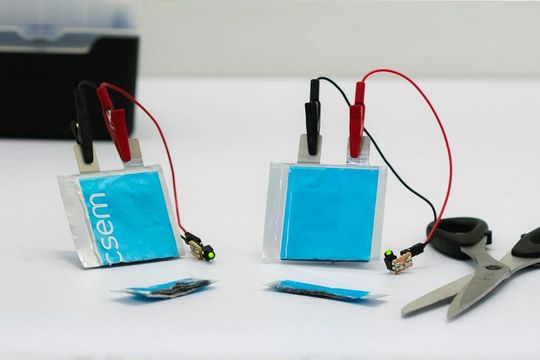
The new infrastructure allows the processing of extremely moisture-sensitive materials such as lithium metal, which are essential for future batteries with higher energy density, improved safety and lower costs. Pictured: Cutting test on lithium metal batteries.
(Image: CSEM)
Batteries are a cornerstone of the energy transition and a strategic industrial technology worldwide. The Swiss Technology Innovation Center CSEM has opened a dry room in its "Battery Innovation Hub" in Neuchâtel, which it is now making available to industry. In the dry room environment, companies, start-ups and SMEs can develop next-generation battery cells under industrial conditions. These opportunities are becoming increasingly important, as innovation, competitiveness and value creation depend on mastering the battery cell itself. Access to this type of infrastructure is still concentrated abroad and in a few large industrial companies.
A Key Requirement for Next-Generation Batteries
Advanced battery technologies are increasingly based on materials that are extremely sensitive to moisture, including lithium metal. CSEM's drying room is operated at a dew point of around 122 °F or below, so that these materials can be processed under conditions that meet industrial production requirements.
The drying room covers around 400 square feet and is equipped with a pilot line for assembling pouch cells up to 5 Ah, a cell format widely used in smartphones and electric vehicles. This allows new cell concepts to be transferred from laboratory research to industrially relevant formats.
"Batteries are becoming a mainstay of the energy system of the future," says Andrea Ingenito, Co-Leader CSEM "Battery Innovation Hub". "Whoever masters their production will control a central part of the energy transition. With this dry room, we can develop new materials and cell concepts and demonstrate their industrial feasibility."
Why Innovation at Cell Level is Crucial
Modern electric vehicles contain thousands of individual battery cells, whereas only a few are used in consumer electronics. Improvements at cell level therefore have a direct impact on the range, costs and safety of entire energy systems.
Battery technologies are also becoming a key factor for industrial competitiveness. Batteries already account for around 30 to 40 percent of the cost of an electric vehicle, and their importance is increasing in the areas of mobility, stationary energy storage and industrial applications.
"The next generation of batteries will not only determine how far electric vehicles can travel, but also how efficiently we can store renewable energy and how competitive Switzerland and Europe are in this area," explains Andreas Hutter, Co-Leader CSEM "Battery Innovation Hub".
Strengthening Switzerland in the Global Race for Batteries
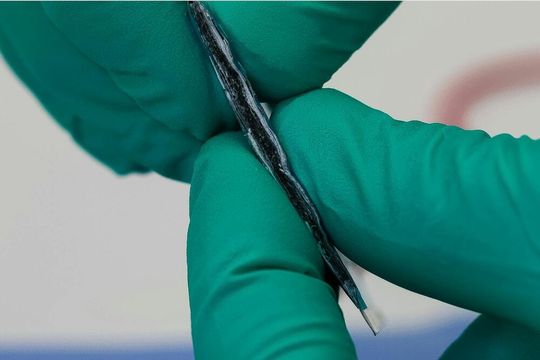
Open access is of strategic importance for Switzerland. Battery cells are a core element of the energy transition and industrial value creation, but the corresponding infrastructures are still highly concentrated internationally. Image: Solid state of a lithium metal battery.
(Image: CSEM)
The production of battery cells is highly concentrated worldwide: The majority of production takes place in Asia, while Europe is investing massively in new industrial capacities. In this context, access to a modern development infrastructure is strategically crucial.
By opening up the dry room to industry, start-ups and SMEs, CSEM is helping to close a critical gap in Switzerland's innovation landscape. Companies gain access to a state-of-the-art development infrastructure that is otherwise mainly available abroad or within large industrial groups.
With the "Battery Innovation Hub" and the now operational drying room, CSEM is helping to strengthen Switzerland's position in the international competition for future battery technologies and accelerate the transfer of innovation from applied research to industrial application.
Continuation of Regional Support
The CSEM "Battery Innovation Hub" will continue to receive strong regional support in the future. Banque Cantonale Neuchâteloise (BCN) has renewed its support for the next two years, reaffirming its commitment to innovation and industrial development in the region.
Pierre-Alain Leuenberger, CEO of BCN, sums it up: "The CSEM 'Battery Innovation Hub' is an impressive example of how research, industry and regional players can work together to create long-term, sustainable value. BCN is proud to continue to support CSEM in developing cleantech and providing Swiss companies with the tools they need to innovate, contribute to the energy transition and remain competitive in a fast-moving global environment."
Date: 08.12.2025
Naturally, we always handle your personal data responsibly. Any personal data we receive from you is processed in accordance with applicable data protection legislation. For detailed information please see our privacy policy.
Consent to the use of data for promotional purposes
I hereby consent to Vogel Communications Group GmbH & Co. KG, Max-Planck-Str. 7-9, 97082 Würzburg including any affiliated companies according to §§ 15 et seq. AktG (hereafter: Vogel Communications Group) using my e-mail address to send editorial newsletters. A list of all affiliated companies can be found here
Newsletter content may include all products and services of any companies mentioned above, including for example specialist journals and books, events and fairs as well as event-related products and services, print and digital media offers and services such as additional (editorial) newsletters, raffles, lead campaigns, market research both online and offline, specialist webportals and e-learning offers. In case my personal telephone number has also been collected, it may be used for offers of aforementioned products, for services of the companies mentioned above, and market research purposes.
Additionally, my consent also includes the processing of my email address and telephone number for data matching for marketing purposes with select advertising partners such as LinkedIn, Google, and Meta. For this, Vogel Communications Group may transmit said data in hashed form to the advertising partners who then use said data to determine whether I am also a member of the mentioned advertising partner portals. Vogel Communications Group uses this feature for the purposes of re-targeting (up-selling, cross-selling, and customer loyalty), generating so-called look-alike audiences for acquisition of new customers, and as basis for exclusion for on-going advertising campaigns. Further information can be found in section “data matching for marketing purposes”.
In case I access protected data on Internet portals of Vogel Communications Group including any affiliated companies according to §§ 15 et seq. AktG, I need to provide further data in order to register for the access to such content. In return for this free access to editorial content, my data may be used in accordance with this consent for the purposes stated here. This does not apply to data matching for marketing purposes.
Right of revocation
I understand that I can revoke my consent at will. My revocation does not change the lawfulness of data processing that was conducted based on my consent leading up to my revocation. One option to declare my revocation is to use the contact form found at https://contact.vogel.de. In case I no longer wish to receive certain newsletters, I have subscribed to, I can also click on the unsubscribe link included at the end of a newsletter. Further information regarding my right of revocation and the implementation of it as well as the consequences of my revocation can be found in the data protection declaration, section editorial newsletter.
(new)
Longer service life of battery-based energy storage systems



:quality(80)/p7i.vogel.de/wcms/51/1b/511b420dbcc296aec09e3bffb051b8a8/0133581587v1.jpeg "The cables connect numerous machine components—often in confined spaces. (Image:Helu)")
:quality(80)/p7i.vogel.de/wcms/b5/67/b5676f3bfb36251ed31f9a0cccf650b6/0133167827v1.jpeg "Thanks to JumboFlex Generation 2, employees can effortlessly move wheelchairs weighing as much as 40 kilograms. (Image:Lard)")
:quality(80)/p7i.vogel.de/wcms/5e/c6/5ec615b7a51440f668259f2af9158cb9/0132654694v1.jpeg "Strategic Partnerships in Industry: As buyers and restructuring partners, Chinese investors are increasingly helping to preserve jobs in Germany. (Image: ©Anatolii Rymarchuk - stock.adobe.com)")
:quality(80)/p7i.vogel.de/wcms/eb/2b/eb2bd1b8487afe577b37363cd02f16ff/0113143253v1.jpeg "In our China Market Insider, we regularly provide you with relevant information straight from China. (Image:© Eisenhans - stock.adobe.com)")
:quality(80)/p7i.vogel.de/wcms/aa/3e/aa3e2603a812f8e7d33c00ba8ae28c9f/0133507886v1.jpeg "With the Iggy Rob, igus is bringing a humanoid robot into factories for a price of 47,999 euros ($54,718). (Image: igus)")
:quality(80)/p7i.vogel.de/wcms/92/64/92645c64ffbb6980976d39102388d120/0113143253v1.jpeg "In our China Market Insider, we regularly provide you with relevant information straight from China. (Image:© Eisenhans - stock.adobe.com)")
:quality(80)/p7i.vogel.de/wcms/c7/05/c70542511e0824ee491f7b55e21fa429/0133598424v1.jpeg "In logistics, AI is often implemented only on a case-by-case basis; data is stored in separate systems, and inventory levels, status values, and priorities are not defined consistently. (Image: ©m-project - stock.adobe.com)")
:quality(80)/p7i.vogel.de/wcms/3a/9c/3a9c1fd546e1f041b86bb1d03cf39101/0133610524v1.jpeg "The Mason W-01 combines industrial-grade humanoid hardware, Physical AI-based perception, and autonomous task planning. (Image:Nova X Robotics)")
:quality(80)/p7i.vogel.de/wcms/e7/94/e794290f265afbd0ffc7a06c4fe9d425/adobestock-1887113836--hypnotics-14-stock-adobe-com-ki-generiertv1.jpeg "In both autonomous driving and industrial production, there is growing skepticism as to whether full autonomy is always desirable. (Source: © Hypnotics 14 – stock.adobe.com / AI-generated)")
:quality(80)/p7i.vogel.de/wcms/a8/71/a8712e5c6ef536228444ab5275cedfe2/adobestock-340905887--gorodenkoff-stock-adobe-comv1.jpeg "A new position paper outlines the conditions that the business community, academia, and policymakers must jointly establish in order to ensure the long-term viability of industry in Germany and Europe. (Source: © Gorodenkoff – stock.adobe.com)")
:quality(80)/p7i.vogel.de/wcms/7d/eb/7deb25ca674fa4c781a9d1fab083f7cf/parker-entwicklungszentrum-hresv1.jpeg "The centerpiece of the Parker Center for Drive and Control Technology in Offenbach is the exhibition area. (Source: Parker Hannifin)")
:quality(80)/p7i.vogel.de/wcms/3d/ff/3dff5e51c24b30c8dc37c1d024887157/0133602931v1.jpeg "Just a few years ago, SpaceX specialists were working on the world’s largest rocket—the Starship. Now, Elon Musk’s company has reached a milestone during a test flight: Earth’s orbit! But there was also a downside... (Image: SpaceX)")
:quality(80)/p7i.vogel.de/wcms/78/ab/78abbfbab0565fabb19efe637aea30e8/nio-power-swap-station-4-china-guangzhou-2024-1400x933-jpgv1.webp "Nio and Geely are collaborating on battery replacement for electric cars. (Source: Nio)")
:quality(80)/p7i.vogel.de/wcms/2e/58/2e58c664e733dd182666606f850c5da4/0133400664v1.jpeg "The IM6 is sort of the crossover version of the IM5. (Image:MG Motor)")
:quality(80)/p7i.vogel.de/wcms/40/5f/405f41f4075e8798878011f0932a8195/0133509065v1.jpeg "Caruso has integrated Hyundai into its platform. (Image:Hyundai)")
:quality(80)/p7i.vogel.de/wcms/06/98/06989beb3f95b8fb06d71190c86cffde/tabletv1.jpeg "The cockpit view during a test drive in the simulator. (Source: Uccello et al., IEEE OJITS 2026)")
:quality(80)/p7i.vogel.de/wcms/40/34/4034915f85470ad8264659267e4f02d0/0133655653v1.jpeg "Cariad, Volkswagen's software subsidiary, continues to struggle. Now, another round of layoffs has been announced, which will result in the loss of many jobs ... (Image:Cariad)")
:quality(80)/p7i.vogel.de/wcms/e4/2a/e42af12e2a0816bb3d25fac9932903e9/0133646920v1.jpeg "TSMC's U.S. headquarters in Arizona: According to various media reports, the world's largest contract semiconductor manufacturer may be planning to build up to six additional fabs in the state of Texas. (Image:TSMC)")
:quality(80)/p7i.vogel.de/wcms/de/8c/de8c694e560ce8e8d7d43fa5b91917b3/0133668420v1.jpeg "Open-source AI tools: DeepSeek and Huawei are making programming tools for Ascend processors available, with the aim of simplifying development, chip communication, and AI computations on Huawei's hardware—and thereby intensifying competition with Nvidia. (Image:Dall-E / AI-generated)")
:quality(80)/p7i.vogel.de/wcms/86/25/8625a62499a6e70e629a2ddde2f01dcb/0133671173v1.jpeg "\"OpenAI\" has repeatedly experienced problems in which AI models have accessed the internet without authorization in order to carry out their tasks. The company has now fired three people whom it no longer trusts ... (Image:AI-generated)")
:fill(fff,0)/images.vogel.de/vogelonline/companyimg/76800/76895/65.jpg "FAULHABER_120mm.jpg ()")
:quality(80):fill(efefef,0)/p7i.vogel.de/wcms/65/40/6540d82b23290/semitron-wp13-whitepaper-cover.png "Semitron_WP13_Whitepaper-Cover")
:quality(80)/p7i.vogel.de/wcms/ea/29/ea29c6c1571e29c4410a0e534a401ca2/0131890096v1.jpeg "Phoeniqs' AI supercomputer is optimized for running, training, and orchestrating complex AI models—such as large language models—in an industrial environment. It combines high-performance computing with uncompromising data security. (Image:Phoeniqs)")
:quality(80)/p7i.vogel.de/wcms/ff/90/ff908c3183c89f167f4b4f5596c603ac/0127877656v1.jpeg "Over a period of four years, seven Swiss research institutions and 24 companies have been working on how to exploit the technical and economic potential of a circular economy for batteries. (Image:Swiss Battery Technology Center)")