


:quality(80)/p7i.vogel.de/wcms/ae/26/ae2614c289c32ada44d0aad0d20a20c7/0129527501v1.jpeg "Since 2018, Mathias Dülfer has been the CEO of Gebr. Pfeiffer SE. Gebr. Pfeiffer SE, headquartered in Kaiserslautern (Germany), is a leading company in the development and manufacturing of grinding plants and technologies. Founded in 1864, the company is renowned for its solutions in material processing, particularly in the areas of cement, coal, lime, gypsum, and ceramics. (Image: Gebr. Pfeiffer SE)")
:quality(80)/p7i.vogel.de/wcms/99/46/994675a032644d5f9840932cd975d3e8/adobestock-295050782--c2-a9-20denys-20yelmanov-20-20-e2-80-93-20stock-adobe-comv1.jpeg "There are various ways to design hydraulic applications to save space and energy. (Symbolic image) (Source: Denys Yelmanov – stock.adobe.com)")
:quality(80)/p7i.vogel.de/wcms/66/90/669096f10c10efa89ce3ce6be0f6f44d/0132279760v1.jpeg "State-of-the-art machine technology, the best tool holders and high-performance tools, combined with finest process expertise, optimize production at toolcraft. (Image:Zecha)")
:quality(80)/p7i.vogel.de/wcms/2a/2a/2a2a10fc0bba59cf59816abb8fecfd42/0132450232v1.jpeg "In addition to global crises and high customer demands, mechanical engineers must respond to rising energy prices and data-driven processes. (Image:Gemini / AI-generated)")
:quality(80)/p7i.vogel.de/wcms/f0/36/f03666f7af96a5a2e37c5344c99ca38e/aufmacher-mvtec-success-20story-vista-3--40vistav1.jpeg "Two robots carry out the inspection process. (Image:Vista)")
:quality(80)/p7i.vogel.de/wcms/16/2b/162beed76aab51d57a32282ddd5ce96b/0132430948v1.jpeg "Security by System: Seamless monitoring of network edges and zero-trust concepts are becoming mandatory in automation. (Image:Gemini / AI-generated)")
:quality(80)/p7i.vogel.de/wcms/68/2d/682d831b9b58bc00faef2b0f5b264875/p90650697-highres-bmw-group-plant-landv1.jpeg "BMW is developing software for humanoid robots at the Landshut site. (Source: BMW)")
:quality(80)/p7i.vogel.de/wcms/89/78/897815ff95e3c63b844b898c83d8ea9e/26-06-22-st-c3-b6ber-ab-eisenmann-bild-201v1.jpeg "In a painting system at Eisenmann, an industrial robot with a gripper handles rims of different sizes and weights. Precise drive technology from Stöber is used in the process. (Image: Stöber Drive Technology GmbH + Co. KG)")
:quality(80)/p7i.vogel.de/wcms/17/40/1740ea2e261b768a3cafcf7805adccfb/adobestock-789872912--c2-a9-20littlewolf1989-20-e2-80-93-20stock-adobe-comv1.jpeg "The tractor gearbox was removed for maintenance purposes. (Stock image) (Source: littlewolf1989 – stock.adobe.com)")
:quality(80)/p7i.vogel.de/wcms/bc/25/bc25f24bffe77b798e23dcbdb4bf13db/0132052516v1.jpeg "When it comes to thermal management, hardware developers and engineers should collaborate. (Image: ROSSandHELEN photographers)")
:quality(80)/p7i.vogel.de/wcms/35/e2/35e29bb4a9f8326c2c1fb2d772547828/adobestock-2094390289--c2-a9-20moneymoney-20-e2-80-93-20stock-adobe-com-ki-generiertv1.jpeg "A central question in the concept of the underwater data center was how to cool the server cabinets in sealed chambers on the seabed. (Symbol image) (Source: © moneymoney – stock.adobe.com / AI-generated)")
:quality(80)/p7i.vogel.de/wcms/eb/a9/eba93106e9c9d4c67e10de61afd17117/0132396640v1.jpeg "Simulation is not an external tool for quality assurance but a part of the design process. This also allows better control of complex components. (Image: PTC)")
:quality(80)/p7i.vogel.de/wcms/5b/f8/5bf8c759eb4a77516bd110a9078650ff/0132469725v1.jpeg "Because the Ford plant in Valencia is not really profitable, Ford wants to team up with the Chinese car manufacturer Geely. Read here what the two are planning ... (Image:Ford)")
:quality(80)/p7i.vogel.de/wcms/b8/a3/b8a3f9eb4979c5af0c16b7e36a86ace0/0132455124v1.jpeg "Because two Chinese entities each hold a ten percent stake in Mercedes-Benz, it could become a problem if a bill supported by some US senators were to take effect ... (Image: Mercedes-Benz)")
:quality(80)/p7i.vogel.de/wcms/ed/02/ed023b1fdf0ce9dab50436c68c21d572/40f910458b38205d15ba8dc67a2d7b5be0b33010v1.jpeg "Volkswagen has launched the ID Cross, an electric SUV positioned above the VW Polo. (Image: Volkswagen)")
:quality(80)/p7i.vogel.de/wcms/17/e4/17e49b36addd1f4c52f83fbf17c283b5/org-blobs-user-response-file-output-528ce347-e0de-4ba7-b658-13b8d0094427-file-1784187263841-jpgv1.jpeg "Many drivers are distracted by screens and mobile phones. Today's common vehicle warnings fall short, according to the verdict of several experts. (Image:)")
:quality(80)/p7i.vogel.de/wcms/34/f2/34f25890cddee72b906ce5a10a1ebf40/snapv1.jpeg "With Tesys Deca Snap In, Schneider Electric offers a solution for motor management with a patented snap-in design. (Source: Schneider Electric)")
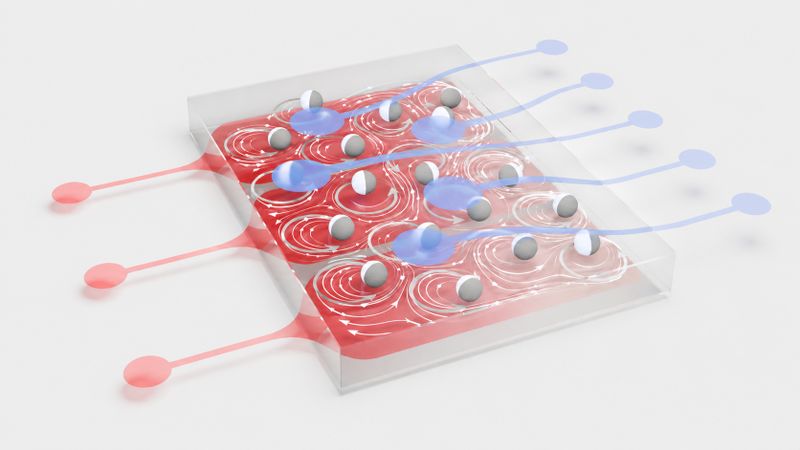
:quality(80)/p7i.vogel.de/wcms/f7/28/f7283c061228deaa0f7839a67c2d604d/computer-ohne-schaltkreisev1.jpeg "A reservoir computer made of oscillating colloidal particles (white/gray) interconnected through flows in a liquid. An external stimulation (red) generates a collective dynamics of the particles, resulting in a high-dimensional output signal (blue). Deviations in the temporal progression of the input signal are reflected therein, enabling sensitive detection of anomalies. (Source: © Veit-Lorenz Heuthe, University of Konstanz)")
:quality(80)/p7i.vogel.de/wcms/8b/1b/8b1bffc74848d00e529f260e139186cc/0132446234v1.jpeg "AI burglars, AI security teams - Science fiction becomes reality (Image:AI-generated)")
:quality(80)/p7i.vogel.de/wcms/2d/9c/2d9c9463fd6d5e5c656b5a6ad41582a8/0113143253v1.jpeg "In our China Market Insider, we regularly provide you with relevant information directly from China. (Image:© Eisenhans - stock.adobe.com)")
:fill(fff,0)/p7i.vogel.de/companies/69/88/69882c428938e/tmts2026-ticec-banner-en-2000px.png "tmts2026-ticec-banner-en-2000px (https://www.tmts.tw/en)")
:fill(fff,0)/p7i.vogel.de/companies/69/de/69de1b7403b0d/simtos-logo.jpeg "simtos-logo (SIMTOS)")
Date: 08.12.2025
Naturally, we always handle your personal data responsibly. Any personal data we receive from you is processed in accordance with applicable data protection legislation. For detailed information please see our privacy policy.
Consent to the use of data for promotional purposes
I hereby consent to Vogel Communications Group GmbH & Co. KG, Max-Planck-Str. 7-9, 97082 Würzburg including any affiliated companies according to §§ 15 et seq. AktG (hereafter: Vogel Communications Group) using my e-mail address to send editorial newsletters. A list of all affiliated companies can be found here
Newsletter content may include all products and services of any companies mentioned above, including for example specialist journals and books, events and fairs as well as event-related products and services, print and digital media offers and services such as additional (editorial) newsletters, raffles, lead campaigns, market research both online and offline, specialist webportals and e-learning offers. In case my personal telephone number has also been collected, it may be used for offers of aforementioned products, for services of the companies mentioned above, and market research purposes.
Additionally, my consent also includes the processing of my email address and telephone number for data matching for marketing purposes with select advertising partners such as LinkedIn, Google, and Meta. For this, Vogel Communications Group may transmit said data in hashed form to the advertising partners who then use said data to determine whether I am also a member of the mentioned advertising partner portals. Vogel Communications Group uses this feature for the purposes of re-targeting (up-selling, cross-selling, and customer loyalty), generating so-called look-alike audiences for acquisition of new customers, and as basis for exclusion for on-going advertising campaigns. Further information can be found in section “data matching for marketing purposes”.
In case I access protected data on Internet portals of Vogel Communications Group including any affiliated companies according to §§ 15 et seq. AktG, I need to provide further data in order to register for the access to such content. In return for this free access to editorial content, my data may be used in accordance with this consent for the purposes stated here. This does not apply to data matching for marketing purposes.
Right of revocation
I understand that I can revoke my consent at will. My revocation does not change the lawfulness of data processing that was conducted based on my consent leading up to my revocation. One option to declare my revocation is to use the contact form found at https://contact.vogel.de. In case I no longer wish to receive certain newsletters, I have subscribed to, I can also click on the unsubscribe link included at the end of a newsletter. Further information regarding my right of revocation and the implementation of it as well as the consequences of my revocation can be found in the data protection declaration, section editorial newsletter.
:quality(80)/p7i.vogel.de/wcms/cb/8a/cb8ae7f5205365efce3e7285154fc3cf/0130132198v1.jpeg "Markus Huber (left) and Nicolai Friis from TU Wien know how to make quantum computers multidimensional in order to perform computing operations even better. (Image:TU Vienna / A. Rommel)")
:quality(80)/p7i.vogel.de/wcms/52/3a/523ac3157ae4b4f596c7241c89127061/0129260553v1.jpeg "This artistic illustration shows a thermal analog calculator that performs calculations using excess heat and is embedded in a microelectronic system. (Image:Jose-Luis Olivares, MIT)")