Test ReportToyota GR Supra: Two Special Editions for the Finale
From
Martin Westerhoff/SP-X | Translated by AI
3 min Reading Time
Toyota crowns the conclusion of the A90 model generation of its GT sports car Supra with two special editions. With over 400 HP, the limited Final Edition is a disguised race car.
Toyota crowns the conclusion of the A90 model generation of its GT sports car Supra with two special editions.
(Image: Toyota)
Toyota is expanding the model range of the GR Supra with two special editions. Both are supposed to be sportier than the standard models—albeit in different ways. So far, the 3.0-liter straight-six from technology partner BMW has delivered a maximum of 250 kW/340 hp in EU countries. In the A90 Final Edition, Toyota increases its output to 324 kW/441 hp and raises the torque to 571 Newton meters (approx. 1873 Newton ft). Instead of an automatic, a manual transmission is responsible for the appropriate gear ratio.
The further developed lightweight version GR Supra Lightweight EVO, on the other hand, is aimed at purists. Not more horsepower, but rather a classic manual transmission as well as chassis and aerodynamics adjustments are intended to help the Japanese GT sports car to a more dynamic approach. The weight advantage, 15 kilograms compared to the standard model and 20 kilograms less than the A90 Final Edition, remains manageable despite the name: 1,575 kilograms is still quite a lot. We have been able to test how the two special models drive on the Circuito de Velocidad racetrack located northwest of Barcelona.
300 Units Worldwide
First of all: Anyone considering the purchase of one of the two special editions must not only put 142,800 euros (166.062,12 USD) on the table for the A90 Final Edition but also be quick. Because Toyota has limited it to 300 units worldwide. In Germany, only a small remaining contingent is available. The lightweight version, on the other hand, is available from 78,950 euros (91.810,96 USD).
Toyota's sports division—Gazoo Racing or GR for short—has given the A90 Final Edition's Bavarian heart plenty of pulse for the extra power. Adapted intake paths and a sports exhaust system with lower back pressure from Slovenian specialist Akrapovič help with easier breathing in and out. Additionally, the Japanese engineers intervened in the engine management and completely reprogrammed it. This performance boost is enough for a top speed of 275 km/h (approx. 171 mph). The 100 km/h (approx. 62 mph) mark is reached from a standstill in 4.3 seconds.
Close to a Race Car
The shock absorbers are also supplied by KW, as with the pure GT4 racing version of the Supra. Whether every customer will regularly adjust the 16 rebound and 12 compression levels remains to be seen. On the racetrack, in any case, the super Supra drives close to a race car. The carbon bucket seats, lined with thin light red padding, provide not only a motorsport flair but also stable lateral support. This is needed when the 265 mm (approx. 10 inches) wide front and 285 mm (approx. 11 inches) wide rear semi-slicks from Michelin build up grip.
The centrifugal forces press the driver firmly into the side bolsters of the seats. The side pads at knee height are also useful. A Brembo braking system with massive 395-millimeter (approx. 15 inches) discs at the front axle and 345-millimeter (approx. 13 inches) discs at the rear is beyond reproach. Even after several fast laps, it decisively decelerates the final fury. When downshifting, the Japanese car automatically blips the throttle. This not only sounds sporty but also ensures that the driven rear wheels do not lock when engaging a lower gear.
If one is so potent, it should also be visible. The external extras include a carbon front spoiler, a sporty front apron, and a rear wing in the style of the GR Supra GT4 race car. All developed in Toyota's own wind tunnel, once built by the Formula 1 factory team.
The Lightweight EVO also drives quite sportily. Its steering is more direct than the production models, just like the Final Edition. The standard Michelin sports tires offer less grip, reducing the possible cornering speeds. Aside from the power difference, the most noticeable aspect is that the smaller brakes don't bite quite as forcefully.
Standard Sprint in 4.6 Seconds
The maximum torque of 500 Newton meters allows for powerful acceleration even at moderate engine speeds. The standard sprint to 100 km/h (approx. 62 mph) is achieved in 4.6 seconds; the top speed is 250 km/h (approx. 155 mph). The seats are significantly less radically tuned for racing and remain pleasantly comfortable. Getting in and out is also easier.
Date: 08.12.2025
Naturally, we always handle your personal data responsibly. Any personal data we receive from you is processed in accordance with applicable data protection legislation. For detailed information please see our privacy policy.
Consent to the use of data for promotional purposes
I hereby consent to Vogel Communications Group GmbH & Co. KG, Max-Planck-Str. 7-9, 97082 Würzburg including any affiliated companies according to §§ 15 et seq. AktG (hereafter: Vogel Communications Group) using my e-mail address to send editorial newsletters. A list of all affiliated companies can be found here
Newsletter content may include all products and services of any companies mentioned above, including for example specialist journals and books, events and fairs as well as event-related products and services, print and digital media offers and services such as additional (editorial) newsletters, raffles, lead campaigns, market research both online and offline, specialist webportals and e-learning offers. In case my personal telephone number has also been collected, it may be used for offers of aforementioned products, for services of the companies mentioned above, and market research purposes.
Additionally, my consent also includes the processing of my email address and telephone number for data matching for marketing purposes with select advertising partners such as LinkedIn, Google, and Meta. For this, Vogel Communications Group may transmit said data in hashed form to the advertising partners who then use said data to determine whether I am also a member of the mentioned advertising partner portals. Vogel Communications Group uses this feature for the purposes of re-targeting (up-selling, cross-selling, and customer loyalty), generating so-called look-alike audiences for acquisition of new customers, and as basis for exclusion for on-going advertising campaigns. Further information can be found in section “data matching for marketing purposes”.
In case I access protected data on Internet portals of Vogel Communications Group including any affiliated companies according to §§ 15 et seq. AktG, I need to provide further data in order to register for the access to such content. In return for this free access to editorial content, my data may be used in accordance with this consent for the purposes stated here. This does not apply to data matching for marketing purposes.
Right of revocation
I understand that I can revoke my consent at will. My revocation does not change the lawfulness of data processing that was conducted based on my consent leading up to my revocation. One option to declare my revocation is to use the contact form found at https://contact.vogel.de. In case I no longer wish to receive certain newsletters, I have subscribed to, I can also click on the unsubscribe link included at the end of a newsletter. Further information regarding my right of revocation and the implementation of it as well as the consequences of my revocation can be found in the data protection declaration, section editorial newsletter.
If you are looking for a sports car for everyday use and excursions to the racetrack, the Lightweight EVO is a good choice. The high price and the limited quantity of the sportier A90 Final Edition will likely spare most interested buyers the agony of choice.



:quality(80)/p7i.vogel.de/wcms/21/b6/21b61c2ac1df28254fb0dad1574fb2d7/0132853015v1.jpeg "The rose-gold, TiAlSiN-based coating material InoxaCon contributes significantly to the stability and service life of HPTec's new RQR-350 milling tool. It enables safe and efficient automated processes in the manufacturing of surgical instruments. (Image:Cemecon)")
:quality(80)/p7i.vogel.de/wcms/d2/73/d273374d6347651e4e6200cf6061ea4e/0132860560v1.jpeg "Even in July, the flag of the Chinese economy did not flutter particularly briskly in the air. Read here what’s happening and why production in China is apparently declining ... (Image:AI-generated)")
:quality(80)/p7i.vogel.de/wcms/18/47/1847f131e3afda201d1dbb98ad0ecb04/0132826776v1.jpeg "Image 1: Difender armored steels from Dillinger stand out with top scores in ballistic testing and cold bending. Defense companies therefore readily choose them. They can be found, for example, in the armored vehicles Fuchs and GTK Boxer of the German Armed Forces. (Image: Dillinger)")
:quality(80)/p7i.vogel.de/wcms/1e/7d/1e7d651782e0e97b3efc25abf2b52350/img-3485v1.jpeg "The Siemens Energy employees attach balancing weights at the precisely calculated and adjusted angular position to achieve the best possible result. (Source: Schenck Rotec)")
:quality(80)/p7i.vogel.de/wcms/a7/38/a73840cb81da9dc3c503f4c04bf66b96/0132892768v1.jpeg "Unitree's IPO symbolizes the high expectations for humanoid robots and embodied AI. (Image:Dall-E / AI-generated)")
:quality(80)/p7i.vogel.de/wcms/1c/a5/1ca5e3ef5d834c3a42de8909c872e3c6/0132876444v1.jpeg "The autonomous transport system Active Shuttle marketed by Bosch Rexroth has been sold to Neura Robotics. (Image:Bosch Rexroth)")
:quality(80)/p7i.vogel.de/wcms/30/1a/301a1aa59e093d848b69e9ff7006b83e/image1v1.jpeg "Wireless switching devices offer advantages in numerous industrial applications – wherever wired communication reaches its limits (Image: Steute) (Image:)")
:quality(80)/p7i.vogel.de/wcms/a2/85/a285b12508af812e28b17be3482a736c/0132488872v1.jpeg "NIS2 is no longer an abstract requirement in the distant future for many industrial companies. (Image:AI-generated)")
:quality(80)/p7i.vogel.de/wcms/41/fc/41fc456ff1ff8f30807924663e8df127/img-0942v1.jpeg "In industrial additive manufacturing, the production strategy must influence the design from the very beginning. (Source: Materialise)")
:quality(80)/p7i.vogel.de/wcms/44/fe/44fe86a16c26c09bb363b3671bf0b930/0132847771v1.jpeg "CoreTechnologie (CT) points out that the 3D printing software 4D_Additive has been equipped with additional application possibilities. Here you can learn more about what the new version 1.8 can do – such as generating complex lattice structures or optimizing faulty data ... (Image:CT)")
:quality(80)/p7i.vogel.de/wcms/b4/f2/b4f2c272247f79c5e87334a6839f20cb/0132549860v1.jpeg "Morefire analysis: Many mechanical engineering websites focus on technical specs instead of customer benefits. Translating features into clear benefits increases visibility, inquiries, and competitiveness. (Image: ©peopleimages.com - stock.adobe.com)")
:quality(80)/p7i.vogel.de/wcms/b4/9a/b49aaad0500e06e253f7d75ecb77338a/adobestock-4840668--dani-kreienb-hl-stock-adobe-comv1.jpeg "Metal processing in 2026 will be more digital, automated, and data-driven – but not automatically easier. (Image:© Dani Kreienbühl - stock.adobe.com)")
:quality(80)/p7i.vogel.de/wcms/5b/88/5b88d94e6a43f2b857462cd1921f7386/0132281427v1.jpeg "The eTurbo solves a well-known turbocharger problem: by combining an exhaust gas turbocharger and a permanently excited synchronous motor into a highly integrated core assembly, the compressor achieves sufficient speed even when the exhaust energy is actually not yet sufficient. (Image: BorgWarner)")
:quality(80)/p7i.vogel.de/wcms/75/fe/75feffb63bc6275786606d78a8d797c4/0132901853v1.jpeg "Steyr Motors reports similar business results as last year. Here you can learn more about the details of the Austrian company's situation ... (Image:E-Steyr)")
:quality(80)/p7i.vogel.de/wcms/57/d2/57d2b75d884c18866b46e776126fb46b/org-blobs-user-response-file-output-dac07b02-0e97-4452-9a3a-26528da583b3-file-1787126178766-jpgv1.jpeg "The memory manufacturer CXMT has had an extremely successful IPO. Among the investors are several car manufacturers. (Image:KI-generiert)")
:quality(80)/p7i.vogel.de/wcms/d0/68/d0681c9d26012538a22ff5c103429612/0132875205v1.jpeg "Electric vehicles: Structure of the zone architecture in a modern vehicle. (Image:TI)")
:quality(80)/p7i.vogel.de/wcms/22/82/22826566c11220ed61efac5982fb94a2/0132896083v1.jpeg "Electrodes made from paper and copper paste deliver comparable signal quality to the established gold standard. They perform significantly better in all environmental impact analyses. (Image:Screentec)")
:quality(80)/p7i.vogel.de/wcms/c4/9f/c49f5b8173f678f7ef071355b1fbbd7c/yamu-jay-ai-generated-9088888v1.jpeg "As part of a strategic partnership, Siemens and Reinhausen are advancing the future of energy supply solutions for AI data centers. (Symbol image) (Source: pixabay / AI-generated)")
:quality(80)/p7i.vogel.de/wcms/28/20/28204a4592a69a8682bfbf9a8f7e1dc2/0132846993v1.jpeg "The health status of a lithium-ion battery changes with increasing aging. AI models can utilize characteristic changes in the charge and voltage curves to estimate the state of health. (Image:freely licensed)")
:quality(80)/p7i.vogel.de/wcms/90/dc/90dc332e30a3e4bd3ff77646ed0633b7/0132833369v1.jpeg "Through a compromised repository of the widely used open-source tool LiteLLM, attackers were able to capture several terabytes of data and login credentials. Security company CloudSEK concludes, after analyzing the data, that the attack conducted in March of this year affected more than 2,000 companies, including major players like Microsoft, Nvidia, AWS, and Deutsche Bahn. (Image:freely licensed)")
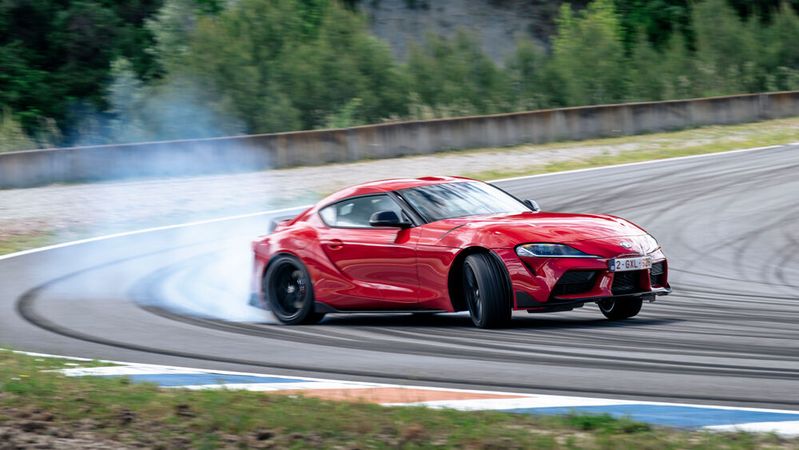
:quality(80)/p7i.vogel.de/wcms/92/c8/92c8846a59f39ab701e0339d7f46bfe6/0125000443v1.jpeg "Not more horsepower, but rather a classic manual transmission as well as chassis and aerodynamic adjustments are intended to help the Japanese GT sports car achieve a more dynamic driving style.(Image: Toyota)")
:quality(80)/p7i.vogel.de/wcms/2b/07/2b07368dec19575e5e9e1d41106b6286/0125000442v1.jpeg "The final special edition costs 142,000 euros (165.131,80 USD).(Image: Toyota)")
:quality(80)/p7i.vogel.de/wcms/35/bc/35bc292b756b81920f25f84f9196f45b/0125000440v1.jpeg "The Final Edition is limited to 300 units.(Image: Toyota)")
:quality(80)/p7i.vogel.de/wcms/bc/23/bc236f342ee3fffe1089789498a67c3c/0125000431v1.jpeg "On the racetrack, the super Supra drives close to a race car.(Image: Toyota)")
:quality(80):fill(efefef,0)/p7i.vogel.de/wcms/67/ad/67adf4a647532/elatec-wp-machine-authentication.png "Elatec WP Machine Authentication")
:quality(80)/p7i.vogel.de/wcms/15/7b/157b67d26a818ac4f54a9c9d2e7846dd/0131362558v1.jpeg "Lamborghini now also builds the Fenomenon as a roadster (Image:Lamborghini)")
:quality(80)/p7i.vogel.de/wcms/e4/85/e485b0a8c61064ef4b83beaeef8d3895/0128378383v1.jpeg "The Toyota GR GT is set to launch in 2027. (Image:Toyota)")