Test drive reportHyundai Inster: Cute electric car for 24,000 euros*
By
Tomas Hirschberger/sp-x | Translated by AI
5 min Reading Time
This post is likely to appeal not only to Generation Z: With the cute mini SUV Inster, Hyundai is now launching its first electric compact car. The cool vehicle starts well below 25,000 euros (26.280 USD).
Following the Dacia Spring, Citroen ë-C3, and Renault 5 E-Tech Electric, Hyundai is now also entering the affordable battery business with the Inster.
(Image: Hyundai)
*approx. 25.229 USD
Finally, the flow of model policy seems to be heading in the right direction. While the mobility transition has largely been an exercise for the affluent, more affordable electric vehicles are now becoming available to the general public. After the Dacia Spring, Citroen ë-C3, and Renault 5 E-Tech Electric, Hyundai is now entering the affordable electric car market with the Inster. The cute mini-SUV will start at well below 25,000 euros (26.280 USD). Hyundai also promises attractive leasing rates, as the clean little car is meant to improve the Koreans' CO2 balance.
On Korea's roads, the four-door has been driving since 2021 as a combustion engine under the name Casper. For fear of absurd wordplay, the electric version is called Inster in our market, and it is built for the global market at the Korean plant in Gwangju.
Two power levels
As a pure electric vehicle, the Inster is extended. It grows by 23 centimeters to 3.8 meters(approx. 9,06 in to 12,5 ft), with the wheelbase increasing by 18 centimeters to 2.5 meters (approx. 7,1 in to 8,2 ft). There will be two power levels and two battery sizes available, as well as the "Inster Cross" trim level later on, enhanced with some aesthetic off-road details. In its base version, the always front-wheel-drive Inster has 71 kW and a 42-kWh battery on board. Its energy is supposed to be sufficient for about 320 kilometers (approx. 199 miles). The more powerful version comes with 85 kW, a 49-kWh battery, and a promised range of 370 kilometers (approx. 230 miles).
The Inster design has the potential to be a class hit. It's a city-friendly mix of compact car and SUV elements with ultra-short overhangs. At the front, narrow LED lights are complemented by round daytime running lights beneath them. The charging port is invisibly hidden in the black front, behind a cover. Boldly flared wheel arches with plastic cladding and an aluminum roof rail add robustness to the four-door from the side. The rear is characterized by a pixel-optic light strip, reminiscent of the Ioniq 5 and 6. Nine colors are available, including cute pastels or stylish matte finishes. Those who wish can also order the roof in black and enhance the cool car with 17-inch alloy wheels. Standard are 15-inch steel wheels.
You notice immediately upon entering that nothing here is cheaply made. Once again, it becomes clear that Hyundai takes the compact car segment seriously. The seating position in the front feels slightly higher, and the driver and passenger seats are styled like a continuous bench. They are optionally heated and ventilated. The second row can be moved 16 centimeters (approx. 6,3 in), allowing for more trunk space or more legroom.
The cockpit consists of two 10.25-inch displays. Regeneration levels can be adjusted via paddles, and the driving modes Sport, Normal, Eco, and Snow can be selected via a button on the steering wheel. In the center under the dashboard is a collection of switches that allow direct access to the most important functions. This ensemble is already familiar from the Kona or Tucson.
Many standard features
The Inster also benefits from a dip into the corporate parts bin, including an inductive charging pad and ambient lighting that bathes the interior in 64 different colors. Many safety, comfort, and assistance systems are surprising to find in a mini of this price range. The list is longer than the car itself, and standard features include blind spot warning, parking sensors at the front and rear, collision warning, and a lane-keeping assist. For an additional charge, there's a 360-degree camera, an intelligent cruise control, unlocking and starting via smartphone, or the practical Vehicle-to-Load function, which provides bidirectional energy to e-bikes, music boxes, and electric grills.
Date: 08.12.2025
Naturally, we always handle your personal data responsibly. Any personal data we receive from you is processed in accordance with applicable data protection legislation. For detailed information please see our privacy policy.
Consent to the use of data for promotional purposes
I hereby consent to Vogel Communications Group GmbH & Co. KG, Max-Planck-Str. 7-9, 97082 Würzburg including any affiliated companies according to §§ 15 et seq. AktG (hereafter: Vogel Communications Group) using my e-mail address to send editorial newsletters. A list of all affiliated companies can be found here
Newsletter content may include all products and services of any companies mentioned above, including for example specialist journals and books, events and fairs as well as event-related products and services, print and digital media offers and services such as additional (editorial) newsletters, raffles, lead campaigns, market research both online and offline, specialist webportals and e-learning offers. In case my personal telephone number has also been collected, it may be used for offers of aforementioned products, for services of the companies mentioned above, and market research purposes.
Additionally, my consent also includes the processing of my email address and telephone number for data matching for marketing purposes with select advertising partners such as LinkedIn, Google, and Meta. For this, Vogel Communications Group may transmit said data in hashed form to the advertising partners who then use said data to determine whether I am also a member of the mentioned advertising partner portals. Vogel Communications Group uses this feature for the purposes of re-targeting (up-selling, cross-selling, and customer loyalty), generating so-called look-alike audiences for acquisition of new customers, and as basis for exclusion for on-going advertising campaigns. Further information can be found in section “data matching for marketing purposes”.
In case I access protected data on Internet portals of Vogel Communications Group including any affiliated companies according to §§ 15 et seq. AktG, I need to provide further data in order to register for the access to such content. In return for this free access to editorial content, my data may be used in accordance with this consent for the purposes stated here. This does not apply to data matching for marketing purposes.
Right of revocation
I understand that I can revoke my consent at will. My revocation does not change the lawfulness of data processing that was conducted based on my consent leading up to my revocation. One option to declare my revocation is to use the contact form found at https://contact.vogel.de. In case I no longer wish to receive certain newsletters, I have subscribed to, I can also click on the unsubscribe link included at the end of a newsletter. Further information regarding my right of revocation and the implementation of it as well as the consequences of my revocation can be found in the data protection declaration, section editorial newsletter.
Many of the small Inster ideas are also clever and smart. Tables can be fixed to the back of the front seats, and the door panels are customizable. Additionally, all rear seatbacks can be folded down with one hand to create a flat 2.20-meter-long lying surface (approx. 7,2 ft).
E-competence at a high level
Once the power flows, the Inster story becomes serious. Here, too, the junior benefits from the family's e-competence. The drive works so seamlessly as if powering cars had been commonplace for a long time. The top version we drove with 85 kW is a sensible choice, especially since the large battery it is paired with comes quite close to meeting the range promise. Additional soundproofing and impeccable workmanship bring pleasant tranquility to the mini SUV, and the chassis tuning feels confident. The low center of gravity combined with the comparatively long wheelbase gives the Inster a well-balanced road presence and reasonable comfort. The rest is accomplished car manufacturing, which Hyundai handles no worse than VW, who still has its customers waiting about a year for the ID 2.
For charging, the Koreans are using a 400-volt architecture. 800 volts, as with their electric siblings, would have exceeded the budget. At a fast charger, energy flows into the battery at a maximum of 85 kW. Charging from 10 to 80 percent takes about 30 minutes. The onboard charger supports up to eleven kW (3-phase) at a wallbox. Here, it takes four and a half hours for all cells to be fully charged.
That's the cost of the Hyundai Inster
Hyundai offers the electric compact car Inster at prices starting from 23,900 euros (approx. 25.124 USD). The variant with the more powerful drive and larger battery costs an additional 1,500 euros (approx. 1.577 USD). The basic equipment Select, which can be combined with both powertrains, includes an infotainment system with navigation, automatic climate control, smart key, leather steering wheel, electric exterior mirrors, and four electric windows.
The Trend equipment, which costs an additional 2,000 euros (approx. 2.102 USD) and thus at least 26,000 euros (approx. 27.331 USD), includes seat heating for the foldable front seats, a sliding and foldable rear bench seat, parking sensors, a rearview camera, a smartphone charging pad, 15-inch alloy wheels, and a vehicle-to-load preparation.
The higher-end trims, Cross and Prime, are only available in combination with the more powerful drive variant. The Cross version starts at 29,100 euros (approx. 30.590 USD). Its features include different exterior elements as well as a steering wheel with LED pixel lighting, a roof rail, ambient lighting, and 17-inch alloy wheels. A glass sunroof can be ordered for an additional charge. The top version, Prime, costs 30,100 euros (approx. 31.641 USD) and also includes the efficiency package with a heat pump and battery heating system, as well as the assistance package with blind spot warning, exit warning, cross-traffic alert, 360-degree camera, and rear parking assist with emergency braking function.



:quality(80)/p7i.vogel.de/wcms/4c/af/4cafbff8a06028a7250e03626a7e6afb/0132939283v1.jpeg "Behind the acronym Clasco is a project based on laser processing techniques, aiming to enable the reliable and application-specific post-processing of even complex metal parts produced by 3D printers. TU Dresden took the lead... (Image:German Materials Society)")
:quality(80)/p7i.vogel.de/wcms/cf/fc/cffc25779317b5b1e42cba9cfcd52bbc/0132927530v1.jpeg "The analysts were wrong again, as Japan was able to increase its export volume far more than predicted. Here are some numbers and facts about Nippon's economic situation... (Image:AI-generated)")
:quality(80)/p7i.vogel.de/wcms/6f/12/6f122ac26fd08f621f7b14f421fc435c/0132930817v1.jpeg "The Federal Statistical Office has taken a closer look at the first half of 2026 in terms of trade. Among other findings, it revealed that China is once again Germany's top trading partner... (Image:AI-generated)")
:quality(80)/p7i.vogel.de/wcms/3c/26/3c2635fb73f283b2d0e6ede46a2c2f9f/0113143253v1.jpeg "In our China Market Insider, we regularly provide you with relevant information directly from China. (Image:© Eisenhans - stock.adobe.com)")
:quality(80)/p7i.vogel.de/wcms/05/e7/05e7017a2699ef15b513bfd2e18431fb/digitaler-planungszwilling-bildv1.png "The author explains here why the digital twin only becomes a planning tool when it follows a clear decision-making question. (Source: T&O Group/AI-generated)")
:quality(80)/p7i.vogel.de/wcms/07/b3/07b368b6d067acdbb49c1e88b0cd8e9d/0131022521v1.jpeg "The seven-axis collaborative robot from Yamaha Motor is equipped with Harting connectors. (Image:Yamaha Motor)")
:quality(80)/p7i.vogel.de/wcms/dc/64/dc64212882d6898cd5b44fcbeb5aedbb/image1v1.jpeg "The cobots from Rheinmetall Yardstick Robotics use all-in-one servo drives from Synapticon. (Image: Rheinmetall Yardstick Robotics) (Image:)")
:quality(80)/p7i.vogel.de/wcms/a7/38/a73840cb81da9dc3c503f4c04bf66b96/0132892768v1.jpeg "Unitree's IPO symbolizes the high expectations for humanoid robots and embodied AI. (Image:Dall-E / AI-generated)")
:quality(80)/p7i.vogel.de/wcms/c8/a1/c8a170f594765cecbdafbc139b96d91a/0132860586v1.jpeg "V-shaped grooves, known as riblets, are directly incorporated into the paint. They reduce overall drag by 50 percent, resulting in significant fuel savings. (Image:Trumpf)")
:quality(80)/p7i.vogel.de/wcms/c9/80/c98042b5898cde9670b4c3ae1efbc656/adobestock-165496610v1.jpeg "In just 45 days, the team from Stauff India completely renewed the hydraulic piping of a steel plant. The key factor here was the right pipe connection system. (Source: Stauff)")
:quality(80)/p7i.vogel.de/wcms/41/fc/41fc456ff1ff8f30807924663e8df127/img-0942v1.jpeg "In industrial additive manufacturing, the production strategy must influence the design from the very beginning. (Source: Materialise)")
:quality(80)/p7i.vogel.de/wcms/44/fe/44fe86a16c26c09bb363b3671bf0b930/0132847771v1.jpeg "CoreTechnologie (CT) points out that the 3D printing software 4D_Additive has been equipped with additional application possibilities. Here you can learn more about what the new version 1.8 can do – such as generating complex lattice structures or optimizing faulty data ... (Image:CT)")
:quality(80)/p7i.vogel.de/wcms/d1/42/d142e0e90738d0335c4ed7936f030e6a/0132948392v1.jpeg "Its production was long delayed, but now Tesla's electric truck Semi is being built in the USA. If the Elon Musk company has its way, it will soon also be seen on Europe's roads... (Image: Tesla)")
:quality(80)/p7i.vogel.de/wcms/a4/19/a419e31b91a2da68d3b59afed58dc31c/26c0194-001v1.jpeg "The Mercedes VLE will soon also be produced in China, local media report. (Image:Mercedes-Benz AG)")
:quality(80)/p7i.vogel.de/wcms/16/2f/162ff38606f0034832fbaadea1829933/precision-measurement-labv1.jpeg "In car manufacturing, much revolves around precision. This is evaluated, among other things, in the precision measurement laboratory. (Source: Geely)")
:quality(80)/p7i.vogel.de/wcms/5b/88/5b88d94e6a43f2b857462cd1921f7386/0132281427v1.jpeg "The eTurbo solves a well-known turbocharger problem: by combining an exhaust gas turbocharger and a permanently excited synchronous motor into a highly integrated core assembly, the compressor achieves sufficient speed even when the exhaust energy is actually not yet sufficient. (Image: BorgWarner)")
:quality(80)/p7i.vogel.de/wcms/65/74/6574fcb9fb6b589ef577767613f5397c/0132928076v1.jpeg "Compact and standardized: CubeSats enable cost-effective space missions and are increasingly serving as a platform for testing new technologies—from sensors and communications to innovative power supply systems. (Image:City Labs, Inc.)")
:quality(80)/p7i.vogel.de/wcms/07/f6/07f6c430c86bf0d5d915268b881ada49/0132895094v1.jpeg "FOUP wafer cassette for 300-mm semiconductor manufacturing in TSMC's Fab 12. (Image:TSMC)")
:quality(80)/p7i.vogel.de/wcms/59/25/59258a3771bf03dd3461d0378884464d/0132928076v1.jpeg "Compact and standardized: CubeSats enable cost-effective space missions and increasingly serve as platforms for testing new technologies—from sensors and communication to innovative energy supply systems. (Image: City Labs, Inc.)")
:quality(80)/p7i.vogel.de/wcms/22/82/22826566c11220ed61efac5982fb94a2/0132896083v1.jpeg "Electrodes made from paper and copper paste deliver comparable signal quality to the established gold standard. They perform significantly better in all environmental impact analyses. (Image:Screentec)")
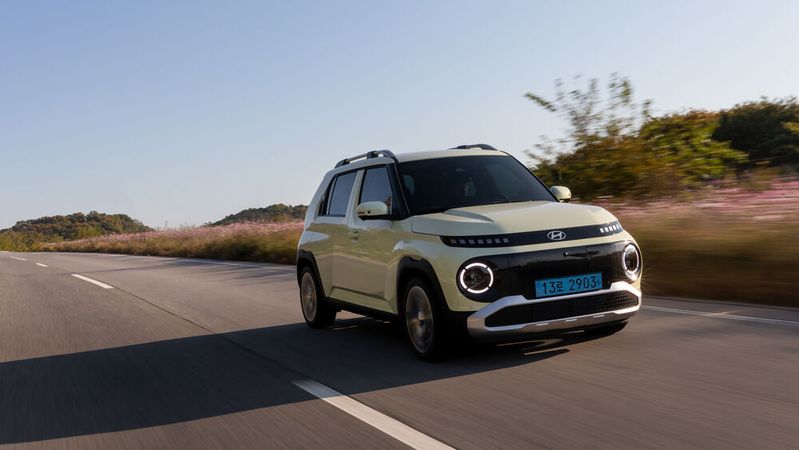
:quality(80)/p7i.vogel.de/wcms/e4/5e/e45e8457219441c630fa1373f9d3924a/0121592786v1.jpeg "The Inster design has what it takes to be a class hit.(Image: Hyundai)")
:quality(80)/p7i.vogel.de/wcms/5f/7d/5f7d9a1e2e427ef4b58c89fa6eac0f79/0121592787v1.jpeg "The cockpit consists of two 10.25-inch displays.(Image: Hyundai)")
:quality(80)/p7i.vogel.de/wcms/26/53/26536830312c302c2fb66cd7536c3c33/0121592798v1.jpeg "The Inster also scores points in terms of variability.(Image: Hyundai)")
:quality(80)/p7i.vogel.de/wcms/fa/75/fa7546da41c1d4c64d8936415bd099aa/0121592792v1.jpeg "In the base version, the Inster, which is always front-wheel drive, has 71 kW/97 hp and a 42 kWh battery on board.(Image: Hyundai)")
:quality(80)/p7i.vogel.de/wcms/22/e7/22e7227ac563535b03b4f46ba6dd94bc/5d6a4f3364bcacb32b52e149013491ac421da841v1.jpeg "Xpeng is bringing its smallest model to date, the L03, to Europe. (Image:Xpeng)")
:quality(80)/p7i.vogel.de/wcms/c2/57/c257d627beec10e94252cde72830adf6/0130472803v1.jpeg "With the Twingo E-Tech, Renault is now launching a purely electrically powered new edition of the Twingo small car (Image:Renault)")