DecarbonizationMercedes Sets New Sustainability Goals
From
Thomas Günnel
| Translated by AI
4 min Reading Time
Mercedes-Benz has unveiled new plans to decarbonize the company. Some of these measures are being incorporated into procurement processes.
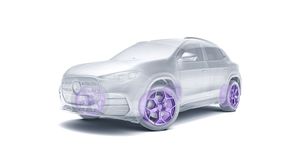
Mercedes-Benz has unveiled new decarbonization goals.
(Source: Mercedes-Benz)
Mercedes-Benz has published its “Climate Transition Action Plan 2026.” The document outlines measures through which the company aims to reduce CO2 emissions by 90 percent in its own production by 2039 and by 80 percent during the vehicle’s usage phase—that is, when customers are driving the car— compared to 2019. Across all relevant stages of the value chain, the company is aiming for an overall reduction of 70 percent.
The plan sets a long-term goal of achieving net-zero by 2049 at the latest. The remaining CO2 emissions “will be permanently neutralized,” Mercedes states. Exactly how this will be achieved remains to be seen. TÜV Rheinland Energy & Environment has officially validated the implementation plan.
According to the report, the Group already sources 100 percent of its electricity from external green power sources at its own facilities (Scope 1 and 2). By 2030, the company aims to increase the share of renewable energy in total energy consumption to 70 percent for passenger cars and 80 percent for vans. By 2039, this share is expected to reach 90 percent across the entire production sector.
Wind Energy from the Baltic Sea and the Test Track
Germany’s electricity needs are to be met by the company’s own facilities and purchased energy. Starting in 2027, the “Windanker” Baltic Sea wind farm operated by Iberdrola will supply more than 140 megawatts. According to Mercedes, this amount covers about 30 percent of Germany’s electricity needs. In addition, 20 wind turbines with a total capacity of about 140 megawatts are currently being built at the test site in Papenburg, Lower Saxony (Germany). In the future, they will cover up to 20 percent of the automaker’s electricity needs in Germany.
At the same time, the Group aims to reduce specific energy consumption in production per vehicle by 2030: by 36 percent for passenger cars and by 16 percent for vans, compared to the base year of 2023. In transport logistics, CO2 emissions are expected to drop by about 45 percent by 2039, compared to 2019. Route optimization, increased rail transport, HVO fuels, and battery-electric trucks are expected to contribute to this goal.
CO2 Emissions as an Award Criterion
In 2025, approximately 22 percent of Scope 3 emissions were attributable to the supply chain. Mercedes is therefore incorporating quantitative interim targets for CO2 emissions into its supplier selection criteria. The focus is on energy-intensive materials such as steel, aluminum, and battery cells.
In the new CLA, for example, the use of renewable energy in the production of anodes, cathodes, and cell housings reduces the CO2 footprint by about 30 percent per cell compared to conventional production. Since 2025, at least one-third of the primary aluminum used in European electric vehicle models has been produced using green electricity. To comprehensively capture Scope 3 data, the manufacturer is utilizing the Catena-X collaboration project. The partners use this project to determine product-specific CO2 footprints based on real primary data.
More Recycled Materials and Recycling
The use of secondary raw materials is expected to rise to 40 percent over the next decade. In 2025, this share stood at 17.6 percent across the entire fleet. Mercedes has entered into a purchase agreement with Hydro for aluminum. From 2026 through 2030 and beyond, the company will supply primary aluminum—with a contractually stipulated, gradual reduction in the CO2 footprint: 3.5 kg CO2e per kilogram by 2028, 3.0 kg CO2e per kilogram starting in 2030.
The primary aluminum that Mercedes currently sources from Hydro has a carbon footprint of approximately 4.0 kg CO2e per kilogram. According to Mercedes, the global average is 14.4 kg CO2e per kilogram. This supply covers at least ten percent of Mercedes’ primary aluminum needs. Starting in 2027, Mercedes also plans to use “Hydro Circal,” recycled aluminum with a CO2 footprint of no more than 2.0 kg CO2e per kilogram.
Date: 08.12.2025
Naturally, we always handle your personal data responsibly. Any personal data we receive from you is processed in accordance with applicable data protection legislation. For detailed information please see our privacy policy.
Consent to the use of data for promotional purposes
I hereby consent to Vogel Communications Group GmbH & Co. KG, Max-Planck-Str. 7-9, 97082 Würzburg including any affiliated companies according to §§ 15 et seq. AktG (hereafter: Vogel Communications Group) using my e-mail address to send editorial newsletters. A list of all affiliated companies can be found here
Newsletter content may include all products and services of any companies mentioned above, including for example specialist journals and books, events and fairs as well as event-related products and services, print and digital media offers and services such as additional (editorial) newsletters, raffles, lead campaigns, market research both online and offline, specialist webportals and e-learning offers. In case my personal telephone number has also been collected, it may be used for offers of aforementioned products, for services of the companies mentioned above, and market research purposes.
Additionally, my consent also includes the processing of my email address and telephone number for data matching for marketing purposes with select advertising partners such as LinkedIn, Google, and Meta. For this, Vogel Communications Group may transmit said data in hashed form to the advertising partners who then use said data to determine whether I am also a member of the mentioned advertising partner portals. Vogel Communications Group uses this feature for the purposes of re-targeting (up-selling, cross-selling, and customer loyalty), generating so-called look-alike audiences for acquisition of new customers, and as basis for exclusion for on-going advertising campaigns. Further information can be found in section “data matching for marketing purposes”.
In case I access protected data on Internet portals of Vogel Communications Group including any affiliated companies according to §§ 15 et seq. AktG, I need to provide further data in order to register for the access to such content. In return for this free access to editorial content, my data may be used in accordance with this consent for the purposes stated here. This does not apply to data matching for marketing purposes.
Right of revocation
I understand that I can revoke my consent at will. My revocation does not change the lawfulness of data processing that was conducted based on my consent leading up to my revocation. One option to declare my revocation is to use the contact form found at https://contact.vogel.de. In case I no longer wish to receive certain newsletters, I have subscribed to, I can also click on the unsubscribe link included at the end of a newsletter. Further information regarding my right of revocation and the implementation of it as well as the consequences of my revocation can be found in the data protection declaration, section editorial newsletter.
In a pilot project with “HyIron,” Mercedes also processed fine iron ore from a mine in South Africa’s Northern Cape into directly reduced iron—without energy-intensive pelletization. According to HyIron, this process generates only ten kilograms of Scope 1 and Scope 2 emissions per metric ton. Mercedes used the material to mold a demonstration component for the EQS.
Less Water and Battery Recycling
By 2030, the automaker also aims to reduce water consumption per vehicle: by 50 percent for passenger cars and by 19 percent for vans, compared to 2023. Mercedes also aims to reduce the amount of waste requiring disposal: by 54 percent for passenger cars and by 71 percent for vans. A mechanical-hydrometallurgical plant in Kuppenheim is used for battery recycling. According to Mercedes, more than 90 percent of the recycled materials are thus reusable.
In its validation statement, TÜV Rheinland (Germany) confirms the methodological clarity and strategic anchoring of the goals, but points out existing uncertainties. The projected reductions are based in part on variable assumptions regarding the actual market ramp-up of electric mobility, customer demand, and the technological maturity of partners. In addition, external factors influence the production targets—such as the availability of specific aluminum grades and the pace at which local utilities are decarbonizing district heating at individual locations.
According to Mercedes-Benz, in 2025 the company covered 51 percent of total energy consumption at all passenger car production sites with renewable energy; for vans, the figure was 39 percent. Over the past two years, Mercedes has also saved a cumulative total of approximately 570 gigawatt-hours of energy. This was made possible, among other things, by more efficient equipment.