For decades, welding was considered the safest and most stable connection for hydraulic pipelines. Nowadays, more and more OEMs are relying on the Stauff Form Evo forming system. In other cases, Stauff cutting ring connections may be the best option. But which connection is the right one?
In just 45 days, the team from Stauff India completely renewed the hydraulic piping of a steel plant. The key factor here was the right pipe connection system.
(Source: Stauff)
The welding of pipes requires careful preparation of the pipe material as well as precise work by qualified personnel. First, the pipe edges must be precisely cut, deburred, and cleaned to create clean connection surfaces. Then, the welder aligns the segments with millimeter precision and secures them with tack welds. The actual welding is carried out in multiple layers, often in confined construction spaces for hydraulic systems. Finally, the weld seams are visually inspected and often tested using methods such as X-ray or ultrasound. In contrast, the application of the Stauff Form Evo forming system requires only two work steps: The end of the prepared hydraulic pipe is reshaped using a robust table device, the forming machine, so that, when screwed together with a conventional fitting body and a union nut, a so-called positive, leak-proof "metal-to-metal" connection is formed. The Stauff Viton sealing ring additionally secures the only conceivable leakage path. During final assembly, another advantage of Stauff Form Evo becomes apparent: over- and under-tightening are virtually eliminated. When tightening the union nut, a noticeable increase in force is felt at a certain point. With an additional turn of 15–20° beyond this point, the assembly is complete. This achieves high pull-out strength, which withstands the extreme stresses customary in shipbuilding, offshore installations, or cranes and hoists, such as strong pressure surges and vibrations. The sealing effect is even supported by the system pressure of the hydraulic system. After a briefing on the machine for assembly personnel by a Stauff trading partner, the forming process, as well as the final assembly, can be carried out without any further safety precautions.
Shipbuilder Utilizes Economic Advantages of Stauff Evo Form
The Damen Shipyards Group, headquartered in the Netherlands and known for its extremely robust work and tugboats, relied on welding hydraulic pipes until a few years ago, at a time when other shipbuilders had long been using detachable connections. They wanted to play it safe and accepted the high manpower requirements, long processing times, and the costs associated with welding. In the meantime, they have also switched to the Stauff Form Evo forming system and are now taking advantage of its economic benefits without having to compromise on safety.
Another example demonstrates the advantages of Stauff Form Evo: The team at Stauff India had only 45 days to completely renew the hydraulic piping of a steel plant. The shutdown in September and October 2025 was not allowed to last any longer. The initial situation: The pipelines had been in operation for more than ten years, were visibly worn, and regularly leaking due to corrosion. Accordingly, the maintenance team was constantly occupied with emergency repairs during ongoing operations and under extreme heat conditions.
Stauff India took full responsibility for the entire process, from dismantling all old pipes, planning, manufacturing, assembly, cleaning, and pressure and leak testing of the new piping system, to the final acceptance with a leak-proof guarantee. Where previously labor-intensive welding was used, Stauff Form Evo was now employed. The initial skepticism of the maintenance team quickly gave way to enthusiasm for the simple operation of the forming machine and the significantly noticeable time savings: Connecting two pipes with Stauff Form Evo takes 7 to 10 minutes, whereas welding can take up to 30 minutes, partly due to time-consuming testing (e.g., X-ray). A formed connection only needs to be checked with a simple caliper. In addition to the high leak-proof security with minimal maintenance effort, Stauff Form Evo offers the operator the medium- and long-term advantage that standardized components—in this case, locally manufactured in India—facilitate future modifications or expansions. The project was successfully completed on schedule with a leak-proof guarantee at operating pressures of up to 300 bar (approx. 4,350 psi), marking a milestone for Stauff India.
Forming Machine with Extended Feature
Compared to welding as traditional "manual work" with a particularly high potential for errors, machine-assisted pipe connections offer additional advantages. After manual initiation, the machine performs the forming process automatically. A monitored path control based on stored parameters ensures high process reliability and reproducibility. Quickly interchangeable, clearly marked tools with a bayonet lock minimize setup times and prevent assembly errors. A touchscreen with intuitive user guidance in four languages simplifies handling. The machine is standard-equipped with an integrated communication module with a SIM card, connecting it to the Stauff Technology Center. This enables remote analysis and optimization of settings, software updates are transmitted online, and each forming process is documented in detail as a reporting and quality record. This data supports troubleshooting, maintenance, and proof of compliance for end customers. From now on, the machines Stauff Form EVO SFO-F-IOT will be delivered with a new feature: A module with a light sensor is installed in front of the tool head. This detects the removal of the pipe after the assembly process is completed and automatically resets the machine to its starting position. This step was previously performed by pressing a button. Now this step is eliminated as well, further improving user convenience and operating speed. Existing machines can be retrofitted.
Cutting Ring Assembly Machine in a Practical Case
Highly automated, digitally connected processing machines are also available for the pre-assembly and final assembly of Stauff cutting ring connectors. These are designed to make the assembly process fast, convenient, and safe. Unlike the forming system, cutting ring connections can also be realized entirely without a machine—using a vice or directly at the assembly point on-site. For this purpose, Stauff offers a portable cutting ring assembly machine with accessories in a practical case. This flexibility can be a decisive advantage in certain application situations. For instance, if a pipe is damaged during operation, it can be replaced without delay, whereas repairing a pipe system with formed connections would require a pre-formed replacement pipe.
Date: 08.12.2025
Naturally, we always handle your personal data responsibly. Any personal data we receive from you is processed in accordance with applicable data protection legislation. For detailed information please see our privacy policy.
Consent to the use of data for promotional purposes
I hereby consent to Vogel Communications Group GmbH & Co. KG, Max-Planck-Str. 7-9, 97082 Würzburg including any affiliated companies according to §§ 15 et seq. AktG (hereafter: Vogel Communications Group) using my e-mail address to send editorial newsletters. A list of all affiliated companies can be found here
Newsletter content may include all products and services of any companies mentioned above, including for example specialist journals and books, events and fairs as well as event-related products and services, print and digital media offers and services such as additional (editorial) newsletters, raffles, lead campaigns, market research both online and offline, specialist webportals and e-learning offers. In case my personal telephone number has also been collected, it may be used for offers of aforementioned products, for services of the companies mentioned above, and market research purposes.
Additionally, my consent also includes the processing of my email address and telephone number for data matching for marketing purposes with select advertising partners such as LinkedIn, Google, and Meta. For this, Vogel Communications Group may transmit said data in hashed form to the advertising partners who then use said data to determine whether I am also a member of the mentioned advertising partner portals. Vogel Communications Group uses this feature for the purposes of re-targeting (up-selling, cross-selling, and customer loyalty), generating so-called look-alike audiences for acquisition of new customers, and as basis for exclusion for on-going advertising campaigns. Further information can be found in section “data matching for marketing purposes”.
In case I access protected data on Internet portals of Vogel Communications Group including any affiliated companies according to §§ 15 et seq. AktG, I need to provide further data in order to register for the access to such content. In return for this free access to editorial content, my data may be used in accordance with this consent for the purposes stated here. This does not apply to data matching for marketing purposes.
Right of revocation
I understand that I can revoke my consent at will. My revocation does not change the lawfulness of data processing that was conducted based on my consent leading up to my revocation. One option to declare my revocation is to use the contact form found at https://contact.vogel.de. In case I no longer wish to receive certain newsletters, I have subscribed to, I can also click on the unsubscribe link included at the end of a newsletter. Further information regarding my right of revocation and the implementation of it as well as the consequences of my revocation can be found in the data protection declaration, section editorial newsletter.
Function and Advantages of Cutting Ring Connections
The functional principle of the 24° tube fittings with cutting ring from Stauff is based on a metallic ring with two cutting edges arranged sequentially. When the union nut is tightened, both edges cut into the tube one after the other, creating a tight metallic connection with high pull-out strength. The front cutting edge not only ensures the primary tube retention but also clearly signals the end of assembly to the user with a stable, prominently visible continuous material burr in front of the face. The second cutting edge supports the overall function. In certain applications, such as in agricultural machinery, the use of WD cutting ring connections is recommended. In addition to the purely metallic connection, they are secured with two elastomer elements. A sealing ring made of FKM (Viton) is securely positioned in the rear area of the cone, while another O-ring is placed between the cutting ring and the tube, securing a second potential leakage path.
Flaring Technique as an Obsolete Model?
As a complete provider of all components for hydraulic piping systems from in-house development and production, Stauff also offers all necessary materials and tools for flaring steel pipes. A model of the cutting ring assembly machine can be used for this purpose thanks to an interchangeable tool head. In flaring, the end of a hydraulic pipe is reshaped to create a tight and at the same time detachable connection. For this, the pipe end is mechanically expanded or folded—typically at an angle of 37°—so that the formed flare sits positively and securely on the cone of the fitting or the sealing cone. The sealing effect is achieved through the precisely fitting surfaces of the flare and cone. In DKO fittings, this effect is further supported by an O-ring in the sealing cone. In addition to the pipes, a flare fitting is required, consisting of a sealing cone or cone, flare nut, possibly an O-ring, and a housing or connector, such as a straight or angled fitting. In contrast, forming with Stauff Form Evo or Stauff cutting ring connections uses only a few consistently standardized components that are easily available and inexpensive. Clear disadvantages of the flaring technique include high material costs and complex procurement. Therefore, it is often not the first choice in mechanical engineering with complex hydraulic piping systems and many connections. However, typical applications can be found in other fields, such as brake and clutch lines in vehicles or in copper pipes used in refrigeration/air conditioning systems.



:quality(80)/p7i.vogel.de/wcms/68/a5/68a5ce0896756c1dcf48dbeceefafbd3/0132300990v1.jpeg "Christoph Geigges is President and CEO of Walter AG. Headquartered in Tübingen (Germany), the company is one of the world’s leading suppliers of precision tools for metalworking. Under Geigges’ leadership, this long-established company is increasingly transforming itself from a tool manufacturer into an engineering partner that supports the entire manufacturing process. (Image: Walter AG)")
:quality(80)/p7i.vogel.de/wcms/3e/7c/3e7c26f44c68545fc7318597b6b65903/0133649650v1.jpeg "The flexible Heller circular storage system can store and process pallets measuring both 630 millimeters by 630 millimeters and 800 millimeters by 800 millimeters—even in mixed-mode operation. This makes the entire production line particularly flexible. (Image:Brighter)")
:quality(80)/p7i.vogel.de/wcms/16/29/162983885950ec1df27ab441bfe88613/0133132549v1.jpeg "Bernd Hermeler is the CEO of Cemecon AG. He studied mechanical engineering at RWTH Aachen University (Germany)—the very university from which the company emerged as a spin-off 40 years ago. Today, Hermeler is responsible for the global strategy of the coating specialist, which, with branches in Europe, the U.S., China, Japan, and India, is considered the global technology leader in the coating of cutting tools. (Image: Cemecon AG)")
:quality(80)/p7i.vogel.de/wcms/af/81/af81b53cb4926dcadc20ba369a29d412/0132695968v1.jpeg "International venture capital is increasingly flowing into the machining industry. Here are the players that entrepreneurs and CEOs should keep an eye on right now. (Image: ©NDABCREATIVITY - stock.adobe.com)")
:quality(80)/p7i.vogel.de/wcms/88/dc/88dc38a1a0b5e016192ab83b0850fbd0/0133514708v1.jpeg "Scalable data sovereignty is the foundation for the transition from computationally intensive AI processing and growing data streams to sustainable, energy-efficient storage systems. (Image:Gemini / AI-generated)")
:quality(80)/p7i.vogel.de/wcms/1c/ef/1cef66e13c5cc02c5731fefcc99c00d2/0133697754v1.jpeg "Embodied AI in Industry: FMC³ Robotics combines AI-based perception and adaptation with traditional robot control to prepare robots for use in industrial manufacturing. (Image:FMC³/processed by AI)")
:quality(80)/p7i.vogel.de/wcms/db/ca/dbcae78eb8853b53fe122832fe3b2cba/0132914918v1.jpeg "Robotics in Flexible Manufacturing: As connectivity increases, so do the requirements for functional safety. (Image: Delta Electronics)")
:quality(80)/p7i.vogel.de/wcms/ea/18/ea18e84aed24bbe1c91937f30c2f7301/image1v1.jpeg "Kassow Robots' new product portfolio now includes seven 7-axis cobots. (Image: Kassow Robots (Image:)")
:quality(80)/p7i.vogel.de/wcms/90/30/90300137452b00d22f95113eff065ac3/fliehkraftkupplungen-und-bremsen-montage-centrifugal-clutches-and-brakes-assembly-1v1.jpeg "Installation: Centrifugal clutches should always be precisely matched to the machine. (Source: Amsbeck Machine Technology)")
:quality(80)/p7i.vogel.de/wcms/93/84/9384230e840a99a2015fdd3e0af11e2b/newsimage428236v1.jpeg "The crutch replicates the natural, biomechanical movement pattern of the human body. (Source: Leon Kast)")
:quality(80)/p7i.vogel.de/wcms/5b/a2/5ba21b3e5fcdd91f6bfe806f745ea723/isc-physioink-bild-3v1.jpeg "In the PhysioINK project, Fraunhofer researchers are developing bio-printing inks from the most common tissue proteins. Under the microscope, the living tissue cells (fibroblasts) are visible in the printed lattice structure: blue represents the cell nucleus, and green represents the cytoskeleton. (Source: Tobias Weigel/Fraunhofer ISC)")
:quality(80)/p7i.vogel.de/wcms/9c/16/9c16e4aa02594fe4bf82ead736562b07/directhop1-scaledv1.jpeg "Light as a feather, but without feathers: The University of Washington's robot, which weighs just one gram, uses a bionic direct-drive system to catapult itself into the air with centimeter-level precision. (Source: Mark Stone/University of Washington)")
:quality(80)/p7i.vogel.de/wcms/0a/50/0a50938be0b598b36efc4e5457ed56dd/forvia-siege-zen-massage-16-9-06v1.jpeg "Seat with massage function by Forvia. (Source: Forvia)")
:quality(80)/p7i.vogel.de/wcms/99/61/9961719acb89bc87fdecb1bba140481c/0133725593v1.jpeg "Ultrason (PSU, PESU, PPSU) is suitable for E&E components used in electric mobility or AI infrastructure, such as connectors for fiber-optic cables. (Image:BASF)")
:quality(80)/p7i.vogel.de/wcms/42/9b/429badd88cd4a74edb6491d10310349c/wayve-london-05v1.jpeg "Wayve is developing an AI software stack for automated driving. It appears that the Volkswagen Group has now opted for this technology. (Source: Wayve)")
:quality(80)/p7i.vogel.de/wcms/14/9f/149f934f87e5418748fa41a611586a4f/rawdon-gloverv1.jpeg "Rowdon Glover, Managing Director of Jaguar: “We are willing to accept polarization.” (Image:JLR)")
:quality(80)/p7i.vogel.de/wcms/36/f0/36f0472d20227013871aa790f4d48ac6/0133726018v1.jpeg "Ion beams can ablate, coat, or smooth surfaces down to the atomic level. Such processes are used, among other things, in optical chips, precision optics, and superconducting materials. (Image:AI-generated)")
:quality(80)/p7i.vogel.de/wcms/1f/47/1f47da6ee12c38a745eb478a04157a65/0133726100v1.jpeg "The schematic diagram shows the structure of a 3D NAND memory device with memory cells stacked on top of one another and vertical connections for high storage density. (Image:Dall-E / AI-generated)")
:quality(80)/p7i.vogel.de/wcms/70/59/7059db055d4eeb8dea752651a071f360/geralt-handshake-4608297v1.jpeg "The deal between Schneider Electric and PTC is intended to create end-to-end data flows for the industry. (Source: )")
:quality(80)/p7i.vogel.de/wcms/67/3d/673d8f6f14bd030b53b61800a0aeb06d/0133548286v1.jpeg "Overview: If even a single critical component is missing, the entire production process can come to a standstill. Proactive procurement is intended to mitigate such bottlenecks early on. (Image:Dall-E / AI-generated)")
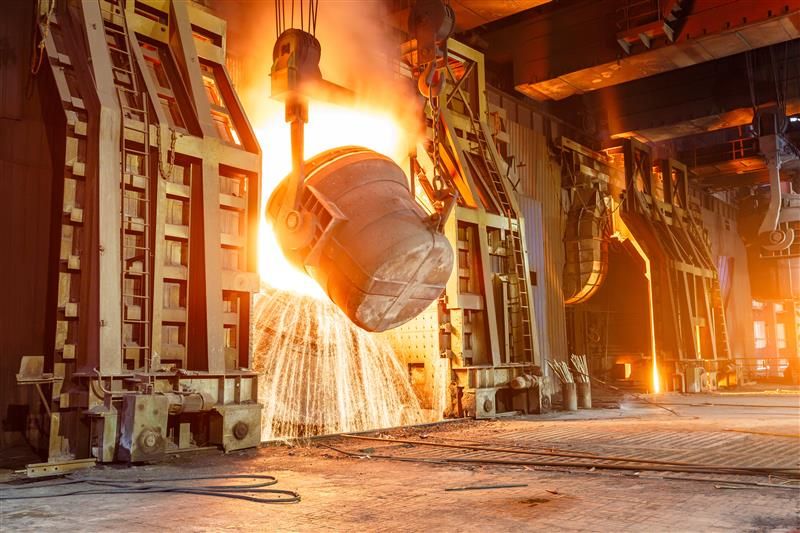
:quality(80)/p7i.vogel.de/wcms/c9/80/c98042b5898cde9670b4c3ae1efbc656/adobestock-165496610v1.jpeg "In just 45 days, the team from Stauff India completely renewed the hydraulic piping of a steel plant. The key factor here was the right pipe connection system.(Source: Stauff)")
:quality(80)/p7i.vogel.de/wcms/40/f8/40f8634743af669b5cec011e95840a6d/damen-10v1.jpeg "Damen Shipyards has also switched to the Stauff Form Evo forming system and is leveraging its economic advantages.(Source: Damen Shipyards Group)")
:quality(80)/p7i.vogel.de/wcms/70/cd/70cdf08dca92214fe5811b7850d62d64/drei-rohrverbindungssysteme-rgbv1.jpeg "Stauff offers the right connection solution for every application.(Source: Stauff)")
:quality(80)/p7i.vogel.de/wcms/6a/b5/6ab572755838e255f7ec3a6794f10853/stauff-form-evov1.png "The Stauff Form Evo forming system requires only two steps: The end of the prepared hydraulic pipe is reshaped using a robust table device, the forming machine, so that when screwed together with a standard fitting body and a union nut, a so-called form-fit, sealed \"metal-to-metal\" connection is created.(Source: Stauff)")
:quality(80)/p7i.vogel.de/wcms/b4/9a/b49aaad0500e06e253f7d75ecb77338a/adobestock-4840668--dani-kreienb-hl-stock-adobe-comv1.jpeg "Metal processing in 2026 will be more digital, automated, and data-driven – but not automatically easier. (Image:© Dani Kreienbühl - stock.adobe.com)")
:quality(80)/p7i.vogel.de/wcms/99/46/994675a032644d5f9840932cd975d3e8/adobestock-295050782--c2-a9-20denys-20yelmanov-20-20-e2-80-93-20stock-adobe-comv1.jpeg "There are various ways to design hydraulic applications to save space and energy. (Symbolic image) (Source: Denys Yelmanov – stock.adobe.com)")
:quality(80)/p7i.vogel.de/wcms/fe/1f/fe1fa5ee713f94deaba963dc24c3abc5/0133299273v1.jpeg "The Flexistar enables highly flexible production of laser-welded tubes thanks to its tool-free clamping system. (Image:Because Technology, LLC)")