Quality studyHow US customers rate the quality of their cars
From
Thomas Günnel
| Translated by AI
4 min Reading Time
Ram, Chevrolet, and Hyundai lead in customer satisfaction in the USA. German volume manufacturers are further down in the quality ranking—but it's worth taking a closer look at the details.
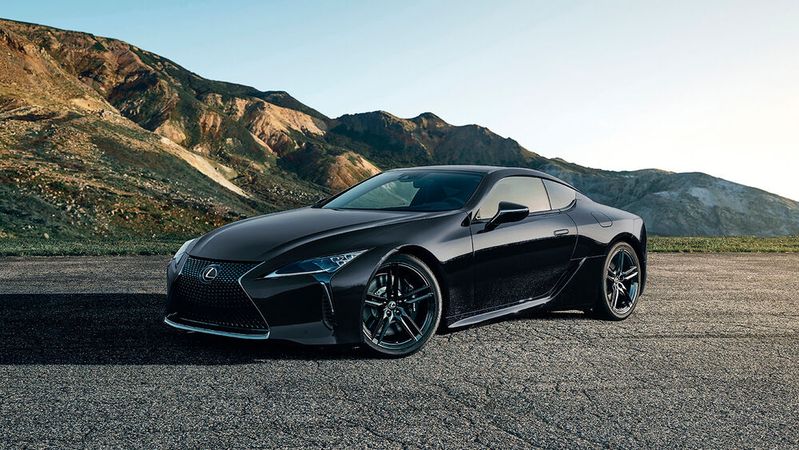
The Lexus LC received the overall best rating in J.D. Power's US quality ranking.
(Image: Lexus.)
The analytical firm J.D. Power has published its annual quality survey of car owners. For the first time, this includes data from dealers and users. The brand with the best individual quality is Ram, with 149 problems per 100 vehicles. Among the mass-market brands, Chevrolet is in second place with 160 problems and Hyundai is in third place with 162 problems.
In the so-called premium vehicles, Porsche is at the top: 172 problems per 100 cars were reported. Lexus takes second place with 174 problems, and Genesis third with 184 problems. The average for the more expensive vehicles is 232 problems; according to J.D. Power, the industry average is 195 problems per 100 vehicles.
Drivers of BMW reported 206 problems, those of Volkswagen 241, and those of Audi 242. The overall best-rated car is the Lexus LC with 106 problems per 100 vehicles.
Manufacturer with the most awards
The most awards at model level, six, were received by General Motors, followed by Hyundai and Toyota each with four awards. Among the brands, Chevrolet receives four segment awards, followed by Lexus with three.
Not all categories are comparable. For example, no German manufacturer has large pick-ups in its program; and vice versa. In the category "small premium car", for example, only the BMW 2 Series is listed. In the "compact premium car" category, the BMW 3 Series is in third place behind Lexus IS and Cadillac CT4 In "upper midsize premium car", the BMW 5 Series is in second place after the Genesis G80.
Among the "small premium suv", the Audi Q3 is ranked second behind the Lexus UX. In the "compact premium suv" category, the BMW 4 Series leads ahead of Alfa Romeo Stelvio and Porsche Macan. Volkswagen and Audi are not represented in the top 3 segment rankings.
Problems with electric cars
According to the survey, battery electric cars and plug-in hybrids require more repairs in all categories than petrol-powered vehicles. Petrol and diesel-powered vehicles reach an average of 180 problems in this year's survey, battery electric cars 266.
This has closed the gap between the quality of Tesla and the quality of battery electric vehicles from traditional car manufacturers. Tesla has performed better in the past. The removal of traditional controls for turn signals and windshield wipers was apparently not well received by Tesla customers.
These are the most frequently mentioned defects
Frustration due to false warnings top the annoyance ranking. Often, owners do not understand what the warnings mean, writes J.D. Power. The reminder that something was left on the back seat contributes 1.7 problems per 100 cars across the industry. According to the survey, some mistakenly assume that this is a sign of a seat belt not being fastened, or report that the warning is triggered when there is no one in the back seat.
There are also complaints about driver assistance systems, especially about inaccurate and annoying warnings from rear cross traffic alerts and automatic emergency braking functions in reverse. These categories were added to the survey this year.
Problems with Android Auto and Apple Car Play continue to persist. They remain among the top 10 issues. Customers reportedly have the most difficulty establishing or maintaining a connection to their vehicle. More than half of Apple users and 42 percent of Samsung users access the respective function on every trip. The analysts interpret this as indicating that customers want to bring their smartphone experience into the car and integrate the function wirelessly.
Problems with operation, displays and smells
Functions, controls and displays are the second most problematic category in the study. They are only slightly ahead of error-prone infotainment. From seemingly simple functions like windshield wipers and rearview mirrors to the more complicated operation of an OEM smartphone application, this category is particularly problematic for electric vehicles.
The error rate in this category is over 30% higher for electric vehicles than for gasoline-powered vehicles. JD Power explicitly mentions Tesla as a complicating factor here. The manufacturer has recently switched to buttons on the steering wheel for horn and blinker functions.
According to the survey, unpleasant odors in the interior are occurring more and more frequently. The problem worsened starting from the year 2023. Every brand except Kia and Nissan saw an increase in mentions in this category. According to the owners, the problematic smells come from their vehicle's heating, ventilation, and air conditioning systems.
Date: 08.12.2025
Naturally, we always handle your personal data responsibly. Any personal data we receive from you is processed in accordance with applicable data protection legislation. For detailed information please see our privacy policy.
Consent to the use of data for promotional purposes
I hereby consent to Vogel Communications Group GmbH & Co. KG, Max-Planck-Str. 7-9, 97082 Würzburg including any affiliated companies according to §§ 15 et seq. AktG (hereafter: Vogel Communications Group) using my e-mail address to send editorial newsletters. A list of all affiliated companies can be found here
Newsletter content may include all products and services of any companies mentioned above, including for example specialist journals and books, events and fairs as well as event-related products and services, print and digital media offers and services such as additional (editorial) newsletters, raffles, lead campaigns, market research both online and offline, specialist webportals and e-learning offers. In case my personal telephone number has also been collected, it may be used for offers of aforementioned products, for services of the companies mentioned above, and market research purposes.
Additionally, my consent also includes the processing of my email address and telephone number for data matching for marketing purposes with select advertising partners such as LinkedIn, Google, and Meta. For this, Vogel Communications Group may transmit said data in hashed form to the advertising partners who then use said data to determine whether I am also a member of the mentioned advertising partner portals. Vogel Communications Group uses this feature for the purposes of re-targeting (up-selling, cross-selling, and customer loyalty), generating so-called look-alike audiences for acquisition of new customers, and as basis for exclusion for on-going advertising campaigns. Further information can be found in section “data matching for marketing purposes”.
In case I access protected data on Internet portals of Vogel Communications Group including any affiliated companies according to §§ 15 et seq. AktG, I need to provide further data in order to register for the access to such content. In return for this free access to editorial content, my data may be used in accordance with this consent for the purposes stated here. This does not apply to data matching for marketing purposes.
Right of revocation
I understand that I can revoke my consent at will. My revocation does not change the lawfulness of data processing that was conducted based on my consent leading up to my revocation. One option to declare my revocation is to use the contact form found at https://contact.vogel.de. In case I no longer wish to receive certain newsletters, I have subscribed to, I can also click on the unsubscribe link included at the end of a newsletter. Further information regarding my right of revocation and the implementation of it as well as the consequences of my revocation can be found in the data protection declaration, section editorial newsletter.
This is how the customer satisfaction survey works
The "US Initial Quality Study" has been around for 38 years. This year it is based on the responses of 99,144 buyers and lessees of new cars from the 2024 model year. They were surveyed after 90 days of ownership. For the first time, the study also includes data on repair visits. These were reported by contracted dealers for new cars.
Private survey participants were asked to answer 227 questions. Contracted dealers provided relevant repair data. The questions are divided into nine vehicle categories, plus one for repairs:
Infotainment.
Functions.
Controls and displays.
Exterior.
Driving assistance.
Interior.
Drivetrain.
Seats.
Driving experience.
Climate.
And not specifically defined, only for repair.
The survey ran from July 2023 to May 2024. More information on the quality study U.S. Initial Quality Study



:quality(80)/p7i.vogel.de/wcms/1d/5b/1d5bcee2e6539e24af41fd1905186599/0132188566v1.jpeg "China builds by far the most trade ships in the world. However, the USA now plans to impose port fees on Chinese ships, aiming to harm the de facto monopoly. Germany, however, could emerge as the winner, as a study aims to show... (Image: Yangzijiang)")
:quality(80)/p7i.vogel.de/wcms/52/37/5237ad737cca476a02a0079609dd17fa/0131909526v1.jpeg "At Kern contract manufacturing, zero defect tolerance applies to extreme quality demands – even in mass production within the five- and six-digit range. Fully automated manufacturing processes with Kern Micro HD precision centers play a decisive role in this. (Image:Kern Microtechnik GmbH)")
:quality(80)/p7i.vogel.de/wcms/95/3e/953ec906155aabebd1803aa72c26bb64/0132152343v1.jpeg "At first glance, the APSX-PIM V3 injection molding machine doesn't appear so, but it is built so compactly that it can be installed on any workbench. What the compact plastic processing system can be used for is explained here by the manufacturer ... (Image: APSX)")
:quality(80)/p7i.vogel.de/wcms/77/bc/77bc807477b379ffb3548c5a85a1680e/0132142400v1.jpeg "Record order for submarine builder TKMS. Canada has ambitious plans to protect its long coastline. This is to be ensured in some time with the help of a dozen submarines of the 212CD model ... (Image: TKMS)")
:quality(80)/p7i.vogel.de/wcms/25/ed/25edc189adc0265237630b0037e10088/0132204842v1.jpeg "(from left) Zhendong Ke, Vice President of Leju Robotics, Hao Gao, General Manager Central Region of Leju Robotics, Haitian Sun, General Manager of Schaeffler Humanoids (Taicang) Co., Ltd., and Dr. Yilin Zhang, Regional CEO Region Greater China of Schaeffler AG, sealed the partnership. (Image: Schaeffler)")
:quality(80)/p7i.vogel.de/wcms/16/d5/16d5e4cd9b61b912644949d57aa2957f/yamaha-20picture-202v1.jpeg "The seventh axis on the cobot increases flexibility in production and logistics. (Image: Yamaha Robotics)")
:quality(80)/p7i.vogel.de/wcms/15/07/15076fcebff9938ec3535d44c4f82868/adobestock-2012652009--c2-a9-20masque-20--20stock-adobe-comv1.jpeg "Physical AI requires advanced security concepts due to the close integration of perception, decision logic, and action. (Image: Masque - stock.adobe.comMasque - stock.adobe.com)")
:quality(80)/p7i.vogel.de/wcms/d2/c0/d2c0591eb93a0b21997ec51d0965f4c2/0131063063v1.jpeg "The development of humanoid robots is based on an interplay of various technologies. (Image:reichelt/Getty)")
:quality(80)/p7i.vogel.de/wcms/70/f5/70f5c6d89b274e357fdb9954dab9479c/bild-20vossv1.jpeg "Voss has identified operators, integrators, and manufacturers of data center infrastructure as the target group for its cooling systems. (Source: Voss Automotive)")
:quality(80)/p7i.vogel.de/wcms/0d/e1/0de113306c5841b8938eb1acf0642a64/clipboard-07-08-2026-01v1.jpeg "Luna Rossa optimizes its processes in digital engineering and enhances its racing yacht for the 38th America's Cup. (Source: Image courtesy of Luna Rossa)")
:quality(80)/p7i.vogel.de/wcms/23/b7/23b7c94b680b588e6a782720cc06900b/newsimage424308v1.jpeg "Left: Injection-molded test specimen with conventional platelet-shaped metallic effect pigments. Right: Injection-molded test specimen with novel tetrahedral pigment particles. (Image: Fraunhofer IAP)")
:quality(80)/p7i.vogel.de/wcms/40/0d/400df72efc5f3a38cd9ee532027309e5/june12finals-8-bncrop-2048x1170v1.jpeg "An \"electronic nose\" developed by researchers at UC Berkeley can detect gases emitted by spoiled food and food allergens better than the human nose. (Image: Brandon Sánchez-Mejia/UC Berkeley)")
:quality(80)/p7i.vogel.de/wcms/34/41/34415124ecf859db85834277bc98af4d/0132181994v1.jpeg "In June 2026, Astemo announced that the electric drivetrain of the Nissan Leaf improves range through an efficient energy management system. This is enabled by the \"3-in-1\" drivetrain, which combines three key components: the motor, the inverter, and the reduction gearbox. (Image: Astemo)")
:quality(80)/p7i.vogel.de/wcms/f0/ef/f0ef248235b4a62444e2ac88f1e61858/0132143511v1.jpeg "The new electric vehicle fleet from FIAT supports the Vatican in expanding sustainable and emission-free mobility. (Image: @Governatorato)")
:quality(80)/p7i.vogel.de/wcms/8a/94/8a94b1b84f1d1273c8719692806b07dd/0132185639v1.jpeg "The Bavarian car manufacturer BMW was pushed from second place in new electric car registrations in Germany, including models like the i4, during the first quarter. Now it has managed to reclaim its spot... (Image: BMW)")
:quality(80)/p7i.vogel.de/wcms/c5/fe/c5fe4c0dc9b1b0c2cd6227881e957258/0132086804v1.jpeg "Polestar has refreshed its Model 3 and equipped it with 800-volt technology. Externally, however, the car has remained unchanged. (Image:Schmidt - VCG)")
:quality(80)/p7i.vogel.de/wcms/37/af/37af3e619eacd8de50279bff29af2efc/0132142532v1.jpeg "Samsung has been experiencing true highs in terms of revenue and profit for years. The thermals are driven by the AI boom. Now, the South Koreans are once again reporting a record... (Image: Samsung)")
:quality(80)/p7i.vogel.de/wcms/92/05/9205943ef756325173d69207f438f278/0132123486v1.jpeg "Export controls no longer only influence which national borders a component, raw material, or end product may cross. (Image:Dall-E / AI-generated)")
:quality(80)/p7i.vogel.de/wcms/77/15/7715aab3d27cae68e7ff6e2b802668d2/0132070881v1.jpeg "Innodisk's HDR cameras are intended to deliver usable image data for embedded vision and edge AI applications even with significant brightness differences. (Image:Innodisk)")
:quality(80)/p7i.vogel.de/wcms/64/43/6443737124d870de11c81bd7636fa646/0132086586v1.jpeg "Symbolic image: RAM (Image: freely licensed)")
:quality(80)/p7i.vogel.de/wcms/63/75/6375cfd8e1c865bb6842dfac0d0768f0/0132140588v1.jpeg "The space available in the IM6 is generous due to the nearly three-meter-long wheelbase and is subjectively enhanced by the huge panoramic roof. (Image: MG)")
:quality(80)/p7i.vogel.de/wcms/fd/ec/fdec3b1b0bddf151ffc1cfaddda087e1/0126570766v1.jpeg "China currently accounts for two-thirds of global EV sales. Europe follows with 17 percent, and the USA with seven percent. (Image:AI-generated)")