Is autonomous driving in China now ridiculously cheap? It's possible, if you believe the manufacturer DJI Automotive's announcements. They have just launched an autopilot that costs only 7,000 yuan for hardware. That's just a little over 900 euros (approx 963 USD) per car.
Is autonomous driving in China becoming really affordable? It's possible, according to DJI Automotive.
(Image: Image licensed for free at Pixabay.)
Henrik Bork, a long-time China correspondent for the Geman Süddeutsche Zeitung and the Frankfurter Rundschau, is Managing Director at Asia Waypoint, a Beijing-based advisory agency specializing in China.
Until now, autonomous and ADAS driving functions have been reserved for relatively expensive "smart cars", many of them representatives of the new species "intelligent electric car". But even drivers of cheap burner carts, bombarded with industry advertising, are increasingly dreaming of autopilot. That's exactly what DJI Automotive is now targeting - and the buyers of cheap electric cars.
Cost-effective solutions
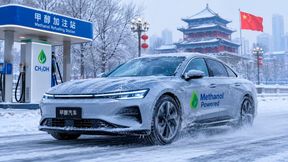
It's sort of like an Ikea cupboard among autonomous driving configurations that the company just unveiled at the China EV 100 Forum trade fair. Its base model 7V+32 TOPS can now easily be upgraded to 7V-100TOPS without the need for new, more expensive sensors, a company spokesperson said. With hardware costs of about 7,000 yuan, which is equivalent to around 908 euros (approx. 963 USD), manufacturers can now offer their buyers autopilots on the highway and within large cities. The latter urban solution, known in China as NOA, is currently taking the market by storm.
By the end of this year, 20 car models from various manufacturers in China are expected to come onto the market using this Chengxing platform technology from DJI Automotive, according to Shen Shaojie, Head of Automotive Systems at DJI Automotive, who made the announcement at the trade fair.
Own algorithms in combination with upgraded hardware features
This announcement could not be independently verified, but it is probably not just pure bragging. They would like to establish the autopilot and other autonomous driving functions in the segment of vehicle models with prices between 80,000 and 250,000 yuan – thus between about 10,400 and 32,400 euros (approx 11,000 and 34,380 USD), said Shen. "Among the suppliers of Smart- Driving products in China and even worldwide, DJI Automotive is a company to be taken seriously," comments the automotive professional portal Gasgoo. The company is making rapid progress towards "ultimate cost-efficiency". Through its own algorithms and upgrading existing hardware configurations, autopilot and other L2 functions can now be realized "without dependency on high-precision maps and Lidar," says DJI Automotive.
New autopilot in the Tiguan L Pro
According to the company, the first affordable gasoline car on the Chinese market equipped with the new autopilot will be the Tiguan L Pro from SAIC Volkswagen. The new model is expected to hit the Chinese market very soon.
In addition to affordable combustion engine vehicles, this cheap hardware solution also brings autonomous driving within the reach of owners of cheap electric cars. Up until now, the market penetration of complex autopilots in the segment below a purchase price of 250,000 yuan, or 32,400 euros (34,380 USD), has been very low.
New player
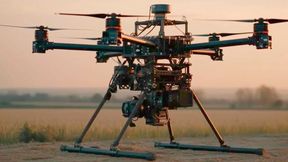
DJI is known worldwide primarily as a manufacturer of drones. But from the perspective of the company founded in Shenzhen in 2006 by robotics enthusiast Frank Wang, autonomous vehicles are actually no different than drones on four wheels. In 2019 they founded DJI Auto and made it an independent company in 2022 as part of a spin-off, which is now operated by its parent company Shenzhen Zhouyu Technology. In just a few years, the drone company spin-off has become one of the largest providers of autonomous driving technology in China, competing with Huawei, which is also active in this segment.
Without frills, but cheap
The development towards affordable, so-called no-frills solutions in autonomous driving is a story that is quite typical for China. Chinese developers and entrepreneurs may not always be the first to invent something, but they are often the first to turn new inventions into mass-market products.
However, this does not mean that the company's C-suite would be less proud than at other tech companies. When introducing his autopilot for 7,000 yuan, Shen Shaojie couldn't resist talking about the difficulties of this product development.
Building a cost-effective solution for autonomous driving is about as complex as trying to carve a "forest out of a watermelon shell," according to the manager. You can imagine how difficult that would be.
Date: 08.12.2025
Naturally, we always handle your personal data responsibly. Any personal data we receive from you is processed in accordance with applicable data protection legislation. For detailed information please see our privacy policy.
Consent to the use of data for promotional purposes
I hereby consent to Vogel Communications Group GmbH & Co. KG, Max-Planck-Str. 7-9, 97082 Würzburg including any affiliated companies according to §§ 15 et seq. AktG (hereafter: Vogel Communications Group) using my e-mail address to send editorial newsletters. A list of all affiliated companies can be found here
Newsletter content may include all products and services of any companies mentioned above, including for example specialist journals and books, events and fairs as well as event-related products and services, print and digital media offers and services such as additional (editorial) newsletters, raffles, lead campaigns, market research both online and offline, specialist webportals and e-learning offers. In case my personal telephone number has also been collected, it may be used for offers of aforementioned products, for services of the companies mentioned above, and market research purposes.
Additionally, my consent also includes the processing of my email address and telephone number for data matching for marketing purposes with select advertising partners such as LinkedIn, Google, and Meta. For this, Vogel Communications Group may transmit said data in hashed form to the advertising partners who then use said data to determine whether I am also a member of the mentioned advertising partner portals. Vogel Communications Group uses this feature for the purposes of re-targeting (up-selling, cross-selling, and customer loyalty), generating so-called look-alike audiences for acquisition of new customers, and as basis for exclusion for on-going advertising campaigns. Further information can be found in section “data matching for marketing purposes”.
In case I access protected data on Internet portals of Vogel Communications Group including any affiliated companies according to §§ 15 et seq. AktG, I need to provide further data in order to register for the access to such content. In return for this free access to editorial content, my data may be used in accordance with this consent for the purposes stated here. This does not apply to data matching for marketing purposes.
Right of revocation
I understand that I can revoke my consent at will. My revocation does not change the lawfulness of data processing that was conducted based on my consent leading up to my revocation. One option to declare my revocation is to use the contact form found at https://contact.vogel.de. In case I no longer wish to receive certain newsletters, I have subscribed to, I can also click on the unsubscribe link included at the end of a newsletter. Further information regarding my right of revocation and the implementation of it as well as the consequences of my revocation can be found in the data protection declaration, section editorial newsletter.