


:quality(80)/p7i.vogel.de/wcms/60/05/6005341bce1a4d93c86ef0acb608cd5c/0130701953v1.jpeg "2025 was a difficult and painful year for Bosch, according to Stefan Hartung, member of the Board of Management. (Image:Robert Bosch GmbH)")
:quality(80)/p7i.vogel.de/wcms/25/79/2579d0f113755b950b8c3da2610ec8f6/0130668369v1.jpeg "Where does my electricity come from? In addition to the price when purchasing, the energy source is also increasingly coming into focus—for example for CO2 balances. (Image:Scholt Energy)")
:quality(80)/p7i.vogel.de/wcms/b8/90/b8906166b2acd38549ad7db16d37c3b8/opening-20ceremony-2400x1349v1.jpeg "SIMTOS 2026 Opens on April 13, Held at KINTEX for 5 Days Through April 17. (Source: SIMTOS)")
:quality(80)/p7i.vogel.de/wcms/4b/bc/4bbcff159df32ad396280fcbcdcc7c1f/0130537896v1.jpeg "A Westcotec camera monitors the speed of forklift trucks in an industrial hall. (Image:Westcotec)")
:quality(80)/p7i.vogel.de/wcms/2d/ab/2dabbcfccd1c2d75c1f5353f8d1c0335/adobestock-480305078-20ipopba-3117x1753v1.jpeg "(Source: © ipopba - stock.adobe.com)")
:quality(80)/p7i.vogel.de/wcms/5d/58/5d58d82b26316019a6428aa85c793c0f/adobestock-567949975-7936x4462v1.jpeg "(Source: © N Felix/peopleimages.com - stock.adobe.com)")
:quality(80)/p7i.vogel.de/wcms/37/17/3717ad595f9bbed1b5867aa1139c1444/0130331513v1.jpeg "Hans Beckhoff is the founder, managing director and shareholder of Beckhoff Automation GmbH & Co. KG. He founded the company immediately after studying physics at the Technical University of Berlin and the University of Münster. Beckhoff can look back on over 45 years of experience in automation technology and holds numerous patents. (Image:Beckhoff Automation)")
:quality(80)/p7i.vogel.de/wcms/c2/e5/c2e58a3c742e1a82f7d4725fa571dd26/0130305463v1.jpeg "Europe has a Primus for humanoids! After the agreement to cooperate and found Primus Robotics (from left): Juan Etxebarria, Head of Business Development at Fagor Arrasate, and Alejandro Echeverría, Managing Director of Funditec Intelligence ... (Picture:Fagor Arrasate)")
:quality(80)/p7i.vogel.de/wcms/8f/3c/8f3ce2d9280f7ffa2ab6b26ad9f9b54c/vermeer-press-release-flex-ver-ast-2486x1399v1.jpeg "Surface Miner for autonomous lunar construction. (Source: Astroport Space Technologies)")
:quality(80)/p7i.vogel.de/wcms/06/f6/06f6c0b0a9315eb409432cba3f157e1d/0130677175v1.jpeg "Cross-sectional view of the 750 kW electric machine with oil cooling and hairpin windings. (Image:Thomas Schriefer / Fraunhofer IISB)")
:quality(80)/p7i.vogel.de/wcms/77/3c/773cb974dd1d6b647b57990a1106c4ae/adobestock-1897067579--c2-a9-20alqausarbonazir-20-20-e2-80-93-20stock-adobe-com-ki-generiertv1.jpeg "Powerful energy storage systems are required in order to be able to use electricity from renewable energies reliably at all times. (Source: © AlqausarBonazir - stock.adobe.com / AI-generated)")
:quality(80)/p7i.vogel.de/wcms/a9/d7/a9d79229ed8ef1f5875fd8cda891bc52/cadfem-fem-positioniertischv1.png "Simulation data is increasingly shaping the effectiveness of engineering processes. (Source: Cadfem)")
:quality(80)/p7i.vogel.de/wcms/9c/82/9c82ffdf1eb9b2d6519c3a7c1aff776c/c10-testfahrtenjanuar2026-3290x1849v1v1.jpeg "It was a difficult winter for Leapmotor on the Chinese market. The manufacturer started the spring with significantly better sales figures. (Image:Stellantis/Leapmotor)")
:quality(80)/p7i.vogel.de/wcms/a7/0e/a70e4486f8b26f75af2c87d8498890da/f1-20with-20flowers-5914x3328v1v1.jpeg "Huawei's automotive unit is doing very well. The division is generating high profits. (Image:Huawei)")
:quality(80)/p7i.vogel.de/wcms/33/b8/33b87575f3e5a8018627f091eefb9c4e/0130516846v1.jpeg "Politicians must move with the times: Berlin and Brussels are called upon to drive prosperity, growth and innovation forward in Germany and Europe and not to slow down branches of industry. (Image:Stefanie Eckardt)")
:quality(80)/p7i.vogel.de/wcms/5c/88/5c88bab945405f3ed0d3ce3d1cbd28d0/p90634043-highres-bmw-hydrogen-flat-st-6000x3373v1v1.jpeg "BMW has developed a new refueling system for the iX5 Hydrogen. (Image:BMW)")
:quality(80)/p7i.vogel.de/wcms/00/0f/000f67225299d0ad9123896d49aa25e5/0130564619v1.jpeg "Infrastructure for AI agents: Intel and Sambanova share computing load across three processor types (Image:Gemini / AI-generated)")
:quality(80)/p7i.vogel.de/wcms/e4/54/e454fcca7009b106cda2e228992a7a47/0130565746v1.jpeg "Hand in hand: Intel CEO Lip-Bu Tan enters into a strategic partnership with his company in the grandiose Terafab project. But the scope, timeframe and purpose remain vague. (Image:SemWiki/X)")
:quality(80)/p7i.vogel.de/wcms/22/32/22328957aafda3529c5b0069c0790595/0130537290v1.jpeg "Human knowledge, artificial intelligence: intelligent data processing directly at the point of use requires the interaction of AI, hardware expertise and concrete application experience. (Image:Dall-E / AI-generated)")
:quality(80)/p7i.vogel.de/wcms/ed/ff/edfff4eab0635db8530fcc8da1943fd4/0130612359v1.jpeg "Using a special microlens array, Korean researchers have developed a wide-angle camera that is less than 1 mm (0.04 inches) thick and offers a field of view of 140 degrees. (Image:freely licensed)")
:fill(fff,0)/images.vogel.de/vogelonline/companyimg/76800/76895/65.jpg "FAULHABER_120mm.jpg ()")
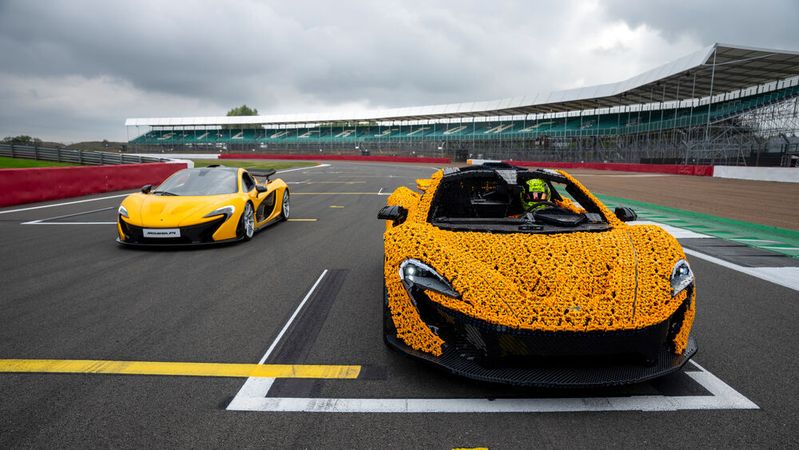
:quality(80)/p7i.vogel.de/wcms/9a/c0/9ac0f82f0a198508f0b45499de5f30c1/0120933757v1.jpeg "Lando Norris, a racer for the McLaren Formula 1 team, had the opportunity to take the LEGO model of the McLaren P1 around the track at Silverstone.(Image: © Jeff Moore / McLaren / LEGO Group)")
:quality(80)/p7i.vogel.de/wcms/9d/74/9d7491c8d3fa074a3a59e296c9e8c8b8/0120933703v1.jpeg "Lando Norris, a racer for the McLaren Formula 1 team, had the opportunity to take the LEGO model of the McLaren P1 around the track at Silverstone.(Image: © Jeff Moore / McLaren / LEGO Group)")
:quality(80)/p7i.vogel.de/wcms/41/a3/41a33888003f142afd429a1b71dd8448/0120933702v1.jpeg "Lando Norris, a racer for the McLaren Formula 1 team, had the opportunity to take the LEGO model of the McLaren P1 around the track at Silverstone.(Image: © Jeff Moore / McLaren / LEGO Group)")
:quality(80)/p7i.vogel.de/wcms/65/ac/65ac22f1257a2e3fd96a944bec3a6a3e/0120933755v1.jpeg "Lando Norris, a racer for the McLaren Formula 1 team, had the opportunity to take the LEGO model of the McLaren P1 around the track at Silverstone.(Image: © Jeff Moore / McLaren / LEGO Group)")
Date: 08.12.2025
Naturally, we always handle your personal data responsibly. Any personal data we receive from you is processed in accordance with applicable data protection legislation. For detailed information please see our privacy policy.
Consent to the use of data for promotional purposes
I hereby consent to Vogel Communications Group GmbH & Co. KG, Max-Planck-Str. 7-9, 97082 Würzburg including any affiliated companies according to §§ 15 et seq. AktG (hereafter: Vogel Communications Group) using my e-mail address to send editorial newsletters. A list of all affiliated companies can be found here
Newsletter content may include all products and services of any companies mentioned above, including for example specialist journals and books, events and fairs as well as event-related products and services, print and digital media offers and services such as additional (editorial) newsletters, raffles, lead campaigns, market research both online and offline, specialist webportals and e-learning offers. In case my personal telephone number has also been collected, it may be used for offers of aforementioned products, for services of the companies mentioned above, and market research purposes.
Additionally, my consent also includes the processing of my email address and telephone number for data matching for marketing purposes with select advertising partners such as LinkedIn, Google, and Meta. For this, Vogel Communications Group may transmit said data in hashed form to the advertising partners who then use said data to determine whether I am also a member of the mentioned advertising partner portals. Vogel Communications Group uses this feature for the purposes of re-targeting (up-selling, cross-selling, and customer loyalty), generating so-called look-alike audiences for acquisition of new customers, and as basis for exclusion for on-going advertising campaigns. Further information can be found in section “data matching for marketing purposes”.
In case I access protected data on Internet portals of Vogel Communications Group including any affiliated companies according to §§ 15 et seq. AktG, I need to provide further data in order to register for the access to such content. In return for this free access to editorial content, my data may be used in accordance with this consent for the purposes stated here. This does not apply to data matching for marketing purposes.
Right of revocation
I understand that I can revoke my consent at will. My revocation does not change the lawfulness of data processing that was conducted based on my consent leading up to my revocation. One option to declare my revocation is to use the contact form found at https://contact.vogel.de. In case I no longer wish to receive certain newsletters, I have subscribed to, I can also click on the unsubscribe link included at the end of a newsletter. Further information regarding my right of revocation and the implementation of it as well as the consequences of my revocation can be found in the data protection declaration, section editorial newsletter.
:quality(80)/p7i.vogel.de/wcms/43/6b/436bf9dac40c2881309eb3d84b971f04/0125944903v1.jpeg "Visually, the new RSP25 Rosequartz stands out from its predecessor: its color matches its name with pink. (Image:Stöber Drive Technology GmbH + Co. KG)")
:quality(80)/p7i.vogel.de/wcms/97/6b/976b8b47233ce9ba3ac56dca6ac6b3a9/0127259658v1.jpeg "The technologies in the Ferrari Elettrica. (Image:Ferrari)")