The first all-electric car from the traditional sports car manufacturer Ferrari was unveiled on October 9, 2025 with technical details on the chassis and components. Ferrari builds all the components itself and aims to deliver record-breaking energy and power density.
The technologies in the Ferrari Elettrica.
(Image: Ferrari)
While Scuderia Ferrari tends to slow down a little in Formula 1, the traditional sports car manufacturer Ferrari S.p.A. is going full throttle. At the Capital Markets Day 2025, the production-ready chassis and component design for the first all-electric Ferrari, the Ferrari Elettrica, was presented. Having already experimented with hybrids and plug-in hybrids derived from Formula 1, such as the Ferrari LaFerrari and the Ferrari SF90 Stradale, the company is now working on the Elettrica. The special thing about this is that Ferrari develops and builds every essential component of the vehicle itself.
The designs of the Elettrica show some innovative ideas that stand out when compared to other electric super sports cars. The in-house developments range from synchronous motors with permanent magnets and Halbach rotors, inverters, battery modules and cast parts through to the software control system. This ensures one thing above all: technological independence, which is accompanied by more than 60 patents for these developments. Ferrari has also supplied a whole collection of images of the technologies.
The plans also speak of technical efficiency: the rear axle achieves a power density of 4.8 kW/kg, the battery an energy density of 195 Wh/kg. With a system voltage of around 880 volts, the drive operates at racing car level, which enables high continuous power, short charging times and a stable thermal balance. The interior of the Elettrica will be unveiled at the beginning of 2026, and you will be able to admire the model itself in spring 2026.
Battery in the Chassis
The entire vehicle is designed for performance and weight optimization. 75 percent of the chassis is made of recycled aluminum, which saves Ferrari around 6.7 tons of CO₂ per vehicle. At the same time, the battery serves not just as an energy store, but as a load-bearing structural element: it is integrated into the vehicle floor, has a crash-absorbing effect and increases torsional rigidity. 85 percent of the modules were positioned as low as possible between the front and rear axles in order to lower the center of gravity by 80 millimeters (compared to a combustion engine) and thus improve driving dynamics.
To achieve this, Ferrari combines its latest 48-volt active chassis generation with four independent permanent magnet synchronous motors with Halbach rotors. "The front axle has a power density of 3.23 kW/kg and an efficiency of 93 percent at maximum power, while the rear axle achieves a power density of 4.8 kW/kg and the same efficiency. The front inverter with an output of up to 300 kW is fully integrated into the axle and weighs just 9 kilograms," reports Ferrari. The battery has an energy density "of almost 195 Wh/kg". These systems are controlled by a Vehicle Control Unit that updates the relevant parameters 200 times per second - a level of control precision reminiscent of Formula 1.
The central element is the Ferrari Power Pack (FPP), a module with silicon carbide-based power switches, gate driver boards and an integrated cooling system. The switching frequency is between 10 and 42 kHz, depending on requirements, and has been tuned for efficiency, thermal management and acoustic comfort. The result is a precise, fast torque distribution that combines high performance with a compact design.
Nothing Works Without Sound
Another novelty is the acoustic approach: the Elettrica does without artificially generated engine sound. Instead, a sensor records the mechanical vibrations of the drivetrain, which are then amplified and transmitted to the interior via the body structure. The result is an authentic, mechanical-electrical sound that adapts dynamically to the driving behavior and provides the driver with tangible feedback.
Date: 08.12.2025
Naturally, we always handle your personal data responsibly. Any personal data we receive from you is processed in accordance with applicable data protection legislation. For detailed information please see our privacy policy.
Consent to the use of data for promotional purposes
I hereby consent to Vogel Communications Group GmbH & Co. KG, Max-Planck-Str. 7-9, 97082 Würzburg including any affiliated companies according to §§ 15 et seq. AktG (hereafter: Vogel Communications Group) using my e-mail address to send editorial newsletters. A list of all affiliated companies can be found here
Newsletter content may include all products and services of any companies mentioned above, including for example specialist journals and books, events and fairs as well as event-related products and services, print and digital media offers and services such as additional (editorial) newsletters, raffles, lead campaigns, market research both online and offline, specialist webportals and e-learning offers. In case my personal telephone number has also been collected, it may be used for offers of aforementioned products, for services of the companies mentioned above, and market research purposes.
Additionally, my consent also includes the processing of my email address and telephone number for data matching for marketing purposes with select advertising partners such as LinkedIn, Google, and Meta. For this, Vogel Communications Group may transmit said data in hashed form to the advertising partners who then use said data to determine whether I am also a member of the mentioned advertising partner portals. Vogel Communications Group uses this feature for the purposes of re-targeting (up-selling, cross-selling, and customer loyalty), generating so-called look-alike audiences for acquisition of new customers, and as basis for exclusion for on-going advertising campaigns. Further information can be found in section “data matching for marketing purposes”.
In case I access protected data on Internet portals of Vogel Communications Group including any affiliated companies according to §§ 15 et seq. AktG, I need to provide further data in order to register for the access to such content. In return for this free access to editorial content, my data may be used in accordance with this consent for the purposes stated here. This does not apply to data matching for marketing purposes.
Right of revocation
I understand that I can revoke my consent at will. My revocation does not change the lawfulness of data processing that was conducted based on my consent leading up to my revocation. One option to declare my revocation is to use the contact form found at https://contact.vogel.de. In case I no longer wish to receive certain newsletters, I have subscribed to, I can also click on the unsubscribe link included at the end of a newsletter. Further information regarding my right of revocation and the implementation of it as well as the consequences of my revocation can be found in the data protection declaration, section editorial newsletter.
The system is complemented by a software-based power characteristic called Torque Shift Engagement, which emulates a classic Ferrari torque curve. Five power levels can be selected via shift paddles on the steering wheel, which feel like gears and create the feeling of steadily increasing acceleration without violating the physical limits of an electric motor. Further details from the development and design of the Elettrica can be found in the extensive article on the Ferrari website. (sb)



:quality(80)/p7i.vogel.de/wcms/51/1b/511b420dbcc296aec09e3bffb051b8a8/0133581587v1.jpeg "The cables connect numerous machine components—often in confined spaces. (Image:Helu)")
:quality(80)/p7i.vogel.de/wcms/b5/67/b5676f3bfb36251ed31f9a0cccf650b6/0133167827v1.jpeg "Thanks to JumboFlex Generation 2, employees can effortlessly move wheelchairs weighing as much as 40 kilograms. (Image:Lard)")
:quality(80)/p7i.vogel.de/wcms/5e/c6/5ec615b7a51440f668259f2af9158cb9/0132654694v1.jpeg "Strategic Partnerships in Industry: As buyers and restructuring partners, Chinese investors are increasingly helping to preserve jobs in Germany. (Image: ©Anatolii Rymarchuk - stock.adobe.com)")
:quality(80)/p7i.vogel.de/wcms/eb/2b/eb2bd1b8487afe577b37363cd02f16ff/0113143253v1.jpeg "In our China Market Insider, we regularly provide you with relevant information straight from China. (Image:© Eisenhans - stock.adobe.com)")
:quality(80)/p7i.vogel.de/wcms/aa/3e/aa3e2603a812f8e7d33c00ba8ae28c9f/0133507886v1.jpeg "With the Iggy Rob, igus is bringing a humanoid robot into factories for a price of 47,999 euros ($54,718). (Image: igus)")
:quality(80)/p7i.vogel.de/wcms/92/64/92645c64ffbb6980976d39102388d120/0113143253v1.jpeg "In our China Market Insider, we regularly provide you with relevant information straight from China. (Image:© Eisenhans - stock.adobe.com)")
:quality(80)/p7i.vogel.de/wcms/c7/05/c70542511e0824ee491f7b55e21fa429/0133598424v1.jpeg "In logistics, AI is often implemented only on a case-by-case basis; data is stored in separate systems, and inventory levels, status values, and priorities are not defined consistently. (Image: ©m-project - stock.adobe.com)")
:quality(80)/p7i.vogel.de/wcms/3a/9c/3a9c1fd546e1f041b86bb1d03cf39101/0133610524v1.jpeg "The Mason W-01 combines industrial-grade humanoid hardware, Physical AI-based perception, and autonomous task planning. (Image:Nova X Robotics)")
:quality(80)/p7i.vogel.de/wcms/e7/94/e794290f265afbd0ffc7a06c4fe9d425/adobestock-1887113836--hypnotics-14-stock-adobe-com-ki-generiertv1.jpeg "In both autonomous driving and industrial production, there is growing skepticism as to whether full autonomy is always desirable. (Source: © Hypnotics 14 – stock.adobe.com / AI-generated)")
:quality(80)/p7i.vogel.de/wcms/a8/71/a8712e5c6ef536228444ab5275cedfe2/adobestock-340905887--gorodenkoff-stock-adobe-comv1.jpeg "A new position paper outlines the conditions that the business community, academia, and policymakers must jointly establish in order to ensure the long-term viability of industry in Germany and Europe. (Source: © Gorodenkoff – stock.adobe.com)")
:quality(80)/p7i.vogel.de/wcms/7d/eb/7deb25ca674fa4c781a9d1fab083f7cf/parker-entwicklungszentrum-hresv1.jpeg "The centerpiece of the Parker Center for Drive and Control Technology in Offenbach is the exhibition area. (Source: Parker Hannifin)")
:quality(80)/p7i.vogel.de/wcms/3d/ff/3dff5e51c24b30c8dc37c1d024887157/0133602931v1.jpeg "Just a few years ago, SpaceX specialists were working on the world’s largest rocket—the Starship. Now, Elon Musk’s company has reached a milestone during a test flight: Earth’s orbit! But there was also a downside... (Image: SpaceX)")
:quality(80)/p7i.vogel.de/wcms/78/ab/78abbfbab0565fabb19efe637aea30e8/nio-power-swap-station-4-china-guangzhou-2024-1400x933-jpgv1.webp "Nio and Geely are collaborating on battery replacement for electric cars. (Source: Nio)")
:quality(80)/p7i.vogel.de/wcms/2e/58/2e58c664e733dd182666606f850c5da4/0133400664v1.jpeg "The IM6 is sort of the crossover version of the IM5. (Image:MG Motor)")
:quality(80)/p7i.vogel.de/wcms/40/5f/405f41f4075e8798878011f0932a8195/0133509065v1.jpeg "Caruso has integrated Hyundai into its platform. (Image:Hyundai)")
:quality(80)/p7i.vogel.de/wcms/06/98/06989beb3f95b8fb06d71190c86cffde/tabletv1.jpeg "The cockpit view during a test drive in the simulator. (Source: Uccello et al., IEEE OJITS 2026)")
:quality(80)/p7i.vogel.de/wcms/40/34/4034915f85470ad8264659267e4f02d0/0133655653v1.jpeg "Cariad, Volkswagen's software subsidiary, continues to struggle. Now, another round of layoffs has been announced, which will result in the loss of many jobs ... (Image:Cariad)")
:quality(80)/p7i.vogel.de/wcms/e4/2a/e42af12e2a0816bb3d25fac9932903e9/0133646920v1.jpeg "TSMC's U.S. headquarters in Arizona: According to various media reports, the world's largest contract semiconductor manufacturer may be planning to build up to six additional fabs in the state of Texas. (Image:TSMC)")
:quality(80)/p7i.vogel.de/wcms/de/8c/de8c694e560ce8e8d7d43fa5b91917b3/0133668420v1.jpeg "Open-source AI tools: DeepSeek and Huawei are making programming tools for Ascend processors available, with the aim of simplifying development, chip communication, and AI computations on Huawei's hardware—and thereby intensifying competition with Nvidia. (Image:Dall-E / AI-generated)")
:quality(80)/p7i.vogel.de/wcms/86/25/8625a62499a6e70e629a2ddde2f01dcb/0133671173v1.jpeg "\"OpenAI\" has repeatedly experienced problems in which AI models have accessed the internet without authorization in order to carry out their tasks. The company has now fired three people whom it no longer trusts ... (Image:AI-generated)")
:fill(fff,0)/images.vogel.de/vogelonline/companyimg/76800/76895/65.jpg "FAULHABER_120mm.jpg ()")
:fill(fff,0)/p7i.vogel.de/companies/69/88/69882c428938e/tmts2026-ticec-banner-en-2000px.png "tmts2026-ticec-banner-en-2000px (https://www.tmts.tw/en)")
:fill(fff,0)/p7i.vogel.de/companies/69/de/69de1b7403b0d/simtos-logo.jpeg "simtos-logo (SIMTOS)")
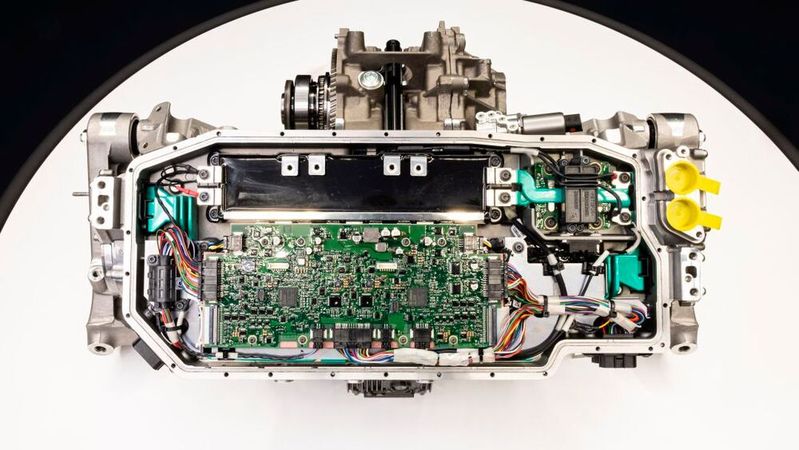
:quality(80)/p7i.vogel.de/wcms/f1/ff/f1ff4a41ef3c99899a989080644d71d6/0127259580v1.jpeg "The technologies in the Ferrari Elettrica.(Image: Ferrari)")
:quality(80)/p7i.vogel.de/wcms/52/53/5253ed17abe1a3e4604e9f0b8db81079/0127259581v1.jpeg "The technologies in the Ferrari Elettrica.(Image: Ferrari)")
:quality(80)/p7i.vogel.de/wcms/3e/66/3e663b11eb68cb2715e79b31b66525d3/0127259579v1.jpeg "The technologies in the Ferrari Elettrica.(Image: Ferrari)")
:quality(80)/p7i.vogel.de/wcms/3a/85/3a85b558ae9a0571bf4d65b9a1deddc5/0127259590v1.jpeg "The technologies in the Ferrari Elettrica.(Image: Ferrari)")
:quality(80)/p7i.vogel.de/wcms/89/8b/898b6a369ef8578808b4a9005267850c/0127487852v1.jpeg "Ferrari has unveiled technical details of its electric model Elettrica, including the newly developed aluminum chassis. (Image:Ferrari)")
:quality(80)/p7i.vogel.de/wcms/15/75/1575ab89b889911c692bbb7e7b956697/0127487457v1.jpeg "The new hybrid concept from Horse also includes heat pumps and the use of the refrigerant R290. (Image:Horse Powertrain)")