Cobots, mobile robots, humanoid robots - robotics is developing at breakneck speed thanks to new technologies such as artificial intelligence (AI). Will production with complete automation (dark factory) soon even be realistic?
The latest robotics study by Reichelt Elektronik, conducted by the independent institute OnePoll, takes a look at the production facilities of German industry: What types of robots are most frequently used there and will cobots replace classic stationary robots in the future?
Robotics in German Factories—The Status Quo
As one of the countries with the highest robot density in the world, it is not surprising that 85% of the companies surveyed use robots. More than half (55 percent) use stationary robots, which are typically permanently installed and work automatically in enclosed or demarcated areas and without direct contact with humans. In addition, 41 percent already use smaller, lighter models such as cobots or other robotic arms. These can be used flexibly and are often explicitly designed to work side by side with humans.
Almost as many (39%) used mobile robots, such as self-propelled platforms or mobile manipulators. These are rolling or walking robots that are equipped with an additional gripper arm. Seven percent have even invested in a humanoid robot - i.e. a robot that is modeled on a human in terms of body shape and movement.
The plans for investment in robotics also show the high level of interest among companies. Most (41%) are planning to purchase cobots within the next two years, while more than a third (36%) are thinking about buying a mobile robot. In contrast, only 32% are planning to invest in stationary robots. One in five companies (20%) would like to purchase a humanoid robot within the next two years.
Will Cobots Replace Stationary Robots?
So are cobots taking over from stationary robots? Almost two thirds (63%) of respondents said they would prefer robotic arms to stationary robots in the future. This decision is not only due to the lower price. Although 57% say that their decision to choose a cobot was primarily driven by price, even more (74%) believe that cobots offer capabilities that traditional robots do not have.
"There is no doubt that smaller, flexible robot arms are currently experiencing great interest," comments Malte Janßen, Product Management, Robotics & Electromechanical Components at Reichelt Elektronik. "With the rapidly advancing technical innovations of recent years, they have gained a firm place in factories. Cobots open up new opportunities, especially for small and medium-sized companies. The survey shows that 57 percent had not used robots before investing in cobots. Although stationary robots will always be needed, especially for heavy loads or high performance requirements, the survey clearly shows (88 percent in favor): Cobots have established themselves as an important addition to classic stationary robots."
New Technologies Expand Areas of Application
Most companies rely on robots when work steps are particularly physically demanding (53%) or repetitive (45%). Most frequently, they perform pick-and-place work steps (46 percent) or transport objects (44 percent). However, there are also a large number of more specialized work steps for which they are regularly used - including cutting, soldering, palletizing, packaging or assembling. Humanoid robots, which are currently only rarely used, are intended to assist humans with physically strenuous tasks (54%) or perform repetitive tasks. Individual companies also stated that they use humanoid robots in AI-controlled test environments to automate further work steps.
Two technologies have helped companies the most in recent years to make their use of robots even more efficient: The use of AI, which allows robots to perform even more complex tasks (42 percent) and better sensor technology, which allows robots to recognize the environment even better (also 42 percent). Other useful technologies include sensors that give robots an even more precise sense of touch (32%) and more powerful software that enables robots to perform more complex tasks (31%). This includes, for example, the control of robot arms with multiple joints and in different directions.
On the Way to the Dark Factory—Soon to be 100 Percent Automatic?
Today, robots perform up to 40 percent of tasks in most companies (69 percent). Just under ten percent have more than 60 percent of the manufacturing process carried out by robots. In the opinion of most companies, this is set to change. According to 59% of respondents, the manufacturing process will be fully automated in just five years' time. Almost as many (56%) also agree that robotics is the key to combating the shortage of skilled workers now and in the future.
Date: 08.12.2025
Naturally, we always handle your personal data responsibly. Any personal data we receive from you is processed in accordance with applicable data protection legislation. For detailed information please see our privacy policy.
Consent to the use of data for promotional purposes
I hereby consent to Vogel Communications Group GmbH & Co. KG, Max-Planck-Str. 7-9, 97082 Würzburg including any affiliated companies according to §§ 15 et seq. AktG (hereafter: Vogel Communications Group) using my e-mail address to send editorial newsletters. A list of all affiliated companies can be found here
Newsletter content may include all products and services of any companies mentioned above, including for example specialist journals and books, events and fairs as well as event-related products and services, print and digital media offers and services such as additional (editorial) newsletters, raffles, lead campaigns, market research both online and offline, specialist webportals and e-learning offers. In case my personal telephone number has also been collected, it may be used for offers of aforementioned products, for services of the companies mentioned above, and market research purposes.
Additionally, my consent also includes the processing of my email address and telephone number for data matching for marketing purposes with select advertising partners such as LinkedIn, Google, and Meta. For this, Vogel Communications Group may transmit said data in hashed form to the advertising partners who then use said data to determine whether I am also a member of the mentioned advertising partner portals. Vogel Communications Group uses this feature for the purposes of re-targeting (up-selling, cross-selling, and customer loyalty), generating so-called look-alike audiences for acquisition of new customers, and as basis for exclusion for on-going advertising campaigns. Further information can be found in section “data matching for marketing purposes”.
In case I access protected data on Internet portals of Vogel Communications Group including any affiliated companies according to §§ 15 et seq. AktG, I need to provide further data in order to register for the access to such content. In return for this free access to editorial content, my data may be used in accordance with this consent for the purposes stated here. This does not apply to data matching for marketing purposes.
Right of revocation
I understand that I can revoke my consent at will. My revocation does not change the lawfulness of data processing that was conducted based on my consent leading up to my revocation. One option to declare my revocation is to use the contact form found at https://contact.vogel.de. In case I no longer wish to receive certain newsletters, I have subscribed to, I can also click on the unsubscribe link included at the end of a newsletter. Further information regarding my right of revocation and the implementation of it as well as the consequences of my revocation can be found in the data protection declaration, section editorial newsletter.
In recent years, the budget for robotics investments has already increased in almost one in three companies (62%) and even significantly for 16%. In order to be able to invest in robotics even more easily, companies would particularly like to see cheaper models (38%), simpler programming (28%), more options for personalizing robots for individual applications (27%) and easier access to funding (also 27%).
The survey was conducted in March 2026 by the survey institute OnePoll on behalf of Reichelt Elektronik. 500 decision-makers from the fields of technology and manufacturing in German industry were surveyed. (mk)



:quality(80)/p7i.vogel.de/wcms/9e/23/9e23111e49d73012e9e3b7c69428ad5c/0134019347v1.jpeg "The Dominant VA45 high-helix tap from Bass, made of lead-free brass. The long chips, which result from the absence of lead, are clearly visible. (Image:Bass, Inc.)")
:quality(80)/p7i.vogel.de/wcms/1d/09/1d0999956ef87709b72ab1d0402ba207/csf-minis-gruppe-final-01-outputv1.jpeg "Since mid-2026, Harmonic Drive has been offering its CSF Mini gearheads in size 7 as well, in six variants designed for different installation scenarios. (Source: Harmonic Drive)")
:quality(80)/p7i.vogel.de/wcms/ab/08/ab08675922c3a7edea45128248b45b00/0133857009v1.jpeg "In the aerospace industry—one of the most demanding sectors of all—the Shanghai-based company TOPNC has already made a name for itself. (Image:TOPNC)")
:quality(80)/p7i.vogel.de/wcms/ff/48/ff48b1154746e79128935f28bd73ba0e/0113143253v1.jpeg "In our China Market Insider, we regularly provide you with relevant information straight from China. (Image:© Eisenhans - stock.adobe.com)")
:quality(80)/p7i.vogel.de/wcms/89/01/890193a30c52ffd4811d18db82170952/0113143253v1.jpeg "In our China Market Insider, we regularly provide you with relevant information straight from China. (Image:© Eisenhans - stock.adobe.com)")
:quality(80)/p7i.vogel.de/wcms/6b/8a/6b8ac7cd85db2d1d1f6ab30957648711/schaeffler-news-taicanglighthouse6v1.jpeg "At the Lighthouse Factory, robots assemble linear and rotary actuators, among other components. (Source: Schaeffler)")
:quality(80)/p7i.vogel.de/wcms/4f/5a/4f5a2417df55dae5967e90b331e0bbc5/physical-ai-robotics-ariv1.jpeg "With new hardware and software solutions, the productive use of AI in industry is becoming increasingly prominent. (Source: Nvidia)")
:quality(80)/p7i.vogel.de/wcms/ba/d6/bad6e38e53c7443934b4c9a5a70e14d7/a264823-largev1.jpeg "At the Production Lab, where Audi tests future technologies for production and logistics, mobile humanoid robots from Agile Robots retrieve parts from material bins and place them in sequence carts. (Audi AG)")
:quality(80)/p7i.vogel.de/wcms/c3/68/c368b4f6821557ec497c64bc17fe9f8d/adobestock-2051843806--kaliel-stock-adobe-com-ki-generiertv1.jpeg "To truly harness the full potential of virtual product development, teams and management must radically change their mindset. (Source: © kaliel – stock.adobe.com_AI-generated)")
:quality(80)/p7i.vogel.de/wcms/a3/c1/a3c19e028b66a6fd7c373ab94981631d/paprika-gripperv1.jpeg "For the final, additively manufactured gripper base, SoftGripping chose PA 2200, a material based on polyamide 12 (PA12). It offers balanced mechanical properties and high load-bearing capacity, making it ideal for robust gripper solutions with integrated pneumatics. (Source: SoftGripping GmbH)")
:quality(80)/p7i.vogel.de/wcms/51/b8/51b8e08d2105fdd9952aff385f154192/graphic-2-adma1v1.png "The new surface hardening process enhances the performance of corrosion-resistant alloys by improving their tribological and mechanical surface properties, while preserving the properties of the base material. (Source: Bodycote)")
:quality(80)/p7i.vogel.de/wcms/96/ef/96effc239916cb7e0f396ab75627b8c0/image-space-testingv1.jpeg "Two scientists in front of a vacuum chamber used for testing: As technical instruments for spaceflight become more sensitive, the test facilities are becoming a critical system. (Source: Busch Group)")
:quality(80)/p7i.vogel.de/wcms/ba/d3/bad3d62389a59fe3cdbac386a0dce64b/0134098250v1.jpeg "Following initial tests with its robotaxis in Europe, Pony.ai now plans to bring robot trucks to Europe as well. (Image:Pony.ai)")
:quality(80)/p7i.vogel.de/wcms/78/d1/78d124651f6149aa9f33913fc00ef98a/bertrandt-standort-tschechienv1.jpeg "Bertrandt has opened a new facility in the Czech Republic—near Škoda. (Source: Bertrandt)")
:quality(80)/p7i.vogel.de/wcms/03/9b/039b002b36a5983bb1bb0fefafcdf3dc/0134083586v1.jpeg "After Volkswagen announced last week that many electric cars of various models worldwide would have to be recalled due to battery problems, the specific number of affected vehicles has now been determined. In Germany, the number is around 10,000 ... (Image: Volkswagen)")
:quality(80)/p7i.vogel.de/wcms/3a/0b/3a0b7a7fc3898a25a0c849690d641390/0134084456v1.jpeg "After Elon Musk had previously been rather cautious in his comments about a long-discussed merger between Tesla and SpaceX, things now seem to be taking shape—or so it appears... (Image: Tesla)")
:quality(80)/p7i.vogel.de/wcms/cd/23/cd239aa506b3ace30e62f44c83fa31ca/0134051508v1.jpeg "Figure 1: Schematic representation of the DAB (Dual Active Bridge) topology. (Image:Texas Instruments)")
:quality(80)/p7i.vogel.de/wcms/8b/35/8b35660420abba32fb891a4c5cc42fbd/0134018092v1.jpeg "Long-range UVC LED with lens and reflector: Close-up of a square LED with a transparent, dome-shaped lens on a dark base plate. The hermetically sealed housing ensures greater reliability and durability under demanding environmental conditions. (Image:FBH_Schurian)")
:quality(80)/p7i.vogel.de/wcms/a4/1c/a41cd52e0a26e5173bd4e1f834d4f7f4/0134025034v1.jpeg "As chips become more complex, the demands on semiconductor testing increase. Teradyne and FormFactor plan to combine their technologies for future applications. (Image:freely licensed)")
:quality(80)/p7i.vogel.de/wcms/7b/64/7b64e9fe595b88d2b01ed79e0f2baf94/pm-weidm-ller-elatec-substation-line-switchv1.jpeg "Caption: The Substation Line managed switches can accommodate up to three HSR/PRP modules. (Image:Weidmüller)")
:fill(fff,0)/images.vogel.de/vogelonline/companyimg/76800/76895/65.jpg "FAULHABER_120mm.jpg ()")
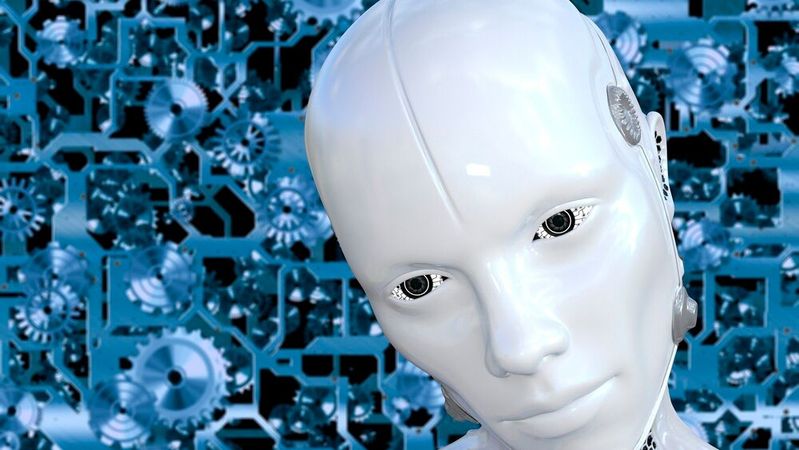
:quality(80)/p7i.vogel.de/wcms/d2/c0/d2c0591eb93a0b21997ec51d0965f4c2/0131063063v1.jpeg "The development of humanoid robots is based on an interplay of various technologies. (Image:reichelt/Getty)")
:quality(80)/p7i.vogel.de/wcms/c7/12/c712b688dba2262fa3906e3a4c1d2f7d/humanoide-robotikv1.jpeg "“Find a job that the humanoid can actually do, and understand your processes”—that’s the advice robotics expert Sebastian Prinz gives companies so they can benefit from the technology in the long term. (Source: Fraunhofer IEM / Janosch Gruschczyk)")