Nvidia has reported its business figures for the second quarter of 2025, and despite growth, the mega-growth of recent years is tapering off. This is also related to the regulation of AI chips for China. However, customers from the People's Republic might become rare in the future anyway.
Nvidia is also generating good revenues in Q2 of fiscal year 2026. Nevertheless, uncertainties regarding the Chinese market remain.
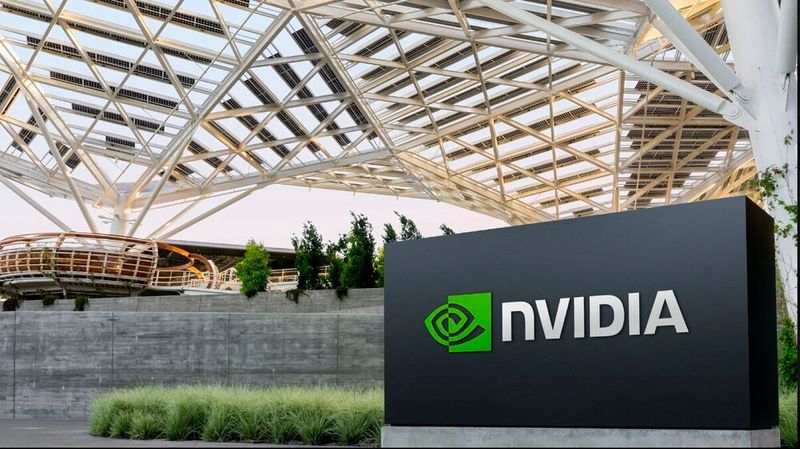
(Image: Nvidia)
Anyone who is a shareholder in Nvidia has had little to complain about in recent years and will continue to be delighted these days, as the figures for the second quarter of fiscal year 2026 look solid on their own. Nvidia continues to benefit massively from the data center business. Revenue, profit, and free cash flow are rising sharply, and margins remain at an exceptionally high level, even without the special effect from H20 inventory. The outlook promises an even stronger Q3, driven by the ramp-up of the Blackwell generation.
Despite double-digit growth rates compared to the previous year, such as in data centers (+56 percent), gaming (+49 percent), and automotive (+69 percent), and a 56 percent increase in revenue, an end to the steep rise of the AI leader is becoming apparent. Nvidia has increased its quarterly revenue within a year from $29.4 billion to $46.7 billion, and its net income from $16.6 billion to $26.4 billion. Even a gross margin of 72.4 percent is impressive.
However, even Nvidia officials view the U.S. export restrictions on AI chips and the current developments in China surrounding backdoor speculations regarding the H20 chip, specifically reduced for the People’s Republic, as a risk. This is reflected, for instance, in a slight loss in Nvidia's stock value after the Frankfurt Stock Exchange opened, despite a revenue forecast for the third quarter of $54 billion and margins potentially exceeding 73 percent. Nvidia downplays the concern: demand impulses from the U.S., Europe, and the Asia-Pacific region remain extremely strong and could offset market weaknesses in China. Despite the minor setbacks, the stock remains significantly higher year-to-date.
Is China dwindling as a market for AI chip revenues?
Nvidia generated no revenue from H20 chips in China in Q2, as they are affected by U.S. export restrictions. Approximately $180 million worth of H20 inventory previously reserved for the Chinese market was released and redirected to other regions. Additionally, the company recorded about $650 million in H20 revenue outside of China—in markets not subject to the export restrictions.
Even if Nvidia were able to sell H20 and subsequent market-specific AI chips in the People's Republic in the future, the question arises whether the vast market would even want this hardware by then. Chinese companies have long been encouraged by the government to switch to domestic hardware in many industrial sectors, which is now quite comparable to Western products.
In the field of data centers, there is also an effort to become independent of Western providers, as can be inferred from a report by the Financial Times. According to the report, China is planning to triple the production of AI processors. "The report cites sources and notes that a factory dedicated to manufacturing Huawei AI chips is expected to begin production by the end of this year, with two additional plants likely to start operations in 2026," write the authors of Trendforce with reference to the FT report. Once these fabs reach full production capacity—who owns them is currently unknown—the combined capacity of these three facilities could surpass the current production of comparable manufacturing lines at Semiconductor Manufacturing International Corporation (SMIC). As a reminder: SMIC is currently the world's third-largest contract manufacturer after TSMC and Samsung.
Deepseek as a major client
And speaking of SMIC: The report also points out that SMIC plans to double its production capacity for 7-nanometer chips next year. This is currently the most advanced process used in mass production in China. This, in turn, allows smaller Chinese chip manufacturers, such as Cambricon and Biren, to secure additional SMIC production capacities and generate significant revenue. CNBC reported, for example, that Cambricon's revenues in the first half of 2025 rose by 4,000 percent compared to the same period the previous year.
China's OpenAI competitor Deepseek has reportedly conducted small tests with Chinese chips to demonstrate technical feasibility and announced that its models have adopted an FP8 data format tailored to the next generation of domestic chips. At the same time, Huawei's 910D and Cambricon's 690 are considered products that align with Deepseek's preferred standards. It sounds like the Chinese market may no longer play a significant role for Nvidia in the future.
Blackwell as a growth driver outside China
Even as China increasingly builds up its own chip capacities, Nvidia remains well-positioned globally. The ramp-up of the Blackwell generation reportedly brings an exceptional technological leap—particularly through new rack-scale designs that can optimize entire data center architectures. These systems are being used by hyperscalers worldwide to train and deploy the next wave of large AI models.
Additionally, the dynamics are shifting: Non-Chinese hyperscalers in the U.S., Europe, and the Asia-Pacific region are driving the majority of demand. In Europe, for instance, governments and industries are specifically promoting the development of an industrial AI cloud based on Blackwell systems. This creates a counterbalance to China—and Nvidia benefits from being the only provider technologically capable of delivering complete platforms from chip to rack. (sb)
Date: 08.12.2025
Naturally, we always handle your personal data responsibly. Any personal data we receive from you is processed in accordance with applicable data protection legislation. For detailed information please see our privacy policy.
Consent to the use of data for promotional purposes
I hereby consent to Vogel Communications Group GmbH & Co. KG, Max-Planck-Str. 7-9, 97082 Würzburg including any affiliated companies according to §§ 15 et seq. AktG (hereafter: Vogel Communications Group) using my e-mail address to send editorial newsletters. A list of all affiliated companies can be found here
Newsletter content may include all products and services of any companies mentioned above, including for example specialist journals and books, events and fairs as well as event-related products and services, print and digital media offers and services such as additional (editorial) newsletters, raffles, lead campaigns, market research both online and offline, specialist webportals and e-learning offers. In case my personal telephone number has also been collected, it may be used for offers of aforementioned products, for services of the companies mentioned above, and market research purposes.
Additionally, my consent also includes the processing of my email address and telephone number for data matching for marketing purposes with select advertising partners such as LinkedIn, Google, and Meta. For this, Vogel Communications Group may transmit said data in hashed form to the advertising partners who then use said data to determine whether I am also a member of the mentioned advertising partner portals. Vogel Communications Group uses this feature for the purposes of re-targeting (up-selling, cross-selling, and customer loyalty), generating so-called look-alike audiences for acquisition of new customers, and as basis for exclusion for on-going advertising campaigns. Further information can be found in section “data matching for marketing purposes”.
In case I access protected data on Internet portals of Vogel Communications Group including any affiliated companies according to §§ 15 et seq. AktG, I need to provide further data in order to register for the access to such content. In return for this free access to editorial content, my data may be used in accordance with this consent for the purposes stated here. This does not apply to data matching for marketing purposes.
Right of revocation
I understand that I can revoke my consent at will. My revocation does not change the lawfulness of data processing that was conducted based on my consent leading up to my revocation. One option to declare my revocation is to use the contact form found at https://contact.vogel.de. In case I no longer wish to receive certain newsletters, I have subscribed to, I can also click on the unsubscribe link included at the end of a newsletter. Further information regarding my right of revocation and the implementation of it as well as the consequences of my revocation can be found in the data protection declaration, section editorial newsletter.



:quality(80)/p7i.vogel.de/wcms/2c/b5/2cb58b0c53a4a7d9c3032427e9a31861/0132623548v1.jpeg "Quality inspection in detail: Roundness measurement of a workpiece using Accretech Rondcom. (Image:Accretech)")
:quality(80)/p7i.vogel.de/wcms/58/bf/58bf72e72e3066a7f7990d33c757675b/0132650629v1.jpeg "The winding determines what defines the electric motor. In the image: Short winding on small motors. (Image:Faulhaber)")
:quality(80)/p7i.vogel.de/wcms/ef/08/ef08922ce5a15207a9775d5065527250/0132599857v1.jpeg "What you see here is the innovative WAAM system called Arctitan from Gefertec. With it, high-quality titanium components can finally be additively manufactured under consistent process conditions, as the manufacturer promises. (Image: Gefertec)")
:quality(80)/p7i.vogel.de/wcms/66/fa/66fa3238dd2624ae644a3ba871438757/0113143253v1.jpeg "In our China Market Insider, we regularly provide you with relevant information directly from China. (Image:© Eisenhans - stock.adobe.com)")
:quality(80)/p7i.vogel.de/wcms/56/fe/56fe431946e1f4ac95fe71a53becc299/omdia-2025v1.png "Market shares of industrial Ethernet protocols according to an Omdia study. (Source: Omdia, Industrial Communication Report 2025)")
:quality(80)/p7i.vogel.de/wcms/00/4c/004c97f265026bc126720f24d0b0d68c/0132664223v1.jpeg "Physical AI can intervene directly in manufacturing, delivering significant added value. (Image:Shutterstock)")
:quality(80)/p7i.vogel.de/wcms/da/dc/dadcf29e66cec822e5fbac3144df7dce/0132579697v1.jpeg "The \"childhood\" of robots: Structured training environments provide the crucial practical data that AI models need for reliable autonomy. (Image:Gemini / AI-generated)")
:quality(80)/p7i.vogel.de/wcms/e3/a4/e3a44159531a41ac69f308a3b356fa9e/image1v1.jpeg "The dynamic guidance system LARS projects information directly onto the warehouse floor using laser projection. (Image:Fraunhofer IML)")
:quality(80)/p7i.vogel.de/wcms/14/b7/14b722e669a9aa9810c1a77b4fa5e8af/0132649760v1.jpeg "The new version of the sensor system is based on reusable patches and integrates a portable computer that enables AI-supported analysis of the collected data. (Image:Basel Adams / AI-generated)")
:quality(80)/p7i.vogel.de/wcms/7c/78/7c78b1a79249627ecac8a6cdd9ff0db8/0132675504v1.jpeg "Here at Fraunhofer IWM, an additively manufactured metal part is cyclically loaded in a test fixture after its highly stressed surface zones have been mechanically post-processed. Now, it is also known how to identify these areas before production. (Image:Fraunhofer IWM)")
:quality(80)/p7i.vogel.de/wcms/f5/e6/f5e67d094c9ff528802907f2986c175f/0132631344v1.jpeg "Graphite electrodes for batteries consist of natural and synthetic graphite. Both materials will be in increasingly high demand in the future. That’s why projects, such as those by International Graphite and Westwater, are already in the starting blocks to seize the opportunity... (Image: International Graphite)")
:quality(80)/p7i.vogel.de/wcms/84/2b/842b528802ab7fb92be95e089d9f5777/csm-wabenstruktur-2026-07-20-jm-855955b94dv1.png "Bionically inspired honeycomb structures with gradually arranged fiber angles made from regenerated cellulose fibers. These lightweight structures could contribute to more sustainable safety components in the future. (Source: © HSB - AG Biologische Werkstoffe)")
:quality(80)/p7i.vogel.de/wcms/e5/2b/e52b30828b2c61228b8795d807520d68/0132607603v1.jpeg "In Project LEIA, various companies like Airbus are working on a hybrid-electric onboard network architecture for short- and medium-haul aircraft. (Image: Airbus)")
:quality(80)/p7i.vogel.de/wcms/21/b2/21b24e92c458fd3a019289cf920fb2a0/b4acb47fcace0508fa403dfaef9628968fa3f650v1.jpeg "The muscle car from Dodge is back on offer in Germany. The Charger is available with a combustion engine and as the electric Daytona variant. (Image:Stellantis/Dodge)")
:quality(80)/p7i.vogel.de/wcms/3d/6f/3d6f237bda1ed959f4926789b8dcac11/0132622329v1.jpeg "The battery manufacturer CATL has announced a cell that can charge so quickly that the driver can remain standing next to the van after plugging in the cable. (Image:Volkswagen Commercial Vehicles)")
:quality(80)/p7i.vogel.de/wcms/9d/27/9d27974b77965320deca4effe62fe450/org-blobs-user-response-file-output-b2334db5-a0dc-4492-9c6d-1c655264bc22-file-1785911165790-jpgv1.jpeg "A debate is ongoing in China about whether cars have become disposable items. (Image:KI-generiert)")
:quality(80)/p7i.vogel.de/wcms/92/f1/92f1243318173802ec4ac8ed6a36dc2a/0132637902v1.jpeg "Depending on the solid electrolyte used, material systems, cell concepts, and production processes for solid-state batteries differ significantly. (Image:freely licensed)")
:quality(80)/p7i.vogel.de/wcms/62/2d/622d79199f67c7721eca0b81dd350779/0132577934v1.jpeg "The executives at Globalfoundries are planning for additional funds from the CHIPS Act. (Image:Globalfoundries)")
:quality(80)/p7i.vogel.de/wcms/c7/22/c72290be02701591268e4419220766d0/0132589361v1.jpeg "A Twinscan NXT:1950i lithography machine from ASML. According to Chinese media reports, the Chinese company Shanghai Yuliansheng plans to deliver six self-developed DUV lithography machines by the end of 2026, which are said to be technologically comparable to the system from the Dutch equipment manufacturer introduced in 2008. (Image:ASML)")
:quality(80)/p7i.vogel.de/wcms/70/21/7021d732ad7b441d0436592046a25432/0132610698v1.jpeg "Kimi K3 can fundamentally be self-hosted. However, due to its size, it is not a model for just any company: even in a compressed form, extensive storage and computing resources are required. (Image:Moonshot AI)")
:fill(fff,0)/p7i.vogel.de/companies/69/88/69882c428938e/tmts2026-ticec-banner-en-2000px.png "tmts2026-ticec-banner-en-2000px (https://www.tmts.tw/en)")
:fill(fff,0)/p7i.vogel.de/companies/69/de/69de1b7403b0d/simtos-logo.jpeg "simtos-logo (SIMTOS)")
:quality(80)/p7i.vogel.de/wcms/13/20/13204ad5819ee751393c71b8bdc6a2df/0128673059v1.jpeg "Nvidia's HGX-H200 system board as a server component in the form of an integrated mainboard. The H200 products were considered the company's most powerful AI solution by the end of 2023. (Image:Nvidia)")
:quality(80)/p7i.vogel.de/wcms/2b/69/2b69f9794e0ee8b067b6726ccf841c2e/0127584403v1.jpeg "Nvidia's CEO Jensen Huang has to watch as his company loses all market share in China due to the chip war. (Image:Nvidia)")