Lisa Su has been leading AMD since 2014. Under her leadership, the chipmaker managed to re-enter the competition with Intel thanks to Ryzen and EPYC. Today, AMD is also a major player in the AI accelerator market. Here’s a look at the engineer’s career and her role in the company’s rise.
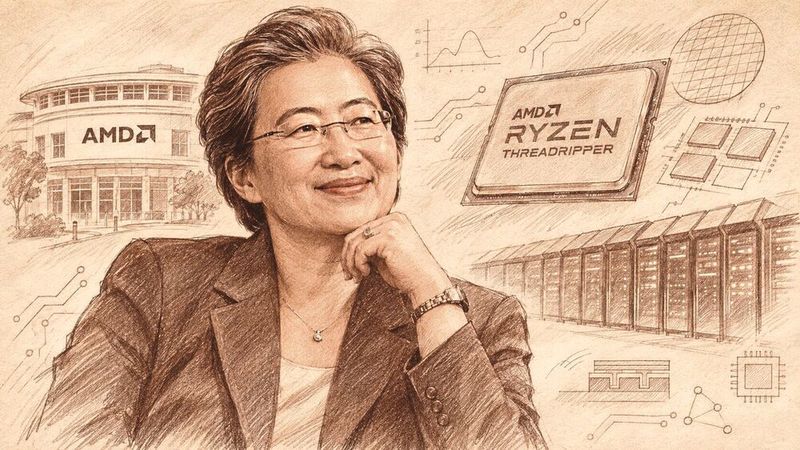
AMD's Success Story: Under Lisa Su's leadership, AMD has evolved from a struggling chipmaker into a major supplier of PC and server processors as well as AI accelerators.
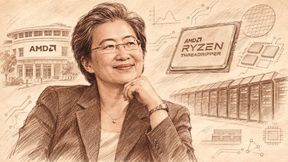
(Image: Dall-E / AI-generated)
There was a time when everyone talked about AI hardware and accelerators in the context of Jensen Huang and Nvidia. But now there are many more players in the field who are making their mark technologically. That’s why we’re taking a closer look at the biography of AMD’s (Advanced Micro Devices) most important figure: Lisa Su, AMD’s longtime CEO.
Anyone who’s even slightly familiar with PC and laptop hardware manufacturers will surely mention two big names when it comes to processors: Intel and AMD. Gamers will also mention Nvidia as a major competitor to AMD in the graphics card sector and, because of the colors of their logos, refer to the battle between Team Green (Nvidia) and Team Red (AMD). While AMD continues to trail Nvidia in the market for dedicated graphics cards, AMD is overall a major player in the microprocessor sector and, among other things, equips the current Xbox and PlayStation consoles with its SoCs (system-on-chip), which are essential for gaming.
One of the key figures behind this success was—and remains—Lisa Su, who has worked at AMD since 2012 and became CEO in 2014. Incidentally, Lisa Su is also related to Nvidia co-founder Jensen Huang—but more on that later. Let’s start by looking at Lisa Su’s early life.
From Taiwan to the Bronx: An Engineer Comes of Age
On November 7, 1969, Lisa Su—whose full name is Lisa Tzwu-Fang Su—was born in the Taiwanese city of Tainan. Tainan, which today has a population of about 1.8 million, is located in southwestern Taiwan and is a good 260 kilometers (about 162 miles) from the capital, Taipei, in the north. However, Lisa Su spent almost her entire childhood in the United States, as her parents, Sandy Su and Chun-Hwai Su, emigrated to the U.S. in the early 1970s along with their daughter Lisa and her brother. They settled in New York City. Lisa’s father, Chun-Hwai Su, who worked as a statistician, encouraged his two children to pursue the natural sciences.
Learning multiplication tables was also part of the curriculum as early as elementary school. Lisa Su’s mother, on the other hand, was the one who sparked her interest in business, as Sandy Su worked as an accountant and taught her daughter, among other things, about how businesses work. At the age of ten, Lisa Su decided she wanted to become an engineer. Because of her interest, she would take her brother’s remote-controlled cars apart as a child, only to put them back together again. She also got into home computers at an early age, including a Commodore 64. Lisa Su attended the Bronx High School of Science in New York City, graduating in 1986 at the age of 16.
Electrical Engineering? Precisely Because It's Harder!
Immediately after graduating from high school in 1986, Lisa Su began her studies at MIT (Massachusetts Institute of Technology) and wavered between electrical engineering and computer science. She ultimately chose electrical engineering for a reason that clearly illustrates one of her character traits. Lisa Su views challenges as motivation rather than obstacles, so she logically chose electrical engineering because she considered it the more difficult of the two subjects under consideration. Through her work in the university lab, where she dealt with wafers, her interest in semiconductors grew, and she eventually made them the focus of her studies. In the process, she gained hands-on experience designing and manufacturing such products in a university lab setting.
Lisa Su earned her bachelor’s degree in 1990 and went on to earn her master’s degree in electrical engineering at MIT in 1991, at the age of just 21. She remained at MIT until 1994 to pursue her doctoral studies, earning a Ph.D. in electrical engineering. For her research, she focused on SOI (silicon-on-insulator) technology, which was still novel at the time and involves transistors located on a thin layer of silicon atop an insulating material. At the time, the technology was still largely the subject of research, but it later gained significance for certain semiconductor applications.
Copper, Cell, and a Career at IBM
Immediately after graduating, Lisa Su joined Texas Instruments in June 1994, but then moved to IBM as early as February 1995, where she initially worked in research on device physics. Over the course of her career at IBM, she eventually rose to the position of vice president of the Semiconductor Research and Development Center. At IBM, Lisa Su worked on various semiconductor technologies, including the introduction of copper interconnects in integrated circuits. In many applications, copper replaced the aluminum that had been used previously and, due to its lower electrical resistance, enabled faster and more energy-efficient connections between transistors.
Date: 08.12.2025
Naturally, we always handle your personal data responsibly. Any personal data we receive from you is processed in accordance with applicable data protection legislation. For detailed information please see our privacy policy.
Consent to the use of data for promotional purposes
I hereby consent to Vogel Communications Group GmbH & Co. KG, Max-Planck-Str. 7-9, 97082 Würzburg including any affiliated companies according to §§ 15 et seq. AktG (hereafter: Vogel Communications Group) using my e-mail address to send editorial newsletters. A list of all affiliated companies can be found here
Newsletter content may include all products and services of any companies mentioned above, including for example specialist journals and books, events and fairs as well as event-related products and services, print and digital media offers and services such as additional (editorial) newsletters, raffles, lead campaigns, market research both online and offline, specialist webportals and e-learning offers. In case my personal telephone number has also been collected, it may be used for offers of aforementioned products, for services of the companies mentioned above, and market research purposes.
Additionally, my consent also includes the processing of my email address and telephone number for data matching for marketing purposes with select advertising partners such as LinkedIn, Google, and Meta. For this, Vogel Communications Group may transmit said data in hashed form to the advertising partners who then use said data to determine whether I am also a member of the mentioned advertising partner portals. Vogel Communications Group uses this feature for the purposes of re-targeting (up-selling, cross-selling, and customer loyalty), generating so-called look-alike audiences for acquisition of new customers, and as basis for exclusion for on-going advertising campaigns. Further information can be found in section “data matching for marketing purposes”.
In case I access protected data on Internet portals of Vogel Communications Group including any affiliated companies according to §§ 15 et seq. AktG, I need to provide further data in order to register for the access to such content. In return for this free access to editorial content, my data may be used in accordance with this consent for the purposes stated here. This does not apply to data matching for marketing purposes.
Right of revocation
I understand that I can revoke my consent at will. My revocation does not change the lawfulness of data processing that was conducted based on my consent leading up to my revocation. One option to declare my revocation is to use the contact form found at https://contact.vogel.de. In case I no longer wish to receive certain newsletters, I have subscribed to, I can also click on the unsubscribe link included at the end of a newsletter. Further information regarding my right of revocation and the implementation of it as well as the consequences of my revocation can be found in the data protection declaration, section editorial newsletter.
Lisa Su also played a key role in the development of the Cell processor, which was jointly developed by IBM, Sony, and Toshiba beginning in 2001. The architecture combined a PowerPC-based main processor with eight specialized processing units, known as Synergistic Processing Elements (SPE). Seven of these units were active in the PlayStation 3, one of which was reserved for system tasks. Sony unveiled the console in 2005, and it launched in 2006.
From Freescale to the AMD CEO's Chair
In 2007, Lisa Su joined Freescale Semiconductor as CTO (Chief Technology Officer). There, she was initially responsible for the company’s technical direction as well as research and development. In September 2008, she took over the Network and Multimedia division as Senior Vice President and General Manager. This shifted her focus increasingly toward management, as she now also oversaw strategy, marketing, and product management for embedded communications and application processors. Following the company’s initial public offering in 2011, Lisa Su sought a new challenge and, in early 2012, took on the role of Senior Vice President and General Manager of Global Business Units at AMD (Advanced Micro Devices). In this role, she oversaw, among other things, product strategy and business execution at AMD.
She later became Chief Operating Officer and oversaw the integration of various business units and processes. At the same time, AMD expanded its business with custom processors. As a result, the Xbox One (Microsoft) and PlayStation 4 (Sony) game consoles, released in 2013, featured AMD SoCs that combined a CPU and a GPU. In October 2014, Lisa Su was finally promoted to CEO and President of AMD. She began by refocusing the company more strongly on those business areas where AMD had strong technological and economic prospects. The goal was to make AMD simpler and, as a result, more efficient.
Ryzen, EPYC, and AMD's Big Comeback
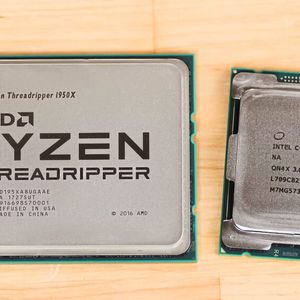
Even before Su was named CEO, AMD had already shifted its focus more toward business segments outside the traditional PC market. The share of these growth markets rose from around 10 percent to 40 percent between 2012 and 2014. Among other factors, custom processors for game consoles and embedded applications contributed to this growth. Under Su, AMD continued this realignment and increasingly focused on high-performance CPUs and graphics processors. A key step in this process was the Zen architecture. Although its development had already begun before Su’s appointment as CEO, it was under her leadership that AMD finally brought the new processors to market. In March 2017, the first Ryzen CPUs for desktop PCs were released, followed a few months later by the first EPYC processors for servers. With EPYC in particular, AMD succeeded in returning to a market where Intel had long been virtually unchallenged. The new processors offered numerous processing cores, high memory bandwidth, and many options for connecting additional components. In the high-end desktop segment as well, AMD was once again able to offer a serious alternative starting in 2017 with Ryzen Threadripper.
The continued development of chiplet technology also played an important role. Instead of placing all processor components on a single large die, AMD relies on multiple interconnected dies for many of its processors. This concept was further refined, particularly with the Zen 2 generation introduced in 2019, by distributing compute cores and I/O functions across separate chiplets. Among other things, this made it easier to combine different manufacturing technologies and to produce multi-core processors cost-effectively. Market share figures show that the strategy has paid off. According to Mercury Research, in the third quarter of 2026, AMD captured 29.3 percent of the x86 client processor market and 35.5 percent of the x86 server CPU market. While Intel remains in the lead, it has lost significant market share to AMD in recent years. AMD’s current line of CPUs for desktop PCs consists of the Ryzen 9000-series processors featuring Zen 5 architecture. For server processors, AMD has already moved on to Zen 6. In 2020, Lisa Su also strengthened the company’s commitment to the gaming console market, as the Sony PlayStation 5 models released at that time—which are still current today—and the Xbox Series consoles feature an AMD SoC based on the Zen 2 architecture.
From FPGAs to AI: AMD Wants More
However, Lisa Su did not stop at expanding the CPU and graphics card business. In February 2022, AMD completed the acquisition of FPGA specialist Xilinx. With this move, the company expanded its product portfolio to include programmable logic and adaptive computing platforms, which are used in industries such as manufacturing, communications technology, and data centers. Later that same year, AMD also acquired Pensando Systems, a provider of data processing and networking technologies for data centers.
When it comes to AI, AMD has no intention of ceding the field to Nvidia. With its Instinct accelerators, the company offers its own solutions for high-performance computing and AI applications. The MI300 family, set to be introduced in 2023, plays a particularly important role in this regard. The MI300X, for example, is designed for large AI models, while the MI300A combines CPU and GPU computing cores in a single package. AMD has long since ceased to compete solely with Intel in the realm of traditional PC processors or with Nvidia in the gaming graphics card market. Under Lisa Su, the company has evolved into a provider serving various markets, ranging from embedded systems and data centers to AI hardware. However, the competition isn’t standing still: Nvidia continues to hold a significant lead, particularly in the area of AI accelerators.
A Cousin at Nvidia and Plenty of Accolades
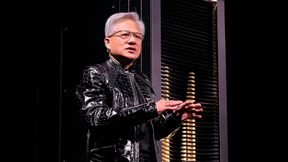
Jensen Huang, the Nvidia co-founder and longtime CEO who has been widely known to the public since the big Nvidia hype, is a first cousin of Lisa Su’s mother and is therefore related to the AMD CEO. However, since his resignation in November 2026, Huang has no longer been at the helm of Nvidia. Lisa Su has already received several awards in her career—here is a brief summary of some of them: In 2019, she became the first woman in history to rank number one on the Associated Press’s list of the highest-paid CEOs. Her total compensation package amounted to approximately $58.5 million, with the majority coming from stock-based compensation.
That same year, the U.S. business magazine *Barron's* included her on its list of the world's best CEOs. In 2021, she received the IEEE Robert Noyce Medal. Lisa Su has been an elected member of the American Academy of Arts and Sciences since 2020 and was named to TIME magazine’s list of the 100 most influential people in the world in 2025. TIME had already named her CEO of the Year in 2024. In 2026, she also received the National Medal of Science, considered the highest honor in the U.S. for scientists and engineers. We are eager to see how AMD will continue to develop under Lisa Su in the future.