Thermal management is a critical interface between vehicle technology, energy storage, and sustainable operations in agriculture. The requirements go beyond conventional vehicle technology.
Voss Automotive develops and manufactures line systems, connectors, and valves for thermal management systems.
(Quelle: Voss)
The mobility transition brings new technical challenges, particularly evident in thermal management: Whether pass cars or agricultural machinery, the requirements for temperature regulation of the battery, power electronics, and interior vary significantly depending on the application profile. Cars rely on compact, efficient systems focused on comfort and range due to space constraints, while heavy agricultural machinery must reliably operate under extreme conditions.
As a system supplier, Voss Automotive develops and manufactures customized technical solutions tailored to specific application areas—such as line systems, connectors, and valves for various requirements. In doing so, Voss supports the industry not only in optimizing existing systems but also as a partner in the electrification and transformation of modern agricultural technology.
The electrification of agriculture is slowly gaining momentum. While battery-electric drives are already well established in the automotive sector, the transformation of agricultural machinery is still in its early stages. This is partly due to the specific challenges in the agricultural sector: long operating hours, dust, vibrations, extreme temperatures, and low driving speeds under full load. However, with the right thermal management solution as a key technology, the future of agricultural technology can be reimagined.
Battery Cooling Under Extreme Conditions
Electric-powered agricultural machinery must operate reliably under extreme conditions. Stable battery temperature regulation is crucial for performance, safety, and longevity. Since airflow for passive cooling is absent, active systems such as pumps, fans, and heat exchangers are indispensable. Additionally, long operating hours under full load, such as during harvesting, cause continuous heat generation.
These requirements make thermal management a key technology for a successful transformation. Immersion cooling, in particular, proves to be an excellent solution: high-performance batteries are directly surrounded by an electrically non-conductive liquid, allowing for uniform temperature distribution—ideal for continuous operation in the field. At the same time, this technology places special demands on material selection: the components used must not only be conductive but also meet the highest standards against ion leaching. In practice, such systems ensure thermal stability even under high continuous loads, making them a central component for the operability of electrified agricultural machinery. A key part of these immersion cooling systems are space-optimized connector systems. They are designed for continuous temperatures ranging from -40°C to +85°C (~-40°F to +185°F) and enable safe, intuitive assembly—both during initial installation and maintenance. Their high mechanical resilience and media compatibility make them equally suitable for passenger cars, commercial vehicles, and agricultural machinery.
Valve Technology as the Key to Efficient Cooling Circuits
In modern vehicles—whether passenger cars, on-highway, or off-highway—various cooling circuits must be precisely controlled and adapted to changing operating conditions. Electrically actuated valves play a central role in regulating the flow and temperature of cooling media.
Modular valve systems make it possible to mix or separate multiple flows as needed – for instance, between the battery, power electronics, and interior climate control. This involves not only the hydraulic performance but also the integration into the vehicle architecture.
Another technical aspect is media flexibility: the valves must fulfill specific material properties depending on the application area (e.g., water-glycol, oil, refrigerant). This is especially relevant for multifunctional heating and cooling systems, such as preheating batteries in winter or air-conditioning the cabin during long work operations in summer.
Thermal Management as a Link Between the Vehicle and Energy System
In addition to the electrification of agricultural machinery and off-highway vehicles, energy storage solutions are increasingly coming into focus—such as stationary battery storage systems (Battery Energy Storage Systems, or BESS).
On agricultural operations, these storage systems can serve various purposes. For example, they can store surplus electricity from photovoltaic systems for operational supply or act as buffer storage for fast charging work machines without requiring additional infrastructure expansion.
A forward-looking approach for such battery storage systems is the use of second-life batteries: after being retired in automobiles, battery modules can be reused in BESS containers, which also have specific requirements for temperature regulation—such as for charging performance, safety, or component lifespan. Through the targeted use of customized thermal management systems, the interface between vehicle and stationary storage becomes an integral part of an efficient technology transfer.
Date: 08.12.2025
Naturally, we always handle your personal data responsibly. Any personal data we receive from you is processed in accordance with applicable data protection legislation. For detailed information please see our privacy policy.
Consent to the use of data for promotional purposes
I hereby consent to Vogel Communications Group GmbH & Co. KG, Max-Planck-Str. 7-9, 97082 Würzburg including any affiliated companies according to §§ 15 et seq. AktG (hereafter: Vogel Communications Group) using my e-mail address to send editorial newsletters. A list of all affiliated companies can be found here
Newsletter content may include all products and services of any companies mentioned above, including for example specialist journals and books, events and fairs as well as event-related products and services, print and digital media offers and services such as additional (editorial) newsletters, raffles, lead campaigns, market research both online and offline, specialist webportals and e-learning offers. In case my personal telephone number has also been collected, it may be used for offers of aforementioned products, for services of the companies mentioned above, and market research purposes.
Additionally, my consent also includes the processing of my email address and telephone number for data matching for marketing purposes with select advertising partners such as LinkedIn, Google, and Meta. For this, Vogel Communications Group may transmit said data in hashed form to the advertising partners who then use said data to determine whether I am also a member of the mentioned advertising partner portals. Vogel Communications Group uses this feature for the purposes of re-targeting (up-selling, cross-selling, and customer loyalty), generating so-called look-alike audiences for acquisition of new customers, and as basis for exclusion for on-going advertising campaigns. Further information can be found in section “data matching for marketing purposes”.
In case I access protected data on Internet portals of Vogel Communications Group including any affiliated companies according to §§ 15 et seq. AktG, I need to provide further data in order to register for the access to such content. In return for this free access to editorial content, my data may be used in accordance with this consent for the purposes stated here. This does not apply to data matching for marketing purposes.
Right of revocation
I understand that I can revoke my consent at will. My revocation does not change the lawfulness of data processing that was conducted based on my consent leading up to my revocation. One option to declare my revocation is to use the contact form found at https://contact.vogel.de. In case I no longer wish to receive certain newsletters, I have subscribed to, I can also click on the unsubscribe link included at the end of a newsletter. Further information regarding my right of revocation and the implementation of it as well as the consequences of my revocation can be found in the data protection declaration, section editorial newsletter.
Sustainability Transformation Trend
Second-life batteries also embody the concept of sustainability like few other products—rather than disposing of batteries, their lifecycle is extended and put to meaningful use. This also applies to the integrated line systems, which are designed for durability and can support multiple battery life cycles. Here, the recyclability of materials plays a crucial role alongside system architecture. Recycling-friendly components, media-compatible line systems, and detachable connections help conserve resources and improve the CO2 balance. Combined with efficient system design, ecological and economic goals can be better aligned.



:quality(80)/p7i.vogel.de/wcms/c3/6f/c36f031df46d22615d941d077d32313c/0129800025v1.jpeg "The laser-assisted process is intended to make wafer cutting significantly more productive. (Image:Trumpf)")
:quality(80)/p7i.vogel.de/wcms/ef/1e/ef1e248f58a3697ec1384f6849762d5a/0129842086v1.jpeg "Bodo will soon be hitting it off smart! Signing the memorandum of understanding in Las Vegas: Steffen Haack, Member of the Board of Bosch Rexroth, and Yoshimoto Matsuda, Managing Director of Precision Machinery & Robot Company, Kawasaki Heavy Industries. Here's what it's all about ... (Image:Bosch Rexroth)")
:quality(80)/p7i.vogel.de/wcms/40/b3/40b38efc9eae25e69d644512a2dc4b7c/0129806862v1.jpeg "This is one of the new MDA power clamping nuts from Jakob Antriebstechnik from various angles. It is described as particularly durable and powerful. Here are a few specific data ... (Image:Jakob Drive Technology)")
:quality(80)/p7i.vogel.de/wcms/f5/61/f561ad7c72ed41fd7a67ad9c481cb15d/0129799343v1.jpeg "Engine-generator units (MGU) from Steyr Motors are at work in the Leopard 2 main battle tank and the Leguan bridge vehicle (pictured). An extended contract is now to secure at least 500 more systems of this type for the Bundeswehr ... (Image:German Armed Forces)")
:quality(80)/p7i.vogel.de/wcms/9c/ac/9cac6246660e746c5a3989399ac4d250/0128561645v1.jpeg "Artificial intelligence can drive efficiency in smart factories through centralized data management and predictive maintenance. (Picture: ©Fardived - stock.adobe.com)")
:quality(80)/p7i.vogel.de/wcms/6b/e2/6be235b5ad8a442ccd9d164b0b300d8b/0129763992v1.jpeg "As early as 2020, the Zimmer Group announced that it would convert its production to be sustainably CO2-neutral. (Image:Zimmer Group)")
:quality(80)/p7i.vogel.de/wcms/d4/ba/d4bab9481e66f8570f40eb8ef2a90198/0129795613v1.jpeg "A camera inspection during removal ensures that the components are placed correctly in the KLTs. (Image:Yaskawa Europe)")
:quality(80)/p7i.vogel.de/wcms/cb/56/cb56e42b01638b618e8d1b9b38f32faa/0129810132v1.jpeg "From summer 2026, \"AEON\" will support people at the BMW plant in Leipzig. (Image:diephotodesigner.de/BMW)")
:quality(80)/p7i.vogel.de/wcms/76/81/7681b6450512b2cce1e453cd3d732543/0129479309v1.jpeg "Symbolic image: Model-based design combines virtual system models with real machines and systems in order to simulate, validate and coordinate functions, control and software early on in the development process. (Image:Dall-E / AI-generated)")
:quality(80)/p7i.vogel.de/wcms/5c/0f/5c0fee074c4b6c8e8c0993f3217c2f5a/0129773718v1.jpeg "The General Fusion demonstration reactor. (Image:General Fusion)")
:quality(80)/p7i.vogel.de/wcms/b5/5e/b55ed9355e0395ec0caf111d6af6b494/adobestock-495980372--c2-a9-20natali-mis-20-e2-80-93-20stock-adobe-com-6720x3778v1v1.jpeg "Which engineering skills will be in vogue in 2026? (Image:natali_mis - stock.adobe.com)")
:quality(80)/p7i.vogel.de/wcms/bf/a5/bfa5d882e93f159ce93e933742272b00/nord-vibn-cmyk-2196x1235v1v1.jpeg "With digital twins for virtual commissioning, Nord supports customers in ensuring that systems are available more quickly, even with complex drive systems. (Image:Nord Drivesystems)")
:quality(80)/p7i.vogel.de/wcms/81/24/8124e33f53ec73fa99374f407cc11b61/0129727992-541x304v1v1.jpeg "The development of control elements and HMI systems for commercial vehicles can lead to interactions. (Image:Preh / AI-generated)")
:quality(80)/p7i.vogel.de/wcms/87/f6/87f6edf2c7f287df294328c0b002617d/0129467191v1.jpeg "Jörg Grotendorst has been advising the management of HTEC in Belgrade, Serbia, since April 2025. (Image:HTEC)")
:quality(80)/p7i.vogel.de/wcms/d5/76/d5764e7ca6787e7a924fcc26c3de6793/l9-outdoor01-11358x6389v1v1.jpeg "According to the manufacturer, the new Li L9 is no longer a car, but embodies artificial intelligence. (Image:Li car)")
:quality(80)/p7i.vogel.de/wcms/90/d8/90d81390b6739724628a4ed225ab7752/l9-outdoor03-800x450v1v1.jpeg "The L9 Livis model from Li Auto has both steer-by-wire and brake-by-wire. (Image:Li car)")
:quality(80)/p7i.vogel.de/wcms/84/cc/84cc506003388ecffaab464677c7afa6/0129843694v1.jpeg "Launched last year, ASML's TWINSCAN XT:260 is an i-line scanner with a throughput of 270 wafers per hour. With a focus on the increased demands of AI chips, ASML wants to shift its focus away from pure front-end tools for chip production in the next ten to fifteen years with packaging and bonding technologies. (Image:ASML)")
:quality(80)/p7i.vogel.de/wcms/8f/48/8f48b0ed0d6c5c4f299b1310a7b577e9/0129830738v1.jpeg "Data centers in orbit are indeed dreams of the future, while data centers under water are already being tested. (Image:Dall-E / AI-generated)")
:quality(80)/p7i.vogel.de/wcms/36/ec/36ec46b311c3fb2cf9759ba4843047c5/0129831604v1.jpeg "Keysight and Ericsson enable validation of pre-6G interoperability with real network infrastructure and devices. (Image:Keysight)")
:quality(80)/p7i.vogel.de/wcms/c5/7a/c57ab05221defbbcaf6bddc346d21464/0129752421v1.jpeg "(Image:concept electronic GmbH)")
:fill(fff,0)/images.vogel.de/vogelonline/companyimg/76800/76895/65.jpg "FAULHABER_120mm.jpg ()")
:fill(fff,0)/p7i.vogel.de/companies/67/eb/67eba621ef6ea/logo2.png "logo2 (Wuxi InfiMotion)")
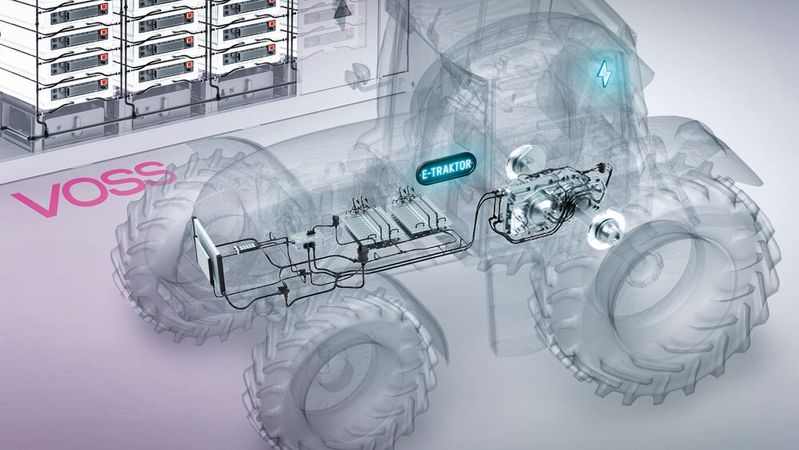
:quality(80)/p7i.vogel.de/wcms/fc/44/fc44f6959cccb7fd722465177788f151/0128048731v1.jpeg "In electrified agricultural machinery, cooling is essential: Voss acts as a partner when it comes to cooling strategies and thermal management. (Image:Voss)")
:quality(80)/p7i.vogel.de/wcms/d4/e1/d4e1b77d7c8cff73e6109b9c60eff11a/0123991355v1.jpeg "In electric cars, the air conditioning system also ensures the ideal temperature for the high-voltage battery—damage can reduce charging performance and service life. (Image:Inficon)")