In the section Legendary Stories, we take a look at remarkable events in the industry. In this episode, it's about a small company that challenged the rigid bed of nails with the first European flying probe tester and redefined flexibility in manufacturing.
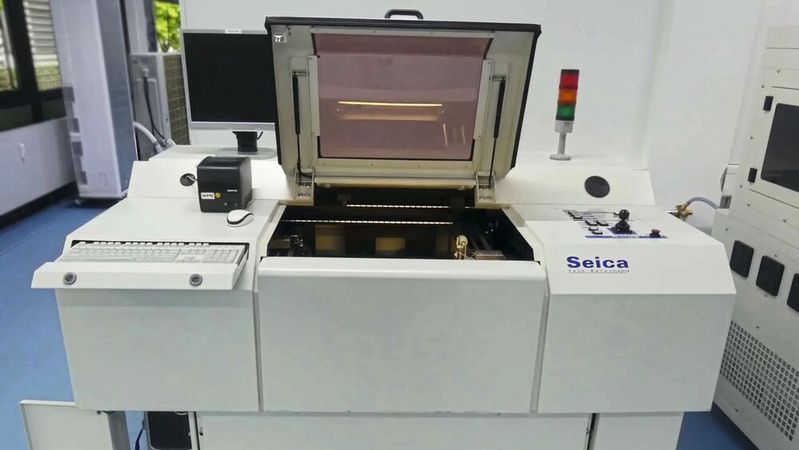
Pilot S20: It entered the market in the late 1990s and was the direct evolution of the very first Pilot system from 1995. With this model, Seica achieved an international breakthrough against major players like GenRad or Teradyne.
(Image: Seica)
Before an electronic product leaves the factory, it is tested. In the mid-1980s, this meant an in-house testing department would spend weeks programming test software, while a mechanical workshop milled an adapter, the so-called bed of nails, which ultimately had to fit the circuit board to the millimeter. Hundreds of spring-loaded contact pins simultaneously probed every measurement point. It was fast and precise. However, it was also a nightmare for anyone who did not produce ten thousand identical circuit boards.
Because if the design changed, a new bed of nails had to be built. That meant a new adapter, thousands of euros in costs, and weeks of waiting time. For prototypes, small series, and the growing number of EMS providers with constantly changing orders, this was an economic catastrophe.
The Bed of Nails Consumes Money and Time
An ICT test adapter (In-Circuit Test) was and still is a masterpiece of precision mechanics. For an average circuit board with 500 test points, a specialist drilled, milled, and assembled a carrier plate, where each individual pin had to be guided, spring-loaded, and precisely aligned with the corresponding test point. The costs were in the four-digit, sometimes even five-digit range. Delivery times were also not fast, with developers having to wait four to eight weeks for their test adapter. It was only economical if large quantities ran through the same adapter.
However, in the late 1980s, electronics manufacturing underwent a fundamental change. Surface Mount Technology (SMT) reduced batch sizes, accelerated product cycles, and increased product diversity. Suddenly, no one was ordering the same board for a year anymore. The rigid bed-of-nails test was too slow for the new flexibility. The market needed a system that could adapt to each new circuit board solely through software. No mechanics and no waiting time. The answer was: Flying Probe.
Japan First, Europe Follows
In 1987, the Japanese Takaya Corporation introduced the APT2200, the world's first flying probe tester. The principle was as simple as it was revolutionary: instead of a fixed bed of nails, two to four fine probes moved along precision axes across the circuit board, from test point to test point, software-controlled, without any mechanical adapter. Although the test was slower than with the bed of nails, it could be set up in minutes instead of weeks. However, it took seven years before a European company mustered the courage and the necessary expertise to develop its own flying probe tester. This company was not located in Munich, Stuttgart, or Grenoble but in Strambino, a small town of 3,000 inhabitants in Piedmont, an hour's drive north of Turin, and it was called Seica.
From Test House to Pioneer
Antonio Grassino had worked for twelve years in the electrical test department of Olivetti, the Italian office machine giant, which in the 1980s was still one of the great innovators in the electronics world. In 1986, he resigned. Armed with his experience, he founded a testing house in Strambino, specializing in the development of complex functional test programs for customers in avionics and telecommunications.
The service soon fostered the ambition to develop its own testing systems. In 1990, Seica developed a modular in-circuit test system based on a modular design principle. The hardware and software platform evolved with the requirements, eliminating the need for a new system for every test type. With models such as the legendary Pilot S20, the company proved by the late 1990s that the technology was ready for the global market.
It was a radical approach because the major ATE (Automatic Test Equipment) manufacturers of the time relied on closed systems: one device for in-circuit testing, another for functional testing. Nothing was compatible. In 1994, Seica took the decisive step and added a mechatronic dimension to its modular platform. The result was the first European flying probe tester and, according to Seica, the world's first system of its kind with true in-circuit capability. It was introduced in 1995.
Eight Probes, One System
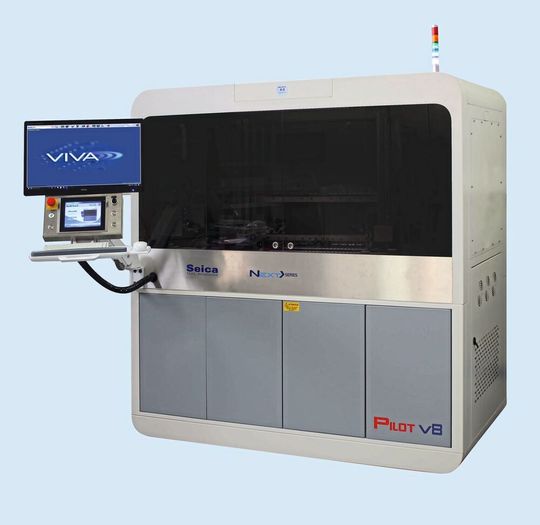
Almost 30 years after the first prototype, the Pilot V8 Next series represents today's state of the art. The characteristic vertical design allows both sides of the circuit board to be contacted simultaneously. For the user, this means maximum test depth and flexibility. This ranges from rapid prototyping to the repair of complex boards.
(Image: Seica)
The first Seica system, the so-called Pilot, relied from the beginning on an architecture designed to keep development efforts low: the same software platform for bed-of-nails and flying-probe tests, the same measurement modules, the same user interface. Anyone who could program a Seica ICT could also operate the flying prober.
Date: 08.12.2025
Naturally, we always handle your personal data responsibly. Any personal data we receive from you is processed in accordance with applicable data protection legislation. For detailed information please see our privacy policy.
Consent to the use of data for promotional purposes
I hereby consent to Vogel Communications Group GmbH & Co. KG, Max-Planck-Str. 7-9, 97082 Würzburg including any affiliated companies according to §§ 15 et seq. AktG (hereafter: Vogel Communications Group) using my e-mail address to send editorial newsletters. A list of all affiliated companies can be found here
Newsletter content may include all products and services of any companies mentioned above, including for example specialist journals and books, events and fairs as well as event-related products and services, print and digital media offers and services such as additional (editorial) newsletters, raffles, lead campaigns, market research both online and offline, specialist webportals and e-learning offers. In case my personal telephone number has also been collected, it may be used for offers of aforementioned products, for services of the companies mentioned above, and market research purposes.
Additionally, my consent also includes the processing of my email address and telephone number for data matching for marketing purposes with select advertising partners such as LinkedIn, Google, and Meta. For this, Vogel Communications Group may transmit said data in hashed form to the advertising partners who then use said data to determine whether I am also a member of the mentioned advertising partner portals. Vogel Communications Group uses this feature for the purposes of re-targeting (up-selling, cross-selling, and customer loyalty), generating so-called look-alike audiences for acquisition of new customers, and as basis for exclusion for on-going advertising campaigns. Further information can be found in section “data matching for marketing purposes”.
In case I access protected data on Internet portals of Vogel Communications Group including any affiliated companies according to §§ 15 et seq. AktG, I need to provide further data in order to register for the access to such content. In return for this free access to editorial content, my data may be used in accordance with this consent for the purposes stated here. This does not apply to data matching for marketing purposes.
Right of revocation
I understand that I can revoke my consent at will. My revocation does not change the lawfulness of data processing that was conducted based on my consent leading up to my revocation. One option to declare my revocation is to use the contact form found at https://contact.vogel.de. In case I no longer wish to receive certain newsletters, I have subscribed to, I can also click on the unsubscribe link included at the end of a newsletter. Further information regarding my right of revocation and the implementation of it as well as the consequences of my revocation can be found in the data protection declaration, section editorial newsletter.
The mechanics were the centerpiece. It consisted of precision linear axes that placed spring-mounted probes onto the test points with an accuracy of a few micrometers, double-sided, with up to four probes per side. Later generations, such as the Pilot V8, featured up to eight simultaneous probes. A unique feature was the vertical orientation of the circuit board within the system, which simplified double-sided contact. This was complemented by capacitive probes for bare-board tests, boundary-scan integration, and even thermal testing functions.
The software was key: It translated the PCB's CAD data directly into movement commands for the probes. No adapter and no manual calibration were necessary. The circuit board was placed on a base plate or mounted in a frame, and the system probed point by point. A full test took minutes instead of seconds, but setup time had been reduced to nearly zero.
From Strambino to the World
Seica was internationally oriented from the very beginning. As early as the early 1990s, the company worked closely with U.S. companies such as Computer Automation, GenRad, and Teradyne, the dominant players in the industry at the time. In 1995, the same year the first flying probe tester was launched, Seica established a branch in Beijing with Smart Technology. Offices followed in Paris and near Boston in 2000, in Suzhou in 2004, and in Munich (Germany) in 2008.
Today, Seica has installed over 1,000 systems worldwide. Flying probe testing remains the core product, as no other technology combines flexibility, cost-effectiveness, and testing depth as efficiently for small series and prototypes. The modular architecture from the past, the VIP platform (Versatile Interface Platform), still supports the current systems today. Thirty years later, flying probe testing is indispensable in electronics manufacturing. No prototype leaves the line without being probed by fine measuring tips. No EMS provider with varying orders can do without it. And every time a developer tests a new circuit board for the first time without having to wait weeks for an adapter, they benefit from an idea that originated in Japan in the 1980s and found its European master in Italy in 1994.



:quality(80)/p7i.vogel.de/wcms/ed/78/ed786ed6b280ff6c692908f01f715e3d/0113143253v1.jpeg "In our China Market Insider, we regularly provide you with relevant information straight from China. (Image:© Eisenhans - stock.adobe.com)")
:quality(80)/p7i.vogel.de/wcms/68/a5/68a5ce0896756c1dcf48dbeceefafbd3/0132300990v1.jpeg "Christoph Geigges is President and CEO of Walter AG. Headquartered in Tübingen (Germany), the company is one of the world’s leading suppliers of precision tools for metalworking. Under Geigges’ leadership, this long-established company is increasingly transforming itself from a tool manufacturer into an engineering partner that supports the entire manufacturing process. (Image: Walter AG)")
:quality(80)/p7i.vogel.de/wcms/3e/7c/3e7c26f44c68545fc7318597b6b65903/0133649650v1.jpeg "The flexible Heller circular storage system can store and process pallets measuring both 630 millimeters by 630 millimeters and 800 millimeters by 800 millimeters—even in mixed-mode operation. This makes the entire production line particularly flexible. (Image:Brighter)")
:quality(80)/p7i.vogel.de/wcms/16/29/162983885950ec1df27ab441bfe88613/0133132549v1.jpeg "Bernd Hermeler is the CEO of Cemecon AG. He studied mechanical engineering at RWTH Aachen University (Germany)—the very university from which the company emerged as a spin-off 40 years ago. Today, Hermeler is responsible for the global strategy of the coating specialist, which, with branches in Europe, the U.S., China, Japan, and India, is considered the global technology leader in the coating of cutting tools. (Image: Cemecon AG)")
:quality(80)/p7i.vogel.de/wcms/4b/7c/4b7c11f510878f154012d04c18a7c3cc/0133798118v1.jpeg "RobCo Becomes a Unicorn: The Munich-based robotics company has reached a valuation of more than one billion U.S. dollars and is driving the next generation of autonomous industrial robotics with Alfie. (Image:RobCo)")
:quality(80)/p7i.vogel.de/wcms/c8/a9/c8a96d5841d508c9e9c609c64168cbaa/0133758997v1.jpeg "Hospital Robotics: Neura Robotics' autonomous healthcare platform is designed to independently transport empty hospital beds between wards and floors. (Image:Neura Robotics)")
:quality(80)/p7i.vogel.de/wcms/88/dc/88dc38a1a0b5e016192ab83b0850fbd0/0133514708v1.jpeg "Scalable data sovereignty is the foundation for the transition from computationally intensive AI processing and growing data streams to sustainable, energy-efficient storage systems. (Image:Gemini / AI-generated)")
:quality(80)/p7i.vogel.de/wcms/1c/ef/1cef66e13c5cc02c5731fefcc99c00d2/0133697754v1.jpeg "Embodied AI in Industry: FMC³ Robotics combines AI-based perception and adaptation with traditional robot control to prepare robots for use in industrial manufacturing. (Image:FMC³/processed by AI)")
:quality(80)/p7i.vogel.de/wcms/a7/8a/a78a582a42a96aaaff38bd6b8f97a015/vishal-lal-mit-kernuhrv1.jpeg "It's ticking: Researchers have stabilized the first atomic clock. (Source: PTB)")
:quality(80)/p7i.vogel.de/wcms/36/f9/36f96a206fc408c9a632ce849de1f7fa/newsimage428299v1.jpeg "Polystyrene is used in protective packaging for televisions and electronic devices, in decorative moldings and baseboards for interior home construction, and even in Petri dishes. (Source: Hereon/Marcel Schwickerath)")
:quality(80)/p7i.vogel.de/wcms/90/30/90300137452b00d22f95113eff065ac3/fliehkraftkupplungen-und-bremsen-montage-centrifugal-clutches-and-brakes-assembly-1v1.jpeg "Installation: Centrifugal clutches should always be precisely matched to the machine. (Source: Amsbeck Machine Technology)")
:quality(80)/p7i.vogel.de/wcms/93/84/9384230e840a99a2015fdd3e0af11e2b/newsimage428236v1.jpeg "The crutch replicates the natural, biomechanical movement pattern of the human body. (Source: Leon Kast)")
:quality(80)/p7i.vogel.de/wcms/50/23/5023ffaefac8f9a47286b368143b88eb/0133801078v1.jpeg "Life isn't exactly a walk in the park for Porsche right now. And now Porsche management is saying that next year will be even worse. Read here to find out why that's supposed to be the case... (Image: Porsche)")
:quality(80)/p7i.vogel.de/wcms/2f/ab/2fabf62cdd2f57cb279e00931c91c869/0133794991v1.jpeg "The Atto 2 SUV is one of BYD's most popular plug-in hybrids. (Image:BYD)")
:quality(80)/p7i.vogel.de/wcms/e9/6e/e96e34d467ca1017f2a689275ae07302/0133815122v1.jpeg "Porsche CEO Leiters has shared new information about the company's model plans. (Image:Porsche)")
:quality(80)/p7i.vogel.de/wcms/0a/50/0a50938be0b598b36efc4e5457ed56dd/forvia-siege-zen-massage-16-9-06v1.jpeg "Seat with massage function by Forvia. (Source: Forvia)")
:quality(80)/p7i.vogel.de/wcms/4d/eb/4debf44ac7c0349544c70033bb9a182c/0133750488v1.jpeg "AI-enabled hardware: is a prerequisite for successful AI projects. (Image:Tung Lam)")
:quality(80)/p7i.vogel.de/wcms/36/f0/36f0472d20227013871aa790f4d48ac6/0133726018v1.jpeg "Ion beams can ablate, coat, or smooth surfaces down to the atomic level. Such processes are used, among other things, in optical chips, precision optics, and superconducting materials. (Image:AI-generated)")
:quality(80)/p7i.vogel.de/wcms/1f/47/1f47da6ee12c38a745eb478a04157a65/0133726100v1.jpeg "The schematic diagram shows the structure of a 3D NAND memory device with memory cells stacked on top of one another and vertical connections for high storage density. (Image:Dall-E / AI-generated)")
:quality(80)/p7i.vogel.de/wcms/b6/06/b6060e0b986e103e442b3971b6c0724c/0133731535v1.jpeg "Rendering of the planned Terafab facility in Texas (presumably generated using AI). Elon Musk does not seem to be making progress with his plans to operate his own semiconductor manufacturing facility. The SpaceX CEO has confirmed that he is currently in talks with TSMC regarding a stake in the Terafab project. (Image:SpaceX)")
:fill(fff,0)/p7i.vogel.de/companies/68/a4/68a47beec75ce/logo-cmyk-de.jpeg "logo-cmyk-de (https://www.datatec.eu/)")
:fill(fff,0)/p7i.vogel.de/companies/69/de/69de1b7403b0d/simtos-logo.jpeg "simtos-logo (SIMTOS)")
:quality(80)/p7i.vogel.de/wcms/22/35/2235aeefad964df8b6480beddec5b58c/0131086898v1.jpeg "The Eigenblue team with the eigenScan (from left to right): Ata Keşfeden, Shiyue Liu, Qiao Qiao, Johannes Zimmerer, Raphael Joppi and Tizian Unkauf. (Image:Eigenblue GmbH)")
:quality(80)/p7i.vogel.de/wcms/66/f6/66f664f2955e7e41373f41682adf4de8/0131756090v1.jpeg "At PCIM 2026, Amperesand showcased a SiC-based solid-state transformer for medium-voltage grids. The modular system is designed to replace traditional power transformers and downstream converter stages in certain applications, such as data centers, energy storage infrastructure, or port power solutions. (Image:VCG)")