For a long time, the public cloud was considered the preferred solution for the use of AI models. However, it is now becoming clear that it quickly reaches its limits when it comes to critical industrial applications. Local infrastructures not only offer low latency times, but also the necessary data sovereignty and the ability to reliably comply with local and industry-specific security standards.
The industry now needs to build a flexible, powerful and sovereign infrastructure that can exploit the full potential of artificial intelligence while guaranteeing control over data and processes.
The increasing spread of artificial intelligence (AI) in the industrial sector requires powerful hardware and software infrastructures that can process high computing loads locally, in real time and with maximum reliability. Although the centralized cloud model is widely used, it is increasingly reaching its limits, especially for industrial applications—whether due to latency, bandwidth or regulatory requirements. In this context, local infrastructures are regaining importance and are becoming the central building block for the successful use of AI, digital twins and edge applications in the industrial environment.
Latency, Security, Sovereignty
Artificial intelligence has long since become a matter of course in many industrial processes, for example in image-based quality control, intelligent robotics or predictive maintenance. However, in such scenarios in particular, excessive latency can jeopardize the precision of automated decisions and, in the worst case, result in operational risks.
In addition to technical requirements, regulatory and security-related aspects are increasingly coming to the fore: companies must retain complete control over their data flows at all times. Particularly in security-critical areas such as healthcare, defense or the energy industry, outsourcing sensitive data to public clouds—especially under foreign jurisdiction—is not an option. Local infrastructures not only offer low latency times, but also the necessary data sovereignty and the ability to reliably comply with local and industry-specific security standards.
Digital Twins: the Fusion of Simulation, AI And Edge Computing
The rapid rise of digital twins impressively underlines the growing relevance of local computing power in industry. According to a Bitkom study, almost two thirds of German industrial companies (63%) see the relevance of this technology for international competition. The virtual images of real systems make it possible to precisely simulate production processes and industrial workflows, detect failures at an early stage and optimize the maintenance of complex systems.
To ensure that the digital twin is not just a planning tool and that real structural change can take place, a high-performance infrastructure is required directly at the data generation location. Only local systems—whether at the edge of the network or in the company's own data center—guarantee coherent real-time processing while minimizing the risks associated with data transfer to external clouds. The transition between simulation and reality can only be seamless if computing power, data analysis and AI are directly linked and processing takes place directly where the data is generated—in the immediate vicinity of production.
Hybrid Architectures: Local Data Center, Edge And "Distributed AI" in Interaction
Industrial AI systems are increasingly developing in the direction of hybrid architectures in which local data centers, edge computing and so-called distributed AI are intelligently networked with one another. This convergence creates the conditions for processing industrial data directly on site, securely and almost in real time.
At the same time, the requirements for flexibility, reaction speed and technological sovereignty are increasing. To be prepared for this, companies need a dynamic infrastructure system: powerful, scalable, open for open source integrations and adaptable to the individual requirements of each location.
Without the Right Infrastructure, AI Remains Just Theory
For a long time, the public cloud was considered the preferred solution for the use of AI models. However, it is now becoming clear that it is quickly reaching its limits for critical industrial applications. Hybrid architectures that intelligently combine local data centers, edge computing and distributed AI offer concrete advantages here: they enable data to be processed in real time while ensuring full control over sensitive data streams.
Edge computing plays a key role here. It allows companies to analyse and process data directly at the point of origin, use resources more efficiently and reduce dependence on centralized infrastructures. These technologies are significantly driving the acceleration of AI workloads. Studies show that the global market for graphics processing units (GPUs) is set for significant growth. It is expected to reach $592.18 billion by 2033, up from $63.22 billion in 2024, with a compound annual growth rate (CAGR) of 28.22% between 2025 and 2033. This is a clear indicator of the growing need for locally powerful computing infrastructure.
Date: 08.12.2025
Naturally, we always handle your personal data responsibly. Any personal data we receive from you is processed in accordance with applicable data protection legislation. For detailed information please see our privacy policy.
Consent to the use of data for promotional purposes
I hereby consent to Vogel Communications Group GmbH & Co. KG, Max-Planck-Str. 7-9, 97082 Würzburg including any affiliated companies according to §§ 15 et seq. AktG (hereafter: Vogel Communications Group) using my e-mail address to send editorial newsletters. A list of all affiliated companies can be found here
Newsletter content may include all products and services of any companies mentioned above, including for example specialist journals and books, events and fairs as well as event-related products and services, print and digital media offers and services such as additional (editorial) newsletters, raffles, lead campaigns, market research both online and offline, specialist webportals and e-learning offers. In case my personal telephone number has also been collected, it may be used for offers of aforementioned products, for services of the companies mentioned above, and market research purposes.
Additionally, my consent also includes the processing of my email address and telephone number for data matching for marketing purposes with select advertising partners such as LinkedIn, Google, and Meta. For this, Vogel Communications Group may transmit said data in hashed form to the advertising partners who then use said data to determine whether I am also a member of the mentioned advertising partner portals. Vogel Communications Group uses this feature for the purposes of re-targeting (up-selling, cross-selling, and customer loyalty), generating so-called look-alike audiences for acquisition of new customers, and as basis for exclusion for on-going advertising campaigns. Further information can be found in section “data matching for marketing purposes”.
In case I access protected data on Internet portals of Vogel Communications Group including any affiliated companies according to §§ 15 et seq. AktG, I need to provide further data in order to register for the access to such content. In return for this free access to editorial content, my data may be used in accordance with this consent for the purposes stated here. This does not apply to data matching for marketing purposes.
Right of revocation
I understand that I can revoke my consent at will. My revocation does not change the lawfulness of data processing that was conducted based on my consent leading up to my revocation. One option to declare my revocation is to use the contact form found at https://contact.vogel.de. In case I no longer wish to receive certain newsletters, I have subscribed to, I can also click on the unsubscribe link included at the end of a newsletter. Further information regarding my right of revocation and the implementation of it as well as the consequences of my revocation can be found in the data protection declaration, section editorial newsletter.
The key challenge for the industry now is to build a flexible, powerful and sovereign infrastructure that can exploit the full potential of artificial intelligence while guaranteeing control over data and processes.
Industrial AI Needs Sovereign, Scalable And Resilient Structures
The future of artificial intelligence in industry will neither take place exclusively in the cloud nor entirely on-premise. Rather, a hybrid architecture is emerging that combines the computing power of local infrastructures with the proximity of the edge and the flexibility of the cloud. For industrial companies that want to successfully implement their AI strategies, it is crucial to work with trusted technology partners that have both in-depth software expertise and an understanding of industrial environments. Such providers enable the creation of robust architectures that can be flexibly adapted to different usage scenarios—from classic data centers to edge micro centers and modular embedded solutions. Companies thus benefit from an infrastructure that is precisely tailored to their requirements in terms of flexibility, security and scalability.



:quality(80)/p7i.vogel.de/wcms/7f/fd/7ffd32863352c40f562f4245e4766e61/0129745849v1.jpeg "After US President Donald Trump once again resorted to his favorite weapon, tariffs, concerns rose in the EU that the so-called tariff deal could become invalid. But it looks as if the sea remains relatively calm ... (Image:F. Schneidler)")
:quality(80)/p7i.vogel.de/wcms/53/69/5369bed136061188d873441dfefd6d6e/0129245111v1.jpeg "The company revised the factory layout even though construction work had already begun. (Image:Efeso Management Consultants)")
:quality(80)/p7i.vogel.de/wcms/d2/d7/d2d79e3fb84663cb7e918c88f123989b/0129733908v1.jpeg "Mineral decision! This is how lithium is mined. There is a lot of it in Chile, Australia, Bolivia and also in Zimbabwe. However, the latter country has now announced that the export of all minerals, including lithium concentrate, will be stopped. Read more about the reasons here ... (Image:Largbatt)")
:quality(80)/p7i.vogel.de/wcms/8e/7a/8e7a8d7cd0b947550da99f3d888a57a6/maas-blechnetbeitrag-20blechnext-2563x1440v1v1.png "Blechnext shows that the future of sheet metal processing lies not only in better machines, but also in smarter business models. \"Machine-as-a-Service\" is not just a financing tool; it is an accelerator for digital transformation. (Image:Blechnext)")
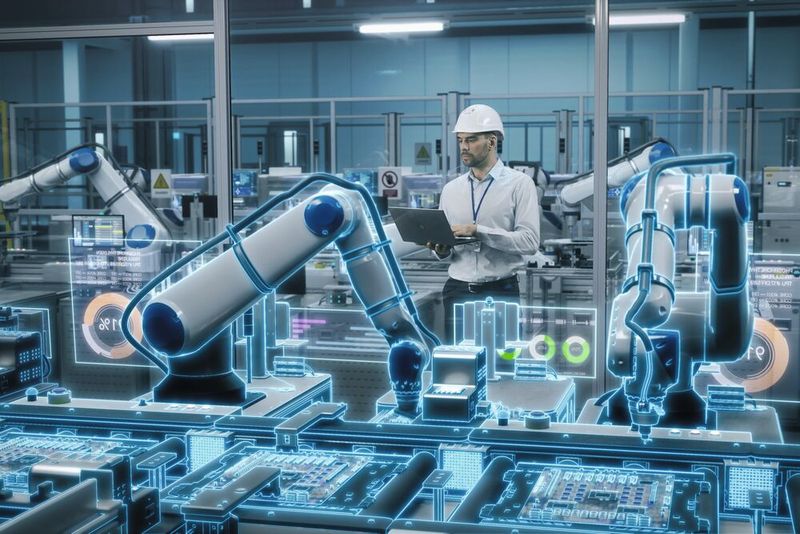
:quality(80)/p7i.vogel.de/wcms/13/4d/134dee0c2b8af6b4f28937ca5b586e0d/0129499541v1.jpeg "The industry now needs to build a flexible, powerful and sovereign infrastructure that can exploit the full potential of artificial intelligence while guaranteeing control over data and processes. (Picture: ©Gorodenkoff - stock.adobe.com)")
:quality(80)/p7i.vogel.de/wcms/c6/71/c671ce338f12be49d39d1b04b40a54f7/0129697443v1.jpeg "Claas is working on making its combine harvesters fit for refurbishment. (Image:Claas)")
:quality(80)/p7i.vogel.de/wcms/f2/4b/f24b8f1c3070e7f13e4f0ffd7854e75a/0129653538v1.jpeg "The production of the BMW iX3 is to be taken as far as possible in terms of sustainability. This is also ensured by the climate-friendly Blueprint recycled steel from Thyssenkrupp Steel ... (Image:BMW)")
:quality(80)/p7i.vogel.de/wcms/09/c7/09c7460e0c70bb5e65ce36f12d9ed995/20260212-sue-60-6000x3372v1v1.jpeg "The People Mover at its world premiere. The large polycarbonate windshield is clearly visible. One of several materials contributed by Covestro. (Image:UE | STUDIOS)")
:quality(80)/p7i.vogel.de/wcms/af/a3/afa312176d956068af20491957eef642/newsimage418262-3100x1745v1v1.jpeg "The autonomous shuttle of the Aula AI project during a demonstration of sensor data with artificial fog. (Image:University of Magdeburg)")
:quality(80)/p7i.vogel.de/wcms/84/2d/842d51915fa4fe69c72da5cc4ba52ed1/newsimage418103-3408x1917v1v1.jpeg "3 Printing can also be sustainable—if recyclable ink is used. (Image:Hereon/Steffen Niemann)")
:quality(80)/p7i.vogel.de/wcms/b0/78/b078e07634ffd4d5ee6b73af42cc7c55/newsimage418259-1000x563v1v1.jpeg "Magnesium during forming. (Image:TU Bergakademie Freiberg)")
:quality(80)/p7i.vogel.de/wcms/29/b5/29b536a22d9b5ac80387b02620cce554/20260212-sue-60-6000x3372v1v1.jpeg "The People Mover at its world premiere. The large polycarbonate windshield is clearly visible. One of several materials contributed by Covestro. (Image:UE | STUDIOS)")
:quality(80)/p7i.vogel.de/wcms/a0/3e/a03e71cec3a956df095607a0b176a7b0/0129584071v1.jpeg "Andreas Mindt will be Head of Design at the Volkswagen Group from March. (Image:Volkswagen AG)")
:quality(80)/p7i.vogel.de/wcms/fc/bd/fcbdbf5c6fdf969dc3e005b3ae512915/can-ai-5000x2812v1v1.jpeg "Anyone who allows themselves to be distracted in China when the assistance system is switched on is responsible. The \"Supreme People's Court\" came to this conclusion. (Image:Togg)")
:quality(80)/p7i.vogel.de/wcms/0a/79/0a79d81b63254586a4548085ab0f609c/0129744210v1.jpeg "The Schaeffler Group wants to reduce its dependence on the automotive industry. (Image:Schaeffler)")
:quality(80)/p7i.vogel.de/wcms/17/21/1721b98b7580a86c7790f607395878a1/0129697493v1.jpeg "Universal: Motors are used everywhere. (Image:Microchip Technology)")
:quality(80)/p7i.vogel.de/wcms/41/35/4135bb6dcc5748c7a7334e0aa146c3ab/0129722035v1.jpeg "SMIC is at the forefront of China's push to manufacture chips using advanced processes. The company has already produced 7nm chips using less advanced equipment; according to Nikkei Asia, it is now working on a technology described as \"5-nanometer-like\". (Image:SMIC)")
:quality(80)/p7i.vogel.de/wcms/0f/b2/0fb28656d39754b67a76b90b42243cda/0129655768v1.jpeg "Driven by GaN wafer production at 300 millimeters, Infineon's GaN products deliver outstanding performance with clear application benefits. (Image:Infineon Technologies AG)")
:quality(80)/p7i.vogel.de/wcms/98/c7/98c77993453c1edf3d2bd54b0028fa6a/0129630827v1.jpeg "Left: High Bandwidth Flash (HBF) stacks multiple layers of NAND chips to significantly increase storage capacity; Right: Concept of the \"hybrid\" H³ architecture presented in the IEEE study. (Image:Sandisk (left) / Sk hynix (right))")
:fill(fff,0)/images.vogel.de/vogelonline/companyimg/76800/76895/65.jpg "FAULHABER_120mm.jpg ()")
:fill(fff,0)/p7i.vogel.de/companies/67/eb/67eba621ef6ea/logo2.png "logo2 (Wuxi InfiMotion)")
:quality(80):fill(efefef,0)/p7i.vogel.de/wcms/65/a6/65a678f1a2373/etmm-artificial-intelligence.png "ETMM Artificial Intelligence")
:quality(80)/p7i.vogel.de/wcms/c7/bb/c7bbf9d2e343a8b935b82f5e240e0203/0126516806v1.jpeg "Containerization and cloud computing enable a flexible and scalable IT infrastructure. Through APIs and edge computing, distributed systems can be centrally controlled, secure, and used in real time. (Image:gridscale)")
:quality(80)/p7i.vogel.de/wcms/36/04/36042ccb94e4b472e9a8c98dfbf877f8/0128638148v1.jpeg "Portus colocation data center: The alternative to on-premises and hyperscalers (Image:Portus Data Centers)")