How API-oriented architectures and edge computing work together to make distributed systems centrally controllable, secure, and scalable—from the cloud to the individual embedded node.
Containerization and cloud computing enable a flexible and scalable IT infrastructure. Through APIs and edge computing, distributed systems can be centrally controlled, secure, and used in real time.
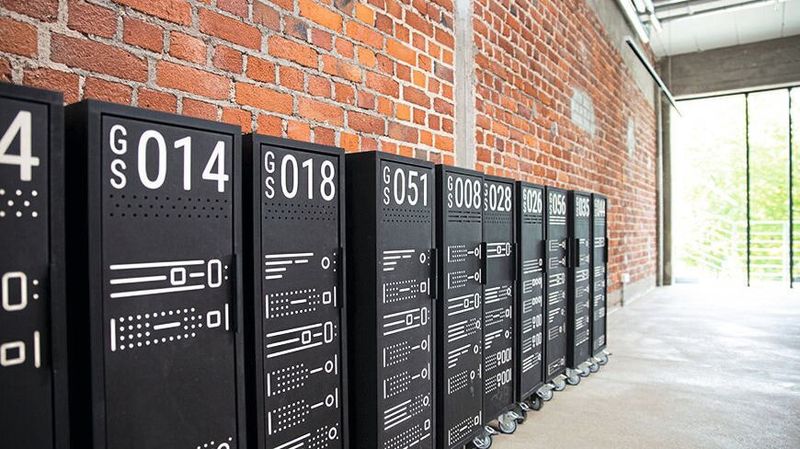
(Image: gridscale)
IT infrastructures are undergoing a profound structural transformation. For decades, centralized, often monolithic architectures dominated, bundling all processing in large data centers. However, this model is increasingly reaching its technical and organizational limits in the face of new demands. Real-time capability, high availability, and compliance with strict data protection and compliance requirements can only be realized to a limited extent when all workloads are executed centrally.
At the same time, enormous amounts of data are being generated directly at endpoints in modern production environments, urban infrastructures, or vehicle fleets. Whether it's sensor data from a production line, telemetry from an autonomous vehicle, or measurements from an energy plant—this information often needs to be processed within milliseconds. Transmitting it to distant cloud data centers results in latency, bandwidth bottlenecks, and dependencies that are unacceptable in many scenarios.
In parallel, regulatory pressure is increasing. Data protection laws such as the GDPR, security guidelines under NIS-2, and industry-specific standards require data processing to be more transparent, controllable, and auditable. This results in a clear architectural requirement: distributed systems that can be centrally orchestrated and monitored. Two technologies form the foundation for this—API-first as a methodological basis and Edge Computing as the physical execution environment.
API-First as the Foundation of Modular IT Architectures
The API-first approach establishes interfaces as the primary design layer of the IT architecture. Instead of adding APIs retrospectively, they are integrated into the system design from the outset. Every function—from the provisioning of virtual resources to the management of network interfaces and the configuration of security-relevant parameters—is exposed through clearly defined, standardized interfaces.
This consistent interface orientation allows for a loose coupling of system components. Services can be updated, extended, or replaced independently of one another without requiring deep interventions in other modules. For the embedded sector, this opens up new possibilities: firmware updates, parameter configurations, or the deployment of new algorithms can be automated and remotely controlled, down to individual controllers or sensor nodes.
Technically, modern cloud and edge platforms implement this approach using REST-compliant APIs and specifications like OpenAPI. Integration into DevOps and CI/CD pipelines ensures that development, testing, and production environments are consistently managed. This creates the foundation for unified management of heterogeneous system landscapes, ranging from central data centers to intelligent devices in industry.
Edge Computing as a Catalyst for Real-Time Processing
Edge computing addresses the core issues of centralized architectures: latency, bandwidth, and data sovereignty. By moving computing and storage resources closer to the source of data generation, response times can be drastically reduced, and legal requirements for data localization can be met.
In industrial IoT scenarios, this means that critical computations can take place directly on a machine controller, a local edge server, or an edge appliance. Only subsequent analyses or aggregated data are transmitted to the cloud. According to a recent study by OVHcloud and techconsult, more than 60 percent of companies in the DACH region are already relying on decentralized processing models.
The management of these distributed resources is carried out using the same interfaces used for central systems. Monitoring, configuration changes, or security updates can thus be orchestrated across platforms. This unified management logic reduces operational effort and increases reliability, as central and decentralized systems operate under the same operational processes.
API Gateways as a Connecting Control Instance
Hybrid architectures that integrate cloud, edge, and embedded components require an instance that controls all interface interactions. API gateways assume this role. They authenticate and authorize access, translate between protocols, distribute loads, and enforce security and compliance policies.
Date: 08.12.2025
Naturally, we always handle your personal data responsibly. Any personal data we receive from you is processed in accordance with applicable data protection legislation. For detailed information please see our privacy policy.
Consent to the use of data for promotional purposes
I hereby consent to Vogel Communications Group GmbH & Co. KG, Max-Planck-Str. 7-9, 97082 Würzburg including any affiliated companies according to §§ 15 et seq. AktG (hereafter: Vogel Communications Group) using my e-mail address to send editorial newsletters. A list of all affiliated companies can be found here
Newsletter content may include all products and services of any companies mentioned above, including for example specialist journals and books, events and fairs as well as event-related products and services, print and digital media offers and services such as additional (editorial) newsletters, raffles, lead campaigns, market research both online and offline, specialist webportals and e-learning offers. In case my personal telephone number has also been collected, it may be used for offers of aforementioned products, for services of the companies mentioned above, and market research purposes.
Additionally, my consent also includes the processing of my email address and telephone number for data matching for marketing purposes with select advertising partners such as LinkedIn, Google, and Meta. For this, Vogel Communications Group may transmit said data in hashed form to the advertising partners who then use said data to determine whether I am also a member of the mentioned advertising partner portals. Vogel Communications Group uses this feature for the purposes of re-targeting (up-selling, cross-selling, and customer loyalty), generating so-called look-alike audiences for acquisition of new customers, and as basis for exclusion for on-going advertising campaigns. Further information can be found in section “data matching for marketing purposes”.
In case I access protected data on Internet portals of Vogel Communications Group including any affiliated companies according to §§ 15 et seq. AktG, I need to provide further data in order to register for the access to such content. In return for this free access to editorial content, my data may be used in accordance with this consent for the purposes stated here. This does not apply to data matching for marketing purposes.
Right of revocation
I understand that I can revoke my consent at will. My revocation does not change the lawfulness of data processing that was conducted based on my consent leading up to my revocation. One option to declare my revocation is to use the contact form found at https://contact.vogel.de. In case I no longer wish to receive certain newsletters, I have subscribed to, I can also click on the unsubscribe link included at the end of a newsletter. Further information regarding my right of revocation and the implementation of it as well as the consequences of my revocation can be found in the data protection declaration, section editorial newsletter.
In practice, this means that, for example, a manufacturing execution system receiving sensor data can securely transmit this data via a gateway to a cloud-based analytics service without compromising the integrity of the production environment. Gateways are increasingly becoming strategic components that enforce not only data flows but also regulatory requirements centrally.
Regulation as an Integral Part of System Design
With the implementation of regulations like NIS-2 or the EU Data Act, compliance is no longer an additional afterthought but an integral part of system architecture. APIs provide the opportunity to technically embed governance requirements. Access rights, audit logs, and data flow controls can be directly integrated into the control layer of the infrastructure.
In complex multi-cloud and edge environments, this significantly reduces administrative effort. Instead of ensuring compliance through manual processes, the requirements are implemented systemically, making them consistent and scalable.
Unified Control of Distributed Systems
API-first and Edge Computing are complementary building blocks of modern IT architectures. APIs create the connecting control layer, while Edge Computing brings computing power and data storage closer to the point of use. The result is a scalable, secure, and compliant infrastructure that integrates both central cloud services and decentralized embedded systems. For IT managers, administrators, and software engineers, this provides a forward-looking operating model that combines technological flexibility with regulatory security and sustainably simplifies the operation of complex, distributed infrastructures. (sg)



:quality(80)/p7i.vogel.de/wcms/eb/2b/eb2bd1b8487afe577b37363cd02f16ff/0113143253v1.jpeg "In our China Market Insider, we regularly provide you with relevant information straight from China. (Image:© Eisenhans - stock.adobe.com)")
:quality(80)/p7i.vogel.de/wcms/dd/b8/ddb8edc98c49b384734ab2432b297eb5/adobestock-1913662309--irene-stock-adobe-com-ki-generiertv1.jpeg "Rotary joints are used in grippers and swivel mechanisms to allow assemblies to rotate or swivel smoothly relative to one another, even under very high loads (illustrative image). (Source: Irene - stock.adobe.com / KI-generiert)")
:quality(80)/p7i.vogel.de/wcms/d1/ef/d1ef6b6f7d4543f7999980bacccaf22b/0133499261v1.jpeg "As the growing imbalance in trade relations with China continues to widen, the EU Chamber of Commerce foresees a day when trade with China will have to be seriously reevaluated ... (Image: AI-generated)")
:quality(80)/p7i.vogel.de/wcms/fe/1f/fe1fa5ee713f94deaba963dc24c3abc5/0133299273v1.jpeg "The Flexistar enables highly flexible production of laser-welded tubes thanks to its tool-free clamping system. (Image:Because Technology, LLC)")
:quality(80)/p7i.vogel.de/wcms/60/ef/60ef4f07e4829b2c2929befc0f353c58/0133511729v1.jpeg "Humanoid robots can match human performance in certain tasks. (Image:Gemini / AI-generated)")
:quality(80)/p7i.vogel.de/wcms/2e/99/2e99726b522e4b35b690e25eb6a42643/0133463991v1.jpeg "Robotics: In AMR applications, connection technology must reliably transmit power, signals, and data despite vibration and shock loads—in very confined spaces and in a way that allows for regular maintenance. (Image:Hyperever)")
:quality(80)/p7i.vogel.de/wcms/d0/18/d01801e3d5dbd7bc9d0b4f60408b630c/0133468429v1.jpeg "Quality requirements for film packaging are on the rise. At the same time, many companies are turning to recyclable film materials, which, however, have their own challenges. Fraunhofer researchers have therefore developed a fast system that detects problems in real time. (Image:Fraunhofer IKTS)")
:quality(80)/p7i.vogel.de/wcms/b1/06/b106cf44923ce39565c3264982fd20eb/0133414574v1.jpeg "Robots Build Robots: At the new Ubtech factory, automated systems even handle parts of the material supply and logistics for the production of humanoid robots. (Image:Ubtech)")
:quality(80)/p7i.vogel.de/wcms/c0/52/c052f405eb55fc3d08c4837e77206fc0/adobestock-2021845957--aucartstudio-stock-adobe-com-ki-generiertv1.jpeg "An innovation from China to combat extreme summer heat: A novel coating lowers temperatures. (Source: © AucArtStudio – stock.adobe.com_AI-generated)")
:quality(80)/p7i.vogel.de/wcms/66/a7/66a7b78159caeacce57136529688799f/0133503398v1.jpeg "Sunlight Makes Stone! These stone blocks weren't made the traditional way. Instead, they were additively manufactured from sand using a laser. In the future, however, the laser is set to be replaced by concentrated sunlight—if the startup Addisol is successful... (Image:Addisol / F. Fiedler)")
:quality(80)/p7i.vogel.de/wcms/72/b9/72b995c2c8d812c5e2115cbef31e035a/0133462727v1.jpeg "Eggl manufactures center hoods that are precisely tailored to each cooking island—whether standard size or custom shape. They are made entirely of stainless steel and are individually customized in terms of size and filter arrangement. (Image:SPI)")
:quality(80)/p7i.vogel.de/wcms/13/5d/135dfae6229ceaf5c55467a43e8f7257/adobestock-1879961393--ardi-stock-adobe-com-ki-generiertv1.jpeg "Annoying chatterboxes or awkward silences in response to questions—a moderator should specifically prepare for difficult situations in order to navigate them effectively. (Image:ardi - stock.adobe.com_AI-generated)")
:quality(80)/p7i.vogel.de/wcms/aa/a2/aaa2c6dd2daa24b485cddbf9297590c0/0133467318v1.jpeg "Battery Monitoring: Battery monitoring using electrochemical impedance spectroscopy offers several advantages. (Image:TI)")
:quality(80)/p7i.vogel.de/wcms/39/b2/39b21bf03be1683831862239a369987c/0133469638v1.jpeg "Data from autonomous vehicles and robots operating autonomously is in high demand, and Ruqi wants to capitalize on this. (Image:Ruqi Mobility)")
:quality(80)/p7i.vogel.de/wcms/8a/bb/8abbb6217220595edc1549ac9b84f307/0133429906v1.jpeg "The IAA in Hanover showcased the ambitions of Chinese commercial vehicle manufacturers in Europe. (Image:Wehner - VCG)")
:quality(80)/p7i.vogel.de/wcms/0c/53/0c5313ef91c14b6df0d0996efc33c8ad/jpg03568-bearbeitetv1.jpeg "The category winners of the 2027 German Car of the Year award. (Source: GCOTY)")
:quality(80)/p7i.vogel.de/wcms/48/15/4815da27c45973ca629a99b375ac3aef/0133509585v1.jpeg "Ventuno Q RoadTest: Designed to help the Element14 community gain practical insights from real-world tests using the Ventuno Q. (Image:Farnell/Element14)")
:quality(80)/p7i.vogel.de/wcms/17/2b/172bd132f9febdfcbcedba292ad0504d/aufmacherv1.jpeg "Micro-Epsilon offers a wide range of IO-Link-compatible sensors. (Source: Micro-Epsilon Messtechnik GmbH & Co. KG)")
:quality(80)/p7i.vogel.de/wcms/ca/b4/cab46fd26d19d6a2febca032048200b6/0133471827v1.jpeg "Photonics SDK for C and Python: Computational operations are now abstracted as standard mathematical functions. (Image:Q.ANT)")
:quality(80)/p7i.vogel.de/wcms/92/b2/92b2ed5299cde450c0764f4f64468395/0133505895v1.jpeg "The \"Iris 100\" test system for high-precision volume production of microLEDs uses a spectrometer and a high-resolution camera. (Image:Teradyne)")
:fill(fff,0)/p7i.vogel.de/companies/69/de/69de1b7403b0d/simtos-logo.jpeg "simtos-logo (SIMTOS)")
:quality(80)/p7i.vogel.de/wcms/01/77/017742db7d5eb5964c297bb8917df701/0129696639v1.jpeg "Mini-STX K3921-N: The motherboard masters Intel's Core i3 and N-Series processors and can connect multiple monitors with Full HD. (Image:Kontron)")
:quality(80)/p7i.vogel.de/wcms/c1/e3/c1e349b04178823920b100ea67eb01d5/0132492413v1.jpeg "Cybersecurity: The Cyber Resilience Act (CRA), the Radio Equipment Directive (RED), and other regulations make Security by Design, OTA updates, and consistent compliance mandatory for connected devices. (Image:Dall-E / AI-generated)")