


:quality(80)/p7i.vogel.de/wcms/1d/85/1d856c359855885a633f48d9f77fe69c/0130227630v1.jpeg "Two \"HBZ AeroCell 160\" in the Moyola factory. The machines mark a significant milestone in Moyola's ongoing commitment to performance, innovation and global competitiveness. (Image:Moyola)")
:quality(80)/p7i.vogel.de/wcms/78/e3/78e3db1b32fb30c9a9195e36864db885/0129830906v1.jpeg "Siemens and Caphenia sign the partnership agreement. From left to right: Nicky Ahnert, Jürgen Giegerich, Frank Knauf (all Siemens), Dr. Mark Misselhorn, Dr. Andreas Waibel (both Caphenia). (Image:Siemens)")
:quality(80)/p7i.vogel.de/wcms/5a/d7/5ad72fd14971344dbfed431e07ae6423/0130200276v1.jpeg "A new machining job needs to be processed! Open the drawer—but the right tool is missing! That's what happens when you work with old data. But EVO Informationssysteme has an AI tool that means the problem will never slow down production again. (Image:EVO Information Systems)")
:quality(80)/p7i.vogel.de/wcms/53/f7/53f7dadbe4d656a3fd4f4077445f29f6/0129828707v1.jpeg "Thanks to its compact design and drilling/unscrewing function, the Fire Birdie is suitable for applications with limited installation space and frequent tool changes. (Image:Marcel Kraibühler)")
:quality(80)/p7i.vogel.de/wcms/21/3b/213b5e5454b0c4344ba0eaa700857607/0129635774v1.jpeg "The QRV flow control valves from Lee are available in sizes from 5.5 to 18 mm and cover a flow rate of 0.2 to 20 l/min. Depending on the version, the pressure range is either between 0.1 and 2.75 bar (1.5 - 40 psi) or between 0.17 and 2 bar (2.5 - 30 psi). (Image:Lee)")
:quality(80)/p7i.vogel.de/wcms/63/e9/63e9db3259a656cca88c5f7158af3fcb/0129385769v1.jpeg "The Agibot A2 at a Fortune China event in December 2025. (Image:Agibot)")
:quality(80)/p7i.vogel.de/wcms/df/a1/dfa1786a3b05f5ff2e51d0f633695c57/0130137877v1.jpeg "Openclaw inspires AI communities. (Image:Openclaw.ai)")
:quality(80)/p7i.vogel.de/wcms/16/9c/169ce3040d09673a91a403598d15dbf1/0130162776v1.jpeg "From networked cameras to vacuum robots, industrial robots, drones and humanoids, AI is moving ever closer to sensors and actuators as it develops from \"basic intelligence\" to \"multi-purpose intelligence\", while software-defined architectures make long-term systems flexibly upgradeable for new functions and AI models. (Image:Globalfoundries)")
:quality(80)/p7i.vogel.de/wcms/da/4d/da4da8d34671dc6bce80e496212de877/0129850788v1.jpeg "Mate-XT Go supports the arms and shoulders during overhead work and repetitive tasks and is designed to significantly reduce muscle strain in everyday working life. (Image:Comau)")
:quality(80)/p7i.vogel.de/wcms/3f/cc/3fccb748b0fe16f1f61249d94c72f126/0130149439v1.jpeg "Requirements for integrated power supply systems: Precise AC and DC power supply systems that not only provide energy, but also reliably combine measurement, analysis and system integration. (Image:Schulz Electronic)")
:quality(80)/p7i.vogel.de/wcms/cb/8a/cb8ae7f5205365efce3e7285154fc3cf/0130132198v1.jpeg "Markus Huber (left) and Nicolai Friis from TU Wien know how to make quantum computers multidimensional in order to perform computing operations even better. (Image:TU Vienna / A. Rommel)")
:quality(80)/p7i.vogel.de/wcms/94/7a/947ac066b98cbcd3470e83ff9da3e25f/0130096114v1.jpeg "The use of amorphous steels in the stator enables a significant reduction in losses and increases the efficiency of modern electric motors in vehicle drives. (Image:Horse Powertrain)")
:quality(80)/p7i.vogel.de/wcms/2b/0b/2b0b5ff55299be32174cb0ed76718253/0130177406v1.jpeg "Rolls-Royce has received funding of 70 million US dollars from the EU public-private partnership \"Joint Undertakings for Clean Aviation\". (Image:Rolls-Royce)")
:quality(80)/p7i.vogel.de/wcms/95/7e/957ed49b185794b3e76b9e610a8a389f/0130217926v1.jpeg "Bosch wants to offer components for e-vehicles in India together with Tata. (Image:Bosch)")
:quality(80)/p7i.vogel.de/wcms/d8/11/d8118b193939ca897a4962aeb1bbc5ae/0130224537v1.jpeg "Opel plans to participate in the Formula Ene racing series from fall 2026 with the fully electric Gen4 racing cars. (Image:Opel)")
:quality(80)/p7i.vogel.de/wcms/92/f1/92f12f22e5045c6af002ab48a59841d0/0130171646v1.jpeg "The US electric vehicle manufacturer Rivian is to supply self-driving vehicles to Uber. (Image:Rivian)")
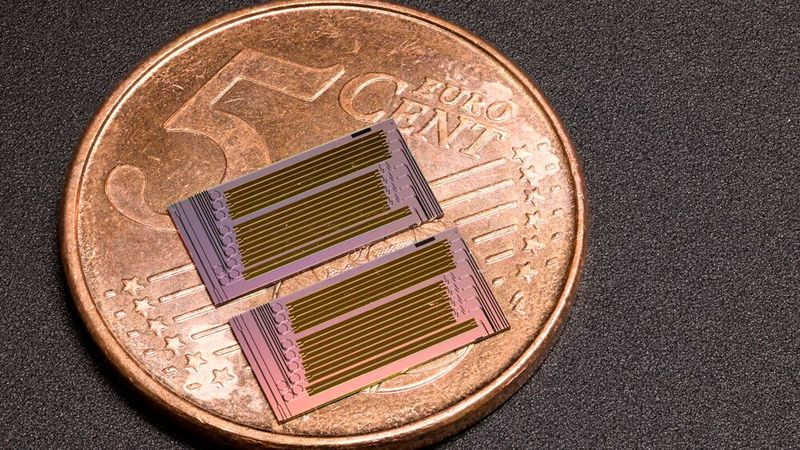
:quality(80)/p7i.vogel.de/wcms/3a/50/3a50d3f269f38f14d7a25a93c6f2b2f8/0130147601v1.jpeg "The compact modulator enables fast and energy-efficient data transmission and can be manufactured cost-effectively. (Image:Hugo Larocque, EPFL)")
:quality(80)/p7i.vogel.de/wcms/54/d3/54d34bf24912ac87780c1fbfa745dad7/0130174841v1.jpeg "Simulation can help to optimize material flows in production. (Image:freely licensed)")
:quality(80)/p7i.vogel.de/wcms/1f/8e/1f8e294ac0af3a801575c7e1400cc830/0130164847v1.jpeg "While micro-injection molding takes 10 to 12 weeks for critical components, 3D printing offers faster manufacturing and greater flexibility for design iterations, Collins said. (Image:Boston Micro Fabrication)")
:quality(80)/p7i.vogel.de/wcms/ae/8f/ae8f87001d67841b6a6f9e3efb5a2f1a/0130176499v1.jpeg "Almost 160 exhibitors and 2,400 participants came to Munich for LOPEC 2026 to find out about printed electronics. (Image:Messe München GmbH)")
:fill(fff,0)/images.vogel.de/vogelonline/companyimg/76800/76895/65.jpg "FAULHABER_120mm.jpg ()")
:fill(fff,0)/p7i.vogel.de/companies/69/88/69882c428938e/tmts2026-ticec-banner-en-2000px.png "tmts2026-ticec-banner-en-2000px (https://www.tmts.tw/en)")
:quality(80):fill(efefef,0)/p7i.vogel.de/wcms/65/e9/65e9d1058820a/siemens-wp-cover.png "Siemens-WP-Cover")
Date: 08.12.2025
Naturally, we always handle your personal data responsibly. Any personal data we receive from you is processed in accordance with applicable data protection legislation. For detailed information please see our privacy policy.
Consent to the use of data for promotional purposes
I hereby consent to Vogel Communications Group GmbH & Co. KG, Max-Planck-Str. 7-9, 97082 Würzburg including any affiliated companies according to §§ 15 et seq. AktG (hereafter: Vogel Communications Group) using my e-mail address to send editorial newsletters. A list of all affiliated companies can be found here
Newsletter content may include all products and services of any companies mentioned above, including for example specialist journals and books, events and fairs as well as event-related products and services, print and digital media offers and services such as additional (editorial) newsletters, raffles, lead campaigns, market research both online and offline, specialist webportals and e-learning offers. In case my personal telephone number has also been collected, it may be used for offers of aforementioned products, for services of the companies mentioned above, and market research purposes.
Additionally, my consent also includes the processing of my email address and telephone number for data matching for marketing purposes with select advertising partners such as LinkedIn, Google, and Meta. For this, Vogel Communications Group may transmit said data in hashed form to the advertising partners who then use said data to determine whether I am also a member of the mentioned advertising partner portals. Vogel Communications Group uses this feature for the purposes of re-targeting (up-selling, cross-selling, and customer loyalty), generating so-called look-alike audiences for acquisition of new customers, and as basis for exclusion for on-going advertising campaigns. Further information can be found in section “data matching for marketing purposes”.
In case I access protected data on Internet portals of Vogel Communications Group including any affiliated companies according to §§ 15 et seq. AktG, I need to provide further data in order to register for the access to such content. In return for this free access to editorial content, my data may be used in accordance with this consent for the purposes stated here. This does not apply to data matching for marketing purposes.
Right of revocation
I understand that I can revoke my consent at will. My revocation does not change the lawfulness of data processing that was conducted based on my consent leading up to my revocation. One option to declare my revocation is to use the contact form found at https://contact.vogel.de. In case I no longer wish to receive certain newsletters, I have subscribed to, I can also click on the unsubscribe link included at the end of a newsletter. Further information regarding my right of revocation and the implementation of it as well as the consequences of my revocation can be found in the data protection declaration, section editorial newsletter.
:quality(80)/p7i.vogel.de/wcms/e6/f6/e6f63cd0fc19352f77d99ca431746bad/0125460682v1.jpeg "With BASE-AU, an optical Ethernet solution is available that meets the strict mechanical, thermal, and electromagnetic requirements of the automotive industry. (Image:MD)")
:quality(80)/p7i.vogel.de/wcms/63/a7/63a708ecf94aa481889584e366f64214/0125053232v1.jpeg "Integrated optical circuits: Fraunhofer IOF has developed both the optical and electrical interconnection technology for the LNOI circuits. (Image:Fraunhofer IOF)")